Is the Smith machine safe for squats? The gym's "safe" machine has a dark side
Millions of people pick the Smith machine because it feels like the safe choice. A viral clip of failed squats has many of them wondering if they got it backwards.
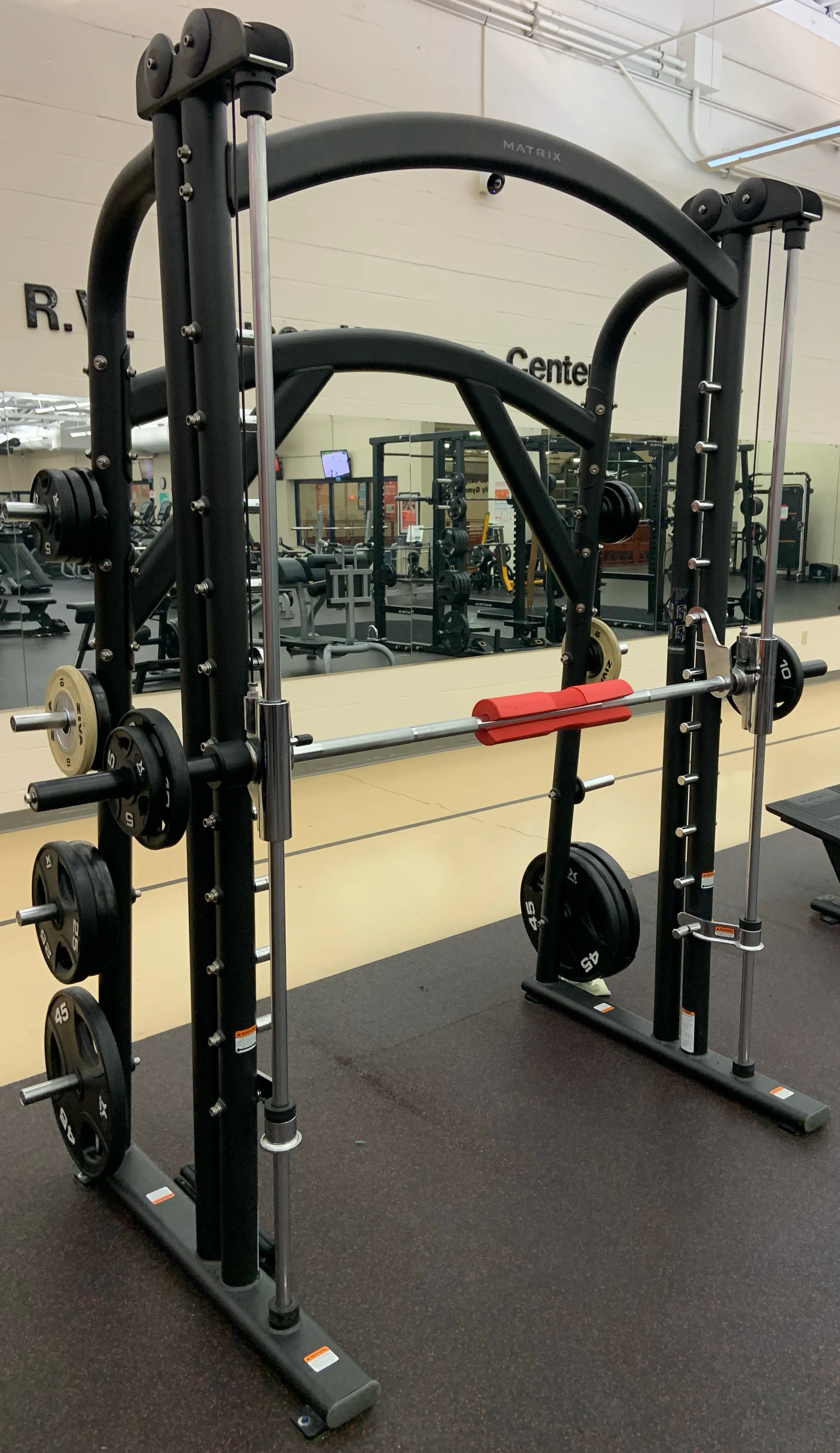
Photo: Wikideas1 / Wikimedia Commons, CC0
- Most people think the Smith machine is the safe way to squat
- One lifter was left paralysed after the bar came down too far
- One small setting decides whether a failed rep is a laugh or a disaster
The bar slides down its steel rails. The knees buckle. And there is nowhere for the weight to go except onto the person under it.
That moment, played again and again, is in a clip that went round this week. It shows lifter after lifter getting folded up during squats on a Smith machine, the gym machine where the bar runs up and down on fixed tracks.
The reaction in the replies was a gasp. One person wrote: "Wait what. I always thought they were one of the safest ways of doing squats." Another said they nearly felt sick, remembering all the Smith machine squats they used to do.
Another reply went further. It claimed a bunch of people had paralysed themselves because they never set the safety stops.
That claim sounds like gym folklore. Yet at least one case went all the way to a jury.
Is the Smith machine safer than a free barbell?
It depends on what you mean by safe. The Smith machine locks the bar onto rails, so it cannot tip forward, backward or sideways. You twist a hook to rack it at almost any height. That is why beginners love it.
But the same rails that make it feel safe take away your escape route. With a free barbell, a lifter who fails a squat can push the bar off their back and step away. One gym-goer summed up the problem: You can't dump the weight if you hit failure.
On a Smith machine, the bar only goes one place. Down the rails. If nothing stops it, it stops on you.
Here is how the two compare, side by side.
| Smith machine | Free barbell | |
|---|---|---|
| Bar path | Fixed on rails, straight or slightly angled | Free, you control it in every direction |
| Bailing out of a failed rep | Hard, the bar can only travel down the rails | Possible, you can drop it behind you |
| What catches the bar | Safety stops, only if you set them | Safety pins or arms in a squat rack |
| Balance needed | Low, the machine steadies the bar | High, your body steadies the bar |
| Leg muscle activity | About 43% lower on average in one small study | Higher in calves, hamstrings and inner thigh |
| Heaviest weight lifted | Higher for squats in one study, mostly in women | Higher for bench press in the same study |
| Best uses | Beginners, presses, hip thrusts, rehab under supervision | Building full-body strength and balance |
Sources: Schwanbeck, Chilibeck and Binsted, J Strength Cond Res 2009, and Cotterman, Darby and Skelly, J Strength Cond Res 2005.
Can you get paralysed on a Smith machine?
Yes. It has happened, and a court heard all of it.
In January 2001, a man named Bostick was doing squats on a Smith machine at a Gold's Gym in Venice, California. According to court reports, the machine's adjustable safety stops had been removed. In their place was a fixed "dead stop" that let the bar fall to 21 inches from the floor.
That is far lower than the bottom of a normal squat. When his legs gave out, the bar came down and pinned him. He was left a quadriplegic, unable to move his arms or legs.
In July 2003, a Los Angeles jury awarded him about $16.3 million. It was cut by 10% because the jury found he was partly at fault, which brought it to about $14.4 million. Gold's Gym had already settled for $7.3 million, and the machine maker, Flex Equipment, was left to cover the rest.
A later case against the maker's insurer added $11.3 million in 2008. Reports put his total recovery at $18.6 million after seven years in court.
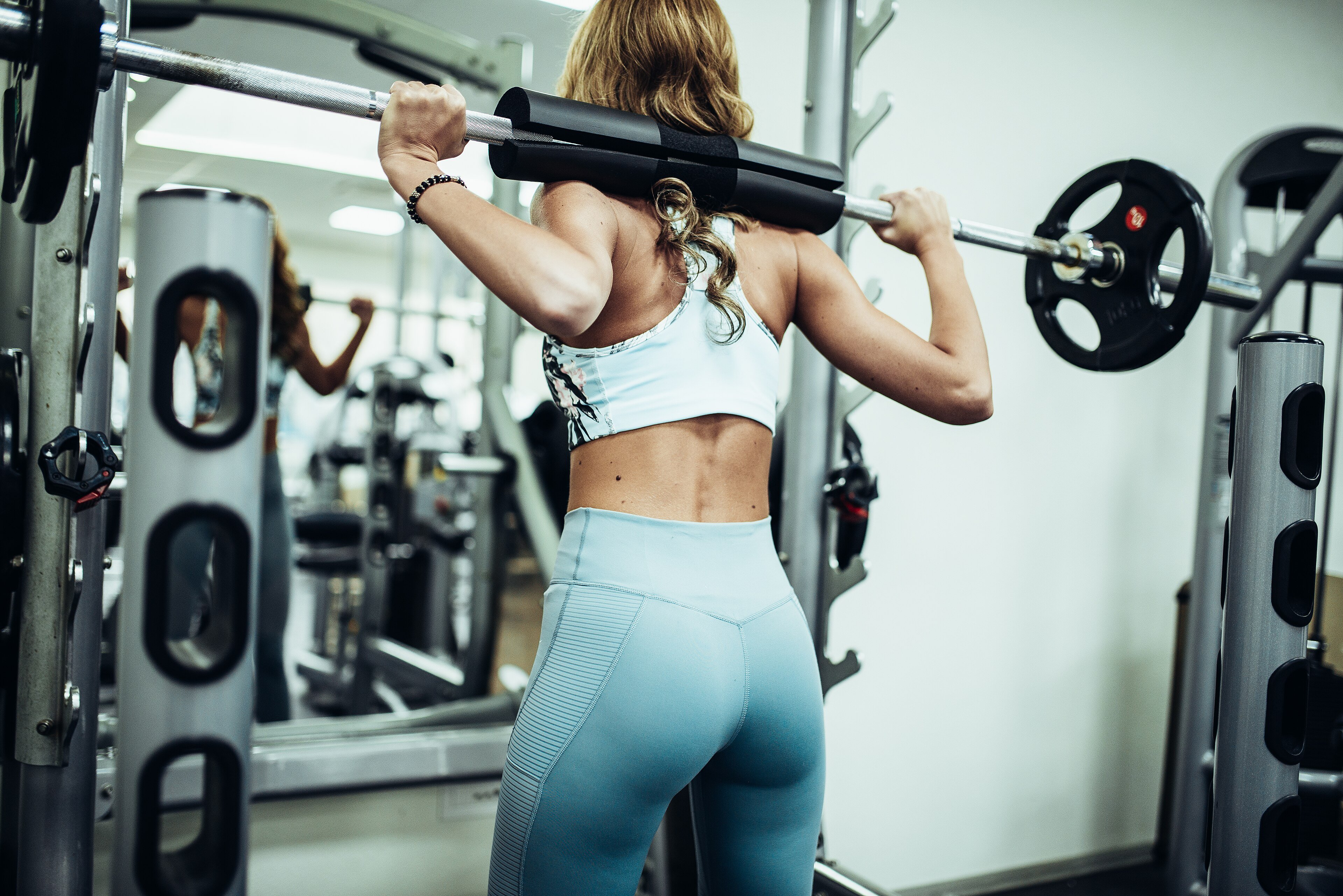
Photo: Nenad Stojkovic / Wikimedia Commons, CC BY 2.0
Do Smith machine squats work your muscles less?
They seem to, at least in one small study. In 2009, researchers in Canada had six people do eight reps on both a Smith machine and a free barbell. They stuck sensors on seven muscles to measure how hard each one worked.
On average, the free barbell squat drew 43% more muscle activity. The biggest gaps were in the inner thigh (49%), the calves (34%) and the hamstrings (26%).
The reason makes sense. On a free bar, your body has to keep the weight balanced. On a Smith machine, the rails do that job for you. Six people is a tiny group, so treat the exact numbers as a hint, not a final answer.
Strength is a different story. A 2005 study tested 32 men and women on both. The women lifted more on the Smith machine squat than with a free bar. For the bench press, everyone lifted more with free weights.
Why do people get hurt on the Smith machine?
From the clip and the replies, three things keep coming up.
The bar path is fixed. One reply put it as an "unnatural plane of movement". Your body does not move in a perfectly straight line when you squat. The rails force it to. If your feet are in the wrong spot, your knees or lower back may take load they are not built for.
There is no way out. On a free bar in a rack, the safety arms catch the weight. On the Smith machine, the stops do the same job. But only if someone sets them.
People lift heavier than they should. Because the machine feels steady, many people pile on more weight than they could handle on a free bar. One person wrote about having a disc in the lower back surgically repaired after a Smith machine squat at half their normal weight. They said they would never touch one again.
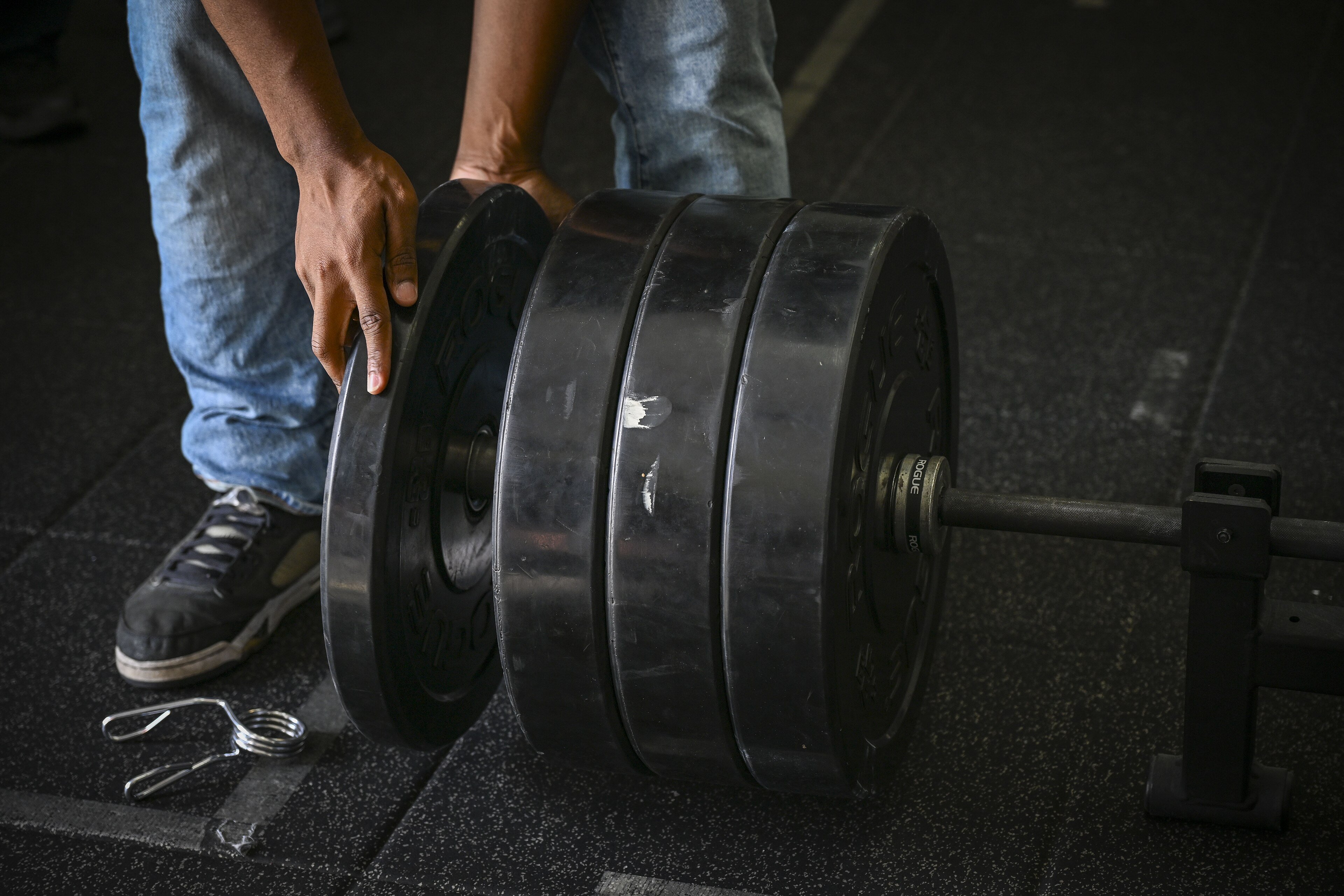
Photo: U.S. Air Force photo by Senior Airman Haiden Morris / Wikimedia Commons, Public domain
So should you stop using the Smith machine?
Not everyone thinks so. Defenders pushed back hard. One wrote: "Every sport is dangerous when doing it wrong." Another blamed the lifters, saying an injury on a Smith machine is your own fault if you skipped the safety stops.
Plenty of coaches agree it has a place. One reply said it is good for presses and hip thrusts and that's about it. Others use it for beginners or for slow, controlled leg work.
If your back already hurts, or you have had an injury, see a physiotherapist or a qualified trainer before you squat on anything.
Recovery matters as much as setup. Sleep is part of it, which is why a man who sleeps 30 minutes a night left so many people stunned. And the gym has its own odd trends, like men trimming their eyelashes.
How do you set up a Smith machine safely?
This is the part that turns the scary clip into a non-event. Do it every time, before the first rep.
- Set the safety stops first. Put them just below the lowest point of your squat. Gym safety guides suggest about 5 to 8 cm (2 to 3 inches) below where the bar sits at the bottom. If you fail, the bar lands on the stops, not on you.
- Test the stops with an empty bar. Squat down slowly. The bar should touch the stops only when you go past your normal depth.
- Place your feet slightly forward. Because the bar cannot move, your feet need to sit a little in front of the bar so your knees and back stay comfortable.
- Start light. Use a weight you could easily lift on a free bar. The machine's steady feel can fool you into going too heavy.
- Learn the hooks. Practise twisting the bar to lock it on the pegs before you load it. A missed hook on a heavy rep leaves the stops as your only backup.
- Never trust a machine with missing stops. If the stops are broken or gone, use another machine or a squat rack with safety arms.
Two minutes of setup is the whole difference. The Bostick case came down to a bar that could fall 21 inches from the floor. Set your stops just under your lowest point, and the worst failed rep of your life ends with a clang and a laugh, not a stretcher.
Sources7
- The original clip of failed Smith machine squats on X (9 Oct 2026)
- Schwanbeck, Chilibeck and Binsted, A comparison of free weight squat to Smith machine squat using electromyography, J Strength Cond Res 2009
- Cotterman, Darby and Skelly, Comparison of muscle force production using the Smith machine and free weights, J Strength Cond Res 2005
- Frontiers in Sports and Active Living (2022), review of Smith machine and free weight squat research
- American Spa, Smith machine lawsuit ends with $14.4 million decision
- Claims Journal, jury awards quadriplegic man in case against Smith machine maker's insurer (Nov 2008)
- Basic-Fit, Smith machine safety information
The week's biggest stories, every Monday
One email. The stories everyone will be talking about, before they do.
Free. One email a week. Unsubscribe anytime.Keep reading
 ViralFortnite player arrested after Epic sent his voice chat to the FBI
 ViralChery rear axle falls off: What we know and how to check your car
 ViralIs Brad Pitt leaving his fortune to Pax? The truth about that quote