Ebola reaches Kenya as a sick man flies home to Nairobi and dies two days later
A Kenyan man who had lived in DR Congo for seven years flew home already sick and died in Nairobi. Here is how far Congo's outbreak has spread, and how worried the rest of us should be.
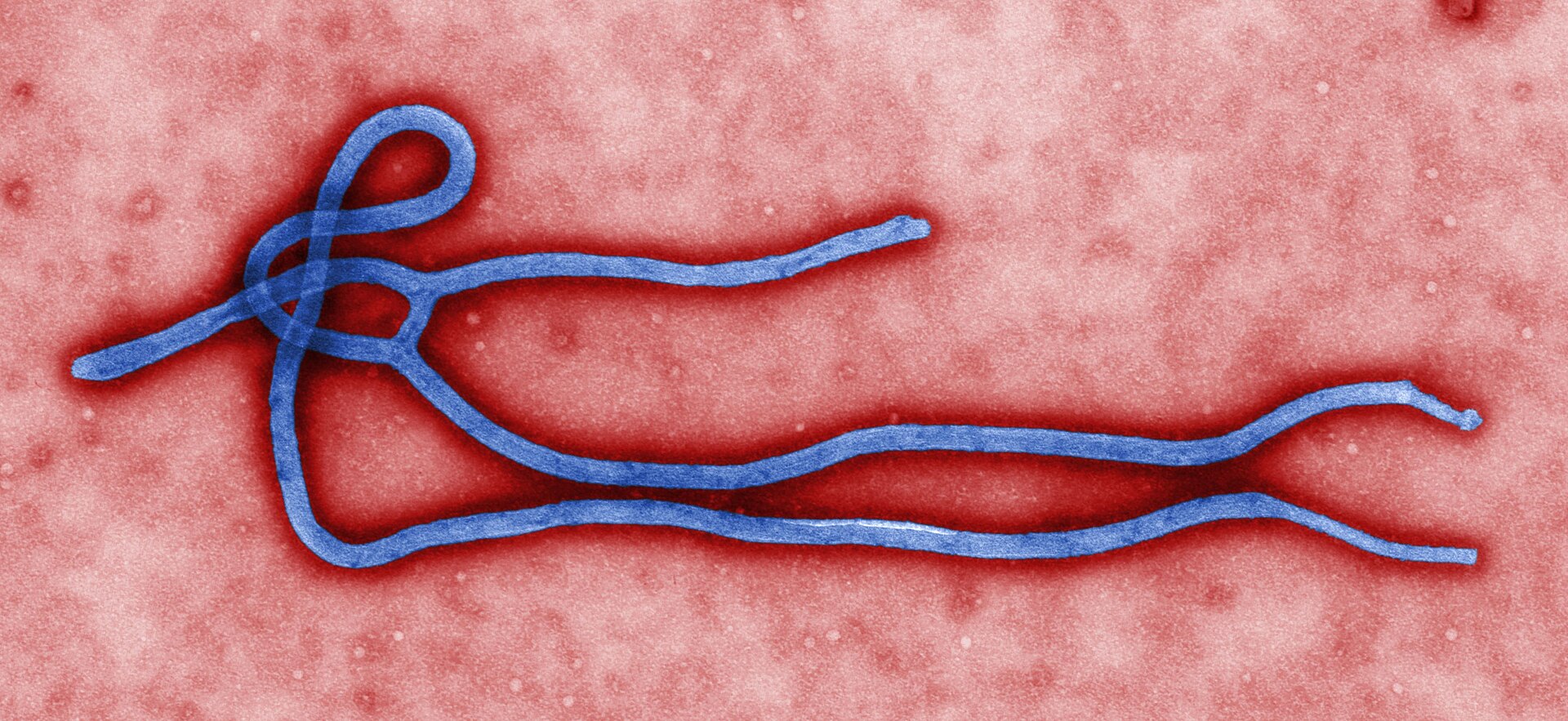
Photo: CDC/Cynthia Goldsmith / Wikimedia Commons, Public domain
- He flew into Nairobi after a month of being sick
- This Ebola strain has no approved vaccine or cure
- Nine vaccinated people caught it, and all nine survived
On Saturday afternoon at 1:10, a Jambojet flight from Kampala landed at Nairobi's main airport. One of the passengers had been sick for about a month.
He was a Kenyan man who had lived and worked in DR Congo for seven years. He had already been treated at several hospitals there. Then he travelled by road into Uganda, boarded a plane in Kampala, and came home.
Screeners at Jomo Kenyatta International Airport flagged him. He was taken to Nairobi Hospital and put in its isolation wing. On Monday night at 11:30, he died.
On Tuesday, Health Cabinet Secretary Aden Duale confirmed what doctors feared. Kenya had its first ever case of Ebola. The man was buried that afternoon under strict safety rules.
Who was Kenya's first Ebola patient?
Officials have not released his name, age or job. What is public is his route and his symptoms. He had fever, chills, crushing tiredness, muscle pain, pain when swallowing and bleeding under the skin.
Tests showed Bundibugyo virus, the same rare type of Ebola tearing through eastern Congo.
Now the hunt is on. Health teams have listed 28 close contacts, mostly relatives and the health workers who cared for him. They are also tracing 23 passengers and four crew from his flight. Everyone at risk stays in quarantine for 21 days, the longest it can take for symptoms to appear.
Duale asked Kenyans not to panic and said "measures are in place to contain the spread of the disease."
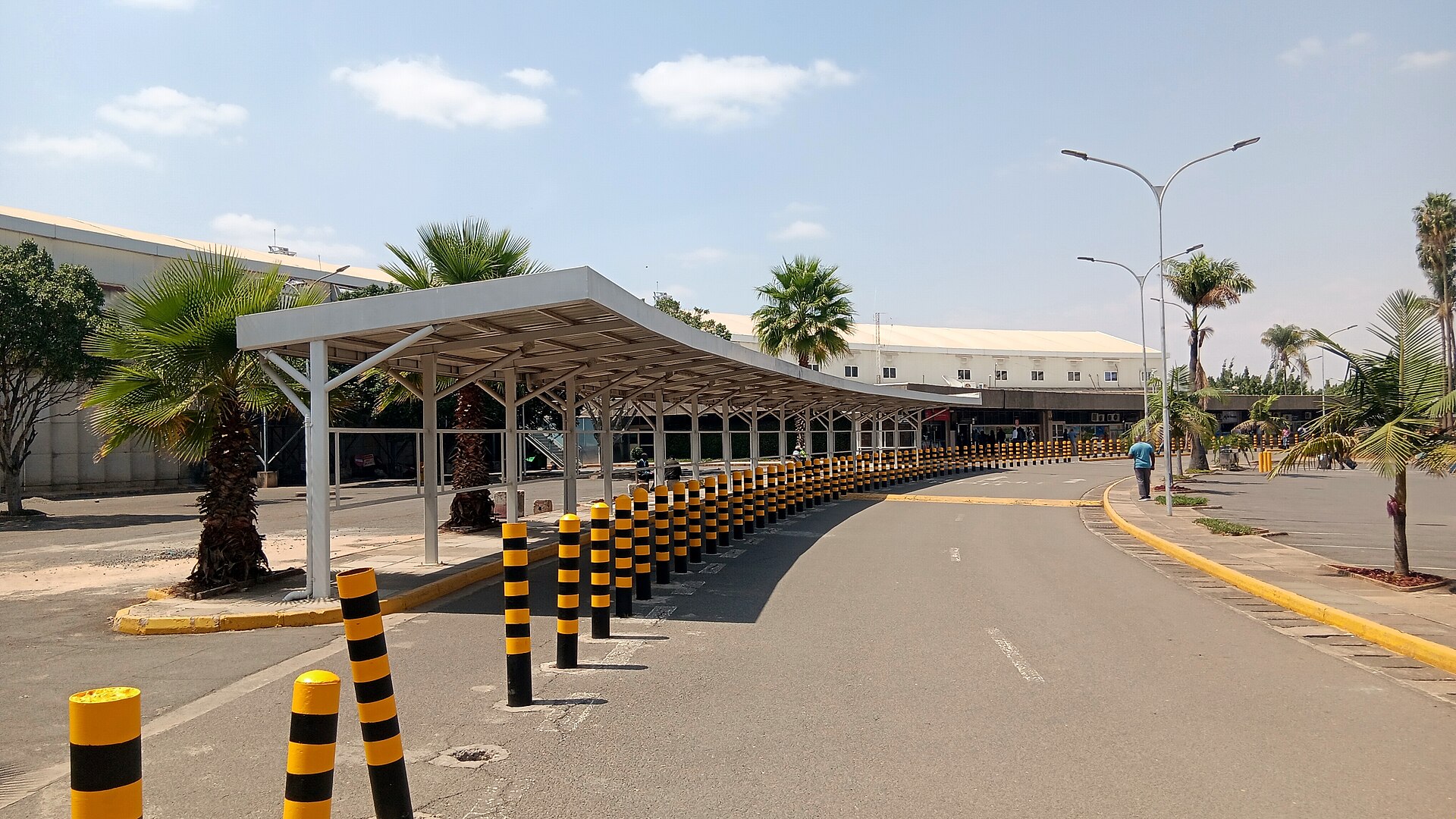
Photo: Bahnfrend / Wikimedia Commons, CC BY-SA 4.0
How big is the Ebola outbreak in Congo?
It is the worst Congo has ever seen. That says a lot, because this is the country's 17th Ebola outbreak.
The first cases were reported in Ituri province in mid-May. By 4 October, Congo had counted 8,603 confirmed cases and 4,148 deaths. At the start of August it had 3,605 cases, so the total has more than doubled in two months.
The virus has now reached seven provinces. The Associated Press calls it the fastest-growing Ebola outbreak ever recorded.
Only the 2014 to 2016 West Africa epidemic was bigger. That one infected more than 28,600 people and killed over 11,000. The WHO warns this one is "far from over."
Which province is Ebola surging in?
Ituri is still the epicentre, with about 6,450 cases. But the fastest growth is now in North Kivu, the province to its south.
At the end of August, North Kivu produced 24% of Congo's new cases. By 2 October that had climbed to nearly 40%, according to Doctors Without Borders, which says the virus is spreading like "wildfire" with new hotspots every week. In the latest daily count, 33 of the 59 new cases came from North Kivu.
It is also the deadliest place to catch it. Doctors Without Borders puts the death rate at 67.6% in North Kivu, against 43.7% in Haut-Uélé.
Fighting makes everything harder. Armed groups operate near the borders with Uganda and Rwanda, and soldiers recently burned an Ebola-hit transit camp in Ituri, sending 19,000 people fleeing.
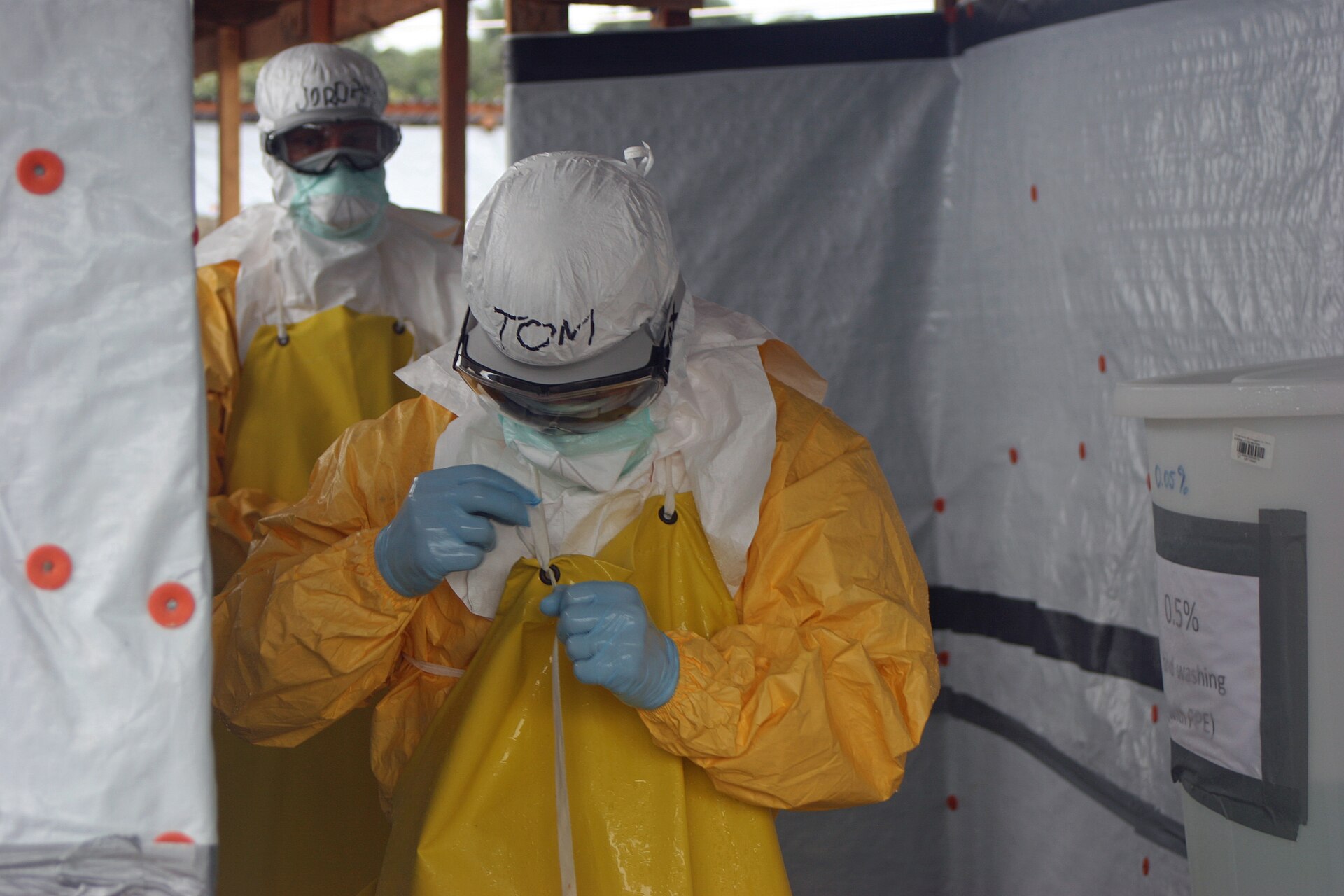
Photo: CDC Global / Wikimedia Commons, CC BY 2.0
How does Ebola spread?
Ebola does not float through the air like flu or Covid. It spreads through direct contact with the body fluids of someone who is sick or has died, such as blood, vomit or semen. Bedding and clothes soiled with those fluids can carry it too.
People are not contagious before their symptoms start, the UK Health Security Agency says. Symptoms appear anywhere from 2 to 21 days after infection.
That is why nurses and families are hit hardest. They wash, feed and hold the sick. It is also why the Kenyans most at risk are the relatives and staff who touched the patient, not the people who walked past him at the airport.
How deadly is Ebola?
On average Ebola kills about half the people it infects, UKHSA says, with past outbreaks ranging from 25% to 90%.
This one sits right in the middle. Congo's own figures work out to about 48 deaths for every 100 confirmed cases. More than 2,200 people have recovered.
Bundibugyo was first found in 2007 in Bundibugyo district, western Uganda, which gave the virus its name. Its two earlier known outbreaks, in 2007 and 2012, each had fewer than 60 confirmed cases. Nobody had seen it spread like this.
Is there an Ebola vaccine or cure?
Not for this strain. The vaccine and antibody drugs that helped end Congo's last big epidemic were built for a different type, Zaire ebolavirus.
There is no approved vaccine or treatment for Bundibugyo, the WHO says. Doctors Without Borders adds that the Zaire antibody drugs do not work against it.
There is real hope, though. In August, Congo received 70,000 doses of Ervebo, the Zaire vaccine, with 20,000 for a trial and 50,000 for frontline workers. By early September about 2,000 health workers had been vaccinated.
The early clues are encouraging. Among confirmed cases whose vaccine history was known, nine people had received Ervebo during an earlier outbreak. All nine survived. None of the 242 people who died had been vaccinated. An Oxford vaccine also started early trials in July, and new drugs are being tested in Congo.
Should people in Africa, the UK and the US be worried?
It is a busy week for disease watchers. In Siberia, a lab worker's mysterious death has sparked a plague scare that reached the White House. Microbiologists have plain answers on how much that one should worry you.
It depends where you live. The WHO rates the risk as very high in Congo, high in Uganda and other neighbouring countries, and low for the rest of Africa and the world.
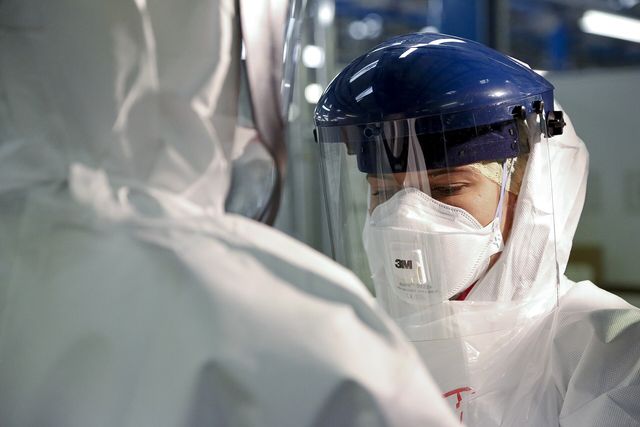
Kenya has been preparing for months. It has trained 4,971 health workers, and the WHO has sent about 1,000 tests and 1,000 protective kits to high-risk counties.
In Britain, UKHSA calls the risk to the population low, and the NHS has specialist units ready. Europe's disease agency puts the chance of the virus reaching the EU as very low.
In the US, the CDC says no case from this outbreak has been found in the country and the risk is low. Americans who were in Congo in the past 21 days cannot board flights to the US.
Rumours have sometimes spread faster than the virus. In Congo, claims that alcohol gives immunity, or that health workers carry the disease, have circulated on WhatsApp. Neither is true.
What does the WHO say about Kenya's case?
WHO chief Tedros Adhanom Ghebreyesus praised Kenya for reporting the case openly and warned against closing borders.
"WHO advises against any restriction of travel to, or trade with, the affected countries based on the currently available information," he said.
WHO and Africa CDC teams are now working with Kenya, Congo and Uganda on tracing, testing and screening.
Can Kenya stop Ebola from spreading?
The odds are on its side. Uganda had 20 cases and two deaths earlier in this outbreak, then shut it down and was declared clear at the end of July.
Kenya caught its patient at the airport, isolated him and drew up a list of every person he touched. Ebola only spreads once someone is visibly ill, so a list like that is exactly how outbreaks are stopped.
The clock started on Saturday. If those 28 contacts and the people on that flight stay healthy until late October, Kenya's first Ebola case will also be its last.
Sources7
How does this make you feel?
The week's biggest stories, every Monday
One email. The stories everyone will be talking about, before they do.
Free. One email a week. Unsubscribe anytime.Keep reading
 WorldA bleeding captain opened the cockpit door and saved his plane
 WorldShould you be worried about the plague in Russia?
 WorldA Siberian plague lab worker died, and Russia won't call it plague