R12.81 of every R30.25 litre you buy isn't petrol at all. Here is who gets it
Taxes, levies, a fund the Auditor-General keeps flagging, and a court ruling about bribes and the sale of the country's emergency oil. This is what sits inside every litre you pay for, and what nobody has fixed.
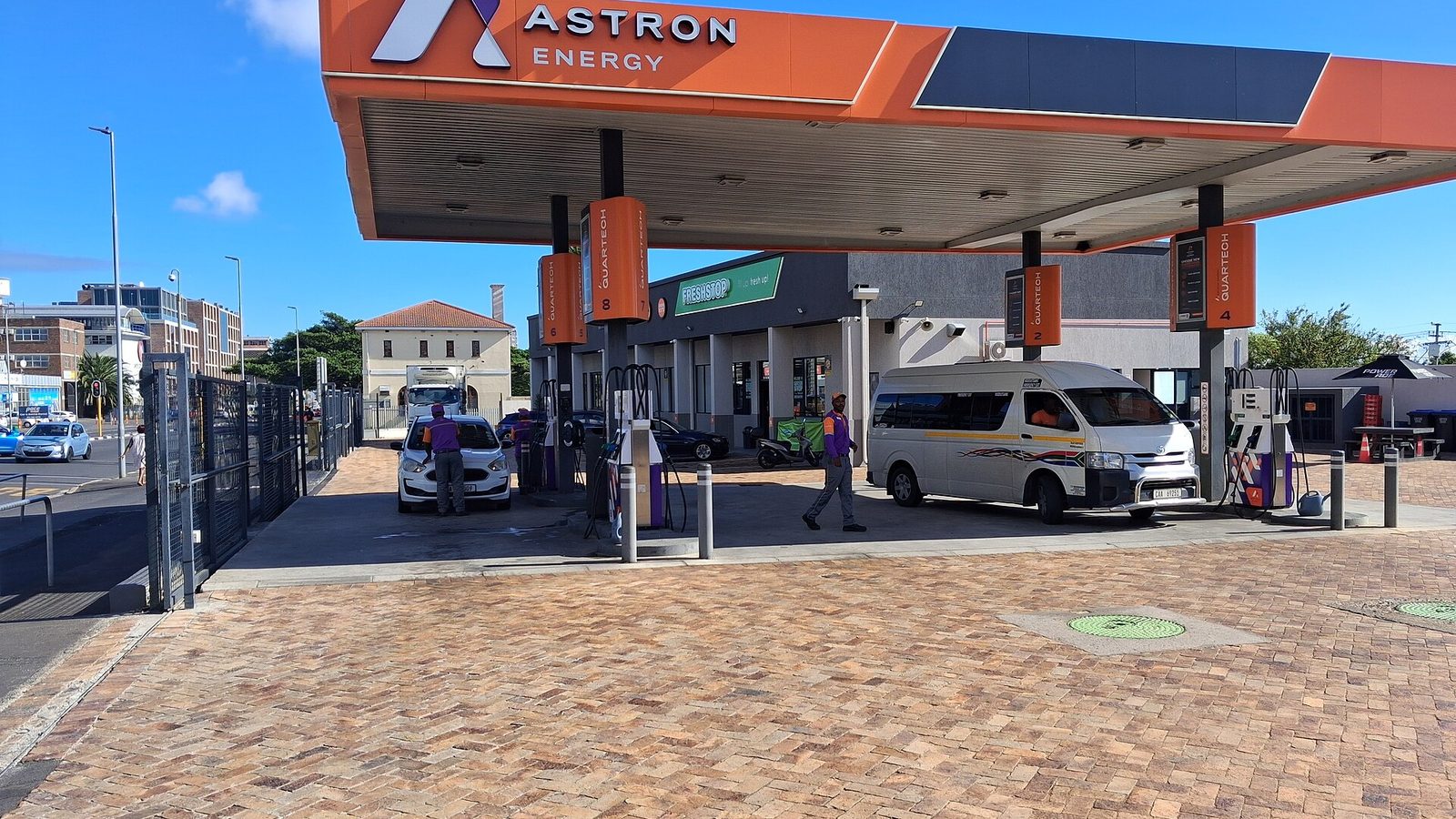
Photo: Axxter99 / Wikimedia Commons, CC BY-SA 4.0
- R7.46 of every litre is tax and levies, before anyone sells you anything
- The Road Accident Fund takes R2.25 a litre and says it is insolvent
- A court found the man who sold SA's oil reserve took bribes
R1,512.50.
That is what it costs from today to fill a 50-litre tank with 95 petrol in Gauteng. In October 2021 the same tank cost R916.50.
On Wednesday, 7 October, 95 unleaded went up by R3.33 a litre to R30.25 inland. It is the first time petrol has crossed R30 in South Africa. At the coast it is now R29.38.
In February this year, the same litre cost R20.10. That is half again in eight months.
The official reason is a war far away. But when you open the government's own price sheet, a big part of the bill has nothing to do with oil at all.
Why is petrol so expensive in South Africa right now?
The trigger is the Middle East. The Department of Mineral and Petroleum Resources says the average Brent crude price rose from $87.89 to $101 a barrel during the month it measured. It blames US and Iran tensions, uncertainty in the Strait of Hormuz, higher shipping costs and falling stockpiles.
Rising world fuel prices alone added R3.29 a litre to the cost of petrol. The rand was a tiny bit stronger, which saved you less than one cent.
Diesel is up too. Wholesale 50ppm diesel inland is now R32.80 a litre, and 500ppm is R31.95. Pumps can charge more on top, because the retail diesel price is not fixed.
So the world price explains the jump. It does not explain everything you pay.
Photo: Axxter99 / Wikimedia Commons, CC BY-SA 4.0
What makes up the petrol price? The full breakdown
The Central Energy Fund publishes the exact recipe for a litre of 95 in Gauteng. Here is October's, rounded to the nearest cent.
| The fuel itself, shipped here | R17.44 | 58% |
|---|---|---|
| General fuel levy and customs | R4.33 | 14% |
| Road Accident Fund levy | R2.25 | 7% |
| Slate levy | R0.88 | 3% |
| Margins and transport | R5.36 | 18% |
| Pump price | R30.25 | 100% |
Margins and transport: R3.20 for the petrol station, R1.25 wholesale, storage and delivery, R0.91 to truck it inland. Source: Central Energy Fund price structure, 7 October 2026.
Add it up and R12.81 of your R30.25 is not fuel. That is 42% of the price.
Of that, R7.46 is tax and levies. That is about a quarter of every litre, and R373 of every 50-litre tank.
Taxes are a fixed number of rand, so their share actually shrinks when oil gets expensive. In February, Treasury's own figures showed fuel taxes were almost a third of the pump price.
What is import parity, and why do we pay it?
Even the "fuel" part has a twist. South Africa does not price petrol on what it costs to make here. It prices it on what it would cost to buy it from refineries in the Mediterranean, the Arab Gulf and Singapore and ship it to our ports. This is called import parity.
That price includes freight, insurance, a 0.3% allowance for fuel lost at sea and harbour fees. For years you paid those costs even on fuel made in South Africa, from Sasol's coal plant at Secunda or local refineries.
In 2006, a Treasury task team said there appeared to be "a discrepancy between the BFP and true import parity prices, resulting in excessive profits for industry players," the Mail & Guardian reported. In August 2007, Treasury decided not to tax those windfall profits. Sasol welcomed the decision.
Today the argument has flipped. Our refineries have closed one by one. A Reserve Bank report cited by BusinessTech says capacity fell from about 720,000 barrels a day to about 250,000 barrels a day. Over 60% of finished fuel is now imported, so those shipping costs are real.
The government asked for comments on a review of the formula in 2018. It said changes would come in 2019. In March 2026, it promised again to "review fuel pricing over the medium term."
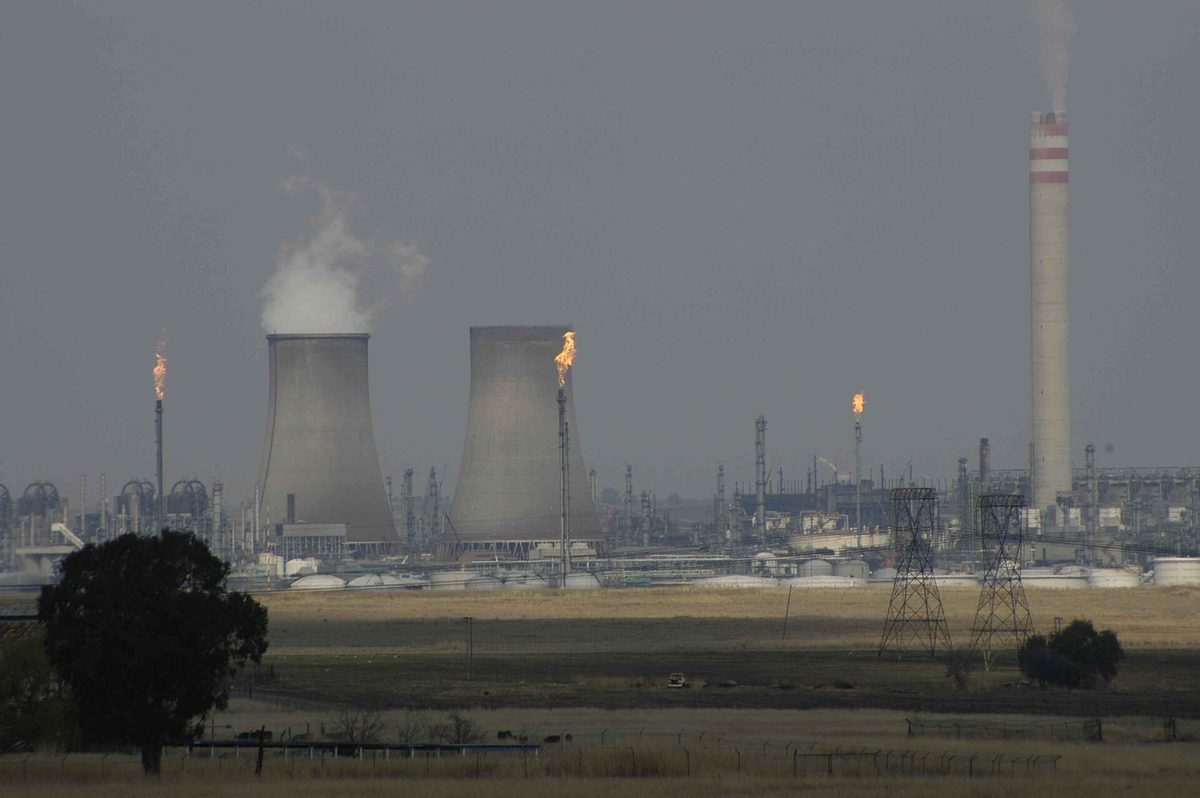
Photo: Horst Vogel / Wikimedia Commons, CC BY 2.0
Where does the fuel levy go?
Not to a roads fund. In a written reply to Parliament, the Minister of Finance said "there is no money received from the fuel levy that is ring-fenced for the maintenance of roads." It goes into the national pot, and a share is passed on to the big metros.
The pot is huge. Treasury expected the fuel levy to bring in R97.3 billion in 2025/26.
How big is that? When the government cut the levy by R3 a litre for one month this April, Treasury said it cost about R6 billion in lost tax. The relief ended in June, and the levy went back up.
Where does the RAF levy money go?
Few drivers notice this line. Every litre carries R2.25 for the Road Accident Fund, which pays people hurt in crashes. On a 50-litre tank, that is R112.50.
In 2023/24, the fund collected R48.6 billion in fuel levies, according to its annual report as reported by BusinessTech.
Yet the RAF told Parliament last year that it is insolvent. The Auditor-General gave it an adverse audit opinion for the third year in a row. Its auditors warned that the fund's real debts to crash victims "may be much higher" than its books show.
The Special Investigating Unit found that 102 law firms received duplicate payments worth more than R340 million. It has recovered R318 million and referred 12 firms to prosecutors. In August 2025, Transport Minister Barbara Creecy dissolved the RAF board for "failing to act in the fund's best interests."
You pay the levy every time you fill up. Whether a crash victim gets paid on time is another story.
What is the slate levy?
The slate is a running tab. When the monthly fuel price lags behind real costs, the gap is written down as a debt. At the end of August, petrol and diesel together owed R10.456 billion on that tab.
So this month the slate levy rose to 87.66 cents a litre. In plain words, you are paying off past months' fuel. That is about R44 a tank.
What happened to South Africa's oil reserves?
In a crisis, a country with oil in the ground can ride out a price spike. South Africa had about 10 million barrels of crude stored at Saldanha Bay for exactly that.
Between December 2015 and early 2016, the Strategic Fuel Fund sold it to traders for $280.8 million.
In 2020, the Western Cape High Court overturned the sales and called the illegalities "serious and pervasive." The Supreme Court of Appeal later dismissed the state's appeal on compensation. Along the way, the courts found:
- The fund's then CEO, Sibusiso Gamede, received R2.6 million from a person linked to one buyer, which the high court found were bribes.
- He also received R20 million in anonymous cash deposits.
- The energy minister at the time "did not apply her mind" before approving the sale.
The court found that Glencore, Vitol and the financier Contango were innocent third parties.
The Central Energy Fund laid a criminal complaint with the Hawks in 2019, the Mail & Guardian reported. We could find no public record of anyone being convicted.
In April 2026, the minister told Parliament the reserve holds 8,052,427 barrels, or about 40 days of the country's refining capacity.
The state oil company has its own record. PetroSA lost R14.6 billion in 2014/15 after a gas field delivered about a tenth of what was promised. Daily Maverick reports the Auditor-General found it technically insolvent by 2020, and a R21-billion contract to rebuild its gas supply later fell apart and ended in litigation.
Photo: Clusteringcoefficient / Wikimedia Commons, CC BY-SA 4.0
What we know, and what we don't
What we know:
- 42% of a litre of 95 is taxes, levies, margins and transport, from the state's own price sheet.
- None of the general fuel levy is ring-fenced for roads.
- The RAF says it is insolvent, and the Auditor-General keeps flagging it.
- A court found the 2015/16 oil sale was unlawful and that bribes were paid.
What we don't know:
- Whether import parity still overcharges drivers today. No new official study has been published.
- Whether anyone will ever stand trial over the oil sale.
- How big the RAF's real debt to crash victims is.
How does South Africa's petrol price compare to other countries?
GlobalPetrolPrices.com, which tracks official prices, put South Africa at $1.80 a litre on 5 October. The world average was $1.48.
- Nigeria: $0.99 (about R16.40)
- United States: $1.23 (about R20.38)
- Botswana: $1.33 (about R21.98)
- South Africa: $1.80 (about R29.82)
Photo: Husskeyy / Wikimedia Commons, CC BY-SA 4.0
What would bring the petrol price down?
Politicians and experts have put options on the table. The EFF wants the fuel levy scrapped for good. AfriForum wants a talk about permanently lowering it. The DA says any relief must be paid for by cutting waste. OUTA wants answers on the strategic reserve.
The government's own list includes a draft rule forcing 60 days of state fuel stocks. The Central Energy Fund also has a plan to rebuild the flooded Sapref refinery in Durban, which it bought for R1, into a 400,000-barrel-a-day plant. No timeline or funding has been made public.
For you, the practical move is timing. Prices change on the first Wednesday of the month. The Central Energy Fund's mid-month numbers, reported by most motoring sites around the 15th, show which way it is going. If they point up, fill up before that Wednesday.
For the bigger picture, our look at whether the Western Cape could break away shows how fed up some South Africans are with how Pretoria spends. And if your budget is already in the red, here is why a bank account can go negative without an overdraft.
What happens to the petrol price in November?
The next adjustment lands on Wednesday, 4 November.
Early estimates based on Central Energy Fund data point to another rise of about R4.58 a litre on 95. That is only a few days of data, and a lot can change by month end. If it held, a litre in Gauteng would cost R34.83.
That would put a full tank at about R1,740.
The war sets the price of the fuel. Pretoria sets the other R12.81. Ten years after South Africa's emergency oil was sold off and a court found bribes behind it, the reserve holds less oil than before the sale, the RAF is still insolvent, and the price review promised for 2019 is still described as "medium term".
On 4 November, watch which part of your litre moves.
Sources15
- Central Energy Fund for DMPR, October 2026 price adjustment and price structure
- South African Government, fuel price adjustment from 7 October 2026
- Supreme Court of Appeal, CEF v Venus Rays Trade (2022), strategic oil sale
- National Treasury, 2026 Budget Review, fuel taxes
- National Treasury, R3 fuel levy relief statement (March 2026)
- Minister of Finance, parliamentary reply on the fuel levy and roads
- PMG, parliamentary reply on strategic fuel reserves (2026)
- EWN, Auditor-General on the Road Accident Fund
- Business Day, RAF admits insolvency
- GroundUp, SIU on duplicate RAF payments
- Mail & Guardian, Treasury windfall tax document (2006)
- Mail & Guardian, Hawks and the crude oil bribes
- Daily Maverick, PetroSA
- BusinessTech, refining capacity (Reserve Bank report)
- GlobalPetrolPrices.com, country comparison (5 October 2026)
How does this make you feel?
The week's biggest stories, every Monday
One email. The stories everyone will be talking about, before they do.
Free. One email a week. Unsubscribe anytime.Keep reading
 PoliticsThe farmer the world won't believe
 PoliticsThe Cape independence push Pretoria can't ignore
 PoliticsKaroline Leavitt left the podium and the gloves came off