Banks take R31 billion a year from South Africans just for touching their own cash
A new Reserve Bank report puts a price on cash. The bill is bigger than most people think, and taking out R1,000 costs anything from R2 to R40 depending on where you stand.
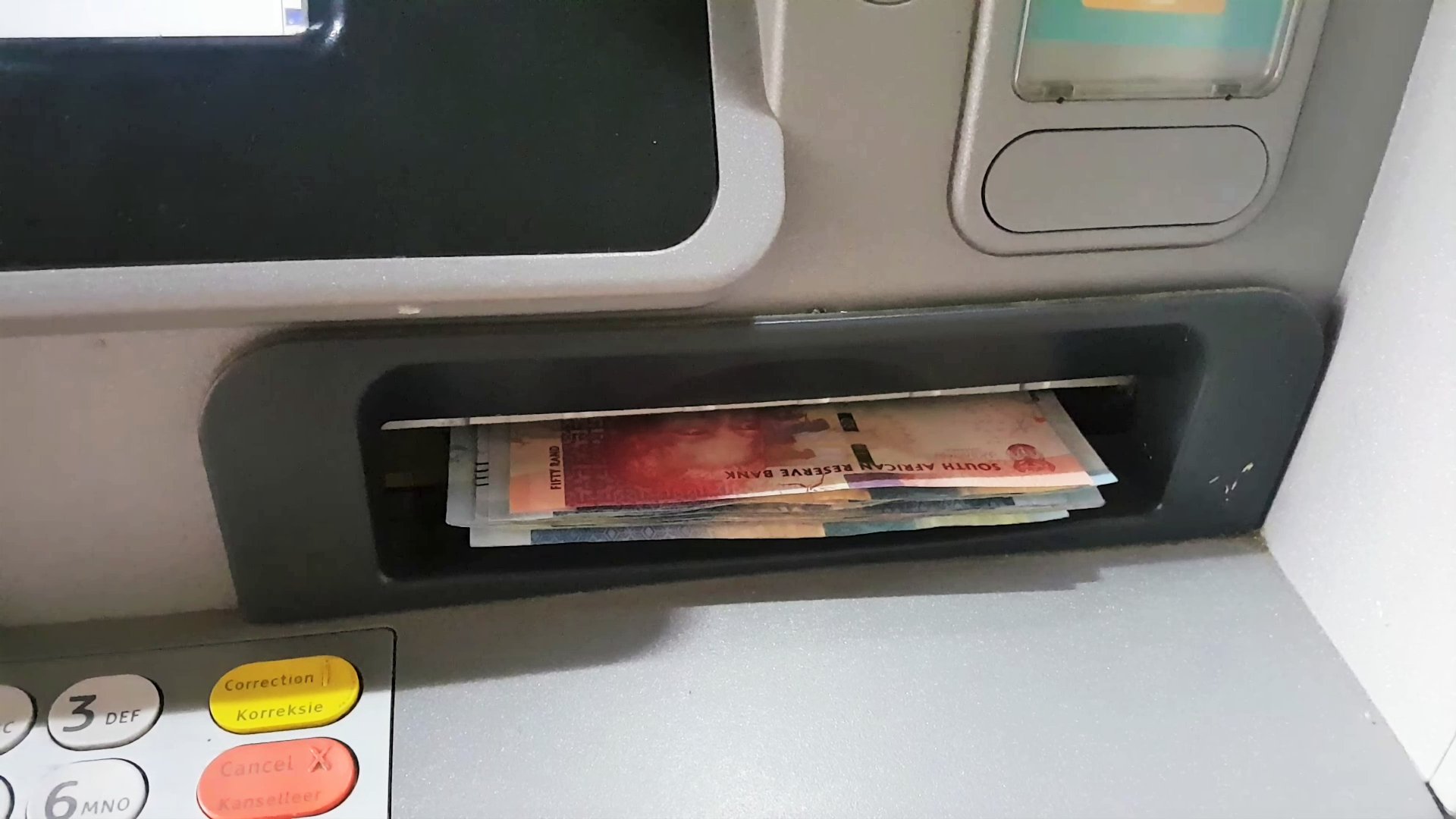
Photo: Tasneem Jaffer / Wikimedia Commons, CC BY 4.0
- The bill works out to about R85 million every single day
- Taking out R1,000 costs R2 at one till and R40 at another bank's ATM
- One Soweto resident says cash is safer in a pocket than in the bank
R31 billion.
That is what South Africans pay each year just to put their own cash into a bank and take it out again. Spread across everyone aged 15 and older, it comes to about R657 each.
BusinessTech reported the number on 11 October, and its post about it was seen nearly 47,000 times. The figure comes from the South African Reserve Bank's Cost of Cash Industry Report 2026, as BusinessTech describes it. Here is what is in the report, how we got to R657, and what your own bank charges.
How much does cash cost South Africans in total?
The report puts the full yearly cost of using cash at R88.5 billion. Fees are only part of it. Time and travel count too.
| Time lost queuing and travelling | R27.80 | 31% |
|---|---|---|
| Withdrawal fees | R17.70 | 20% |
| Everything else | R17.20 | 19% |
| Deposit fees | R13.30 | 15% |
| Transport to reach cash | R12.50 | 14% |
| Total a year | R88.50 | 100% |
Source: SARB Cost of Cash Industry Report 2026, as reported by BusinessTech (11 Oct 2026). Everything else is the remainder, including R3.9bn that businesses pass on and R1.3bn in lost interest.
Withdrawal charges take R17.7 billion, or 20% of the total. Deposit charges take R13.3 billion, or 15%. Those two together are the R31 billion.
Direct costs, which means fees plus the cost of getting to the cash, add up to R43.5 billion. That is 49% of the whole bill. Another R27.8 billion, or 31%, is time. The report counts R19.5 billion for transactions and queuing and R8.3 billion for travel.
More than 45% of the total cost, the report says, is about physical access and time. In plain words, money is not the only thing you lose. Your afternoon goes too.
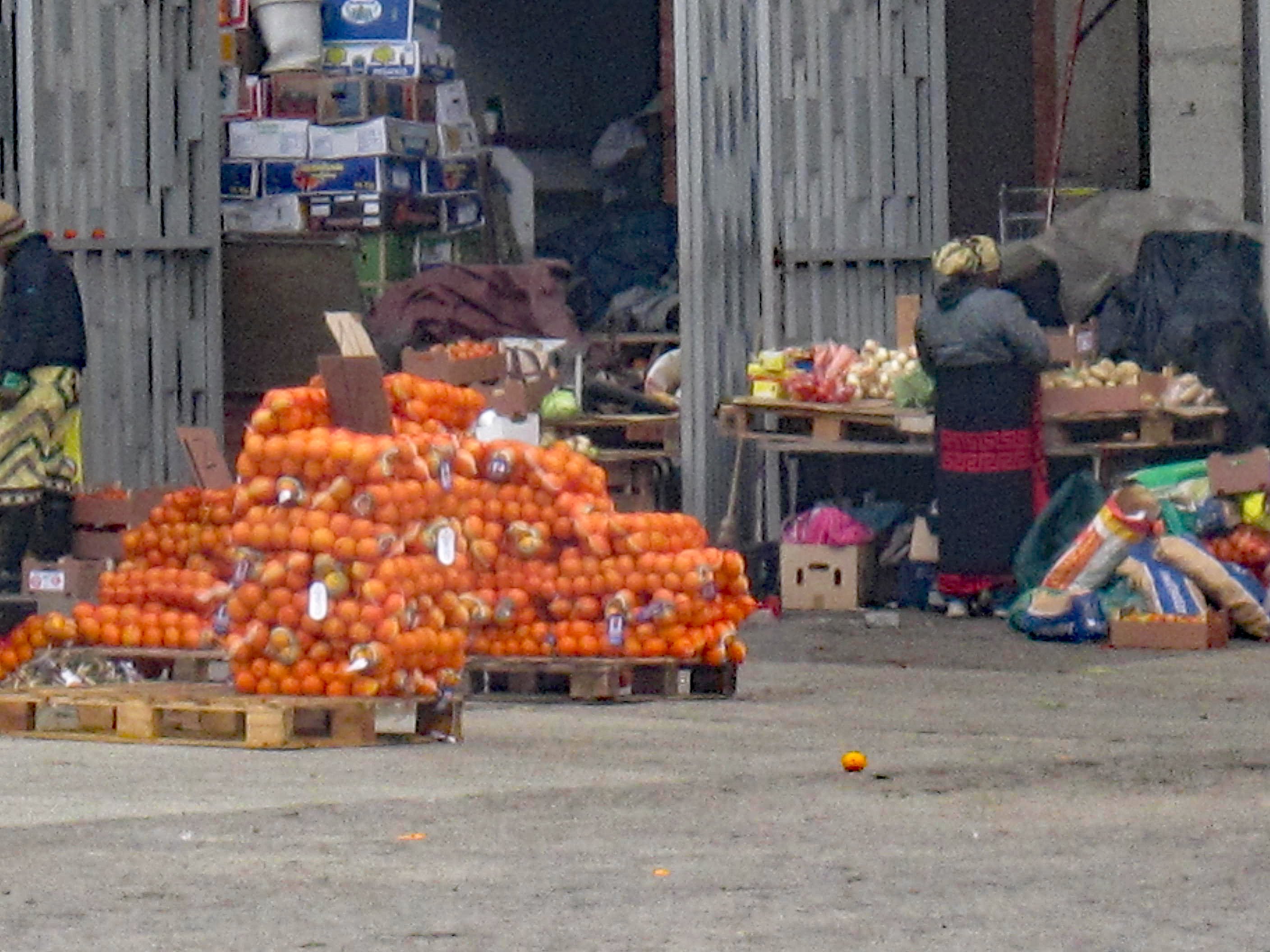
Photo: Nolabob / Wikimedia Commons, CC BY-SA 4.0
Is the R31 billion really R657 per person?
Here is the working, so you can check it.
Stats SA's 2026 mid-year estimates put South Africa's population at 63,522,380. Of those, 16.2 million are children. The rest are 20.7 million young people (15 to 34), 19.7 million adults (35 to 59) and 6.8 million people aged 60 or older. Add the last three and you get 47.2 million people aged 15 and older.
R31 billion divided by 47.2 million is R657. That is about R55 a month, or roughly R85 million every day across the country.
We used 15 and older because that is how Stats SA groups its numbers. Some of those people have no bank account, so for people who do bank the true figure is higher. The full R88.5 billion works out to R1,875 per person aged 15 or older.
What does your bank charge to take out R1,000?
Fees differ a lot, and so does the place you stand when you take the money out. We took the published rates from BusinessTech's August 2026 comparison and Capitec's 2026 fee guide, and worked each one out for R1,000. Checked on 12 October 2026.
| Bank and account | Own ATM, R1,000 | Another bank's ATM, R1,000 | Till point cash-back | Deposit R1,000 cash |
|---|---|---|---|---|
| Capitec (Global One) | R10 | R10 | R2 | R14 |
| FNB (Gold Aspire) | R28 | R40 | R3 | Not confirmed |
| Standard Bank (MyMo plus) | R26.50 | R26.50 | Free | R18* |
| Absa (Gold Value) | R27 | R37 | Free | Not confirmed |
| Nedbank (Migoals plus) | R10 | R20 | R2 | Not confirmed |
| TymeBank (GoTyme Everyday) | No own ATMs | R10 | R3 | Not confirmed |
| Discovery (Gold transaction) | No own ATMs | R33.50 | R2 | Not confirmed |
*Standard Bank lists cash deposits at an ATM at R1.80 per R100, which is R18 per R1,000. We could not confirm the other deposit rates from 2026 guides, so we left them out rather than guess. Withdrawal figures are the core fee only. Your account bundle may include free transactions. Rates change, so check your own bank's pricing guide.
Notice the gap. The same cash costs R2 at a Capitec till point and R40 at another bank's ATM on an FNB Gold Aspire account. That is 20 times more for the same notes.
Capitec's guide also lists cash deposits at R1.40 per R100, at its ATMs and at supermarket tills. A R3,000 deposit therefore costs R42. One person replying to the BusinessTech post said it cost close to R45 to put in R3,000, which is about right.
Why are people so angry about it?
The replies were short and sharp. "How is this right?" one asked. Another called it "daylight robbery". Someone wanted to know why South Africa has no state bank, like Brazil.
One person said they bank with FNB and with a second bank. They claim FNB charges heavy fees on debit orders and the other bank charges nothing. We have not checked that claim. It is what the person says.
Another wrote that they regret withdrawing from an Absa ATM with an FNB card. The table shows the bite. FNB lists R12 plus R2.80 per R100 when you use another bank's machine, which is R40 on R1,000.
A few people pushed back. One said you can negotiate your fees and do everything online. That works if you have a smartphone, data and a regular salary. It does not help much if you are paid in cash.
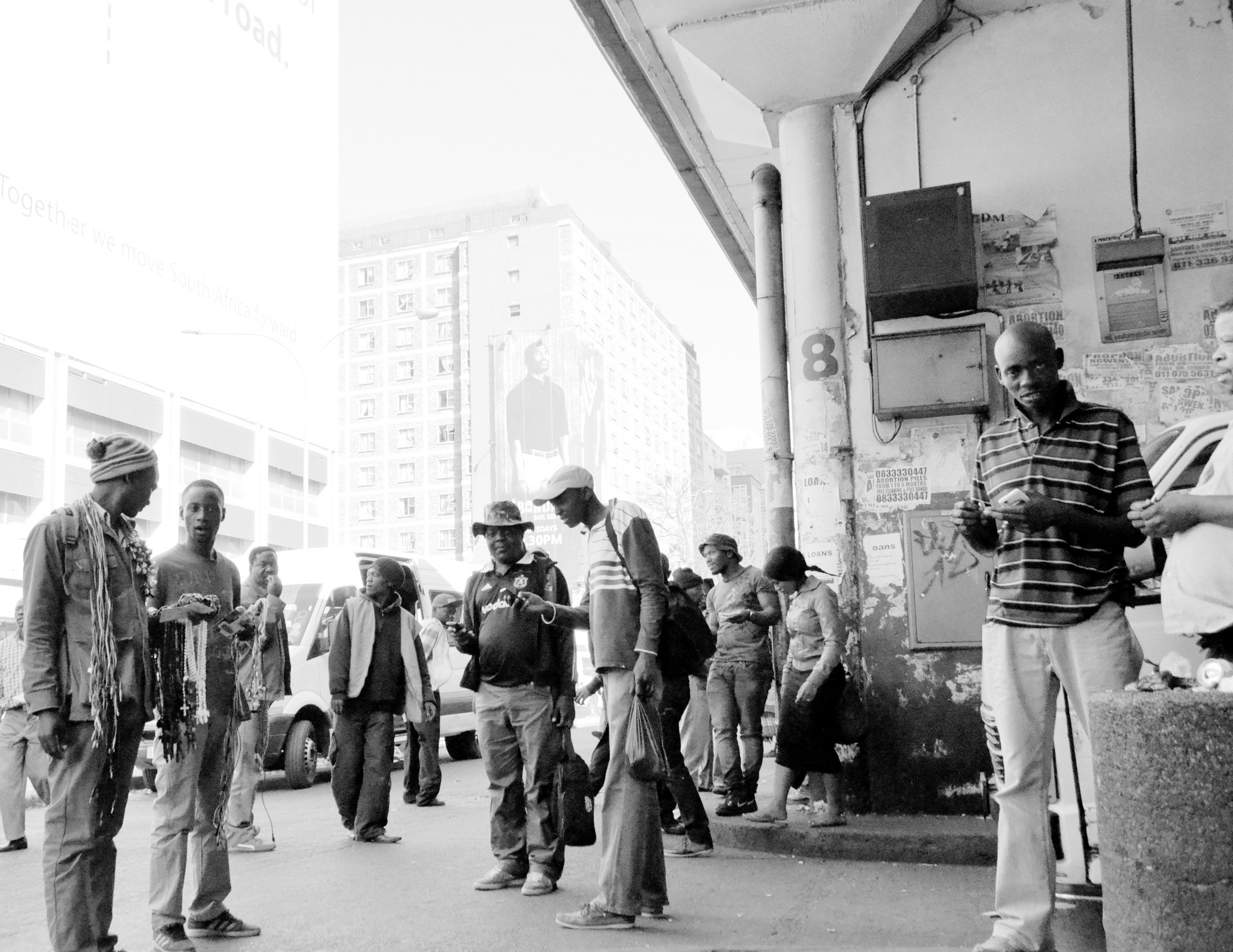
Photo: Lonelocust7 / Wikimedia Commons, CC BY-SA 4.0
Why do some people keep their cash at home?
A Soweto resident quoted in the BusinessTech article said they would rather pull their money out of the bank. They fear the bank will take a cut, or a debit order will go through and the money will be gone. In their words, it is safer in a pocket or a secret hiding place.
That view makes sense when you look at who gets paid in cash. Business cash-handling costs passed on to consumers add up to R3.9 billion, or 4% of the total. Informal traders carry R2.3 billion of that. Formal retailers carry R1.6 billion.
Think of a spaza shop owner or a taxi rank vendor. Their customers pay in notes and coins. To use that money they must queue, travel and pay fees at both ends. The report puts R12.5 billion on transport alone, the cost of just getting to where the cash is.
Then there is lost interest. Cash in a pocket earns nothing, and the report puts that loss at R1.3 billion a year.
So it is a trap. Cash feels safe because no fee can reach it. But hiding it costs interest, and turning it back into bank money costs fees. The trap is tightest for the people who can least afford it.
Photo: Ejvanbelle / Wikimedia Commons, CC BY-SA 4.0
How can you pay less to use your cash?
Four things cut the bill, based on the rates above.
Ask for cash-back at the till. Capitec lists supermarket till withdrawals at R2. Standard Bank and Absa list them as free on the accounts in the table. A R500 cash-back on a grocery shop can cost less than a coffee.
Use your own bank's ATM. Look at the FNB and Absa rows. Using another bank's ATM adds R10 to R12 on top of the percentage fee. If you must use another bank's machine, take out more in one go instead of making three small trips.
Pay by card or phone when you can. Every rand you spend by tap is a rand you never withdraw. That skips the fee, the queue and the trip.
Compare the price per R1,000 before you pick an account. Capitec charges R10 per R1,000 at any ATM. Others charge a percentage plus a flat extra. Work out your usual withdrawal and compare.
Deposits work the same way. A rate charged per R100 punishes big deposits. At Capitec's R1.40 per R100, R1,000 costs R14 but R10,000 costs R140.
We have written before about how banks catch customers out. See our report on customers whose FNB accounts went negative, our explainer on why a bank balance can drop below zero and the story of the bank that offered a quarter back after a fraud.
What happens to R31 billion in tiny slices?
Go back to the number. R31 billion a year is about R85 million a day. It does not leave in one big theft. It leaves in slices of R14, R18 and R28 that nobody stops to notice.
A Soweto resident has already done the sum without a calculator. Every rand kept out of the bank is a rand that cannot be charged. Meanwhile the national bill ticks on at roughly R85 million a day, every day of the year, Sundays included.
Sources6
- BusinessTech on X (11 Oct 2026)
- BusinessTech, South Africans charged R31 billion to keep and access their own money (11 Oct 2026)
- BusinessTech, What banks in South Africa charge to let you access your own money (5 Aug 2026)
- Capitec personal banking fees 2026
- Standard Bank personal banking pricing 2026
- Stats SA, Mid-year population estimates 2026
The week's biggest stories, every Monday
One email. The stories everyone will be talking about, before they do.
Free. One email a week. Unsubscribe anytime.Keep reading
 MoneyRed Bull paid Christian Horner £100 million after sacking him. Every figure from the accounts
 MoneyDrug company gifts change prescriptions, a 93-study review finds
 MoneyNetflix is reported to be cutting about 5% of its staff, with a decision due before earnings