His father-in-law was shot in front of his family. Now this farmer says the world is ignoring South Africa's farmers
Leon Lotz survived three attacks on his farms and lost his father-in-law to another. His story has reignited the fight over farm violence in South Africa, and over who is counting the dead.
Photo: Oggmus / Wikimedia Commons, CC BY-SA 3.0
- Police stopped publishing farm murder numbers in 2007
- One farmer says he survived three attacks on his own farms
- The US has taken in thousands of white South African refugees
Leon Lotz had just driven 600 kilometres home with a racehorse in the trailer. Minutes after he walked through the door, the phone rang. It was his mother-in-law, screaming that they had shot her husband.
Then the line went dead.
His wife, his two daughters and his 16-year-old son were in that farmhouse. Leon was 600 kilometres away, with no way to reach them.
He told the story in a nearly two-hour interview with Tucker Carlson that aired on 30 September. Back home it set off a fierce argument. For many farmers, it put a face on something they say they have lived with for decades.
Who is Leon Lotz?
He's a horse breeder and farmer from the Karoo, and a former soldier. He didn't inherit his land. By his own account he worked as a farrier, shoeing horses, and saved his earnings in a tin until he could buy his first farm after Nelson Mandela was released.
He says he has survived three attacks on his own farms. He showed the scars on camera. One is a deep stab wound in his leg. The other is on his chin, from the night he says he caught men slaughtering his family's cattle and they turned on him.
Staying safe isn't cheap. He says security now costs him around R20,000 a month.
What happened on the night of the attack?
In 2010, eight armed men attacked his in-laws' farm and killed his father-in-law, according to South African coverage of the interview. Leon says the old man had just come home from surgery and was shot in the stomach in front of his grandson.
Leon says the men held a gun to his son's head while they decided whether to shoot him too. He says they assaulted his mother-in-law and raped his wife, while his three-year-old daughter lay hidden under a cover to keep her quiet.
He says only one of the eight was ever caught, and that police told the family the man had killed 23 people. By Leon's account, he was sentenced to life.
Leon says his wife never recovered. She fell ill in the years that followed and later died, and he says doctors linked her illness to the trauma. With no working hospital nearby, he says, he drove her 890 kilometres to Cape Town for treatment every two months for more than three years.
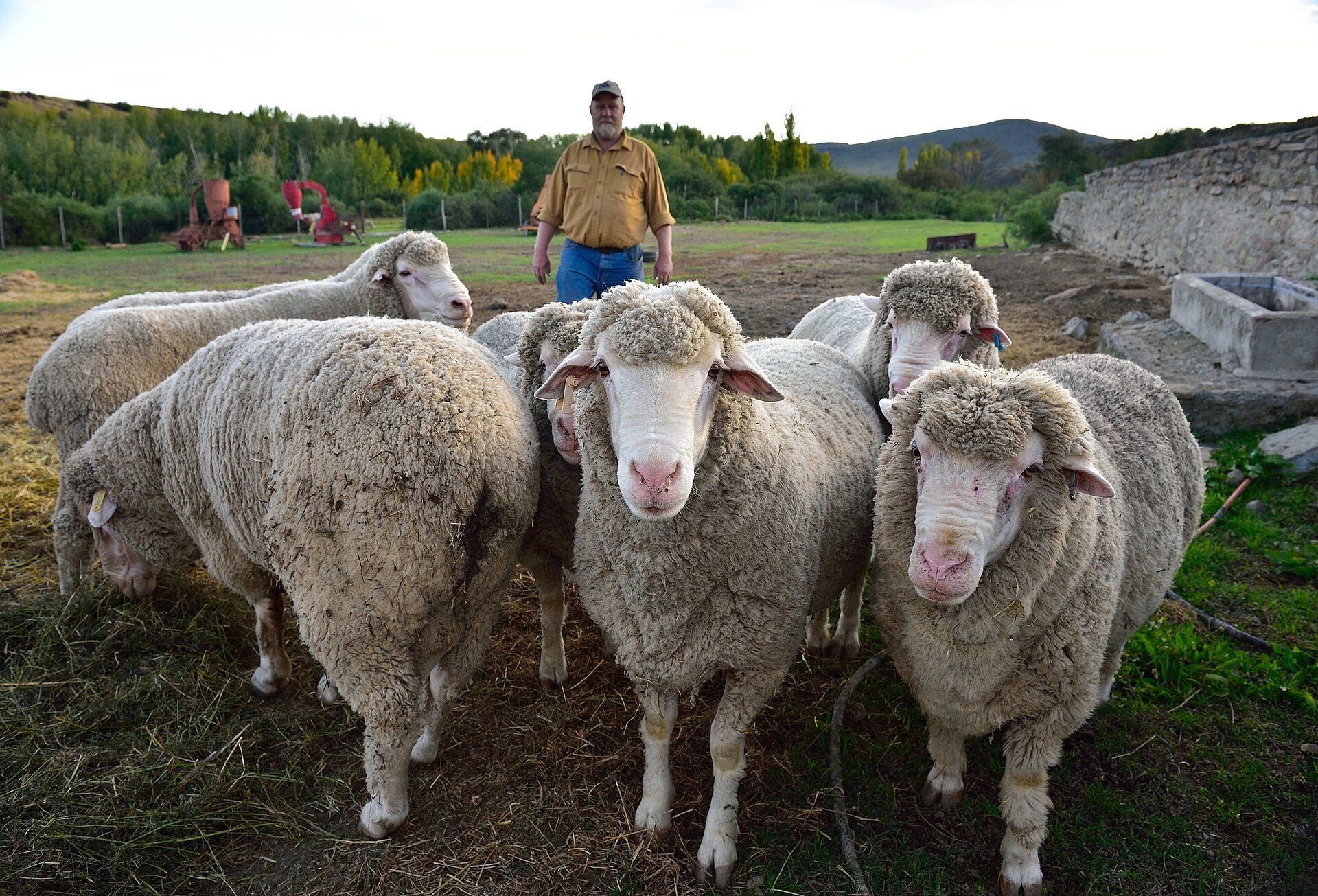
Photo: South African Tourism / Wikimedia Commons, CC BY 2.0
How often are South African farms attacked?
There is no official answer. South Africa's police stopped publishing farm murder figures in 2007, so farmers' own groups do the counting.
The Rural Safety Statistics Group counted 143 farm attacks and 16 murders in the first ten months of 2025. That's about one attack every two days, up from 121 attacks over the same months a year earlier. Gauteng had the most, followed by Mpumalanga, North West, Limpopo and the Western Cape.
The danger isn't new. A 2012 study by the South African Institute of Race Relations found farmers were two to three times more likely to be murdered than the average South African.
Why are farm attacks so violent?
In September 2026 AfriForum, an advocacy group for Afrikaner rights, published a report on 47 farm attacks between 2019 and 2025. It found the same pattern again and again.
Attackers often used torture to make victims say where the safe or the guns were kept.
Does anyone check the official numbers?
Leon says the problem starts with the paperwork. He says death certificates of farm murder victims he knows give unnatural causes as the cause of death, and that he had to argue with officials before his father-in-law's certificate recorded a gunshot wound.
The figures that do come out don't match. AfriForum counted eight farm murders from October to December 2024, according to a report on the dispute. Police data for the same three months showed one farm owner murdered.
The government says farm murders are part of South Africa's wider crime problem, not a campaign against any race, and it rejects the word genocide that some farmers and the interview's title use. The police minister said in May 2025 that the two farm owners murdered in early 2025 were Black.
Farmers have one reply. Police haven't published a farm murder count since 2007, so there is no way to check.
What is "Kill the Boer"?
It's a struggle-era chant, and Julius Malema, leader of the opposition Economic Freedom Fighters, still sings it at rallies. "Boer" means farmer in Afrikaans.
AfriForum took the song to court and lost. An Equality Court found in 2022 that it was not hate speech, the Supreme Court of Appeal agreed in 2024, and the Constitutional Court declined to hear the case in March 2025.
Malema did face a judge for something else. In April 2026 he was sentenced to five years for firing a rifle at a 2018 party rally. Leon's point is about who gets protected. He says a farmer who points even a toy gun at someone can expect to be arrested on the spot.
Photo: Bernard DUPONT / Wikimedia Commons, CC BY-SA 2.0
Can the government take farms without paying?
Under the Expropriation Act, signed in January 2025, the state can pay nil compensation in certain cases, such as land that is abandoned or held only for speculation. The law applies to all land, whoever owns it.
Leon fears it won't stop there. He bought his farm with money he earned shoeing horses, and he says he now expects to lose it for nothing.
Why did America get involved?
On 21 May 2025, Donald Trump dimmed the lights in the Oval Office and played a video of Malema singing the chant to President Cyril Ramaphosa, live on camera. Billionaire Johann Rupert and golfers Ernie Els and Retief Goosen were in the room. Rupert told Trump, "We need Starlink at every little police station." Ramaphosa said the speeches were opposition views, not government policy.
The US had already cut aid to South Africa in February 2025, citing race-based discrimination. The first 59 Afrikaner refugees landed on 12 May 2025. Questions about them came up in White House briefings under Karoline Leavitt, who has since swapped the podium for Fox News. For the current year the US set its entire refugee cap at 7,500, and 6,665 of the first 6,668 people admitted were white South Africans.
What is Washington doing now?
In September 2026 Secretary of State Marco Rubio announced visa restrictions on anyone complicit in uncompensated land seizures or race-based discrimination. He called it only the first step.
The diplomats changed too. Washington expelled South Africa's ambassador, Rasool, in March 2025. In April 2026 South Africa named Roelf Meyer as its new ambassador, an appointment widely praised at home.
Is Leon Lotz leaving South Africa?
Some Afrikaners have built their own answer. Orania, a small Afrikaner town founded in 1991 on the Orange River, runs its own affairs. In the Western Cape, a bigger movement wants a vote on leaving South Africa altogether.
Leon is staying put. He says his children don't want to leave, and neither does he. He calls South Africa a beautiful country and says farmers like him are the ones who feed it, growing enough to export even without the subsidies farmers get elsewhere.
He wants to farm in peace and to be believed. And he says South Africa's farmers didn't get their land for free, so they won't give it up for free.
How does this make you feel?
The week's biggest stories, every Monday
One email. The stories everyone will be talking about, before they do.
Free. One email a week. Unsubscribe anytime.Keep reading
 PoliticsPetrol broke R30 a litre. We followed the money
 PoliticsThe Cape independence push Pretoria can't ignore
 PoliticsKaroline Leavitt left the podium and the gloves came off