A radioactive "guided missile" for cancer just passed a Phase 3 trial. Is this the big one?
The internet asked one question in a hurry: Did we just cure cancer? The honest answer is no, and the real story is still a big one.
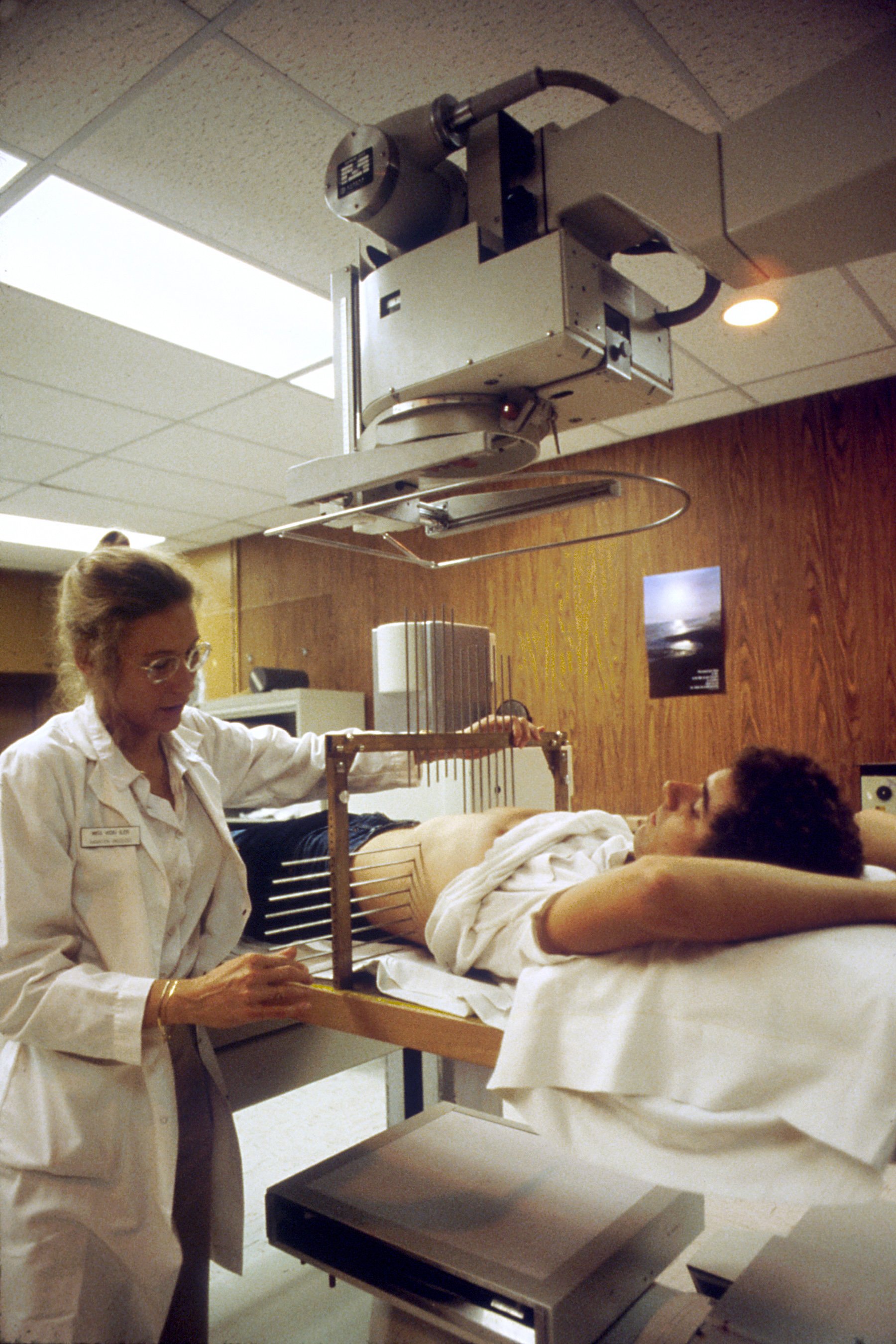
Photo: Linda Bartlett (Photographer) / Wikimedia Commons, Public domain
- A radioactive atom rides a peptide straight into tumours
- It is the first Phase 3 win for this kind of drug
- Breast cancer trials are already running
A drug that sends radiation straight into cancer cells has just passed a Phase 3 trial.
Phase 3 is the final and biggest test before a medicine can go to regulators. News of the result went round the internet on 13 October. One post on X said a radioactive peptide had "just succeeded" and passed 1.2 million views.
The replies came fast. "Did we just cure cancer?" "What's the catch?" "Is it a pill or what is it?" One person wrote "Get this to the pope asap."
Let's go through them one by one.
Did we just cure cancer?
No. And the company has not said that.
On 12 October 2026, Bristol Myers Squibb announced the result for a drug called RYZ101. The drug was made by RayzeBio, a company Bristol Myers owns. The trial is called ACTION-1.
The drug did what the trial was built to test. Patients on RYZ101 saw their cancer progress more slowly than patients on standard treatment. Doctors call this progression-free survival. It means the time before the tumours start growing again.
That is not a cure. It is more time with the cancer held back. For people with a hard-to-treat cancer, more time is a very big deal.
What actually went into the patients?
Think of a guided missile.
RYZ101 has two parts. The first is a small protein piece called a peptide. It is shaped to lock onto a spot on the outside of certain cancer cells. The spot is called SSTR2.
The second part is the warhead. It is a radioactive atom called actinium-225. The peptide carries it through the blood and parks it against the tumour.
 Read nextChrista Pike takes her first steps as Texas executes a man
Then the atom decays. It fires out an alpha particle, which is a heavy, high-energy blast of radiation. The blast travels only a tiny distance, so it hits the cancer cell it is stuck to and does far less to the tissue around it. In the cell it snaps both strands of the DNA, and the cell dies.
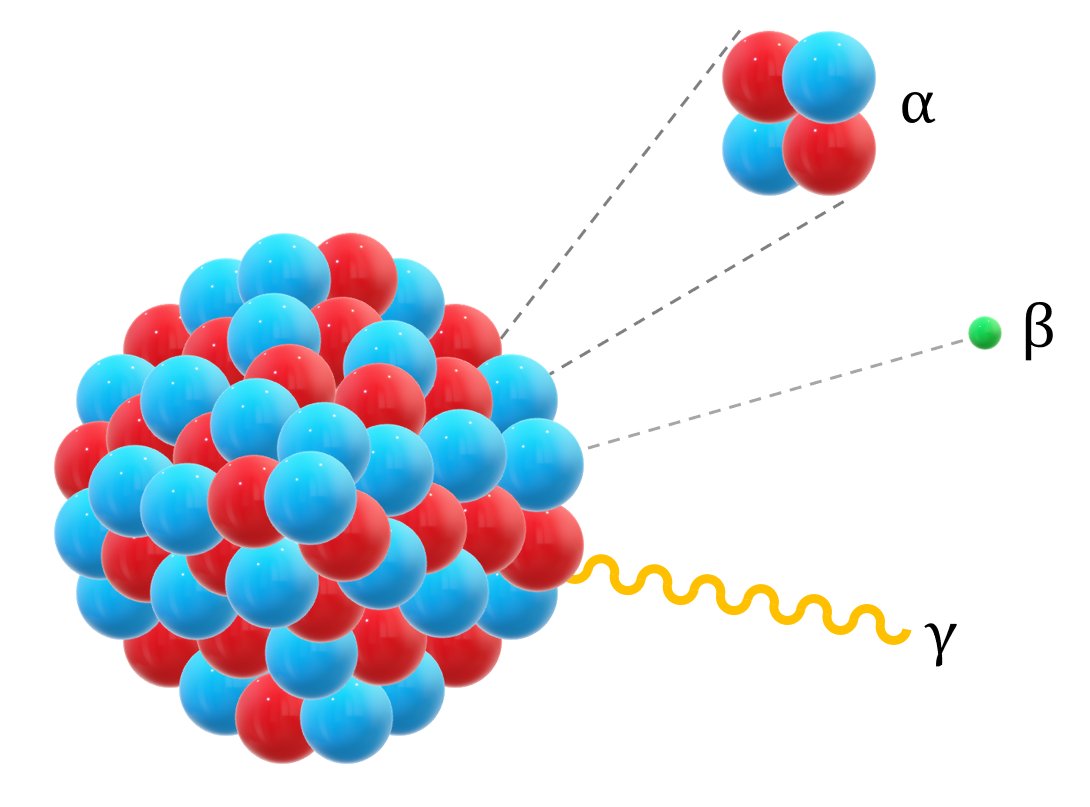
Photo: Kailogical / Wikimedia Commons, CC BY-SA 4.0
Is it a pill or what is it?
It is not a pill. RYZ101 is given as an infusion, which means it goes into a vein through a drip. Drugs like this belong to a group called radiopharmaceuticals. The name is a mouthful. It just means a medicine that carries radiation to where it is needed.
Doctors have used a milder version for years. It uses an atom called lutetium-177, and it gives off a weaker kind of radiation called beta. The new trial asked a sharp question. What happens to patients whose cancer kept growing even after that treatment?
Which cancers does it work on?
For now, one. The trial covered patients with advanced gastroenteropancreatic neuroendocrine tumours, or GEP-NETs. They grow in the gut and pancreas.
GEP-NETs are rare. About 18,000 people are diagnosed in the US each year, and fewer than 200,000 are living with them. The SSTR2 spot the drug locks onto sits on 80 to 90 percent of these tumours.
Everyone in the trial had already tried lutetium-177 and run out of road. Half of them got RYZ101. The rest got standard care, a choice of other drugs picked by their doctor.
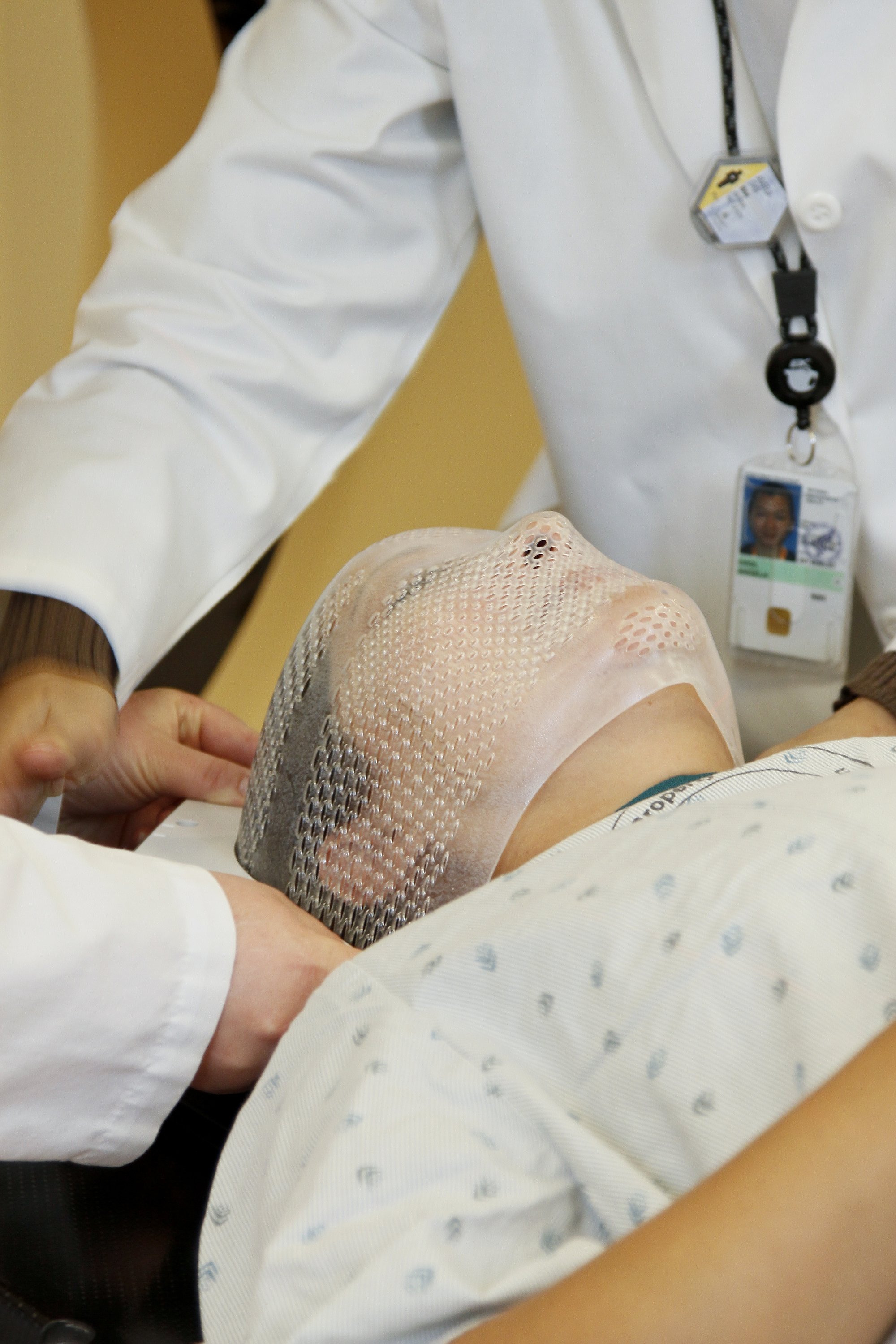
Photo: Daniel Sone (Photographer) / Wikimedia Commons, Public domain
Why is this a first?
Because no drug in this family had ever passed a Phase 3 trial before.
The company says these are the first Phase 3 results for an alpha-isotope targeted drug in any disease. Many labs have tried to turn alpha radiation into a medicine. Alpha particles pack a punch, but the atoms are hard to make and hard to handle. This is the first big randomised trial to show one working.
The table below gives the timeline.
| Date | What happened |
|---|---|
| 2023 | ACTION-1 starts, with RYZ101 against standard care |
| August 2026 | The US FDA gives RYZ101 Orphan Drug Designation |
| 12 October 2026 | Interim analysis meets its main goal |
| Still to come | Full results at a medical meeting, and talks with the FDA |
| Still to come | Overall survival, with patients still being followed |
Orphan Drug Designation is a status the FDA gives to medicines for rare diseases. It can speed up the road to approval.
What's the catch?
There are a few, and the company is open about them.
 Trending nowPetrol broke R30 a litre. We followed the money
The first is that no numbers are out yet. The press release says the improvement was "statistically significant and clinically meaningful." It does not say by how many months. Until the full data is shown, nobody outside the trial knows how big the gain is.
The second is that the result is an interim one. The team looked early, at a planned point, and the drug had already won. Patients will keep being followed to see whether they also live longer. That answer is not known yet.
The third is safety. The company says it matched what was already known about the drug. An earlier small study in 17 patients found no serious side effects linked to the treatment. A big trial is a tougher test, and the full safety data will matter.
The last catch is time. The next step is talks with the FDA about a possible application, and medicines need approval before doctors can prescribe them. How drug money can shape the way medicines are tested and sold is its own story, and we looked at it in our piece on pharma gifts to doctors.
Two doctors are quoted in the announcement. Dr Amreen Husain is the chief medical officer at RayzeBio. Dr Simron Singh of Sunnybrook was the principal investigator on the trial.
Can a patient get it today?
Not yet. RYZ101 is not approved anywhere, so it can't be prescribed outside a trial.
That is why the replies asking for it to be rushed to a sick relative, or to the Pope after his recent surgery, hit a wall. Nobody can say what any one patient will be offered. The same care is why trials are watched so closely, as in this vaccine trial that drew heavy criticism.
Which cancer is next in line?
This is the part that makes the whole thing buzz.
The drug is not only being tried in the gut. RYZ101 is also in early trials for HR+ metastatic breast cancer. That is the most common type of breast cancer once it has spread.
The tool is the same. A peptide finds a target on the cancer cell and drops an actinium atom against it. If breast cancer cells can be found the same way, the same guided missile could one day be pointed at a cancer that millions of people live with.
It is early days, and nobody can promise that. But the first big proof is now on the table. A radioactive atom has held a cancer back in a Phase 3 trial, and the lab that made it has already sent it after breast cancer.
Get the stories that hit your pocket
Petrol, SARS, Eskom, grants and the news everyone is talking about. One short email every weekday at 6am.
Free. One email each weekday. Unsubscribe anytime.Sources5
Keep reading
 ViralHarry watched Leicester Tigers with a beer while some fans booed him on the big screen
 ViralArmed men, gloves and a sleeping house in Valhalla, Pretoria. Why the dog sleeps inside
 ViralThree women shot dead at a Boxer hearing in Eshowe, gunman still on the run