A vaccine built from your own tumour just cut cancer's return by 42%
Every dose is one of a kind, built from a single patient's own cancer cells. In the biggest trial of its kind, that idea just worked.
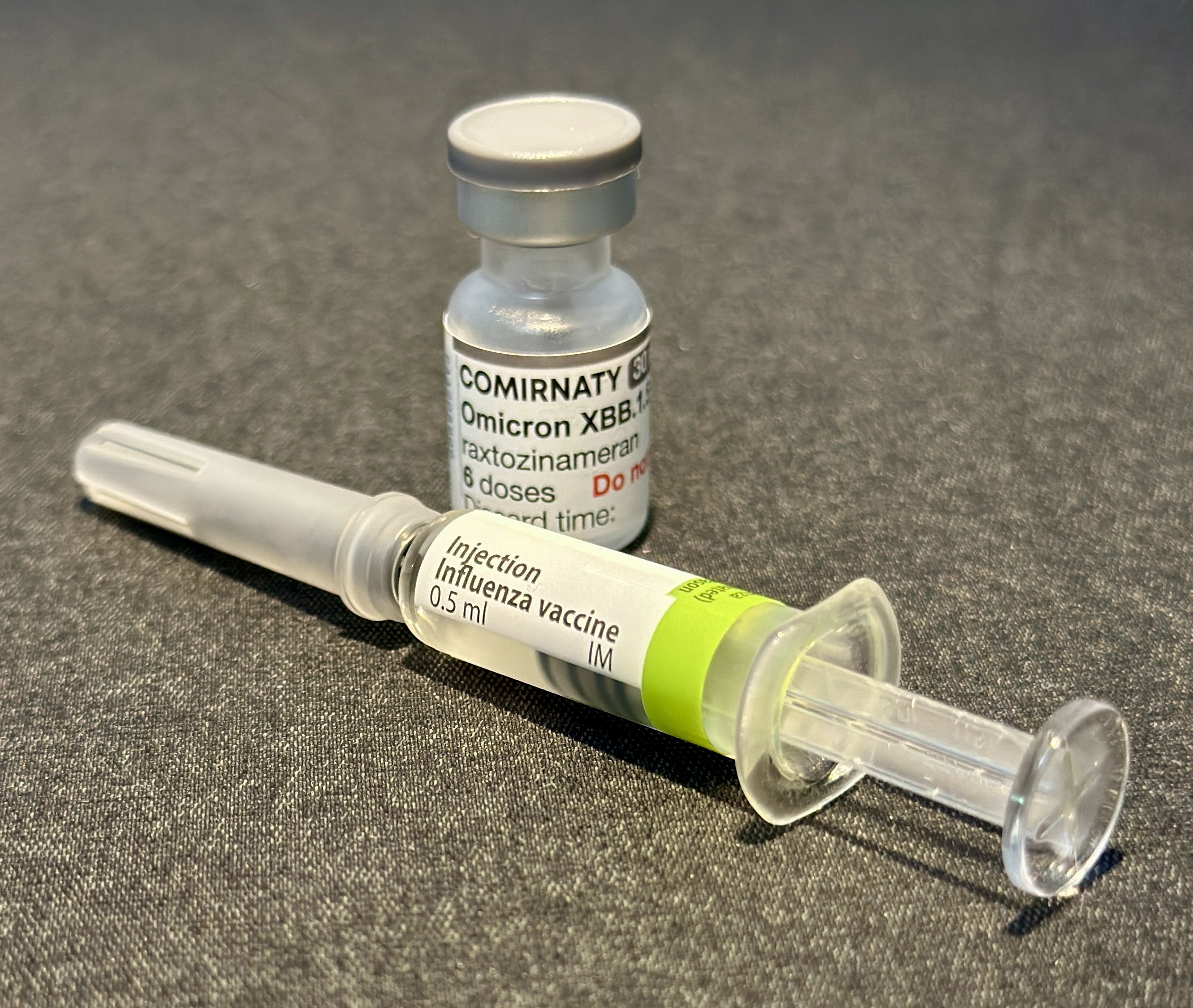
Photo: Whispyhistory / Wikimedia Commons, CC BY-SA 4.0
- A vaccine made only from one patient's own tumour, no two doses alike
- 1,137 patients showed a 42% lower risk of the cancer coming back
- The same vaccine is now being tested in lung, kidney and bladder cancer
42%.
That is how much lower the risk of melanoma coming back, or killing the patient, was in the biggest trial yet of a cancer vaccine built from each patient's own tumour. The trial ran on 1,137 people. Moderna and Merck, the companies behind it, say no two doses in the whole trial were the same.
The results were presented on 22 October 2026 at the European Society for Medical Oncology Congress, and have been accepted for publication in the New England Journal of Medicine. Professor Georgina Long, the Melanoma Institute Australia scientist who led the trial, called it "a foundational shift" in how cancer is treated. She said it is "the coming together of technology, our biological understanding of cancer and the immune system, and the courage to take this idea into the clinic."
How much does this actually cut the risk of melanoma coming back?
Every patient in the trial had already had their melanoma cut out by surgery, but were still at high risk of it coming back. All of them kept taking Keytruda, the immune drug already given after melanoma surgery. Two out of every three patients also got the new vaccine, called intismeran autogene, alongside it.
Two years later, 82% of the patients who got the vaccine were alive with no sign of melanoma, against 70% of the patients who only had Keytruda. That 12-point gap is where the 42% figure comes from, a 42% lower risk of the cancer returning or the patient dying, for the group that got the vaccine. The vaccine group also had a 38% lower risk of the cancer spreading to a new part of the body.
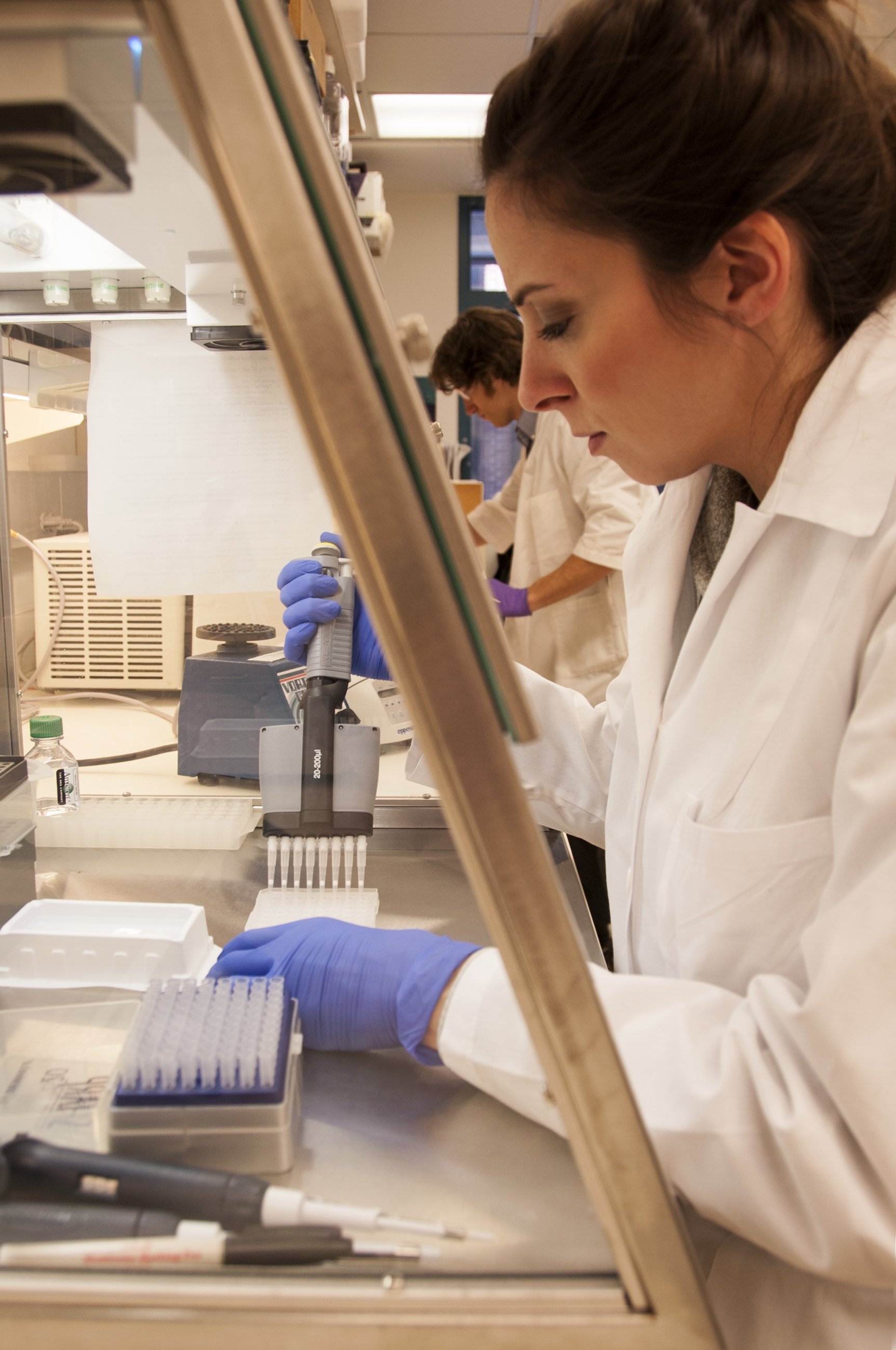
Photo: The U.S. Food and Drug Administration / Wikimedia Commons, Public domain
How do doctors turn your own tumour into a vaccine?
This is the part most headlines skipped. It is not one vaccine made in bulk and given to everyone, like a flu shot. Every single dose is built from scratch, out of one patient's own cancer, and nobody else's.
 Read nextJake and Callum Robinson and Carter Rhoad: Three men guilty in Mexico
Surgeons take a sample of the tumour when it is cut out, plus a blood sample from the same patient. A lab reads the DNA in both samples side by side, hunting for the mutations that show up only in the tumour and not in the patient's healthy cells. An algorithm built by Moderna and Merck then picks out up to 34 of those mutations, the ones most likely to catch the immune system's attention.
| Step | What happens | Time it takes |
|---|---|---|
| 1. Biopsy | Surgeons remove the tumour and take a blood sample | Same day as surgery |
| 2. Sequencing | A lab reads the DNA of the tumour and compares it to healthy cells | A few days |
| 3. Picking targets | An algorithm selects up to 34 mutations found only in the cancer | A few days |
| 4. Manufacturing | Moderna builds that one patient's vaccine at its plant in Norwood, Massachusetts | A few weeks |
| 5. Injection | The finished dose is shipped to the clinic and given as a shot | Same day it arrives |
Because every dose starts from zero, two patients with the exact same type of melanoma can end up with two completely different vaccines. That is also part of why nobody has put a simple price tag on it. Industry estimates for this kind of personalised vaccine run well over $100,000 a dose, though the companies have not published a public price, since it is still not approved for ordinary patients outside a trial. Once a drug like this does reach the market, the small gifts and trips that quietly change what doctors prescribe can become their own story.
How long has this vaccine actually been in the works?
The 42% figure did not come out of nowhere. It is the result of almost a decade of trials that kept growing.
| Date | Milestone | Patients |
|---|---|---|
| 2018 | Moderna and Merck agree to develop the vaccine together | - |
| 2019 | The first trial with Keytruda begins, called KEYNOTE-942 | 157 |
| Dec 2022 | First results: Vaccine plus Keytruda cuts recurrence or death risk by 44% | 157 |
| Feb 2023 | US regulators grant the combination "breakthrough therapy" status | - |
| Apr 2023 | European regulators grant it PRIME scheme status | - |
| 2023 | A much bigger trial begins, called INTerpath-001 | 1,137 |
| Oct 2026 | Phase 3 results: 42% lower risk of recurrence or death | 1,137 |
It is also, the companies say, a double first. No mRNA-based cancer treatment, and no vaccine built from a patient's own tumour, has ever posted a positive result in a trial this large before.
Photo: National Institute of Allergy and Infectious Diseases (NIAID) / Wikimedia Commons, Public domain
Who is the scientist who led the trial?
Professor Georgina Long is the medical director of the Melanoma Institute Australia, and was named joint 2024 Australian of the Year for her work on melanoma. She told reporters the INTerpath-001 result "has not been achieved before in the history of cancer drug development."
 Trending nowBootlegger data leak: The locked dashboard that was never locked
Long has spent years pushing immunotherapy combinations for melanoma, a cancer Australia has one of the highest rates of in the world. Moderna's chief executive, Stephane Bancel, called the result "a defining moment" for the companies' cancer vaccine programme, which began as a side project running alongside their COVID-19 vaccine work.
Could this work on other cancers too?
Melanoma was the test case because it responds unusually well to the immune system once it is given a nudge. Moderna and Merck are now running the same approach, built from each patient's own tumour, in non-small cell lung cancer, in a skin cancer called cutaneous squamous cell carcinoma, in kidney cancer and in bladder cancer. None of those trials has reported results yet.
If even one of them works the way the melanoma trial did, it would land in a market already crowded with experimental options. Other labs are chasing cancer with completely different weapons, including a radioactive drug now being tested against a hard-to-treat tumour type in its own late-stage trial. This vaccine stays a one-off product. Every patient's dose is remade from scratch, so there is never a batch sitting on a shelf waiting for the next person.
When could a patient actually get this?
Nobody can book an appointment for it yet. Moderna and Merck say they are "engaging with regulatory authorities" on the strength of the Phase 3 data, but no filing date or approval date has been announced. The vaccine is still only available inside a clinical trial.
That slow, careful path matters, because not every vaccine trial moves cleanly. One hepatitis B vaccine trial under consideration for West Africa has drawn fresh questions over consent and oversight before it even starts. None of that has happened here. This vaccine has no price list and no sales team, only a result from one very large trial.
For now, the number that matters is 42%, and the fact that it came from a treatment built one tumour at a time. Long's team is already running the next trials. If lung, kidney or bladder cancer respond the way melanoma did, doctors may one day treat the removal of almost any tumour as the first step in printing a vaccine against it.
Get the stories that hit your pocket
Petrol, SARS, Eskom, grants and the news everyone is talking about. One short email every weekday at 6am.
Free. One email each weekday. Unsubscribe anytime.Sources7
- Merck press release, INTerpath-001 Phase 3 results (22 Oct 2026)
- Daily Mail, Professor Georgina Long and the trial (Oct 2026)
- AJMC, Merck and Moderna's cancer vaccine cuts melanoma recurrence risk by 42%
- OncLive, FDA breakthrough therapy designation (Feb 2023)
- OncLive, EMA PRIME scheme designation (Apr 2023)
- Moderna, how individualised neoantigen therapies are made
- Merck press release, Phase 3 trial in non-small cell lung cancer
Keep reading
 World491 days in a drainage pipe, then a drone lifted him out
 WorldBrent crude hits a five-month high after a drone strike near Saudi Aramco's Shaybah oilfield
 WorldWhy do Kim Jong Un death rumours keep coming back, explained