Five strips of coastline could become the most valuable land on Earth after AI
California, central Chile, the Mediterranean, the Western Cape and southern Australia share one rare climate. If AI makes work optional, the money may follow.
- Only five places on Earth share this exact weather
- Foreign buyers in the Algarve pay about 25% more than locals
- Cape Town nearly ran out of water, and buyers still poured in
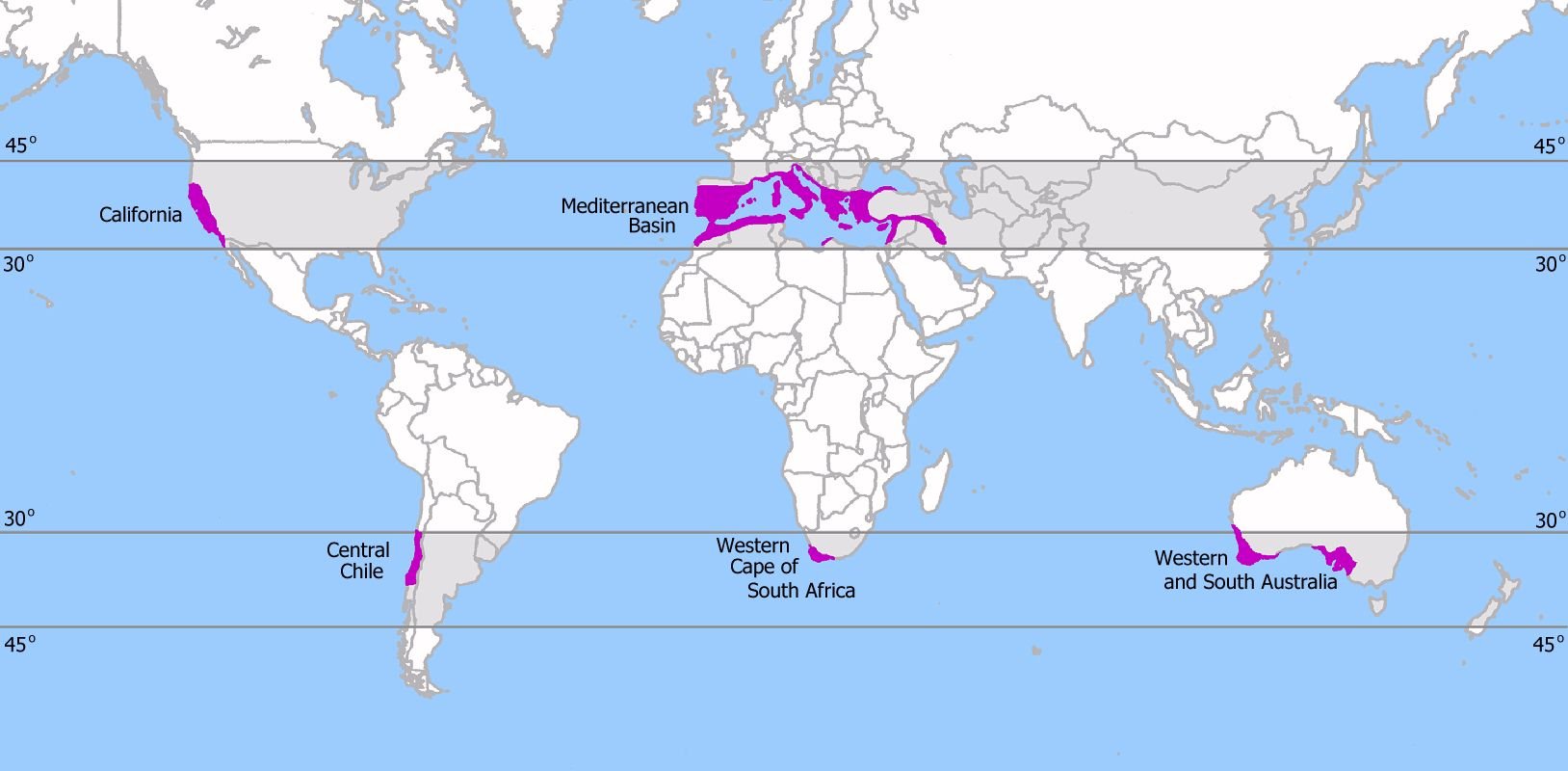
Look at a world map and you'll find five small patches of land with the same weather. Warm, dry summers. Mild, rainy winters. Ocean on one side, often mountains on the other.
California. Central Chile. The coast around the Mediterranean Sea. South Africa's Western Cape. The southern and western edges of Australia.
Together they cover just under 2% of the world's land, and a growing number of people think they're about to become the most fought-over real estate on the planet.
Where will rich people live if AI replaces work?
If artificial intelligence ends up doing most jobs, people with money won't need to live near an office anymore. They'll be free to live wherever life is best, with sunshine, the ocean, good food and small towns worth walking through.
A map of these five regions spread across social media this week with exactly that argument, along with a tip to buy property there before everyone else does.
The tech world already talks this way. Elon Musk said in April that AI and robots will create so much wealth that "everyone can have a penthouse if they want".
Not everyone buys it. Nobel Prize-winning economist Daron Acemoglu has estimated that AI will lift the economy by only about 1% by 2035. But the bet on these coastlines doesn't need Musk to be fully right. If even the richest slice of people stops needing an office, the best places to live get more crowded at the top. Some investors think the AI boom is a bubble, and Michael Burry, who saw 2008 coming, has money riding on it bursting.
Why is the Mediterranean climate so rare?
It only forms in a narrow band, roughly 30 to 45 degrees north or south of the equator, and almost always on the west coast of a continent.
Climate scientists file it under the Köppen codes Csa and Csb, which simply mean dry summers with hot or warm heat, and wet winters.
The west coast part matters. In summer a ridge of high pressure parks over these regions and blocks the rain. Cold ocean currents running along western coasts dry the air even more. Then in winter the pressure systems shift and the rain returns.
That rare mix makes these regions special in another way. They cover about 2% of the land but hold around 20% of the world's plant species.
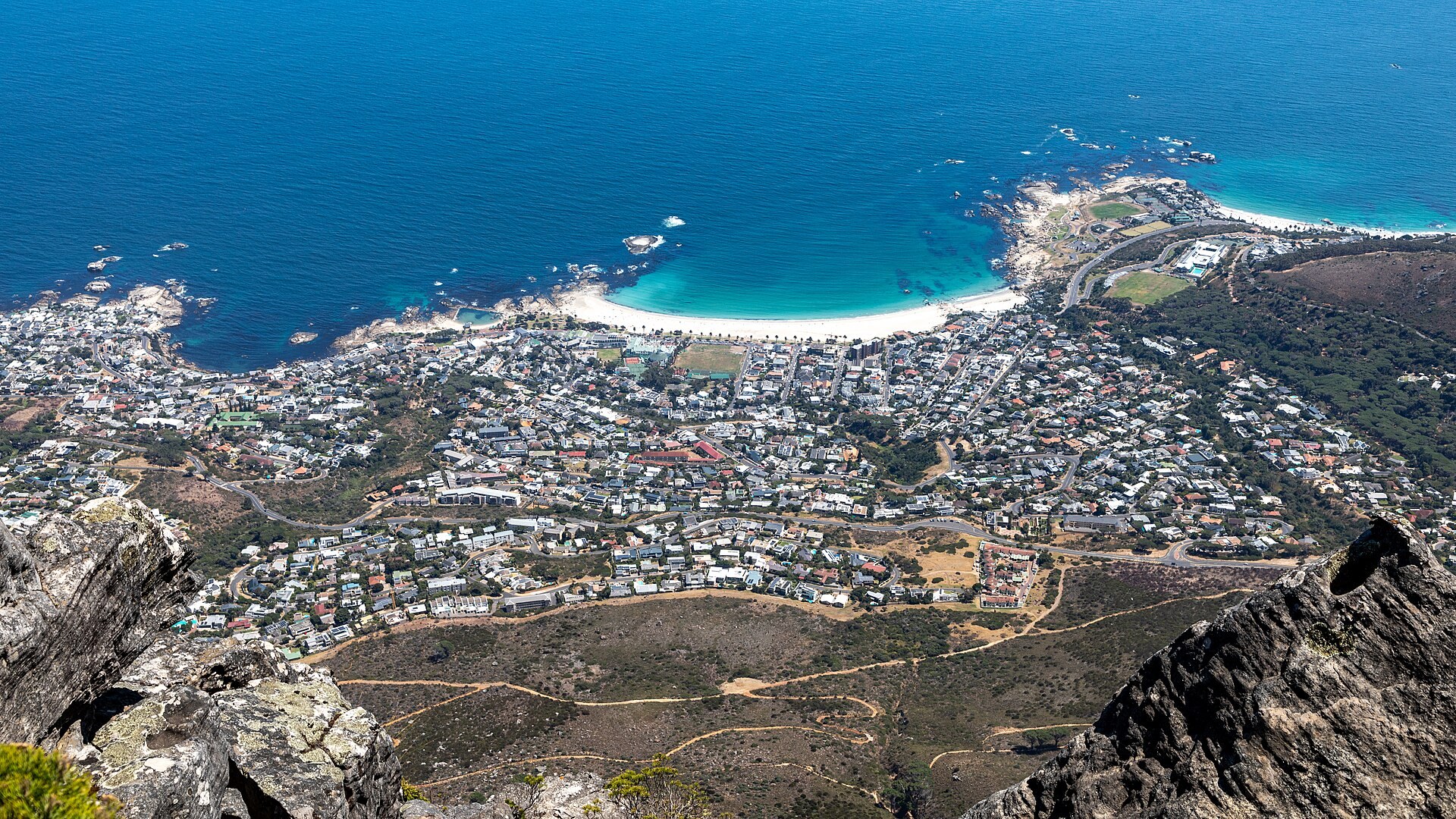
Photo: Dietmar Rabich / Wikimedia Commons, CC BY-SA 4.0
What makes each of the five places special?
Each one has its own pull.
The Mediterranean Basin is the original. It gave the climate its name and its famous trio of crops, wheat, grapes and olives, still grown wherever this weather turns up.
California's share runs down the coast past Big Sur to Santa Barbara, north of Los Angeles, where a typical home now costs more than $2 million.
Central Chile sits between the Pacific and the Andes, the same ocean-and-mountain setup that defines the whole club.
The Western Cape is South Africa's money magnet, and the province where a push to break away from South Africa keeps getting louder. It accounts for about 27% of the country's home sales but about 46% of the value of homes sold above R2 million.
Southern and southwestern Australia, around Perth and Adelaide, round out the list, with the Indian Ocean and the Southern Ocean on their doorstep.
Are property prices already rising there?
In many of these places they're climbing fast.
In Portugal the median bank valuation passed €2,000 per square metre for the first time in October 2025, up 17.7% in a single year. Lisbon apartments reached €3,058 and the Algarve €2,757.
It hasn't stopped there. A local estate agency, citing tax records from Portugal's statistics office INE, puts the Algarve at €3,352 per square metre in early 2026. Buyers living abroad paid €4,003 per square metre, about 25% more than locals, who paid €3,214.
On California's coast, the median home price in the Santa Barbara area hit $2,333,237 in 2025, up 8.5% on the year before.
In South Africa, Western Cape property prices rose about 180% between 2010 and 2025, more than double the growth in Gauteng, home to Johannesburg. On Cape Town's Atlantic Seaboard alone, sales came to about R11.3 billion in 2025, up roughly 26%.
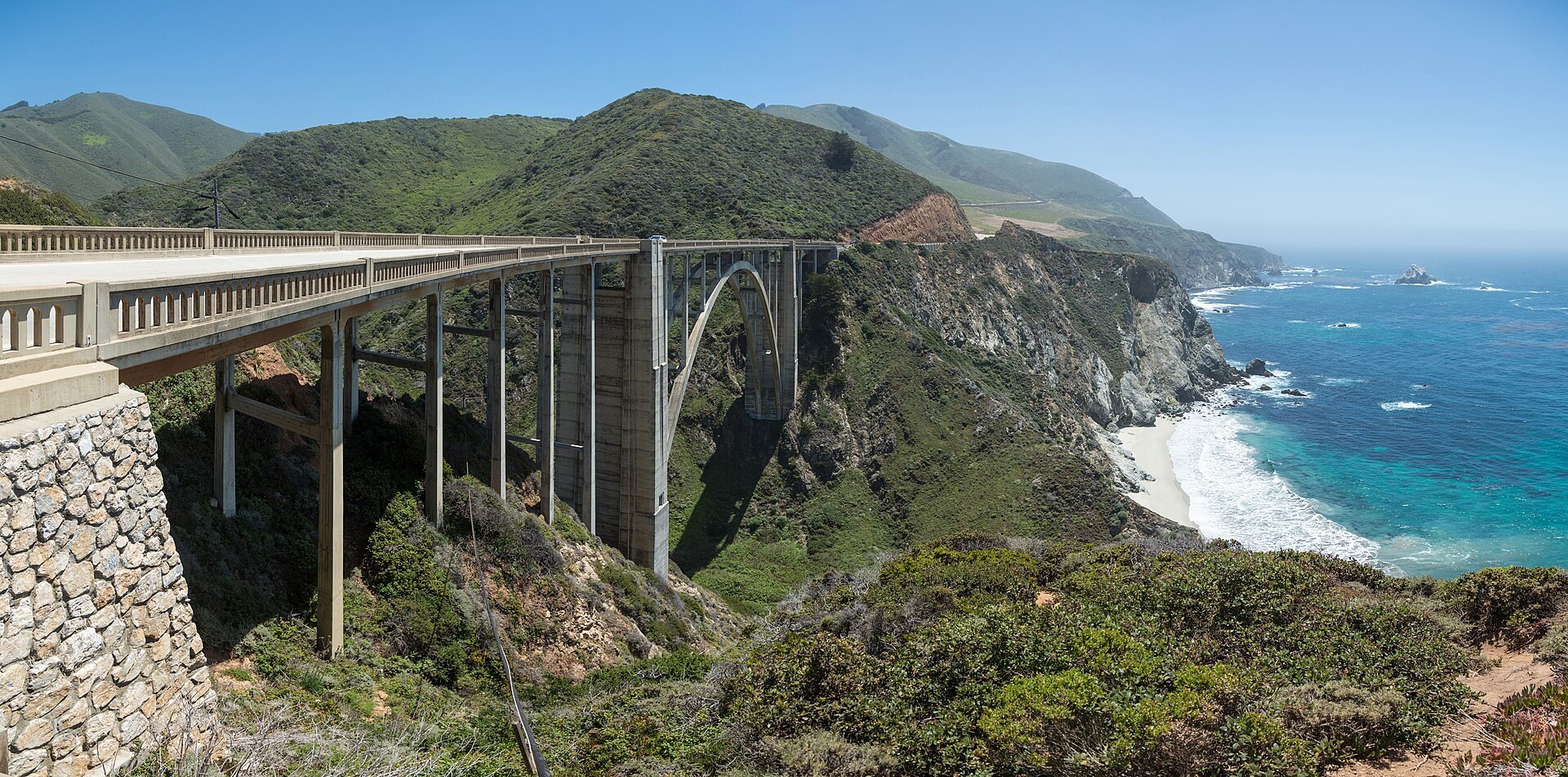
Photo: Diliff / Wikimedia Commons, CC BY-SA 3.0
What could stand in the way?
The same dry sunshine brings real risks. In 2018 Cape Town came close to "Day Zero", when its taps were expected to run dry and residents were limited to 50 litres of water a day.
In 2025 wildfires burned more than a million hectares across the European Union, almost 700,000 of them in Spain and Portugal, and both countries had their hottest summers on record. In California so many insurers pulled back after fires that the state's insurer of last resort grew from about 154,500 policies to more than 408,400.
Others online pointed out that the map leaves out places like Japan.
None of it has slowed buyers down so far. Cape Town is the proof. Seven years after its taps nearly ran dry, sales on its priciest stretch of coast jumped by about a quarter.
Did remote work already prove this?
It gave a preview. When the pandemic let millions of people work from home, many left expensive city centres.
Economists Arjun Ramani and Nicholas Bloom called it the "donut effect". Demand drained out of downtowns and into the places around them, like dough pushed out of the middle of a donut, and the shift was still running in 2023.
Countries noticed. Portugal launched a digital nomad visa in October 2022 and had approved 7,664 of them by September 2025.
Remote work only loosened the link between jobs and cities. A world where work is optional could cut it completely.
Will these coastlines become priceless?
There will only ever be five of them, and nobody is making more. Together they hold a fifth of the planet's plants on a fiftieth of its land.
Prices there are already climbing, and foreign buyers are already paying a premium to get in. The last time work loosened its hold on where people live, millions of them moved.
If AI gives the richest people on Earth the freedom to live anywhere, these five strips of coast are top of the list. Some of the people who will want them most haven't made their fortunes yet.
Source1
How does this make you feel?
The week's biggest stories, every Monday
One email. The stories everyone will be talking about, before they do.
Free. One email a week. Unsubscribe anytime.Keep reading
 WorldA super El Niño is building and the ocean is acting strange
 WorldA bleeding captain opened the cockpit door and saved his plane
 WorldMichael Burry says the market is in denial and the clock is ticking