Orcas and rare sharks are turning up off Mozambique as a super El Niño builds
Scientists on a Mozambique island went from seeing zero orcas to seeing them every week. Meanwhile forecasters say the Pacific is brewing an El Niño stronger than anything on record.
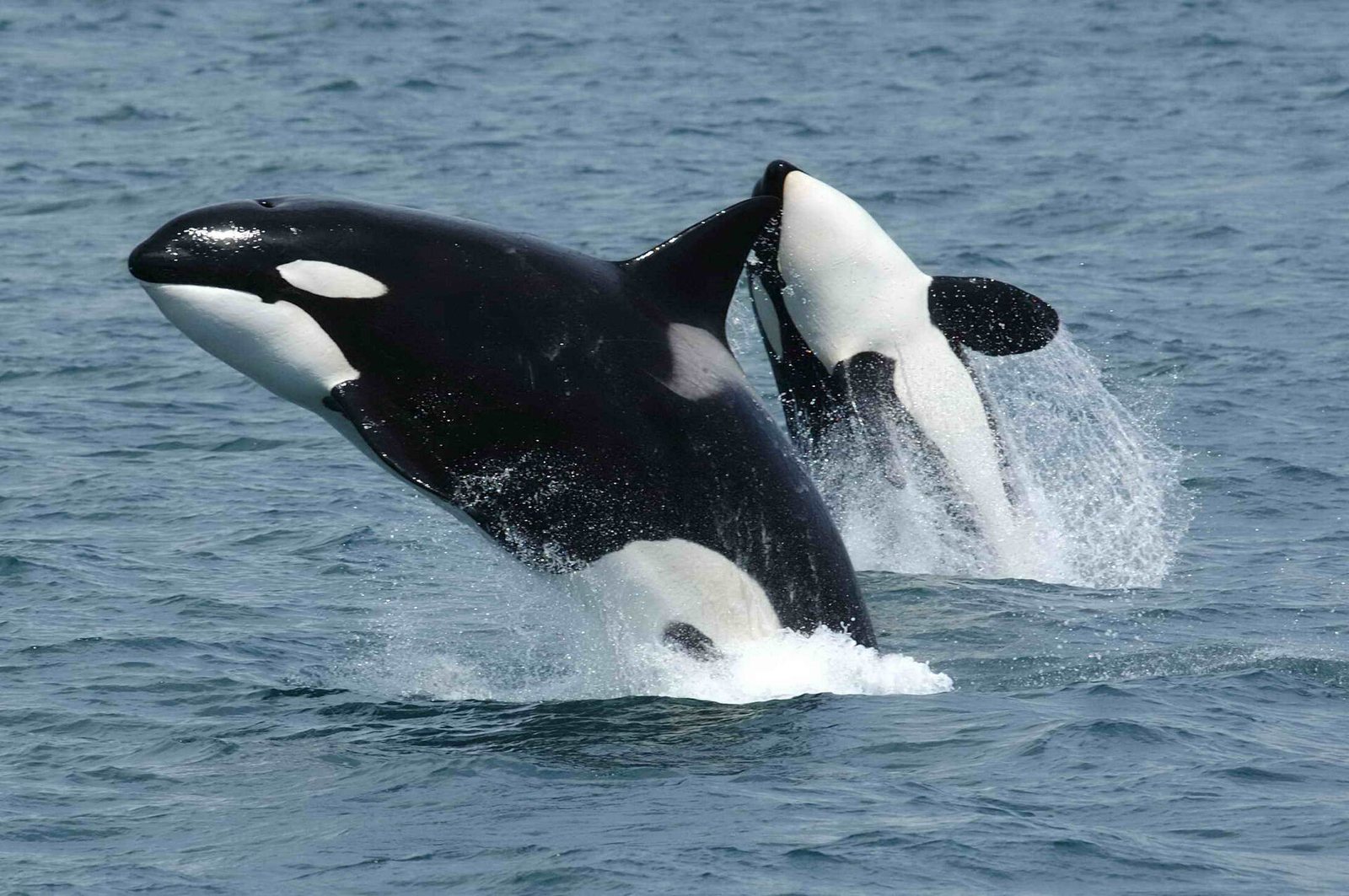
Photo: Robert Pittman (NOAA) / Wikimedia Commons, Public domain
- A scientist went from zero orca sightings to seeing them every week
- Part of the Pacific is already 3C hotter than normal
- The last super El Niño shrank SA's white maize crop to 3.3 million tonnes
A group of ten orcas cut through the water off Mozambique's coast. Black fins, white patches, moving together.
That should not be normal. For years, scientists on Benguerra Island in the Bazaruto archipelago barely saw any. Now they see them almost every week.
"We had seen zero so far and all of a sudden I'm seeing them weekly, starting at the end of last year," Mario Lebrato told Bloomberg, in a report carried by News24. He is chief scientist at the Bazaruto Centre for Scientific Studies, which calls itself Africa's only ocean observatory.
Whale sharks are turning up too. So are hammerheads, leatherback turtles and a dolphin species the team had never recorded there.
And all of it is happening as the Pacific Ocean, on the other side of the world, builds what forecasters call a super El Niño.
Why are orcas and sharks turning up off Mozambique?
Nobody knows for sure. That is what makes it so eerie.
Lebrato says currents and water temperatures in the Mozambique Channel are changing. That may be shifting plankton and the food chain that big animals follow.
"Temperatures are changing, the water mass changes, animals move," he said. "They don't know if it's Bazaruto or South Africa or Tanzania."
Is El Niño behind it? He won't promise. "Is it El Niño-connected? I don't know," he said. "But if you have this time series and you haven't seen it before, you can start thinking that there might be a connection."
His team watches more than 7,000 square kilometres of ocean, according to News24. Strange visitors are now a common sight across that whole patch.
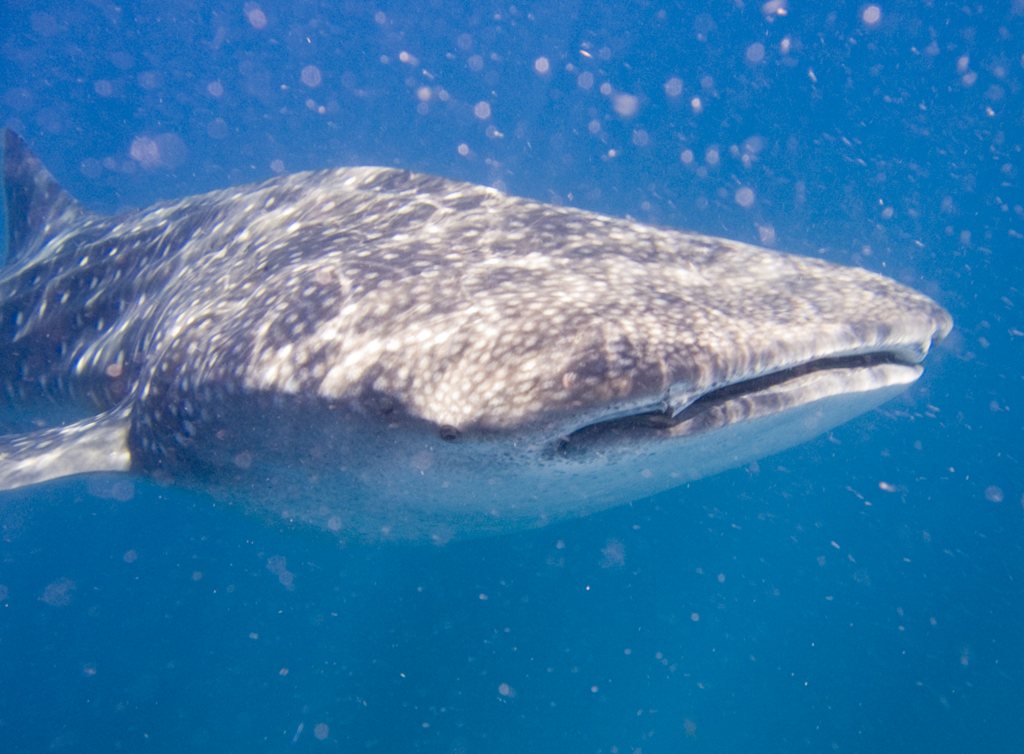
Photo: jon hanson / Wikimedia Commons, CC BY-SA 2.0
What is a super El Niño?
El Niño is a natural shift in the Pacific Ocean. Normally, strong winds push warm surface water west towards Indonesia. During El Niño those winds weaken. The warm water sloshes back east towards South America.
That giant pool of hot water pumps heat into the sky. It moves rain belts, storm tracks and jet streams all over the planet. It happens every two to seven years, according to NPR.
Daniel Vimont, a climate professor at the University of Wisconsin-Madison, told NPR it is like dropping an enormous rock into a pond. Even far from the splash, you feel the waves.
"Super" is not an official label. NOAA, the US weather agency, calls an event "very strong" when the key patch of Pacific is more than 2°C warmer than average. People started saying "super El Niño" and even "Godzilla El Niño" because this one looks bigger than that.
The last monsters were 1982-83, 1997-98 and 2015-16. This one has already matched the 2015 high of 3°C above average, climate scientist Mat Collins told The Guardian. He said it is on course to hit 4°C, "far beyond anything seen before".
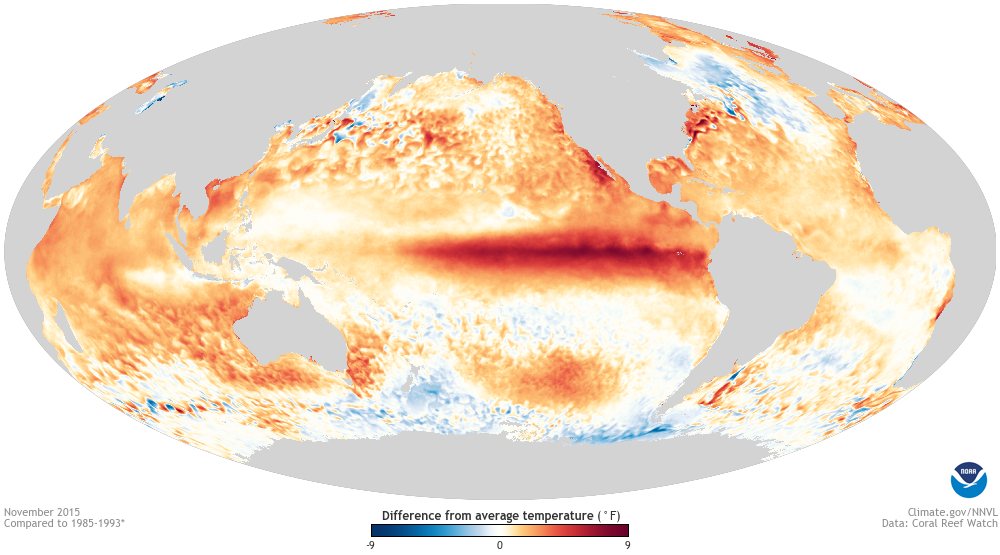
Photo: NOAA Climate.gov, data from NOAA Coral Reef Watch / Wikimedia Commons, Public domain
Is 2026 an El Niño year?
Yes. It is already here.
NOAA's Climate Prediction Center issued an El Niño Advisory in September. It gave a greater than 90% chance of a very strong event this summer (the US autumn and winter). It also put a 75% chance on a "historic" event, stronger than anything since records began in 1950.
NPR reports it is already the strongest El Niño ever measured for this time of year.
When will El Niño start and end?
It started building in the middle of 2026. El Niños usually peak in November and December. The World Meteorological Organization says it will almost certainly last until at least February 2027.
UN chief António Guterres put it bluntly. "El Niño is being supersized before our eyes," he said.
Will El Niño cause drought in South Africa?
The risk is real. In southern Africa, El Niño usually means less summer rain and more heat.
The South African Weather Service expects below-normal rainfall over most of the country from October to December, with above-normal temperatures. It says the chance of a dry mid-summer is growing, with "very high probabilities" of extra heat, according to IOL.
The Citizen reports the country could be heading into one of its driest and hottest springs in more than a decade.
The heat itself is a danger. The Climate Impact Lab estimates El Niño could cause about 1,200 extra heat deaths in South Africa between September and February.
Farmers are worried most. About 80% of South Africa's summer grains and oilseeds rely on rain, not irrigation, agricultural economist Wandile Sihlobo wrote in Daily Maverick.
The Weather Service has one message on repeat. El Niño is not a disaster yet. It is a warning to plan.
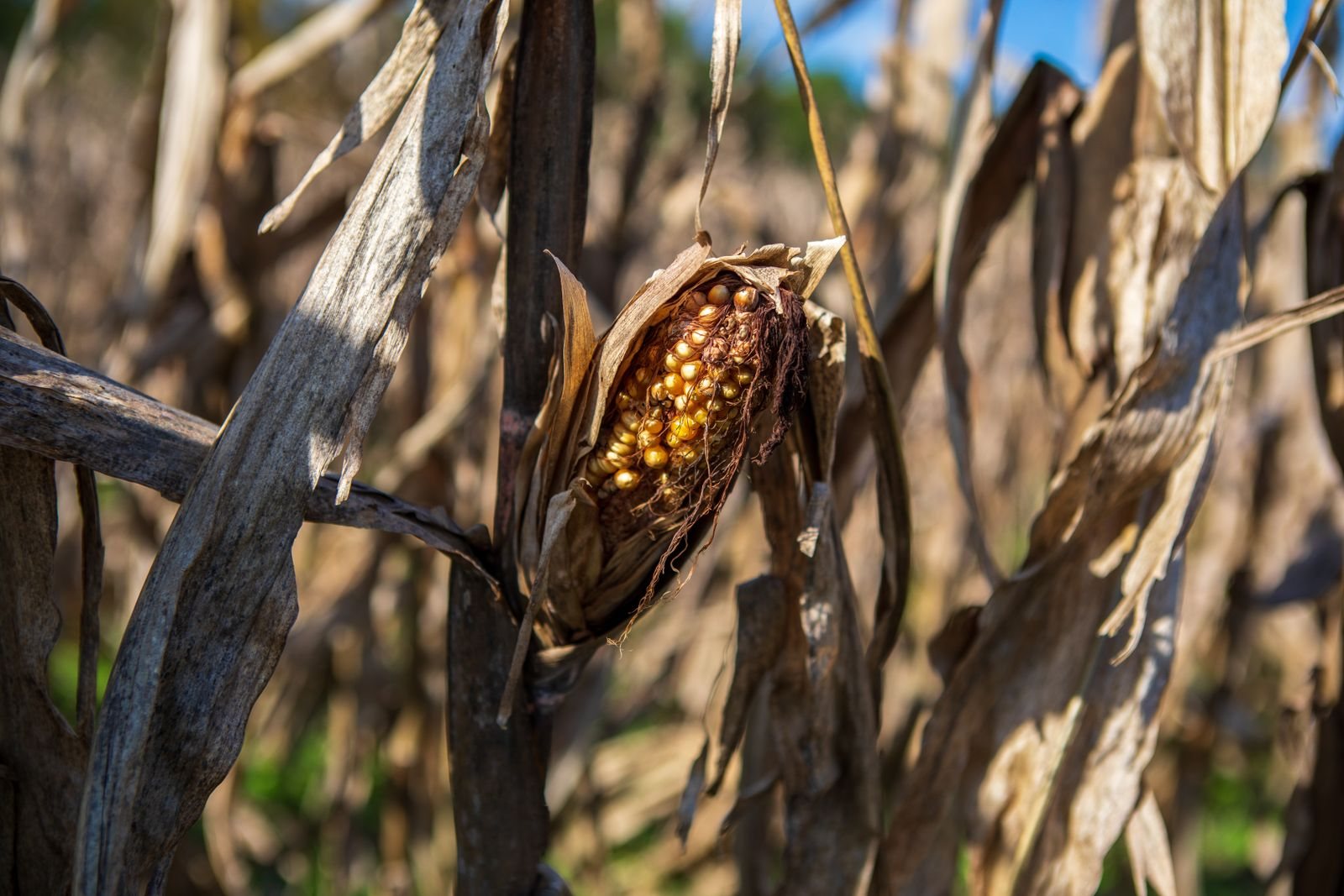
Photo: William Lucord / Pexels
Will maize meal prices go up?
South Africa grew about 9.5 million tonnes of white maize, the kind people eat, in the 2025-26 season. In the 2015-16 super El Niño drought, white maize fell to roughly 3.3 million tonnes, according to agricultural economists writing in The Conversation.
When the country can't grow enough, it has to import. White maize is expensive to import because little of it is traded worldwide. In 2016 that pushed maize meal prices up sharply.
Prices can even rise before any drought arrives. Traders who expect a bad harvest start bidding prices up early.
South Africa does have a cushion. It holds between a fifth and a third more maize in storage than it did at the start of past El Niño years. The economists say that should carry the country to April 2027.
Bean farmers are exposed too. Research reported by The Conversation found extreme climate shocks have cut legume harvests in the region by up to 78%.
What will El Niño do to the rest of the world?
All that extra heat leaks into the air. NPR reports that new global temperature records are very likely in 2027.
Here is what forecasters are watching.
- India's monsoon has already been weakened, Collins told The Guardian.
- Indonesia and the Amazon could see more wildfires and drought around the peak.
- California is more likely to get extreme rain, experts told NPR. The state flooded badly in 1997-98. It shares a rare climate with our own Western Cape.
- Coastal Peru tends to get much wetter.
- Southern and eastern Australia are expected to turn drier.
The UN World Food Programme warns El Niño could push at least 49 million more people into hunger, NPR reports. Traders are also watching coffee and cocoa farms from Brazil to West Africa. If you love your morning cup that may be slowing down how fast you age, keep an eye on the price.
What can you do to get ready for El Niño?
You can't stop the Pacific. You can get ahead of it.
- Save water now. Many areas are coming off a good rain year, and habits started early make any later restrictions easier.
- Watch the price of maize meal. In a drought year it can move fast, so budget for it before mid-summer.
- Take heat seriously. Check on older family members and drink water on hot days.
- Follow the Weather Service. Its outlooks will show early whether the summer rain really fails.
Farmers are already stress-testing their cash flow for a dry year, FNB agricultural economist Paul Makube wrote on Bizcommunity.
How strong will this El Niño get?
Nobody knows the final number yet, because it still hasn't peaked, Collins told The Guardian.
Collins says forecasters can now see these events six to nine months ahead. During the 1982-83 El Niño, a ship in the Pacific reported water temperatures "off the scale" and nobody understood why.
This time the world is watching in real time. NOAA's next El Niño update is due on Thursday 8 October.
Out in the Mozambique Channel, the orcas keep coming. Whale sharks keep cruising past Benguerra Island. The ocean is already sending signals.
The next few months will show how loud they get.
Sources12
- News24 / Bloomberg, orca and shark sightings off Mozambique
- NPR, What's so super about it?
- NOAA Climate Prediction Center, El Niño Advisory
- World Meteorological Organization
- The Guardian, interview with Prof Mat Collins
- The Conversation, maize prices
- IOL, SAWS outlook
- The Citizen
- Daily Maverick, Wandile Sihlobo
- Briefly News, Climate Impact Lab heat deaths
- The Conversation, bean harvests
- Bizcommunity, Paul Makube (FNB)
How does this make you feel?
The week's biggest stories, every Monday
One email. The stories everyone will be talking about, before they do.
Free. One email a week. Unsubscribe anytime.Keep reading
 WorldA bleeding captain opened the cockpit door and saved his plane
 WorldMichael Burry says the market is in denial and the clock is ticking
 WorldAn MIT scientist says Irkutsk may not be plague at all