450 people lived on one Durban street for four months. Why could nobody move them?
There were plastic sheets tied to a wall, small children and a Home Affairs office just behind them. This is how one Durban road became a camp, and what finally moved it.
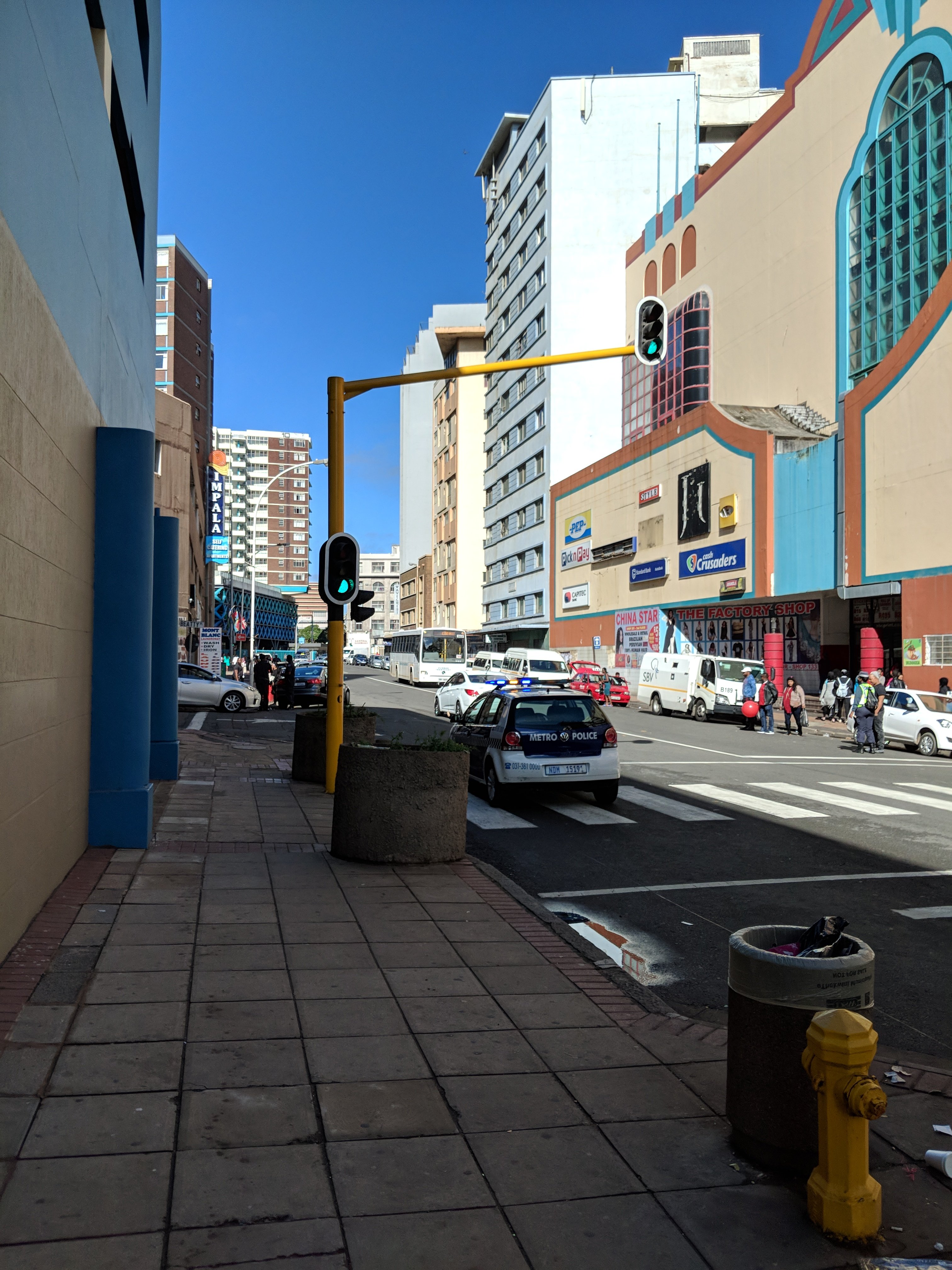
Photo: TurquoiseGoose / Wikimedia Commons, CC BY-SA 4.0
- Most of the group held legal papers
- A post counted 41 children under four on the pavement
- About 100 refused the government's offer and slept in a park
Plastic sheets tied to a wall. Sticks pushed into the pavement. Belongings scattered along the kerb.
That was home for hundreds of refugees and asylum seekers outside the Home Affairs refugee reception centre in Durban, for months. The road is Che Guevara Road. Most people still call it Moore Road.
On 29 July, an Instagram post that Briefly News later reported said about 450 refugees had been stranded there since mid-May. It said 250 were still sleeping outside, and that 41 of the children were under four. Eleven were under one. Four were newborns.
Those figures come from the post's caption and were not checked by anyone else. But the camp itself was real, and the question is simple. Why did it last so long?
Who were the people on Moore Road?
They were people who had fled. EWN reports that the group left their homes and businesses before the 30 June anti-illegal immigration protests in Durban. Many said they were too scared to go back to their old streets, after threats and intimidation.
Home Affairs itself has confirmed that the overwhelming majority of the group are legally documented refugees and asylum seekers. They were not in the country illegally. That matters in a city where the protests were about illegal immigration.
The group included women and children. One man told EWN he lost his hairdressing business when the unrest began.
Why did the pavement become a camp?
The group went to the one place that is meant to help refugees, the reception office. They then simply stayed outside it.
The eThekwini municipality said it did not have the buildings to house them. It also said leaving people on a pavement without basic needs went against the country's human rights culture. In late May, the mayor demanded their urgent relocation.
So each side said the problem belonged elsewhere. On 17 July, a group called Siyafana Sonke publicly demanded urgent intervention, according to IOL. The weeks kept passing, and the numbers kept changing, as the table shows.
Reports do not agree on how many people were there. Counts ranged from about 150 in the first days to more than 400 at the peak. The 450 figure comes from the Instagram post, and about 100 were left in September.
| When | What was reported |
|---|---|
| Mid-May 2026 | The camp begins outside the refugee reception centre |
| Late May | Reports of about 150 to 300 people, and the mayor asks for urgent relocation |
| 30 June | Anti-illegal immigration protests in Durban |
| 29 July | About 250 still sleeping outside, with 41 children under four (Instagram post) |
| 14 September | The group says it will move to Gauteng |
| 15 September | More than 200 board transport to Lindela, about 100 refuse |
How did it look to people walking past?
The Instagram post described men, women and small children in the cold, with no proper toilets and no shelter. It said flood warnings were out for Durban in the same week.
Food aid was reportedly arriving from disaster relief groups, but the post said shelter was the missing piece. It asked churches to take small groups in for at least a week.
Some online comments called the scene inhumane. Others asked why the countries these people came from were not stepping in.
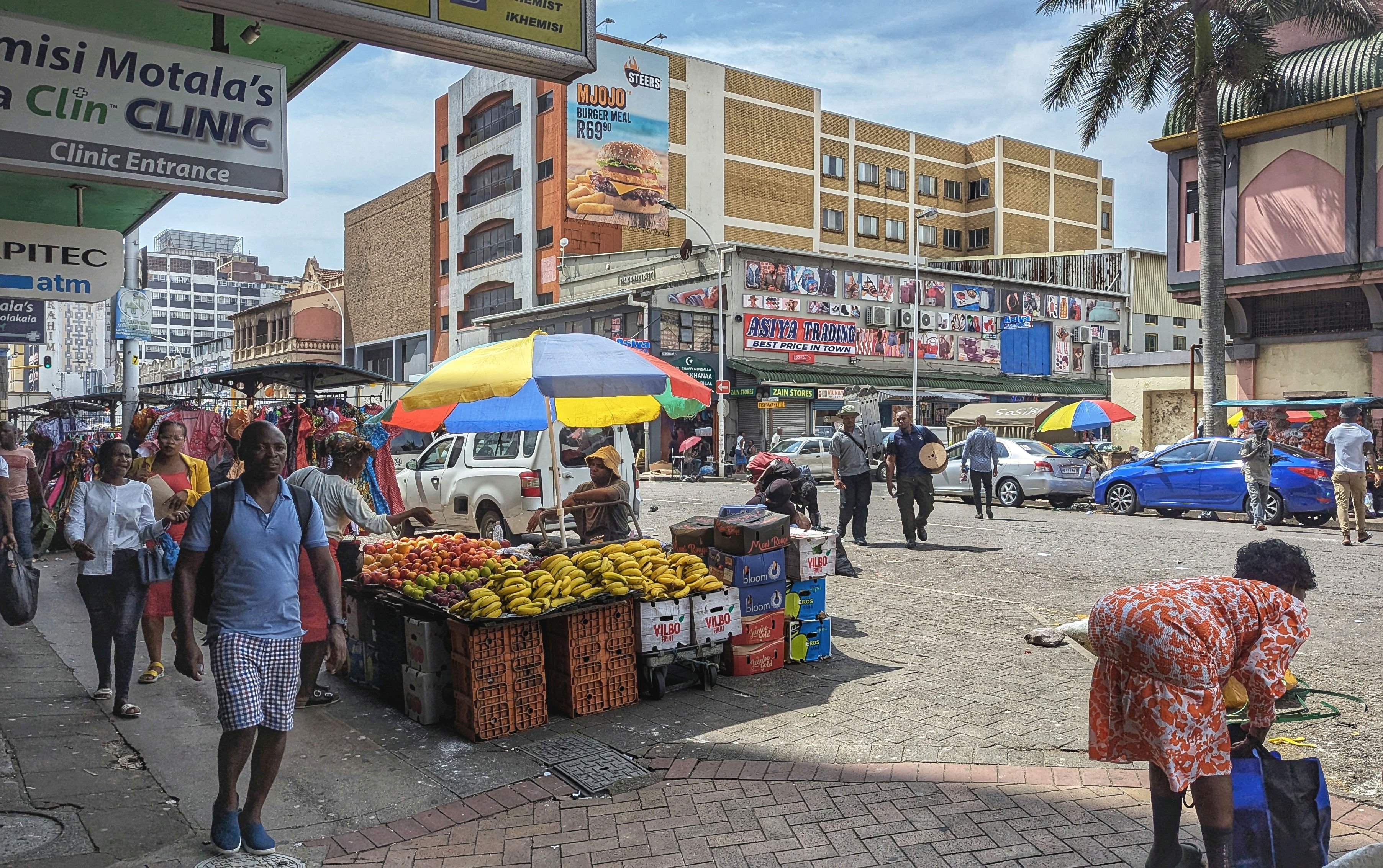
Photo: Dennis Sylvester Hurd / Wikimedia Commons, CC BY 2.0
What did the government offer them?
After about four months, the government gave the group two choices. They could go back to the communities they fled. Or they could go to the Lindela Repatriation Centre in Krugersdorp.
Many people know Lindela as the place where foreigners are held before being sent home. For people who had come to South Africa for protection, that was a hard offer to hear.
EWN reports the group also had two run-ins with marchers from the March and March movement. One turned violent. After that, the group chose to leave for Gauteng.
One group leader, Gerrard Itabelo, told EWN they accepted because the government had promised safety, school for the children, hospital access and renewed papers.
Why did some say yes and about 100 say no?
For Itabelo, it came down to having no choice. He told EWN the group felt there was nowhere else to turn after the two clashes.
The ones who stayed saw it differently. Eddie Muyumba, a Congolese refugee who came to Durban as a child, said he could not see himself living anywhere else. Durban was home. Gauteng was not.
Another man in the group, Makombe Marjole, said they would be patient and wait to try again. Neither side was wrong, exactly. They had been given two bad options and each picked one.
The reasons the 100 gave were short. They wanted their old lives back, in the city where they had built them.
What happened on 15 September?
More than 200 people boarded transport to Lindela that day. Around 100 people refused to go.
Those 100 are now sheltering in a park in Glenwood, EWN reported, while they wait for a place in an NGO shelter. They told the news outlet they want to rebuild in Durban, not leave it.
One of them said that to reintegrate means starting his old life again, the one he lived peacefully.
Is it safe for them to go home?
The group has asked residents not to attack them when they return to their old neighbourhoods. They say tensions have eased.
Others are not so sure. The group's spokesperson, Bishop Raphael Bahebwa, says he is in hiding after receiving death threats.
You can read how the wider fight has played out in our report on why Durban is still marching. A related row about who counts in South Africa is covered in the claim about foreigners registering to vote.
Photo: Chris Bloom from Durban, South Africa / Wikimedia Commons, CC BY-SA 2.0
What is left of the camp on Moore Road?
The pavement is quiet now. The plastic sheets are gone.
But the people are not. About 100 of them sit in a park in Glenwood, with legal papers in their bags, waiting for a bed.
They have only one request for the neighbours who drove them out. Please do not attack us when we come home.
Sources5
- Briefly News, 450 refugees stranded on Moore Road in Durban (30 Jul 2026, from an Instagram post of 29 Jul)
- EWN, Stranded Durban refugees welcome planned relocation (14 Sep 2026)
- Briefly News, Durban refugees who rejected Lindela move seek to rebuild their lives (15 Sep 2026)
- The Mercury, eThekwini mayor demands urgent relocation (25 May 2026)
- IOL, Siyafana Sonke demands urgent intervention (17 Jul 2026)
The week's biggest stories, every Monday
One email. The stories everyone will be talking about, before they do.
Free. One email a week. Unsubscribe anytime.Keep reading
 ExplainedHow much does Starlink cost? Plans, kit price and hidden fees
 ExplainedWhy Proton says never to use Sign in with Google, and how to check your own
 ExplainedAre Chinese cars reliable? What owners, banks and the data say