"Like a drill going into my eye": The sickness the CIA still cannot explain
For years, the official line was that a weapon was unlikely. Now that line is being pulled apart.
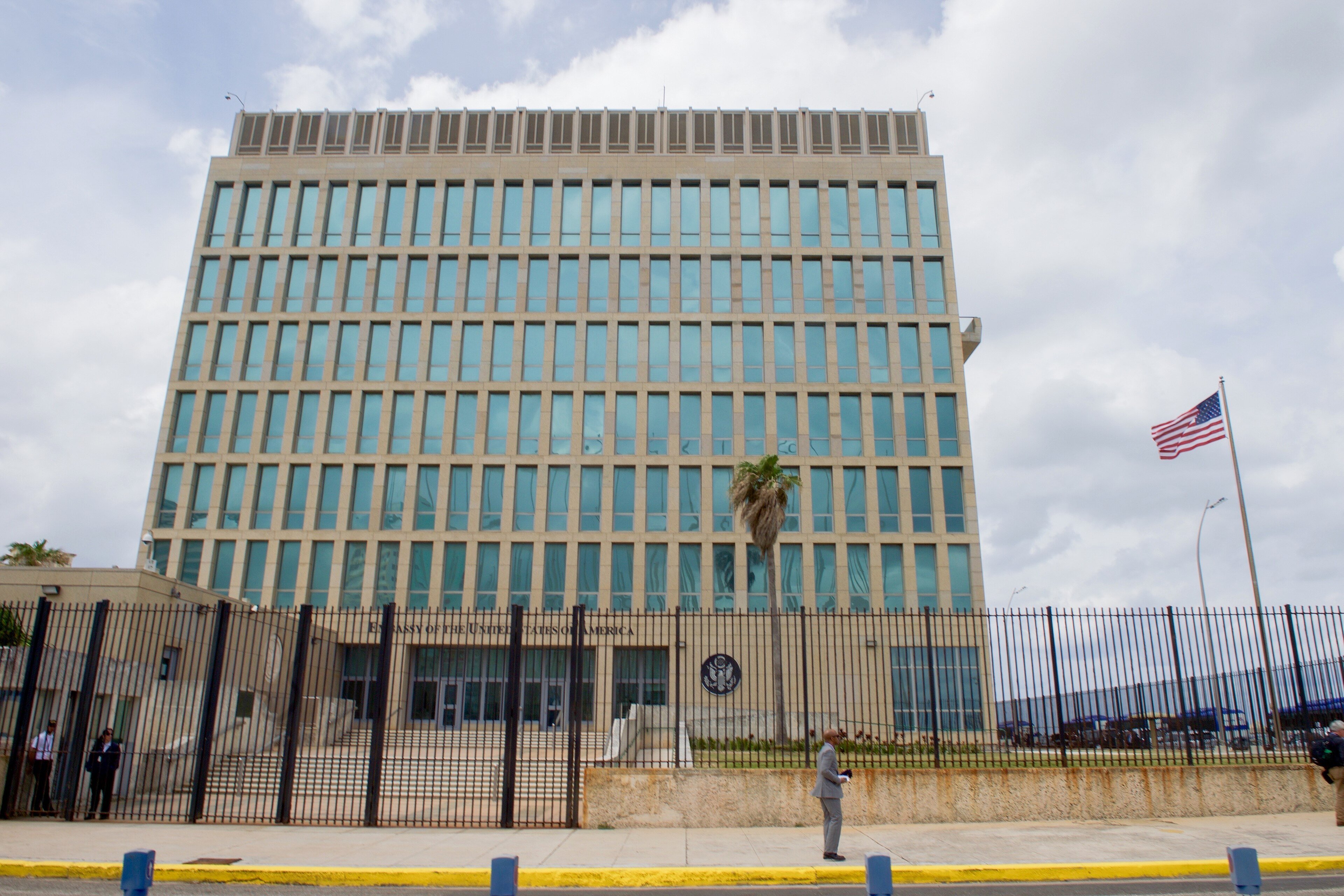
Photo: U.S. Department of State from United States / Wikimedia Commons, Public domain
- A US spy chief pulled a report that called a Russian campaign very unlikely
- Two sources say a device reached the US in late 2024
- One expert panel said a pulsed microwave could explain some cases
A CIA officer was on a work trip to London in April 2019 when his head suddenly hurt. It was intense. Five months later, in Warsaw, the pain came back and was worse.
He was left with nerve pain and tiredness that did not go away. Doctors had no clear answer for him, and for years neither did his own government.
That is one of the cases at the centre of a long Guardian investigation into Havana syndrome, published on 10 October 2026. Its title uses the words one sufferer might use: "Like a drill going into my eye".
What is Havana syndrome?
The name comes from Havana, Cuba, where US diplomats first reported a strange wave of illness. Officials do not use that name. They call the cases "anomalous health incidents", or AHIs.
People describe sudden, severe head pain, and some report hearing a sound. Some then have lasting problems, like nerve pain and tiredness.
Cases have been linked to places including Cuba, Georgia, Kyrgyzstan, Serbia and Vietnam. In several of them, the people affected were reportedly working on issues that touched Russian interests.
What did the official reports say?
Here is the story in date order.
| Date | What happened |
|---|---|
| December 2017 | Former CIA officer Marc Polymeropoulos reports symptoms in Moscow |
| April and September 2019 | A CIA officer is hit by head pain in London, then worse in Warsaw |
| 2021 | The Biden administration launches two investigations |
| 2022 | An expert panel led by Stanford's David Relman says the symptoms are real |
| 2023 | An intelligence summary calls a Russian campaign "very unlikely" |
| Late 2024 | Two sources tell the Guardian a device reached the US for testing |
| Summer 2026 | Director of National Intelligence Tulsi Gabbard rescinds the 2023 assessment |
| 13 October 2026 | A new book comes out in the US, saying Russia was behind some cases |
Sources: The Guardian, as reported by Brit Brief and others, and CBS News and The Insider reporting on earlier steps.
Read that table from top to bottom. Each step moves the story away from "probably nothing".

Did experts say it was real?
Yes. The 2022 panel led by Relman said the symptoms were genuine. It found that a subset of cases was most plausibly explained by exposure to pulsed microwave energy. It also said most claims could be explained by other things.
Relman has gone further since. He told the Guardian there may have been a cover-up. Bill Burns, the former CIA director, told the Guardian it was "simply not true" that the CIA covered anything up.
Two views, one set of files. That is the heart of the fight.
Why did Tulsi Gabbard overturn a report?
In summer 2026, outgoing Director of National Intelligence Tulsi Gabbard rescinded the 2023 assessment that called a Russian campaign very unlikely.
She cited what she called "selective exclusion of evidence" and "mischaracterisation of sources". No new evidence was published with the decision.
Mark Zaid, a lawyer for more than 30 AHI patients, welcomed it as a first step. Others asked what had changed, since the public was shown no new proof.
What does Russia have to do with it?
A 2024 investigation by The Insider, Der Spiegel and CBS's 60 Minutes reported that members of a Russian military intelligence unit, called 29155, had been in places where US staff fell ill. The Kremlin rejected the reporting, with spokesman Dmitry Peskov calling it unfounded.
The new book, The Havana Syndrome by CBS journalists Michael Rey and Oriana Zill de Granados, argues Russia was behind at least some cases. It also accuses parts of the US government of covering up evidence. It came out from Crown in the US on 13 October and comes out from WH Allen in the UK on 15 October.
The CIA's own line, repeated in 2024, was that it assessed a sustained worldwide campaign by a foreign actor with a weapon as unlikely.
Sources gave the Guardian very different readings of the same classified material. One said there was no "smoking gun". A former intelligence official said the Russian "fingerprints are clear".

Photo: Diego Delso / Wikimedia Commons, CC BY-SA 4.0
Russia has been in the headlines for other reasons this month too. Our look at Russia's plague scare shows how quickly claims about Moscow spread.
What is the "Havana syndrome device"?
This is the new part. Journalist Sasha Ingber first reported that the US had acquired a "Havana syndrome-style device" in an undercover operation.
Two sources told the Guardian it was brought to the US in late 2024 for testing. They said it is "man-portable" and came from "a complex Russian illicit network".
Animal testing reportedly produced symptoms like those of AHIs. None of this has been independently verified. The sources have not been named and no government has confirmed it.
If it is true, it would be a physical object at the centre of a mystery that has been argued over for years without one.
Who else says it is a real threat?
James Giordano, a professor emeritus of neurology at Georgetown, called the technology a "clear and present threat".
Then there is Mike Beck, an NSA counter-intelligence officer who fell ill in the 1990s, developed a rare form of Parkinson's at 45 and died this year. An NSA statement referred to 2012 intelligence linking a "hostile country" to a high-powered microwave weapon. Sources told the Guardian that country was Russia.
And there is Polymeropoulos, the former CIA officer who reported symptoms in Moscow in December 2017. He was diagnosed with a mild traumatic brain injury and, in 2023, was found eligible for compensation under the Havana Act.
So why will this mystery not die?
Because both ends of the story are still open. On one end, hundreds of people with real symptoms who say they were attacked. On the other, an intelligence community that for years said a weapon was unlikely.
And in the middle sits a device nobody has shown the world, a unit number, a spy chief's decision and a book arriving in three days.
Somewhere in a lab, the Guardian's sources say, there is a box that made animals sick. What it does to people is the one thing nobody will say out loud.
Sources4
- The Guardian, Like a drill going into my eye: why the mystery over Havana syndrome refuses to die (10 Oct 2026)
- Brit Brief, Havana syndrome: new book and evidence revive questions over Russia role
- Axios, Havana Syndrome mystery takes unusual turn (13 Jan 2026)
- Global News, Havana syndrome Russia report (2024)
The day's top stories, every weekday at 6am
One short email. The stories everyone will be talking about, before they do.
Free. One email each weekday. Unsubscribe anytime.Keep reading
 Explained85 kilometres of shelves, 12 centuries of papers, and a door most of us will never walk through
 ExplainedHow much does Starlink cost? Plans, kit price and hidden fees
 ExplainedWhat is pneumonic plague? The facts, explained simply