What is the Vatican hiding on 53 miles of shelves almost nobody can enter?
Line the shelves up end to end and you could walk them for 17 hours. The Vatican says it keeps everything. So why do people still whisper about what is missing from the story?
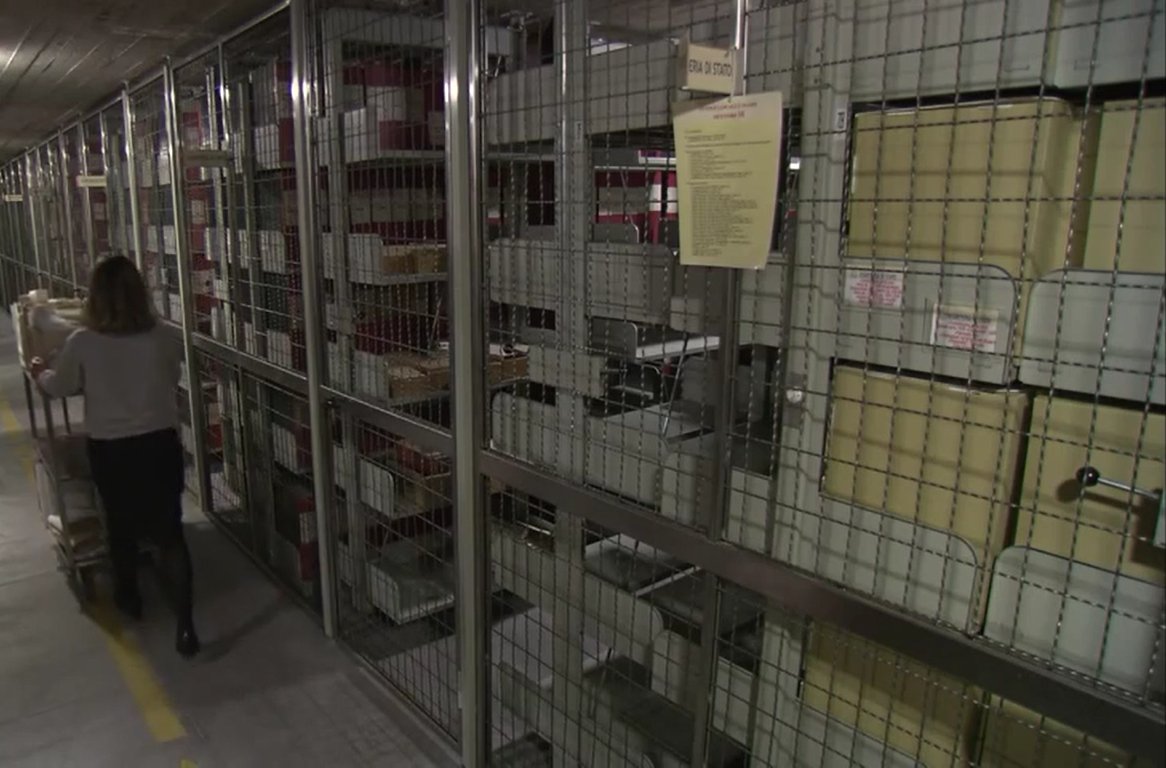
Photo: Collective / Wikimedia Commons, CC BY 3.0
- The shelves run 85 kilometres, as long as two marathons
- It held Galileo's trial papers and a lost Templar parchment
- Its rooms are open only up to the year 1958
85 kilometres.
That is how far the shelves run inside the Vatican's archive. In miles, it is about 53. Walk the whole length at a normal pace and you would be on your feet for 17 hours. It is a little more than two marathons.
Every metre is filled with paper. Letters from popes and kings. Trial records. Orders. Parchments eight hundred years old. Most people on Earth will never see one page of it.
For more than 350 years it carried a name that made people lean in. It was called the Vatican Secret Archives. In 2019 the name changed. The questions did not.
What is actually inside the Vatican Secret Archives?
According to the Vatican's own account, the archive holds millions of papers and parchments, grouped into more than 600 collections. They cover about twelve centuries, from the 8th century to the 20th.
It is the paper trail of the Catholic Church. Popes wrote to kings. Bishops reported home. Ambassadors sent news from every corner of Europe and beyond. All of it ended up on the shelves.
Some of it is famous. The archive holds the papers from the trial of Galileo, the scientist who said the Earth moves around the Sun. It also holds the Chinon Parchment, a document from the 14th century about the Knights Templar, which came back into public view in the 2000s.
Why do the Galileo papers still pull people in?
Because they hold a famous clash on paper. Galileo was put on trial by the Church in 1633 for saying the Earth moves around the Sun. The records of that trial sit in the archive.
Reading them is not the same as hearing the story second hand. You see the questions that were asked and the answers that were written down. If one trial can fill a box, think what the other 600 collections might hold.
Why was it ever called secret?
Here is the part that surprises people. In the original Latin the word was secretum. It meant set apart. The archive was reserved for the pope and the officials he chose, and it was kept separate from the Church's other files.
It was never meant to say that the contents were evil. But try telling that to the internet.
The word "secret" travelled faster than the Latin. Novels and films used it, and the idea of a locked Vatican vault full of forbidden truth stuck. On 22 October 2019, Pope Francis brought back the older name, the Vatican Apostolic Archive, to clear things up.
Plenty of people still call it the Secret Archives. Plenty still wonder.
How long are the shelves really?
The famous number is 53 miles. The Vatican's own page gives 85 linear kilometres. That is about 52.8 miles, so the round figure checks out.
Other writers give slightly different numbers. One 2024 report on the retiring archivist put it at 86 kilometres, and a smaller figure of 80 turns up in some places. The difference is a few kilometres of shelf.
| Figure | Number |
|---|---|
| Shelf length | 85 kilometres (about 53 miles) |
| Time to walk it at 5 km an hour | About 17 hours |
| Years of history covered | About twelve centuries |
| Collections | More than 600 |
| Open to researchers up to | End of Pius XII's papacy, October 1958 |
Source: Vatican News, "The Apostolic Library and the Apostolic Archive" (August 2025). Walking time worked out from the shelf length.
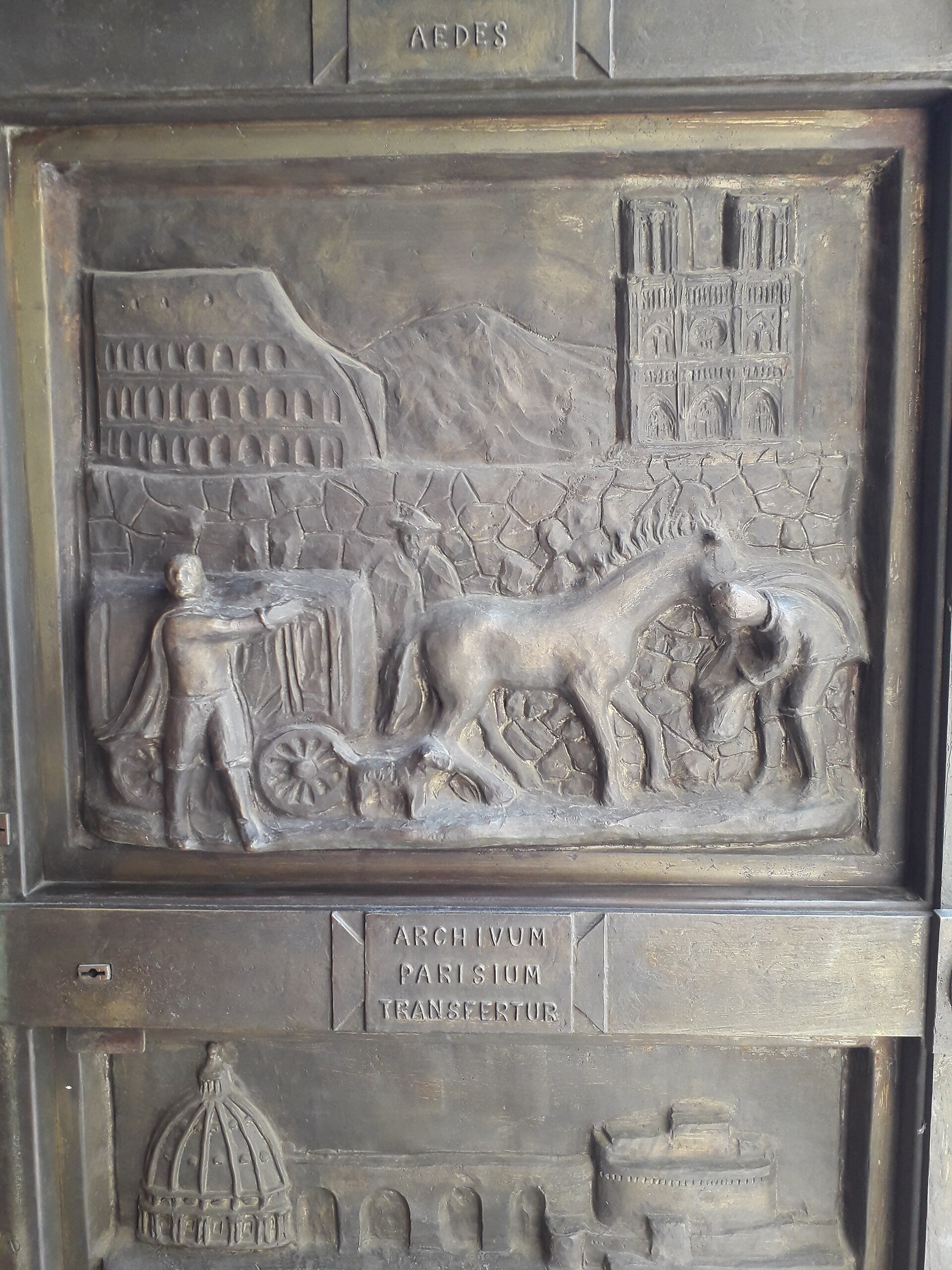
Photo: Prof75 / Wikimedia Commons, CC BY-SA 4.0
Who is allowed inside?
Not you, probably. But it is not closed to everyone either.
The Vatican says access is free and open to scholars of any nationality and any faith. Pope Leo XIII opened the archive to researchers in 1881. Today you still have to show who you are and why you need the papers. In the reports we read, applicants must show their credentials, a research plan and backing from an institution.
The archive is also opened one pope at a time. Documents become available by pontificate, and the Vatican's current limit is the end of Pius XII's time as pope, in October 1958.
Which means the newest papers, the ones about the last six decades, are not yet on the table. Sources disagree on the exact cutoff in older write-ups. The Vatican's own page says 1958.
What do people think is in there?
This is where the rumours live. People wonder about lost texts, letters that were never meant to be read, and files about the Church's biggest fights with the powerful. Some believe the real answers to old historical riddles are sitting in a drawer.
Those are the stories. The shelves are real, and so are the rules about who can see them.
Scholars have been working in the archive since 1881. Still, it is 85 kilometres long, and no single person has read it all. Nobody has.
Photo: Chartep / Wikimedia Commons, CC BY-SA 4.0
How could anyone know what is missing?
Think about the maths for a second. Say a researcher reads one box a day, every working day. Even a fast reader who gets in cannot cover 85 kilometres of shelf. Most researchers ask for a handful of boxes on one narrow topic and leave.
That means whole corners may have been looked at by almost nobody. Is something sitting in one of them? Is there a page that rewrites a story we think we know?
Another place most people will never see is the Irkutsk plague institute. And if you like stories about faith and giant monuments, there is the giant Jesus statue in Armenia.
Will the next door to open change the story?
The line moves when the Vatican opens another pope's papers, and historians race in.
So the real draw of the archive may not be the papers already known. It may be the shelf just beyond 1958, waiting for its turn. When that door opens, the first scholar through will walk past something nobody outside has seen in decades.
And somewhere along 85 kilometres of shelves, there is a box that has never been requested.
Sources4
The week's biggest stories, every Monday
One email. The stories everyone will be talking about, before they do.
Free. One email a week. Unsubscribe anytime.Keep reading
 ExplainedHow much does Starlink cost? Plans, kit price and hidden fees
 ExplainedWhat is pneumonic plague? The facts, explained simply
 ExplainedWhy Proton says never to use Sign in with Google, and how to check your own