Local elections 4 November 2026: Where to vote, what to bring and what your vote actually changes
Voting stations open at 7am and close at 9pm. You can only vote where you registered, you need an ID that the IEC accepts, and special vote applications close on 12 October. This page is updated as the IEC publishes new dates and figures.
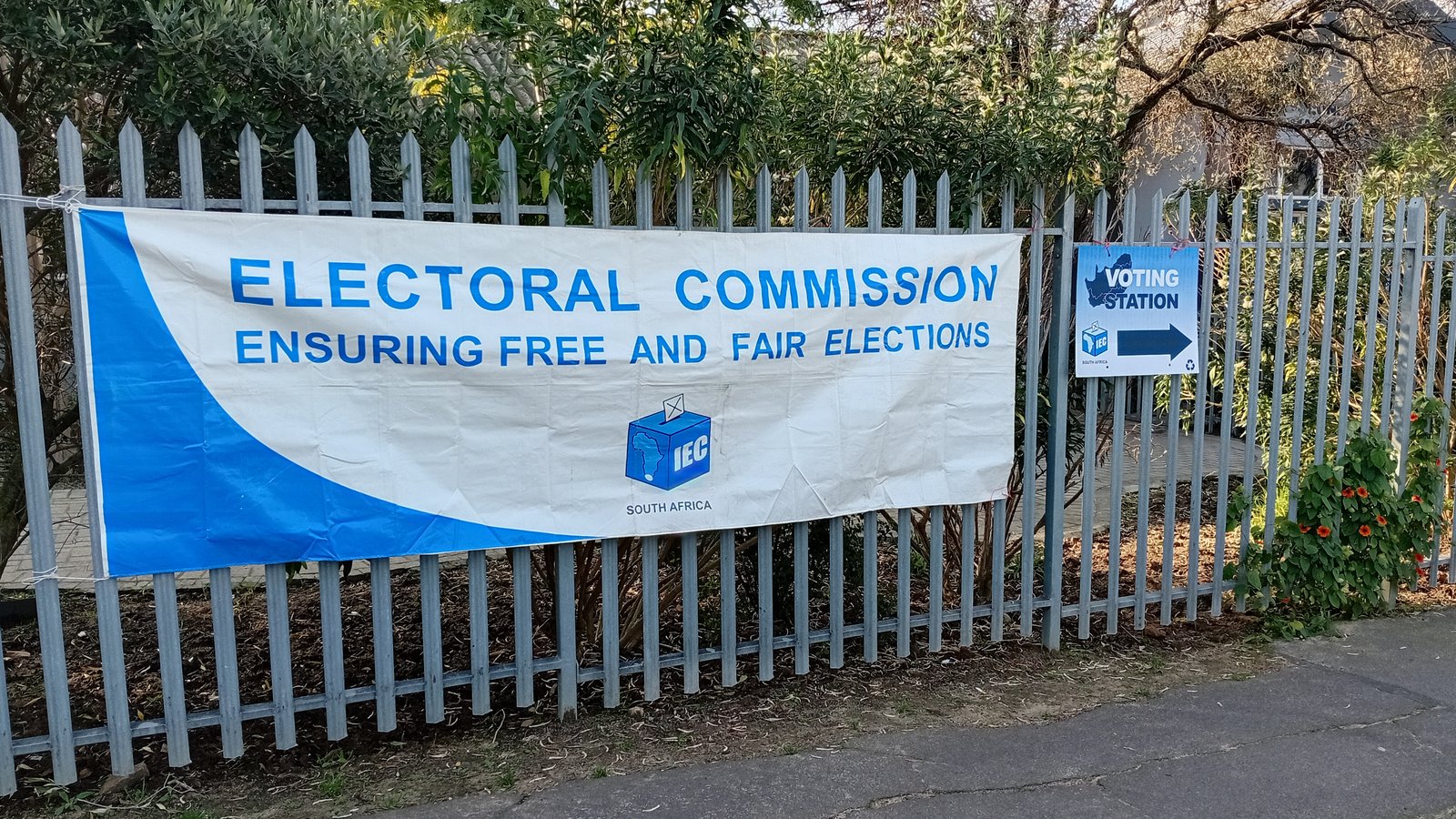
Photo: Lefcentreright / Wikimedia Commons, CC0
- You can only vote at the station where you registered
- Special vote applications close on Monday 12 October at 5pm
- Your council sets the price of your water and electricity
On Wednesday 4 November, more than 23,000 school halls, community centres and tents across South Africa open their doors at 7am.
More than 29 million people are on the voters' roll, according to the Electoral Commission (IEC). They will choose the councils that fix potholes, send the water bill and decide what a unit of electricity costs.
This guide answers the questions people are typing right now. It is updated every month until the results are in.
What changed this month?
- 7 October 2026: Special vote applications close on Monday 12 October at 5pm. Special voting runs on Monday 2 and Tuesday 3 November.
- 16 September 2026: The Electoral Court dismissed the ANC's bid to reinstate 181 candidates in six municipalities, including Mangaung, as reported by Briefly News.
- 28 August 2026: Candidate lists closed. The IEC counted 142,072 candidates for 10,526 council seats.
- 26 August 2026: The final voters' roll was certified.
- 7 August 2026: The election date was proclaimed and the voters' roll closed at midnight.
When are the local elections in 2026?
The local government elections are on Wednesday 4 November 2026. Cooperative Governance Minister Velenkosini Hlabisa proclaimed the date on 7 August.
Election day is a public holiday. Voting stations are open from 7am to 9pm. If you are in the queue when the doors close, you will still get to vote.
You are choosing councils for all 257 municipalities. That is 8 metros like Johannesburg and Cape Town, 205 local municipalities and 44 district councils. The country has 4,488 wards this time.
How do I know if I am registered to vote?
There are four easy ways to check.
- SMS your ID number to 32810. It costs R1.
- Go to the IEC website at elections.org.za and enter your ID number.
- Use the IEC app or its WhatsApp line.
- Call the IEC on 0800 11 8000 (toll free).
The reply shows your ward and your voting station. Check it now, even if you voted in 2024. If you moved house and did not update your address, your old station is still the one on record.
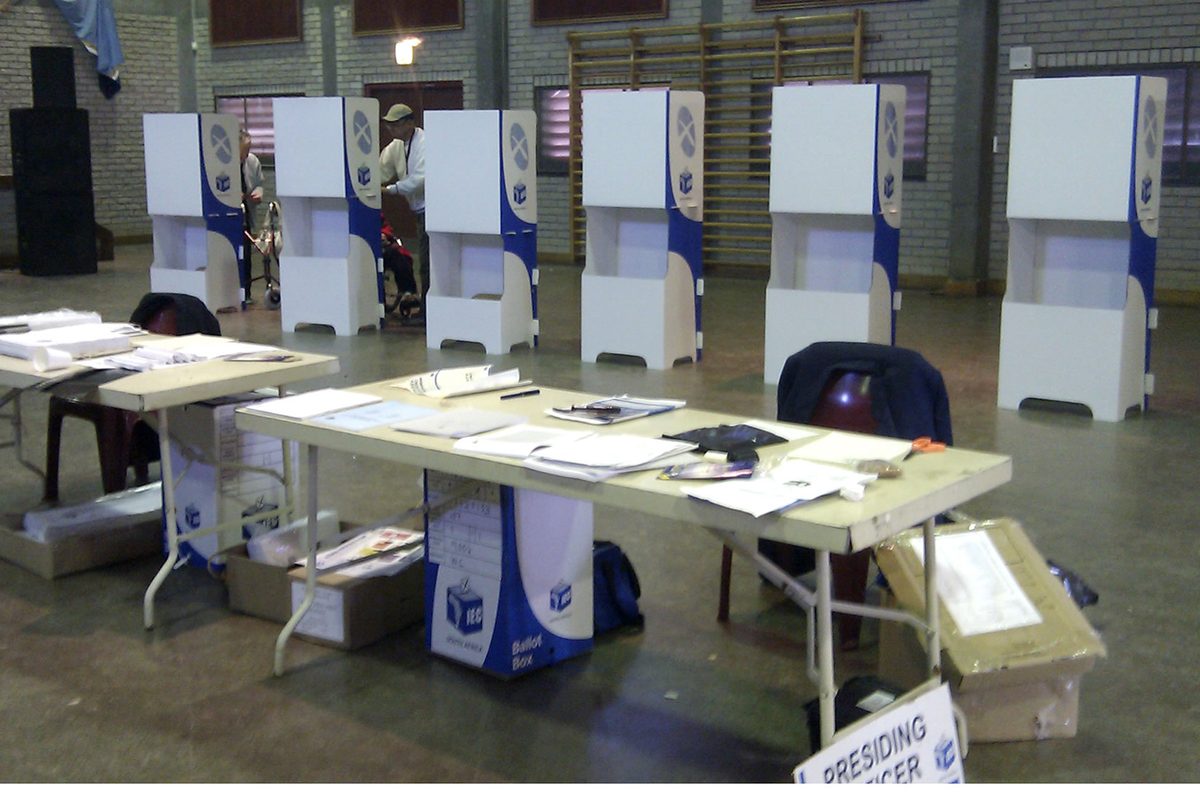
Photo: warrenski / Wikimedia Commons, CC BY-SA 2.0
Can I vote without registering?
No. The voters' roll closed at midnight on 7 August, the day the election was proclaimed. If you were not registered by then, you cannot vote on 4 November.
Online voting does not exist in South Africa either. Every vote is cast on paper in a voting station or during a special vote.
Where do I vote in November 2026?
You vote at the voting station where you are registered. That is the one the SMS or website shows you.
This is the big difference from the 2024 national election. In a local election, you cannot vote at any other station. The IEC says there is "no statutory mechanism" to vote outside the voting district where you registered. Your ward vote is for the person who represents your street, so it only counts in your ward.
Can I vote from overseas?
No. Embassies and consulates only run voting for national and provincial elections. For a local election there is no legal way to vote outside your voting district. South Africans living abroad who are registered must come back to their own voting station to vote.
What ID do I need to vote?
Bring one of these, and only these:
- A green barcoded ID book
- A smart ID card
- A valid temporary identity certificate from Home Affairs
A driver's licence, passport or a photo of your ID on your phone will not work. If your ID was lost or stolen, apply for a temporary identity certificate at Home Affairs before 4 November.
What is a special vote and who can apply?
A special vote lets you vote early, on Monday 2 or Tuesday 3 November, from 8am to 5pm. There are two kinds.
- Home visits. For people who cannot get to a station because of illness, disability, age or pregnancy. IEC staff come to your home, inside your own voting district.
- At your station. For people who will be away or working on election day, like nurses, police officers and journalists. You vote at your own station, two days early.
Applications close on Monday 12 October at 5pm. Apply online at elections.org.za, SMS your ID number to 32249 (station votes only, R1) or hand in a form at your local IEC office.
How many ballots do I get, and what do they do?
Most people get two ballot papers. People outside the eight metros get three.
| Ballot | What you choose | Who gets it |
|---|---|---|
| Ward ballot | A person to represent your ward. Party candidates and independents can stand | Everyone |
| PR ballot (proportional) | A party for your city or town council | Everyone |
| District ballot | A party for your district council, which handles some services across several towns | Only voters in local municipalities, not metros |
Roughly half of each council is ward councillors. The other half comes from party lists, shared out so each party's total seats roughly match its share of the vote. Of the 142,072 candidates, 975 are independents standing in wards.
Photo: Suzi-k / Wikimedia Commons, CC BY-SA 3.0
What does a ward councillor actually control?
More than most people think. The Constitution gives municipalities the services you touch every day. The rest belongs to the province or national government.
| Your municipality | Your province | National government |
|---|---|---|
| Water and sanitation | Schools | Police (SAPS) |
| Electricity to your house and its price | Hospitals and most clinics | Home Affairs and IDs |
| Local roads, potholes and stormwater | Provincial roads | SASSA grants |
| Refuse removal | Housing (with metros) | Eskom's power stations |
| Property rates and your municipal bill | National roads | |
| Street lights, parks, building plans, metro police |
Your council sets the rates you pay on your home, the water tariff and, in most cities, the price of electricity. That price still has to be approved by the energy regulator, Nersa.
Who could win Johannesburg, Tshwane, Ekurhuleni and Nelson Mandela Bay?
No party has won a majority in Johannesburg, Tshwane, Ekurhuleni or Nelson Mandela Bay since 2016. All four have been run by coalitions, and mayors have changed several times.
An Ipsos poll published in September put the ANC on 31% and the DA on 27% in Johannesburg. The same poll put the MK Party on 55% in eThekwini. Analysts expect most of the big metros to need coalitions again.
In Mangaung, the ANC holds 51 of 101 seats. After the Electoral Court ruling, its party list is not on the PR ballot there. The party has said it is weighing its next legal step.
Photo: Khaanya96 / Wikimedia Commons, CC BY-SA 4.0
What is happening in Cape Town and the Western Cape?
The DA runs Cape Town with an outright majority. An Ipsos survey done in June and July put it on 46% in the city, with the ANC on 26%, the EFF on 11% and the Patriotic Alliance on 8%. Polls are not results, and the DA has held the city since 2006.
The election also lands during loud talk about the province going its own way. We looked at whether that is even possible in can the Western Cape actually leave South Africa.
What should I do before 4 November?
Check your registration today with an SMS to 32810. Find your ID book, smart card or temporary certificate and put it somewhere you will remember. If you will be working or travelling on the day, apply for a special vote before 5pm on Monday 12 October.
Then look up who is standing in your ward. It is the one ballot where you pick a person, not a party, and that person is the one you phone when the water goes off.
On 4 November, 4,488 wards choose that person. The first results land overnight. In 2021 the IEC declared the final count three days after the vote, so by the weekend you will know who runs your town.
Sources13
- Electoral Commission, special vote applications for the 2026 Local Government Elections
- SAnews, IEC publishes the 2026 election timetable
- SAnews, over 140,000 candidates nominated (IEC figures)
- SAnews, Minister gazettes the election date
- EWN, voters' roll passes 29 million
- IOL, IEC on ID documents, status checks and voting outside your district
- Daily Maverick, local government elections 2026 guide
- Briefly News, Electoral Court dismisses ANC candidate bid
- EWN, how the ANC missed the candidate deadline
- Daily Maverick, Ipsos metro poll
- Cape Argus, Ipsos poll on Cape Town
- Vuk'uzenzele, how to check where you are registered
- Sunday Tribune, voters' roll closes
How does this make you feel?
The week's biggest stories, every Monday
One email. The stories everyone will be talking about, before they do.
Free. One email a week. Unsubscribe anytime.Keep reading
 ExplainedWhy your bank account can go negative without an overdraft
 ExplainedWhat is pneumonic plague? The facts, explained simply
 WorldTrump says Russia is as quiet about plague as China was on COVID