A Harvard aging scientist says he never does these 8 things. We checked the science
He skips breakfast, refuses the airport body scanner and tracks his biological age. We put each habit next to the research. Two are rock solid. One is about a machine you will almost never meet.

Photo: Xuthoria / Wikimedia Commons, CC BY-SA 4.0
- The airport scanner he avoids gives you zero X-rays
- His company once sold to GSK for $720 million
- The habit with the best evidence costs nothing
Six years. That is how long David Sinclair went without a dental X-ray, on purpose.
Sinclair is a professor of genetics at Harvard Medical School and one of the best-known aging researchers alive. He wrote the bestseller Lifespan and argues that aging is a disease we can treat.
This week a fitness coach shared a list of eight "normal" habits Sinclair avoids. It has passed 1.6 million views. The list skips breakfast, refuses airport body scanners and tracks dozens of markers in his blood.
The replies were brutal. "We're selling a product, NAD+," one person wrote. Another asked if he was "that impostor" who "pocketed $720,000,000" from a drug company.
So which habits hold up? We put each one next to the research.
| Habit | What Sinclair says | What the evidence says | Verdict |
|---|---|---|---|
| 1. Eating breakfast | Skip it, eat late in a short window | Big trials find little extra benefit beyond eating less | Mixed |
| 2. Eating all day | Constant insulin switches off "longevity genes" | Shown in yeast and mice, not proven in people | Weak |
| 3. Low NAD+ | NAD+ falls with age, so restore it | It does fall. Pills raise it, but health gains are unproven | Weak |
| 4. Airport body scanners | Take the pat-down, radiation adds up | Today's scanners use no X-rays at all | Weak |
| 5. Mitochondria losing touch | Cell parts stop "talking" with age | Strong in mice, untested in people | Mixed |
| 6. Taking growth hormone | It speeds up aging | Long-lived mice and humans have less of it | Solid |
| 7. Exercise and fasting stress | Small stresses switch on repair | Exercise has huge evidence. Fasting is weaker | Solid |
| 8. Checking biological age | Track 45+ biomarkers | Tests are noisy and often disagree | Weak |
The list on X actually runs to nine points, with two of them numbered 6. We merged the two that cover exercise and fasting.
Should you skip breakfast to live longer?
Sinclair has long said he skips breakfast and eats late in the day. The thread claims he eats in a two-hour window at night.
Fasting does switch on cell repair in the lab. The cleanup process called autophagy won a Nobel Prize, and we explained how your cells eat their own junk when you go hungry.
In people, the results are less exciting. A 2020 trial in JAMA Internal Medicine had 116 adults eat only between noon and 8pm for 12 weeks. They lost about as much weight as people who ate normally.
A year-long trial in the New England Journal of Medicine in 2022 found the same. Eating in a short window plus cutting calories worked no better than cutting calories alone.
Skipping breakfast is fine if it suits you. It is not magic.
Does eating all day switch off your "longevity genes"?
The thread says every meal raises insulin, and high insulin keeps sirtuins switched off. Sirtuins are proteins that help repair cells, and they made Sinclair famous.
Food does raise insulin. That is normal. The link from insulin to sirtuins to a longer life comes from yeast, worms and mice. Nobody has shown it in humans.
Is NAD+ the secret to slowing aging?
NAD+ is a molecule every cell needs to make energy and fix DNA. Levels fall as we age, and Sinclair's lab has studied it for over 20 years.
Most readers missed one detail. The thread itself included an Amazon link to an NAD+ product. That link came from the coach, not from Sinclair.
Small human trials show supplements like NR and NMN raise NAD+ in the blood. One 2021 study in Science found NMN helped muscles use insulin better in 25 women with prediabetes. That is a long way from proof that it slows aging.
Sinclair says he takes NMN daily, as he described in Lifespan. He also co-founded MetroBiotech, a company developing NAD+ boosting drugs.
Are airport body scanners really dangerous?
This is the habit with the biggest gap between the claim and the facts.
Sinclair told the Huberman Lab podcast in December 2021 that he asks for a pat-down instead of the full-body scanner. He also said radiation adds up over a lifetime, which is true.
But the scanners at most airports today use no X-rays at all. They are millimetre-wave machines, which send out radio waves. The US Environmental Protection Agency says they give off far less energy than a cell phone.
The X-ray body scanners people worried about were called backscatter scanners. The US removed all 250 of them by June 2013. The European Union banned X-ray body scanners for passengers in 2011.
Even those old machines gave a tiny dose. The safety limit was 0.25 microsieverts per scan. A microsievert is a very small unit of radiation.
The flight itself gives you far more radiation than any scanner. Cosmic rays get stronger at altitude.

Photo: Erica Fischer / Wikimedia Commons, CC BY 2.0
His dental point has more going for it. US dental guidance from the FDA and the American Dental Association says X-rays should be based on each patient's needs, not a fixed schedule. If you are unsure, ask your dentist why you need one.
Do your cells stop talking to each other as you age?
The thread says mitochondria, the power stations inside your cells, lose touch with the cell's control centre as you age.
This comes from Sinclair's own lab. A 2013 paper in the journal Cell, led by Ana Gomes, found that falling NAD+ broke this link in old mice. Giving old mice an NAD+ booster for one week made their muscle mitochondria look young again.
It is good science. It is also mice. No one has shown the same reversal in people.
Is growth hormone bad for aging?
The thread says Sinclair calls growth hormone "pro-aging." Here the science is on his side.
Ames dwarf mice make almost no growth hormone. In a 1996 study in Nature, males lived 49% longer than normal mice and females lived 68% longer. One detail is off in the thread, though. These were not Sinclair's mice. Other labs ran these studies.
People show a similar pattern. A group in Ecuador with Laron syndrome cannot respond to growth hormone. A 2011 study found almost no cancer and no diabetes among them. Whether they live longer is still unknown.
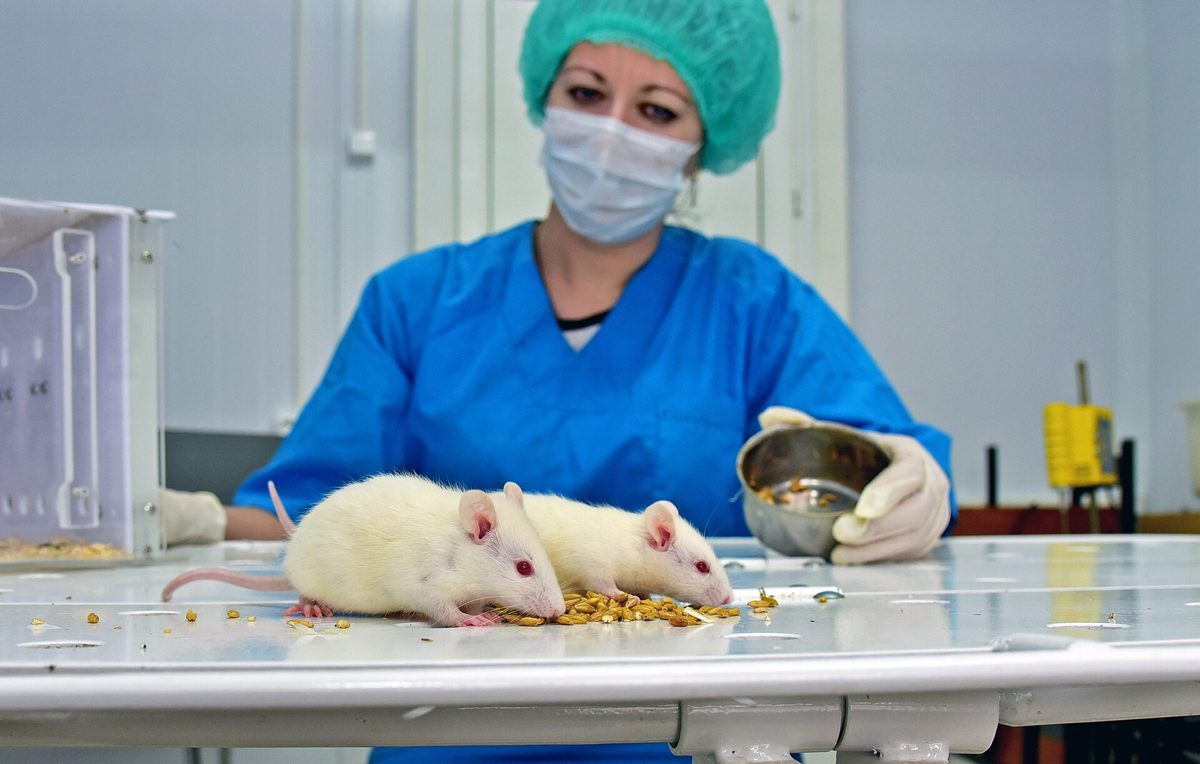
Photo: Galina Fomina / Wikimedia Commons, CC BY 4.0
Does exercise really make you age slower?
Sinclair calls it hormesis: Small, short stresses that make the body stronger. Exercise and fasting switch on AMPK, an energy sensor inside cells.
Exercise is the best-proven habit on the whole list. The World Health Organization says inactive people have a 20% to 30% higher risk of death than active people. Its target is at least 150 minutes of moderate activity a week.
One reply said Sinclair "doesn't work out." He has partly said so himself. He told GQ, in an interview reported in 2023, that he does not exercise every day and usually sleeps under six hours.
Can you trust a biological age test?
Sinclair says he tracks over 45 biomarkers. He also co-founded Tally Health, which sells an at-home biological age test.
Scientists who build these tests warn they are noisy. Aging researcher Morgan Levine, who helped build some of these clocks, has said in a podcast interview that the older ones can differ by up to eight years when the same blood sample is run twice. Newer clocks are steadier, but labs still disagree.
Why do so many people doubt Sinclair?
His science record is real. He joined Harvard in 1999 and became a tenured professor in 2008.
The doubts are real too. In 2004 he co-founded Sirtris, a company built on resveratrol, the red wine compound. GlaxoSmithKline bought it in 2008 for about $720 million. That was the price of the whole company, paid to all its shareholders. GSK stopped one of its main drugs in 2010 and closed the Sirtris office in 2013.
In 2009 and 2010, scientists at Amgen and Pfizer published papers saying resveratrol did not switch on sirtuins the way Sinclair's team had said. His team answered with a 2013 paper in Science. The debate still splits the field. We found no ruling that his work was faked.
Then came the dog chews. In February 2024, Animal Biosciences, a pet company he co-founded and his brother runs, said a supplement was "proven to reverse aging in dogs." No published study backed it. Sinclair said he had been misquoted. A wave of scientists quit the Academy for Health and Lifespan Research, and Sinclair stepped down as its president in March 2024.
Which longevity habits actually work?

Photo: John Robert McPherson / Wikimedia Commons, CC BY-SA 4.0
Strip away the scanners and the supplements, and the strongest items on his list are free.
Move most days, aiming for at least 150 minutes a week. Skip growth hormone unless a doctor prescribes it for a medical reason. Eat less if you need to, whatever time suits you. Get a dental X-ray when it has a reason.
And for good measure, keep the coffee. Big studies link it to nearly two extra years of healthy life.
A walk around the block will do more for you than any test you can buy.
Sources22
- The list of Sinclair's habits on X (Nolan Chandler, 7 Oct 2026)
- Huberman Lab podcast episode 52 with David Sinclair (Dec 2021), airport scanners and dental X-rays
- US EPA, Radiation and airport security scanning
- FDA, letter on full-body X-ray scanners and the 0.25 microsievert limit
- RadiologyInfo.org (ACR and RSNA), radiation doses of X-rays and flights
- CNN, TSA removes backscatter body scanners (May 2013)
- National Academies, Airport Passenger Screening Using Backscatter X-Ray Machines (2015)
- Lowe et al., time-restricted eating trial, JAMA Internal Medicine (2020)
- Liu et al., time-restricted eating with calorie restriction, NEJM (2022)
- Yoshino et al., NMN in women with prediabetes, Science (2021)
- Gomes et al., Declining NAD+ disrupts nuclear-mitochondrial communication, Cell (2013)
- Brown-Borg et al., Dwarf mice and the ageing process, Nature (1996)
- Guevara-Aguirre et al., Laron syndrome in Ecuador, Science Translational Medicine (2011)
- World Health Organization, physical activity fact sheet
- Fortune, Sinclair's habits, citing his GQ interview (July 2023)
- FoundMyFitness, Morgan Levine on consumer epigenetic age tests
- Fortune, Sinclair co-founds Tally Health (March 2023)
- Xconomy, GlaxoSmithKline shuts down Sirtris five years after $720M buyout (2013)
- Pacholec et al. (Pfizer), resveratrol and SIRT1, Journal of Biological Chemistry (2010)
- Beher et al. (Amgen), resveratrol and SIRT1, Chemical Biology & Drug Design (2009)
- Hubbard et al., SIRT1 activators, Science (2013)
- STAT News, Sinclair and the dog supplement claim (March 2024)
How does this make you feel?
The week's biggest stories, every Monday
One email. The stories everyone will be talking about, before they do.
Free. One email a week. Unsubscribe anytime.Keep reading
 FoodSkip meals and your cells start eating their broken parts
 FoodYour coffee may be slowing down how fast you age
 ExplainedWhat is pneumonic plague? The facts, explained simply