Bill Gates wants to tax the robot that takes your job
Headlines in late October made it sound like Bill Gates is cheering machines replacing workers. Read his own words, and it is almost the opposite.

Photo: European Commission - Photographer: Lukasz Kobus / Wikimedia Commons, CC BY 4.0
- Gates wants a tax on robots and AI tokens, not more of them
- He is calling for jobs called "Human Reserved," kept for people only
- Industry already rejected the idea within days
New to this? How much of your "safe" index fund is really just 7 AI stocks
"Hire the robot, fire the human, and don't look back."
That is the headline one tabloid put on Bill Gates's latest warning about artificial intelligence in late October. Read only that line, and you would think the Microsoft founder wants your job gone and does not care.
He does not. In an essay he published on 26 August 2026, Gates spent close to 6,000 words arguing for close to the opposite. He wants a tax that slows companies down from swapping workers for machines. He also wants a list of jobs that no robot or AI should ever be allowed to take, no matter how good it gets.
What did Bill Gates actually ask governments to do?
Gates wants governments to tax AI tokens and physical robots, roughly the way a worker's pay gets taxed. The money raised would go toward retraining people who lose their jobs to automation and toward a stronger safety net while they look for new work, he says.
He is not new to this idea. He first raised a robot tax back in February 2017, in an interview with the news site Quartz. Nine years later, he came back to it with a sharper version aimed squarely at the AI boom.
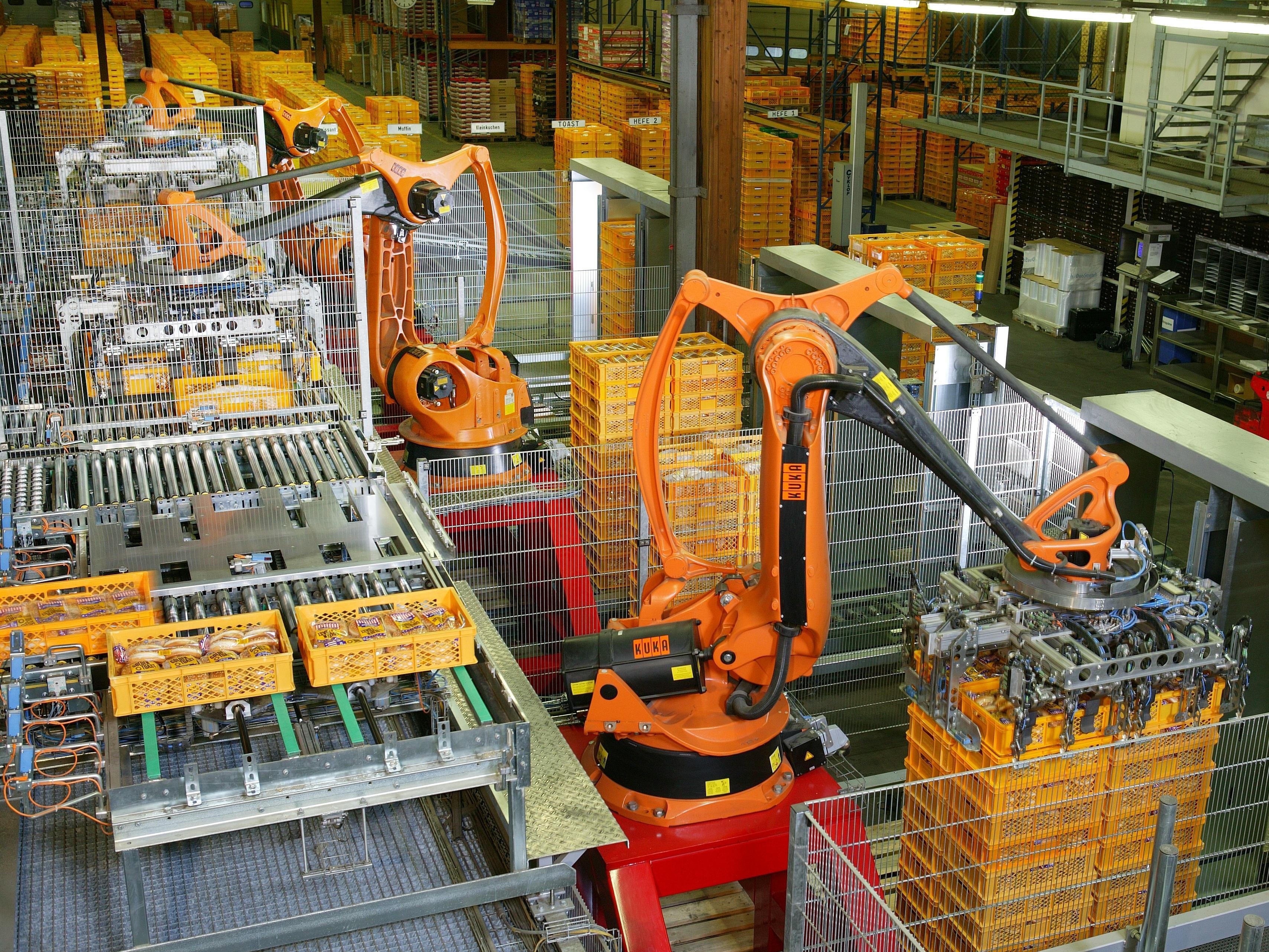
Photo: KUKA Roboter GmbH, Bachmann / Wikimedia Commons, Public domain
Why does your boss pay tax on you, but not on a robot?
Here is the loophole Gates is pointing at. Hire a person, and a business pays payroll tax on every month of their wage. Buy a robot, or a year of AI tool use, and a business can usually write the cost off right away as a normal expense, the same as buying a laptop.
 Read nextScammers already know your account details before they call, and that is what makes them so convincing
Gates says that gap "nudges" companies toward machines over people, even when a person would do the job just as well. His fix is to put a tax on the robot and on the AI tokens a chatbot or AI system burns through, closing the gap between what a worker costs and what a machine costs.
Which jobs would Bill Gates never hand to a robot?
This is the part most headlines skipped. Gates calls it "Human Reserved," and he compares it to a nature reserve. Society could develop that land and make more money from it. It chooses not to, because the loss would be too great.
He floats setting aside as much as 40% of jobs under the most aggressive version of the idea. Some fit easily, he says, like childcare and jury service. Others would be a mix, like education and healthcare, where a person stays in charge of the room while AI helps them do more.
Has anyone tried to tax robots before, and did it work?
In the nine years since Gates first raised a robot tax, only one government has actually gone through with something like it, and robot sales there fell by more than a quarter afterward. Everyone else who has proposed one, including Gates himself this time, has been turned down or ignored.
| Date | Who proposed it | What it said | What happened |
|---|---|---|---|
| Feb 2017 | Bill Gates, Quartz interview | Tax a robot about the same as the $50,000 job it replaces | Debated worldwide, no law passed anywhere |
| 2017 | European Parliament | An EU-wide robot tax | Voted down, called for a robotics rulebook instead |
| Aug 2017 | South Korea's government | Cut the tax break on factory automation from 7% to 3% for big firms | Robot installations fell 28% compared with Japan's |
| Feb 2023 | US Senator Bernie Sanders | A federal robot tax, crediting Gates for the idea | Proposed in a book, no vote reached Congress |
| Aug 2026 | Bill Gates, Gates Notes essay | AI token and robot tax, plus Human Reserved jobs | Industry rejected it within days |
Why did businesses say no?
The International Federation of Robotics, the industry's own trade group, rejected Gates's idea almost as soon as it landed. The group argued a robot tax would make new equipment more expensive and hamper productivity, and said Gates was trying to "solve a problem that does not exist" because automation creates jobs too, by making companies more productive overall.
 Trending nowPinetown dad fires back at gunmen at his gate, and what the law says
That rejection is the gap at the heart of this story. Gates is warning that the swap from humans to machines is happening too fast and wants a brake on it. The people building and selling the robots say there is nothing to brake.

Photo: Bookmark Content / Wikimedia Commons, CC BY-SA 4.0
How many jobs has AI already cut in 2026?
While the argument plays out, the layoffs keep landing. Tech companies have cut around 135,000 jobs in 2026, more than the roughly 122,600 cut in 2025, and this time nearly every company has named AI as a reason rather than hiding behind vague language.
Oracle cut tens of thousands of roles and told staff plainly that AI adoption was behind it. Amazon cut 16,000 jobs. Meta cut about 8,000, roughly 1 in 10 of its staff. PayPal, Wix and the project management company ClickUp all announced cuts tied to AI over the past year, some as high as a fifth of their workforce. Netflix just trimmed its own staff too, and economists are already mapping out which jobs are likely to go first in Britain as companies there follow the same playbook.
The bigger forecasts split down the middle. The World Economic Forum's Future of Jobs Report, published in January 2026, expects AI to wipe out 92 million jobs worldwide by 2030 while creating 170 million new ones, a net gain on paper of 78 million. But those are not the same people. A warehouse worker who loses a job rarely becomes an AI engineer the next week. Goldman Sachs economists put the number of jobs merely exposed to AI automation, not necessarily lost, at 300 million worldwide, a figure that has been getting misquoted as a job-loss count since they first published it in 2023.
None of that uncertainty is helping the stock market swings tied to AI spending, where every earnings call now comes with a headcount number attached.
So was the tabloid wrong?
Technically, no single word in that headline was invented. Companies really are firing humans and hiring robots, and Gates really did say AI will replace people "for most things" within about a decade, with a short list of exceptions he has mentioned before, like nobody wanting to watch a robot play baseball.
But the tone was backwards. Gates is not the man cheering from the sidelines as the robot clocks in and the human clocks out. He is the one asking governments to put a toll booth in the way, and so far, every government and every industry group he has asked has told him to take it down.
Get the stories that hit your pocket
Petrol, SARS, Eskom, grants and the news everyone is talking about. One short email every weekday at 6am.
Free. One email each weekday. Unsubscribe anytime.Sources7
- Manufacturing Dive, Industry rejects Bill Gates' call for robotics and AI tax (27 Aug 2026)
- Yahoo Finance, Bill Gates wants up to 40% of jobs reserved for humans, not AI
- Daily Mail, Hire the robot, fire the human and don't look back
- Fortune, Bill Gates says robots should be taxed like workers (2017)
- CNBC, Bill Gates: AI will replace humans for most things within 10 years
- TechCrunch, the running list of 2026 tech layoffs where employers cited AI
- World Economic Forum, Future of Jobs Report 2026 (Davos)
Keep reading
 Money7 companies are winning AI. The other 493 aren't
 ExplainedHow much of your "safe" index fund is really just 7 AI stocks
 MoneyAudi's $4 billion US plant and Germany's job cuts, same decision