Party schools, police "service stations" and R54 billion in trains. How far does China's reach go inside South Africa?
Every dot here comes from a court, a commission, a government statement or an investigation. Put them side by side and a bigger question appears, one Pretoria has never fully answered.
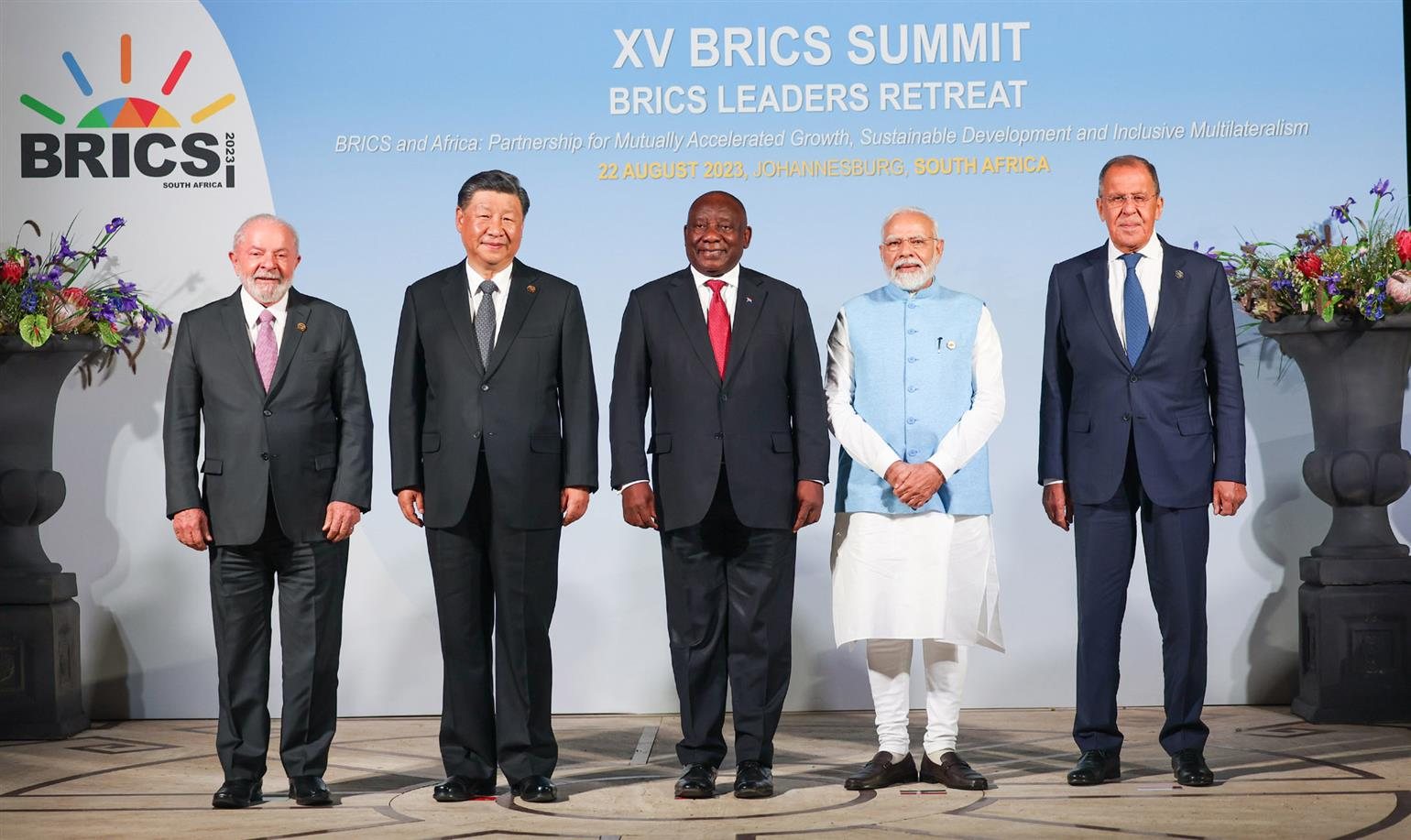
Photo: Prime Minister's Office (India) / Wikimedia Commons, GODL-India
- The ANC planned a party school modelled on a Chinese Communist Party academy
- A Chinese police service desk opened in Johannesburg in 2022
- South Africa moved Taiwan's office out of Pretoria in 2025
In May 2022, a Chinese-language newspaper in South Africa ran a short notice. A "Johannesburg Service Station" of the police in Fuzhou, a city in China, had officially opened.
It sat inside a community centre in Johannesburg. Months later, a human rights group in Madrid put it in a report about Chinese police outposts in 53 countries.
That is one dot. There are many more. They involve the ruling party, our trains, our newspapers and our foreign policy.
None of this is about ordinary Chinese South Africans, who have been part of this country for generations. It is about states, parties and companies. So we lined up only what is documented, to see how far China's influence really reaches.
Is China infiltrating South Africa?
That is the question people type into Google. The honest answer starts with a relationship that is decades old.
The ANC's ties with the Chinese Communist Party go back decades. After 1994 the friendship grew, and South Africa switched its official recognition from Taiwan to Beijing in 1998.
Today China is South Africa's biggest trading partner. In 2024 the two countries traded about $34 billion in goods. Leaders meet often, and Deputy President Paul Mashatile co-chaired a big bilateral meeting with China's vice president in Cape Town in March 2026.
Friendship is not a crime. The question is what comes with it.
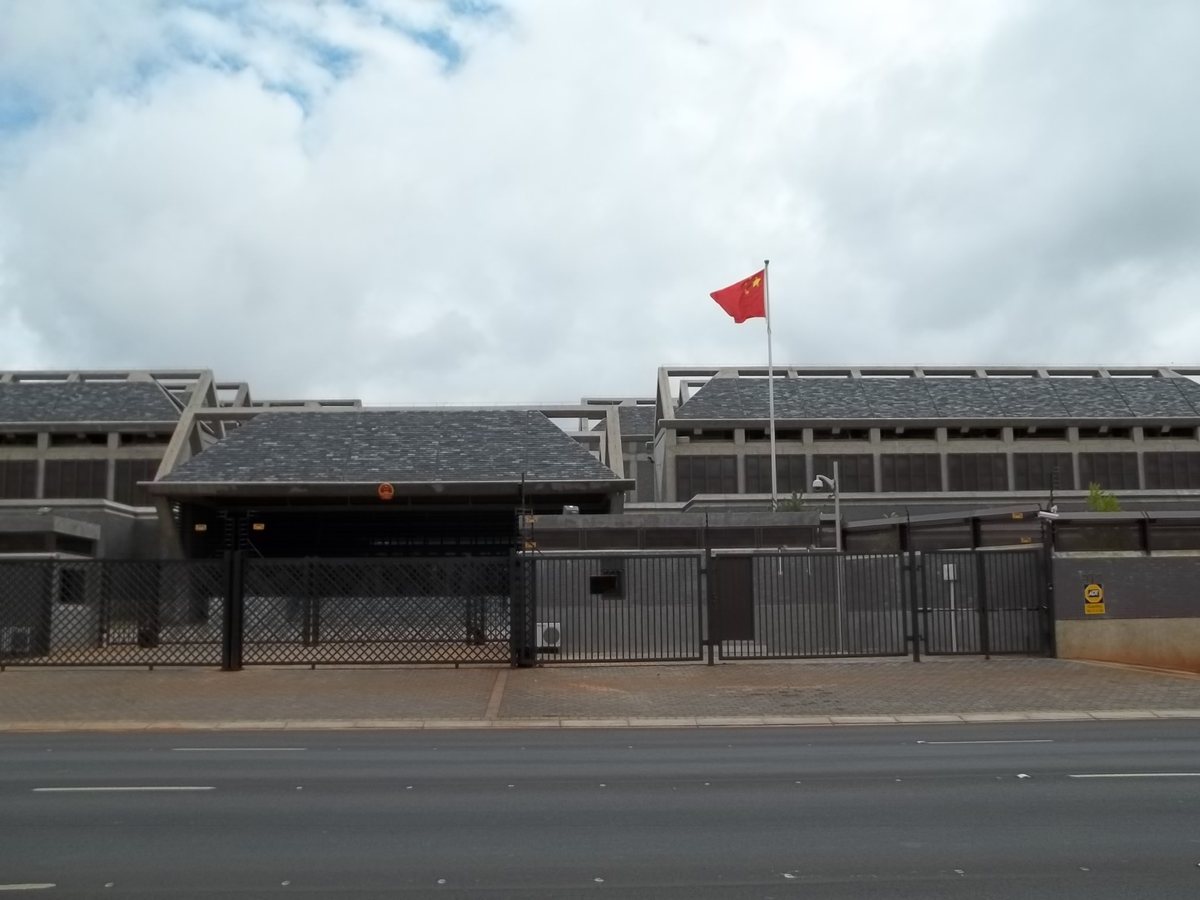
Photo: Kransky / Wikimedia Commons, CC BY 3.0
Does the ANC learn from the Chinese Communist Party?
Yes, and the party says so openly.
At its 2007 Polokwane conference the ANC decided to build a political school. It bought a farm at Venterskroon, on the Vaal River, in 2010. Writer Martin Plaut reported in the New Statesman that the school was to be modelled on the China Executive Leadership Academy Pudong in Shanghai, one of the Communist Party's cadre training schools. Other international reports described the project as Chinese-inspired and Chinese-financed.
Trips to China followed. In 2018, TimesLIVE reported that the ANC planned to send 300 cadres to a Chinese party academy. ANC spokesperson Pule Mabe said the party sends cadres "to the party school in China" from time to time.
Not everyone liked it. Fikile Mbalula, then the ANC's elections head, asked why the party would "look to China for propaganda when they are an undemocratic state."
Five years later, Mbalula himself led a 20-member ANC delegation on a two-week study trip to China, in June 2023. It included all nine provincial secretaries.
There is also a school outside our borders. In 2022 the Mwalimu Julius Nyerere Leadership School opened in Tanzania. The Chinese Communist Party paid about $40 million to build it, and it trains officials from six southern African ruling parties. The ANC is one of them.
Are there Chinese police stations in South Africa?
This is where the story gets murky.
Safeguard Defenders, the Madrid group, published its "Patrol and Persuade" report in December 2022. It listed Johannesburg twice on its map of Chinese police service stations abroad. It said the Fuzhou police desk was set up inside the South African Chinese Community and Police Cooperation Centre.
The report quoted a 2017 article on China's official State Council website. It said Chinese police liaison officers had worked with local Chinese associations to set up these centres in South Africa, and spread them to Lesotho, Mozambique and Tanzania.
Safeguard Defenders says such stations are used worldwide to pressure people to return to China. It did not name a South African victim.
China's consulate in Cape Town has called talk of "13 Chinese police stations in South Africa" fake news. It says the centres date from 2004, are non-profit community bodies, and have no law enforcement powers. SAPS told Africa Check that one centre in the Eastern Cape was "not a police station."
What happened with the Chinese trains at Transnet?
This is the dot with the most official findings behind it.
In 2014 Transnet signed contracts for 1,064 new locomotives. Chinese firms China South Rail and China North Rail, which later merged into CRRC, were among the suppliers. Weeks after signing, the cost of the deal jumped from R38.6 billion to R54.5 billion.
The Zondo State Capture Commission recommended that former Transnet bosses Brian Molefe and Siyabonga Gama be investigated for possible prosecution, over changes to the tender that favoured China South Rail. It also recommended probing directors of the Chinese rail company's local arm for possible corruption.
In 2021 the Special Tribunal froze about R4.2 billion in bank accounts linked to CRRC E-Loco. The Special Investigating Unit said it believed the money was "proceeds of unlawful activity." The Reserve Bank and SARS had raised suspicion that CRRC paid kickbacks, disguised as business development deals, to entities linked to state capture.
In 2025 the case reached the dock. Molefe, Gama, former CFO Anoj Singh and former engineer Thamsanqa Jiyane face fraud and corruption charges. Former minister Malusi Gigaba appeared in the dock in November 2025. All are presumed innocent. Gigaba says the "facts, not fiction, will finally prevail."
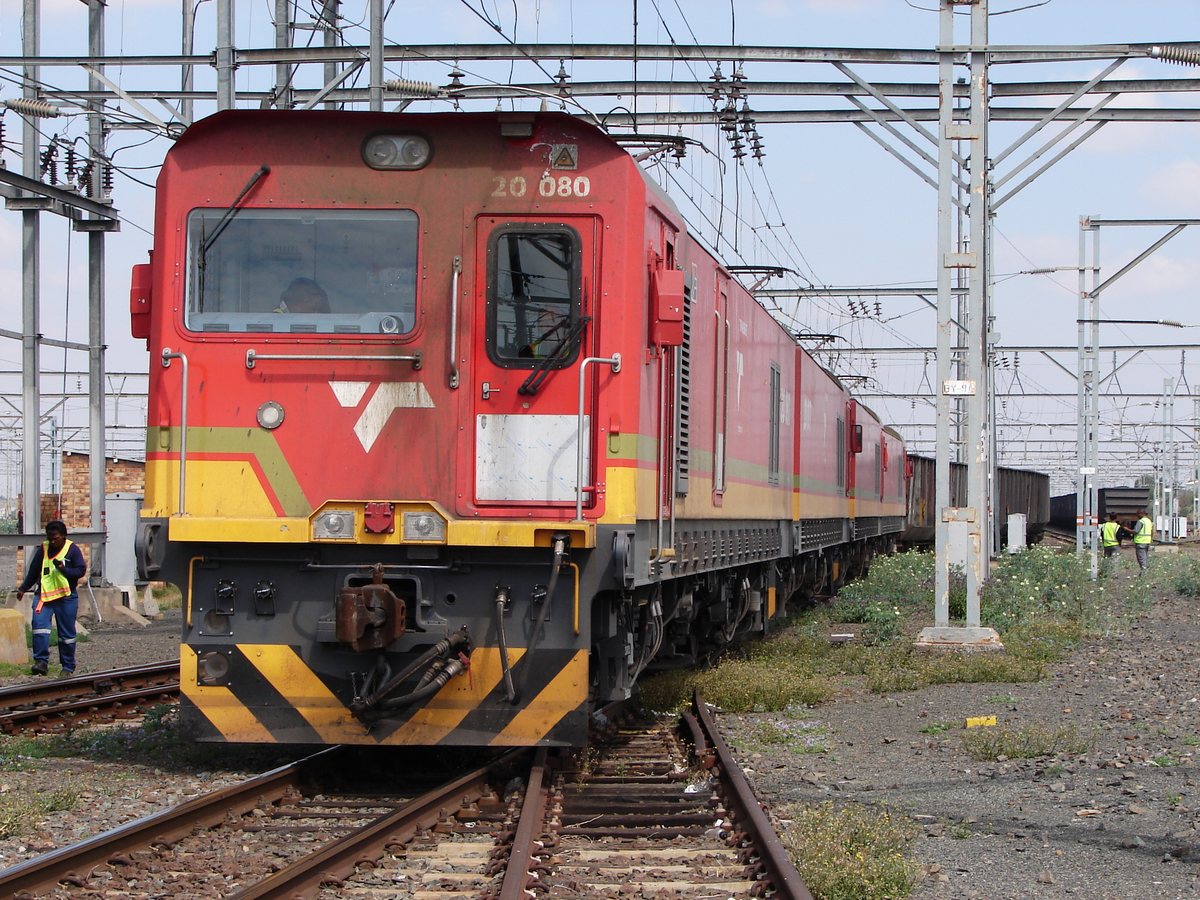
Photo: Col André Kritzinger / Wikimedia Commons, CC BY-SA 3.0
Does China own South African media?
In 2013 Sekunjalo bought Independent Media, the group behind The Star, Cape Times and IOL. Two Chinese state-linked investors took a 20% stake. One was China International Television Corporation, owned by state broadcaster CCTV. The other was the China-Africa Development Fund.
Iqbal Survé told the Mail & Guardian at the time that "the Chinese consortium does not have control." State Media Monitor says the group signed a content-sharing deal with China Media Group, the parent of CGTN, in 2025.
On the airwaves and phones, Chinese firms are everywhere too. Telkom launched 5G with Huawei technology in 2022, after the US warned that Huawei could be forced to hand data to Beijing. Huawei has rejected the US warnings.
Why did South Africa move the Taiwan office?
Look at the pattern in foreign policy.
The Dalai Lama was refused or blocked from visiting South Africa three times in five years. In 2012 a South African court found officials had "unreasonably delayed" his 2011 visa, and reports said it was out of fear of angering Beijing.
In October 2024 Pretoria told Taiwan to move its office out of the capital. In July 2025, days after Mashatile's visit to China, the government gazetted the change. The office became the Taipei Commercial Office in Johannesburg. DIRCO cited the One China policy. Taiwan accused South Africa of bowing to Beijing.
In January 2026 our navy held drills in Simon's Town with China and Russia. Defence scholar Abel Esterhuyse warned that "exercises signal intent and values."
Is China taking South African jobs?
South Africa sells China raw materials and buys back finished goods. In 2024 we imported about $21.9 billion from China and sold it $12.2 billion, a gap of roughly $19.7 billion.
Goods from China brought in R105 billion in import tax in 2024/25, Business Day reported. That is more than the next seven countries combined.
ArcelorMittal South Africa blamed cheap imports, mainly from China, when it moved to close long steel plants in 2025, putting about 3,500 direct jobs at risk. The textile industry says cheap Chinese clothing helped wipe out 75,000 jobs since 2002.
Chinese money also sits deep in the economy. China Development Bank lent Eskom $2.5 billion in 2018 for Kusile. ICBC owns a fifth of Standard Bank, and a Chinese consortium bought control of Palabora copper mine in 2013.
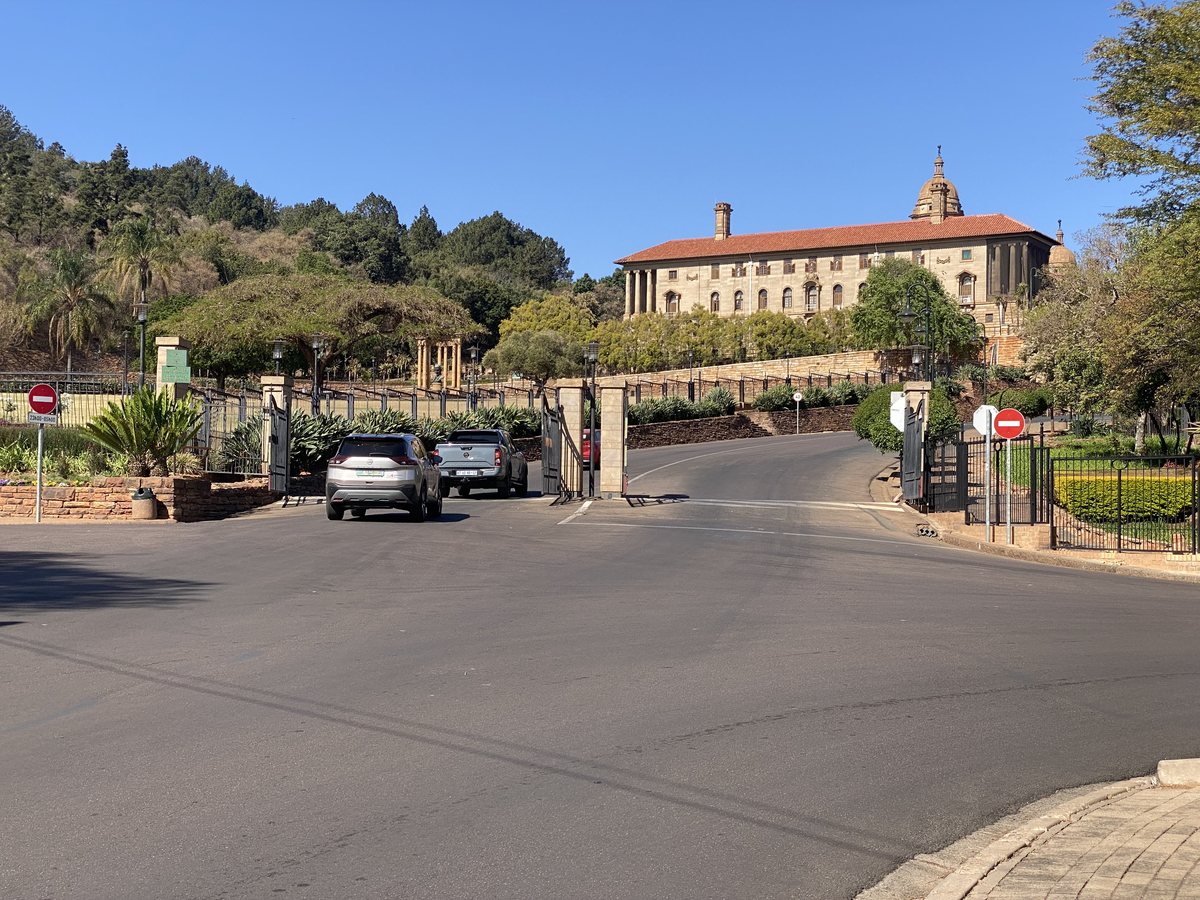
Photo: Ruby D-Brown / Wikimedia Commons, CC BY 4.0
What does China say about its influence in South Africa?
Beijing and Pretoria tell a different story. The IDC says exports to China supported about 330,000 South African jobs in 2024. China has opened duty-free access for African goods from May 2026, and South African apples were first in line.
Foreign Minister Ronald Lamola wrote in 2025 that "engagement is not endorsement." He called it leverage. Pretoria says it engages everyone and joins no bloc.
Washington disagrees. A US House committee passed a bill in 2025 to review ties with South Africa, citing its closeness to the Chinese Communist Party. It is the same political storm that has put the Western Cape independence push and the farm attacks debate in front of American lawmakers.
What we know and what we don't
What we know - The ANC sends cadres to Chinese party schools and planned its own on a Chinese model. - A Fuzhou police service desk opened inside a Johannesburg community centre in 2022. - The Zondo Commission linked the Chinese locomotive deal to possible corruption, and R4.2 billion was frozen. - Chinese state-linked investors bought 20% of a major newspaper group. - Pretoria moved Taiwan's office and blocked the Dalai Lama.
What we don't know - Whether the Venterskroon school was ever finished, or who paid for what. - What the Johannesburg police desk actually did, and for whom. - Whether any money from the train deal ended up in party coffers. - Whether Beijing asked for the Taiwan move, or Pretoria offered it.
How much say does Beijing really have in Pretoria?
Line the dots up and they draw a shape. A ruling party trained in Chinese classrooms. A police desk run from a Chinese city. A R54 billion train deal under criminal trial. A newspaper group with Chinese state shareholders. A Taiwan office pushed out of the capital days after a trip to Beijing.
Each dot has an innocent explanation on its own. Friendship. Trade. Policing help. One China policy.
But nobody in government has ever explained them together. The Transnet trial will put some of it under oath. When the witnesses start talking, South Africans may finally learn how much of our country's direction is decided at home, and how much is decided in Beijing.
Sources24
- Safeguard Defenders, Patrol and Persuade report (Dec 2022)
- News24, Zondo Commission Transnet report
- SAnews (government), SIU preservation order against CRRC E-Loco
- News24, Transnet ex-bosses charged (2025)
- TimesLIVE, Gigaba in the dock
- Daily Maverick, Taiwan office recognition withdrawn
- Christian Science Monitor / AP, Dalai Lama visa
- Mail & Guardian, Chinese stake in Independent Media
- State Media Monitor, Independent Media profile
- New Statesman, Martin Plaut on the ANC school
- TimesLIVE, ANC looks to China (2018)
- Sunday Tribune, ANC study trip to China (2023)
- Africa Center for Strategic Studies, Nyerere school
- Chinese Consulate Cape Town statement
- Africa Check
- Business Day, China and SA import tax
- Polity, SA trade deficit with China
- EWN, ArcelorMittal closure
- BusinessLIVE, Chinese loans to Eskom and Transnet
- Daily Maverick, US warning on Huawei 5G
- EWN, naval drills with China and Russia
- DIRCO, Lamola on non-alignment
- SAnews, SA-China Bi-National Commission 2026
- Herbert Smith Freehills Kramer, US House bill
How does this make you feel?
The week's biggest stories, every Monday
One email. The stories everyone will be talking about, before they do.
Free. One email a week. Unsubscribe anytime.Keep reading
 PoliticsZondo traced R57 billion. Almost nobody has paid for it
 PoliticsA Cape Town municipal bill, line by line, and where the money goes
 PoliticsTexas Senate poll: Talarico and Paxton are neck and neck