A strange 71 THz signal shows up only in living cells. Scientists think your mitochondria are making it
It hums at 71 trillion beats a second. It shows up in living tissue and nowhere else. A team in Shanghai thinks they know why, and their answer is quantum.
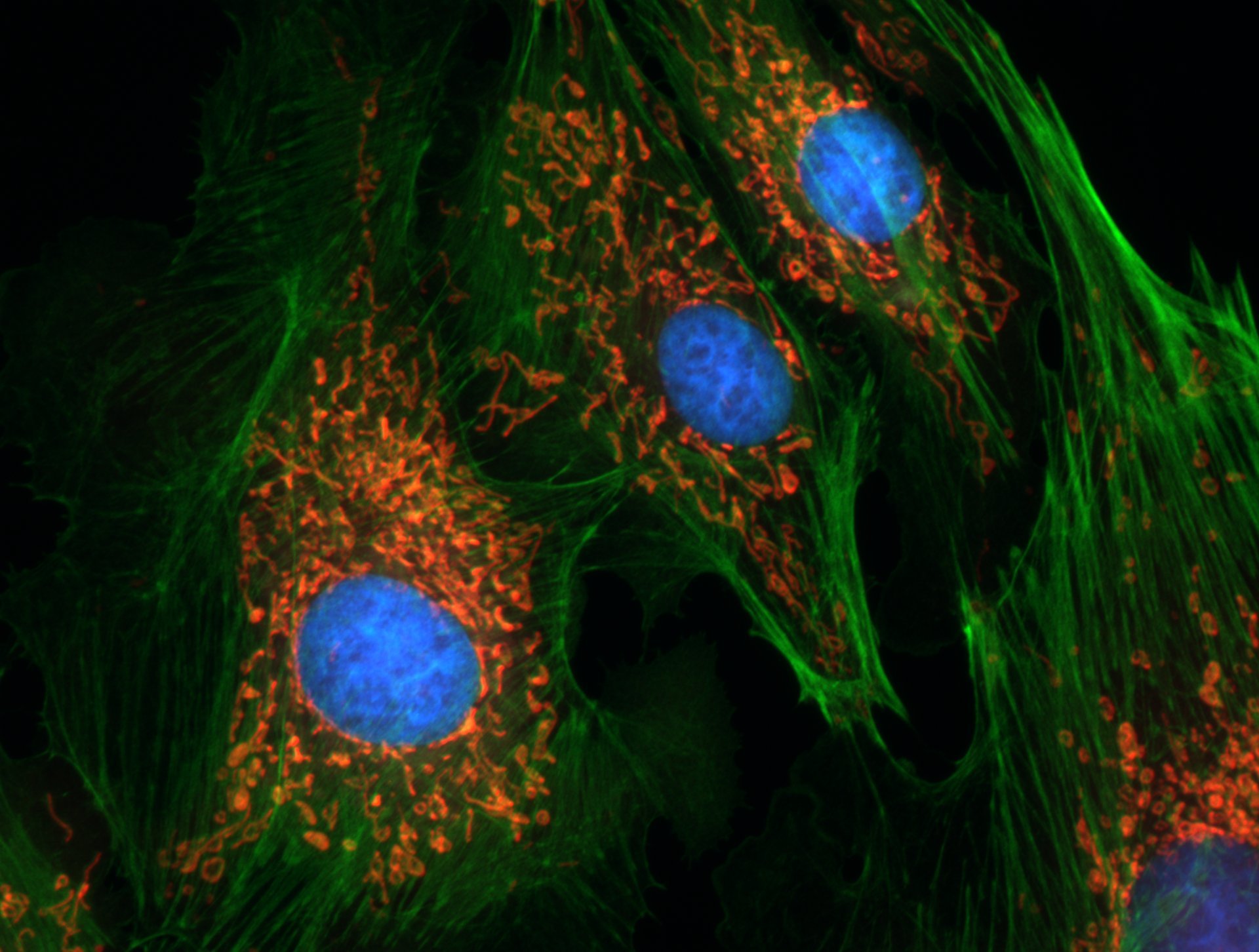
Photo: Erin Rod / Wikimedia Commons, CC BY 4.0
- The signal appears in living cells and vanishes when they are broken
- The right infrared light raised cell energy output by about 10%
- Plants and birds may already use quantum tricks to stay alive
71 trillion times a second.
That is how fast a faint signal vibrates inside living cells. A team in Shanghai found it in human cells, in mouse hearts, livers, kidneys and muscles, and in tiny cell parts called mitochondria.
Then they dried the samples and ground them up. The signal was gone.
The researchers believe it is the sign of a quantum state. That is the strange physics of the very small, which usually falls apart in anything warm and wet, like a body. If they are right, the power plants in your cells may be running on more than plain chemistry.
What is the 71 THz signal in mitochondria?
Mitochondria are tiny parts inside almost every cell in your body. They turn food and oxygen into ATP, the fuel your cells burn to stay alive. Biology class calls them the powerhouse of the cell.
The team, led by Bo Song at the University of Shanghai for Science and Technology, shone infrared light through living samples. Infrared is light just past red, too long for our eyes to see. The tool they used, called FTIR, shows which colours of that light a sample soaks up.
Most of the dips were easy to explain. Proteins left a mark near 50 THz. Fats in cell walls left a strong one near 87 THz.
But one small bump at 71.0 THz did not match any single molecule. It showed up in living cells, in all four mouse organs and in mitochondria taken out of cells. Break the structure apart and it vanished.
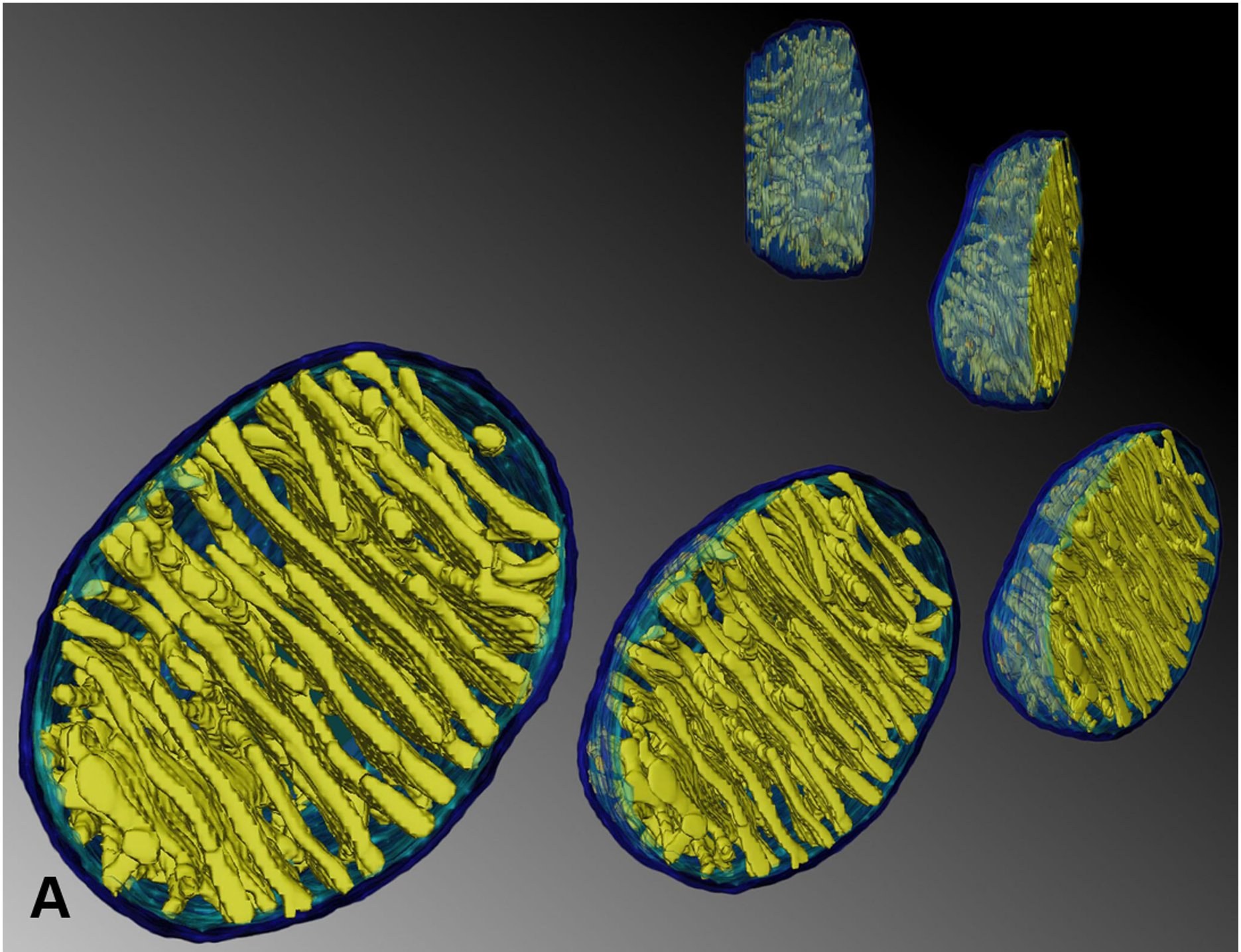
Photo: Terrence G. Frey / Wikimedia Commons, CC BY 3.0
Are mitochondria quantum?
That is the big claim, and it has been seen more than a million times since one post on 7 October said scientists had proved it.
The team's idea starts with shape. Inside each mitochondrion, the inner wall folds over and over like a closed fan. These folds are called cristae. They are packed with fat molecules, and those fats have tiny carbon and hydrogen bonds that wobble at about 87 THz.
The researchers worked out that the size of a mitochondrion fits that wobble almost perfectly. In heart and muscle cells, mitochondria are about 1.2 micrometres long. That is close to half the length of an 87 THz light wave inside a cell wall. So light can bounce back and forth inside, a bit like a note ringing in a guitar body.
What is a mito-polariton?
When light and a vibration ring at the same pitch in the same small space, they can merge. Physicists call the result a polariton. It is part light and part matter at the same time.
The team calls their version a mito-polariton. Their maths says the merge should split the 87 THz wobble into two new notes. One sits near 71 THz, right where the mystery bump appeared. The other sits near 103 THz, where water and proteins make so much noise that it is hard to see.
Only working, folded mitochondria can make the echo chamber. That would explain why dead or crushed tissue goes quiet.
The work is a preprint, which means other scientists have not reviewed it yet. The quantum state itself was not seen directly. It is the explanation the team says fits the signal best. Song told ScienceAlert that the mitochondrial quantum state is a good way to explain the unknown frequency.
Does light affect mitochondria?
This is the part that set people off. The team took living human cells and gave them 10 minutes of very weak infrared light at different frequencies. Then they measured how much ATP the cells made.
| Light frequency | What it matches | Change in ATP |
|---|---|---|
| 71 THz | The mystery signal | Up 10.3% |
| 87 THz | The fat bond wobble | Up 10.1% |
| 53.7 THz | Nothing (the control) | No real change |
The light was gentle, at 10 microwatts per square millimetre. Each test used eight samples of one human cell line. The team says the quantum state could make the cell's energy cycle run more efficiently, and that it might even play a part in how living things pass along information.

Photo: Francis C. Franklin / Wikimedia Commons, CC BY-SA 3.0
Is quantum biology real?
Quantum biology sounds like science fiction. It is a real field, and this study adds a new piece to it.
Photosynthesis came first. In 2007, a team at the University of California, Berkeley reported signs of quantum behaviour in how light energy moves through the parts of bacteria that do photosynthesis. The energy seemed to test several paths at once and pick the fastest.
Then came birds. Many European robins migrate at night and find their way by the Earth's magnetic field. The leading idea is that a protein in their eyes, called cryptochrome, uses a pair of linked electrons that react to magnetism. In 2021, researchers showed in the journal Nature that the robin's version of this protein is sensitive to magnetic fields in the lab.
The problem has always been heat. Quantum states are fragile. Labs cool them close to absolute zero to keep them alive. A human body is hot, wet and busy. The Shanghai idea suggests the folds of a mitochondrion might act as a shelter where a quantum state can survive long enough to matter.
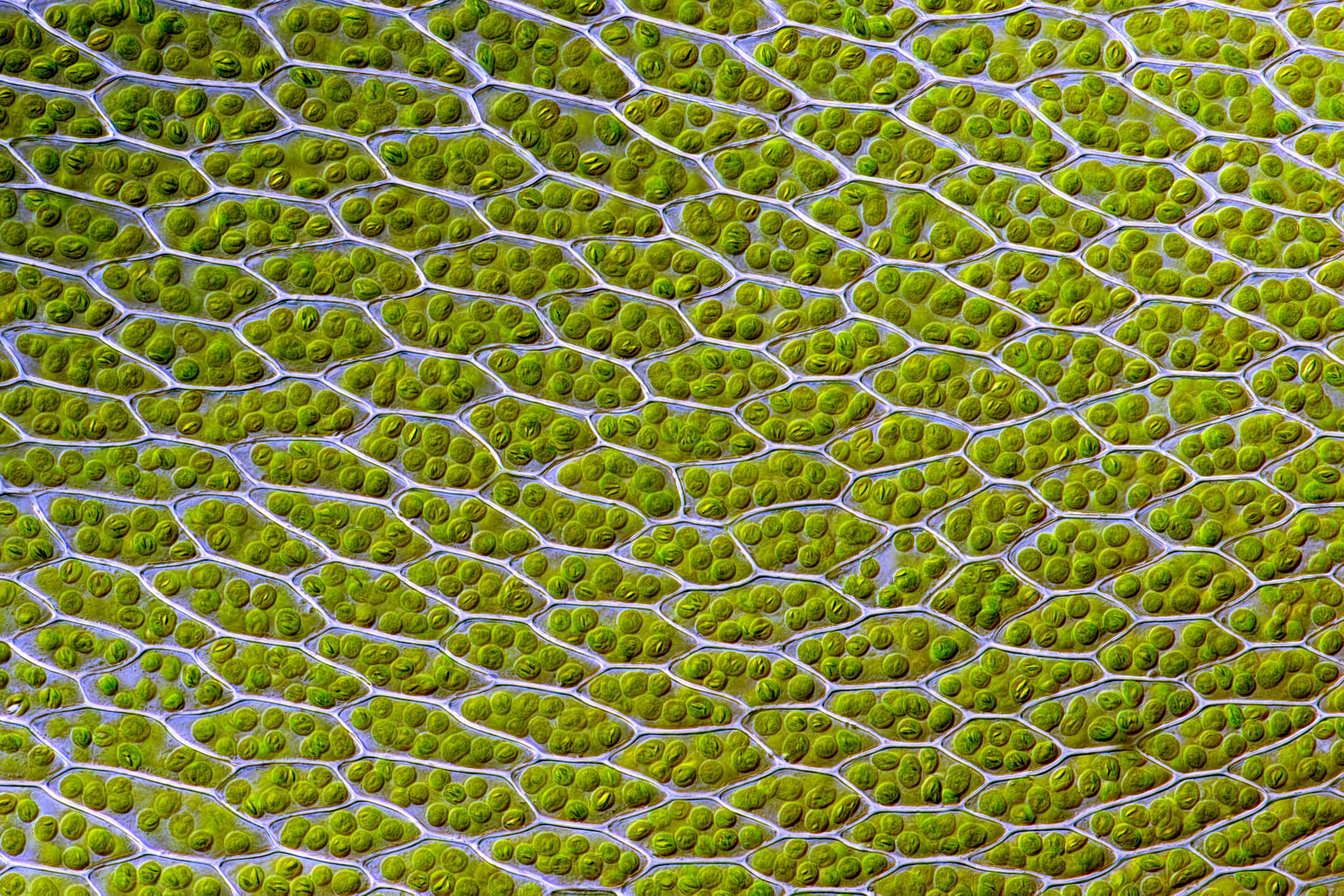
Photo: Des_Callaghan / Wikimedia Commons, CC BY-SA 4.0
Do incandescent bulbs help your mitochondria?
The replies went straight to light bulbs. Many people pointed out that old incandescent bulbs pour out infrared light, while modern LEDs give off almost none. Some wondered if decades of indoor lighting has quietly changed the light our cells live in.
"The living force is real," one reply said. Plenty agreed that science may be catching up with an old idea: Life has a spark that dead matter does not.
The study does not test bulbs, sunlight or people. Its light was tuned to exact frequencies in a dish. But the question it raises is a fair one. If you want more on the habits scientists use to look after their cells, see what a Harvard ageing researcher says he never does, or how fasting makes cells clean themselves out, a discovery that won a Nobel Prize.
Why does this matter?
For most of its history, biology has explained life with chemistry. Molecules bump into each other, react and pass energy along. It works. But it has never fully explained how cells waste so little energy.
Song's team is pointing at something else. They describe a hidden note that only living tissue plays, made inside an echo chamber of folded fat, where light and matter blend and seem to turn up the power at the right pitch.
Next, the team wants to catch both notes, the 71 and the 103, at the same time. They also want to reshape mitochondria and watch whether the signal follows.
If it does, almost every cell in your body may be humming a quantum note right now. And the moment that note stops is the moment a cell stops being alive.
Sources6
- The original post on X (7 Oct 2026)
- Yang, Gu and Song, A quantum state of mitochondria in the living cell, bioRxiv preprint (15 Sep 2026)
- The Brighter Side of News, Scientists propose a light-matter quantum state inside living cells
- Das Wetter, Chinese researchers find a possible quantum state in living cells (with Bo Song's comments to ScienceAlert)
- Engel et al., Nature (2007), quantum coherence in photosynthetic energy transfer
- Xu et al., Nature (2021), magnetically sensitive cryptochrome 4 in night-migratory songbirds
The week's biggest stories, every Monday
One email. The stories everyone will be talking about, before they do.
Free. One email a week. Unsubscribe anytime.Keep reading
 ViralHow did Karl Bushby pay for a 28-year walk? The money story
 ViralThe swarm asked an AI to give itself up. Read its answer
 ViralFortnite player arrested after Epic sent his voice chat to the FBI