Archaeologists found 6,511 Roman dishes on the seabed. Why did they survive 2,100 years?
The ship never reached Rome. Its dinner service did survive, stacked in crates and cushioned in clay, for more than two thousand years.
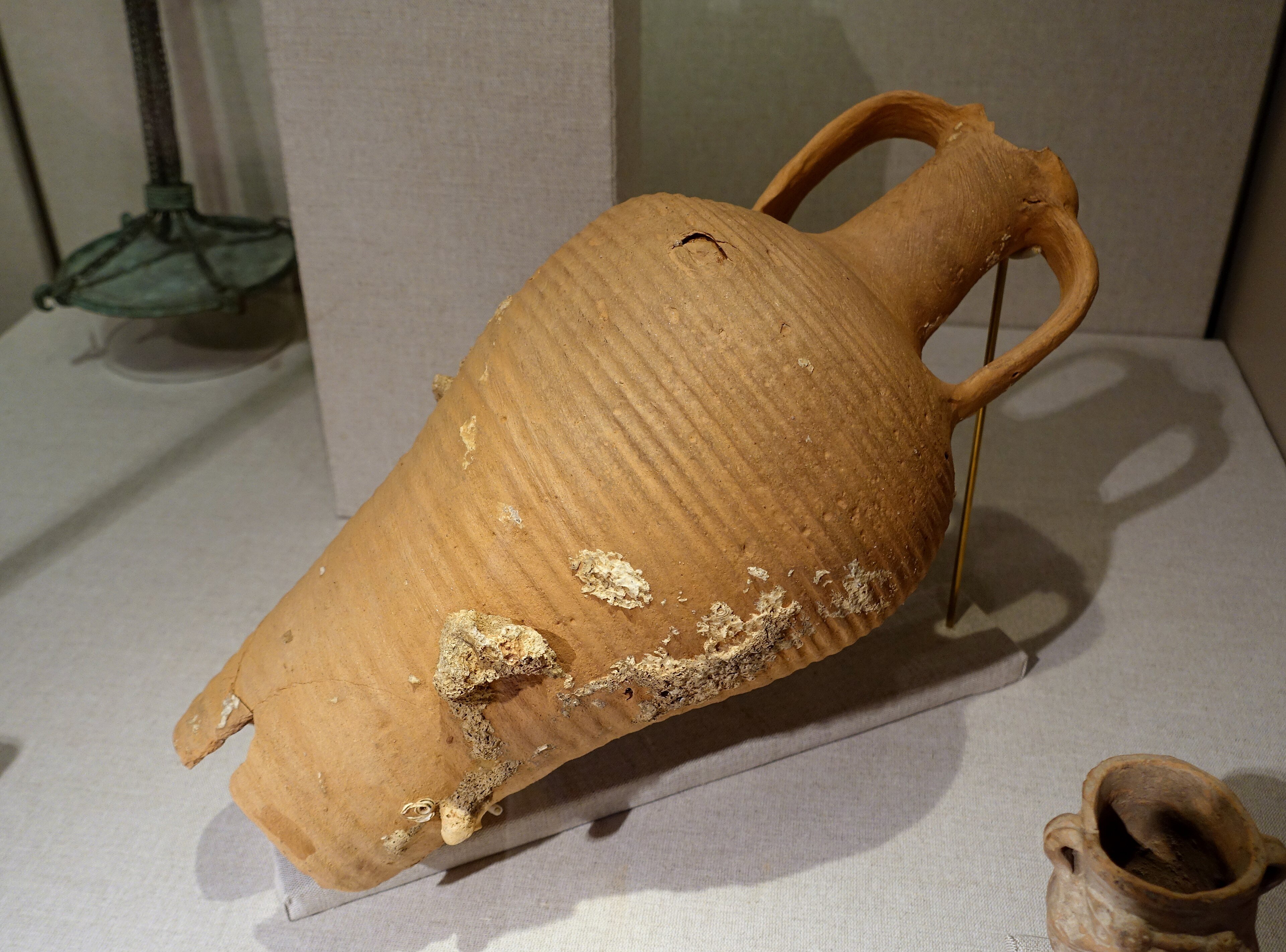
Photo: Daderot / Wikimedia Commons, CC0
- A single wreck held 6,511 plates, bowls and trays
- Clay between the dishes may have saved them
- Cicero wrote a letter ordering this kind of tableware
Imagine opening a crate on the seabed and finding a stack of plates, still in order, after 2,100 years.
That is what archaeologists say they found off the coast of Antalya in Turkey. The ship is known as the Adrasan wreck. Its cargo was 6,511 pieces of fine tableware, plates, bowls and trays, and the pieces came up intact.
It sank on its way, perhaps to Rome. The dishes never made it to a table. But they made it to us.
What was on the Adrasan shipwreck?
Mostly dinner sets. The ministry says the haul so far is 6,511 plates, bowls and trays in 122 different shapes and sizes.
There was more. The ship also carried amphorae, the tall clay jars used for wine and oil. The ministry says some of them were probably made on Aegean islands. Archaeologists also found coins from Antioch, a city in what is now Syria.
| Find | Detail |
|---|---|
| Plates, bowls and trays | 6,511 pieces |
| Shapes and sizes | 122 |
| Coins | From Antioch, 1st century BC |
| Depth | About 42 to 55 metres |
| Age | About 2,100 years |
Turkey's culture minister, Mehmet Nuri Ersoy, said the team is bringing 2,100-year-old tableware to light from the depths of the Mediterranean.
How did thousands of fragile dishes survive 2,100 years?
Look at how they were packed. The sailors, or the workshop, put clay between the dishes. The clay worked like a shock absorber. Then the stacks went into wooden crates.
That packing is the reason the pieces survived, according to the reports. When the ship hit the seabed, the clay held the plates apart so they could not smash into each other.
Depth helped too. The wreck lies about 42 to 55 metres down.
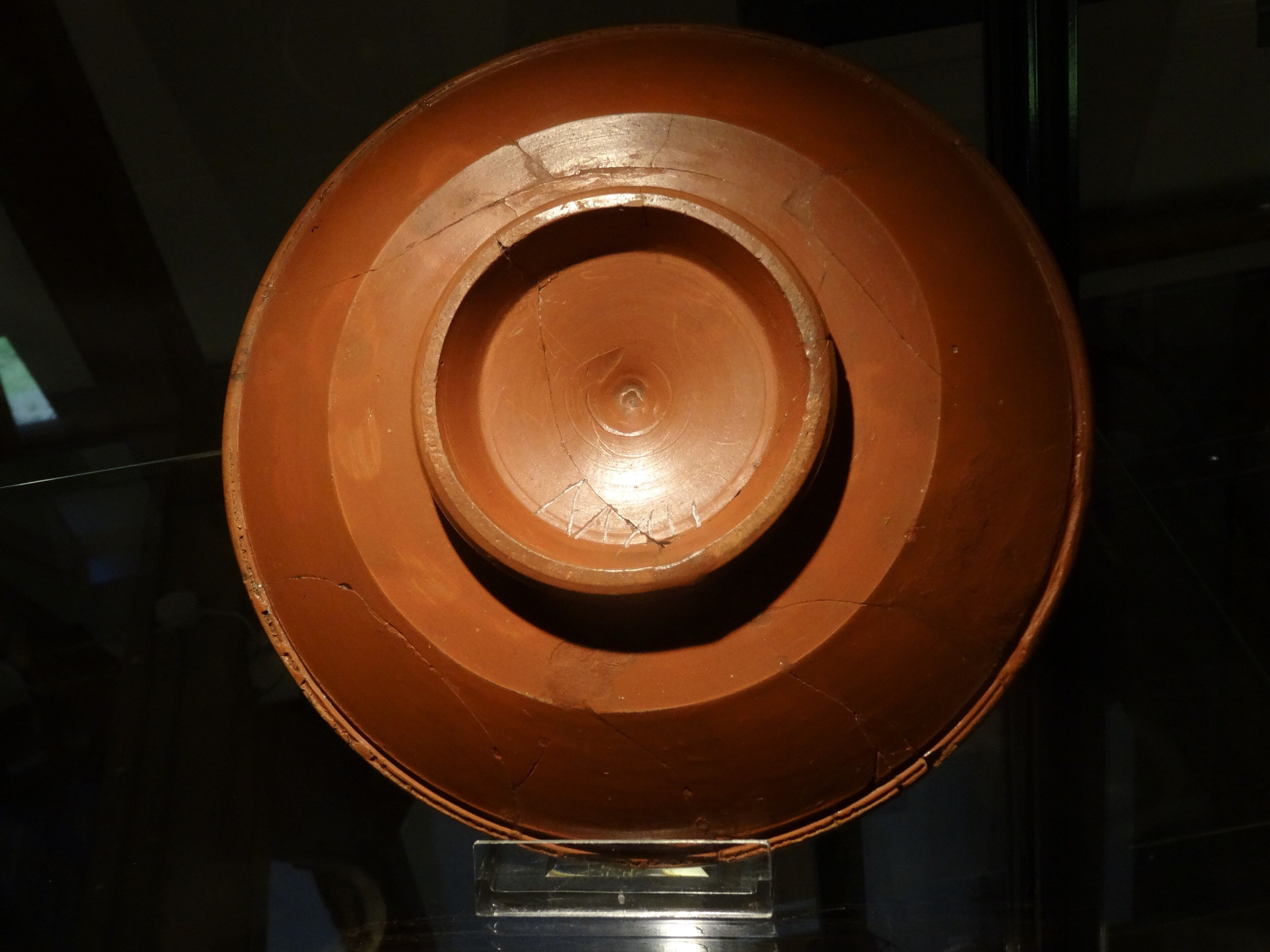
Photo: RomeinenNU / Wikimedia Commons, CC BY 4.0
Who made the dishes?
The ware was made in Rhosus, say the researchers. The town is now called Arsuz, in southern Turkey. Records show it made luxury goods for rich buyers.
The Romans loved the stuff. In the 2nd and 1st centuries BC, wealth poured into Rome on a huge scale, writes the art historian Christopher S. Lightfoot of the Metropolitan Museum of Art. Rich households wanted the best plates for their dinner parties.
So the ship was carrying the kind of goods that sold well. The coins from Antioch suggest a trade web that joined Syria, the Aegean, Greece and the coast of Italy in the 1st century BC.
What did Cicero have to do with it?
A lot of news stories mention him, so here is the link. Marcus Tullius Cicero, the famous Roman speaker and writer, wrote to his friend Titus Pomponius Atticus about ordering "fine" Rhosian ware.
The letter dates to 50 BC, when Cicero was governor of Cilicia, a region in what is now southern Turkey. Gizmodo reports that he joked in it about Atticus serving him vegetarian food on plates with a fern pattern.
So Rhosian ware was not just any pottery. One of Rome's best-known names wanted it on his own table.
Nobody says Cicero owned this shipment. The point is that the ship carried the same kind of ware he asked for.
Where was the ship going, and what sank it?
The ministry says the ship may have sailed from Arsuz towards Rome. Then it struck a shoal during a storm. The coins help date the wreck to around the middle of the 1st century BC.
A ship full of dinner plates, a storm, and a hidden shoal. That is all the record gives. The crew is unknown, and so is the ship's name.
Here is the timeline so far.
| When | What happened |
|---|---|
| Mid 1st century BC | The ship sinks, probably on the way to Rome |
| 50 BC | Cicero writes about ordering Rhosian ware |
| 2025 | Underwater excavation begins |
| September 2026 | Turkey's ministry announces the tableware |
| Today | The dig continues |
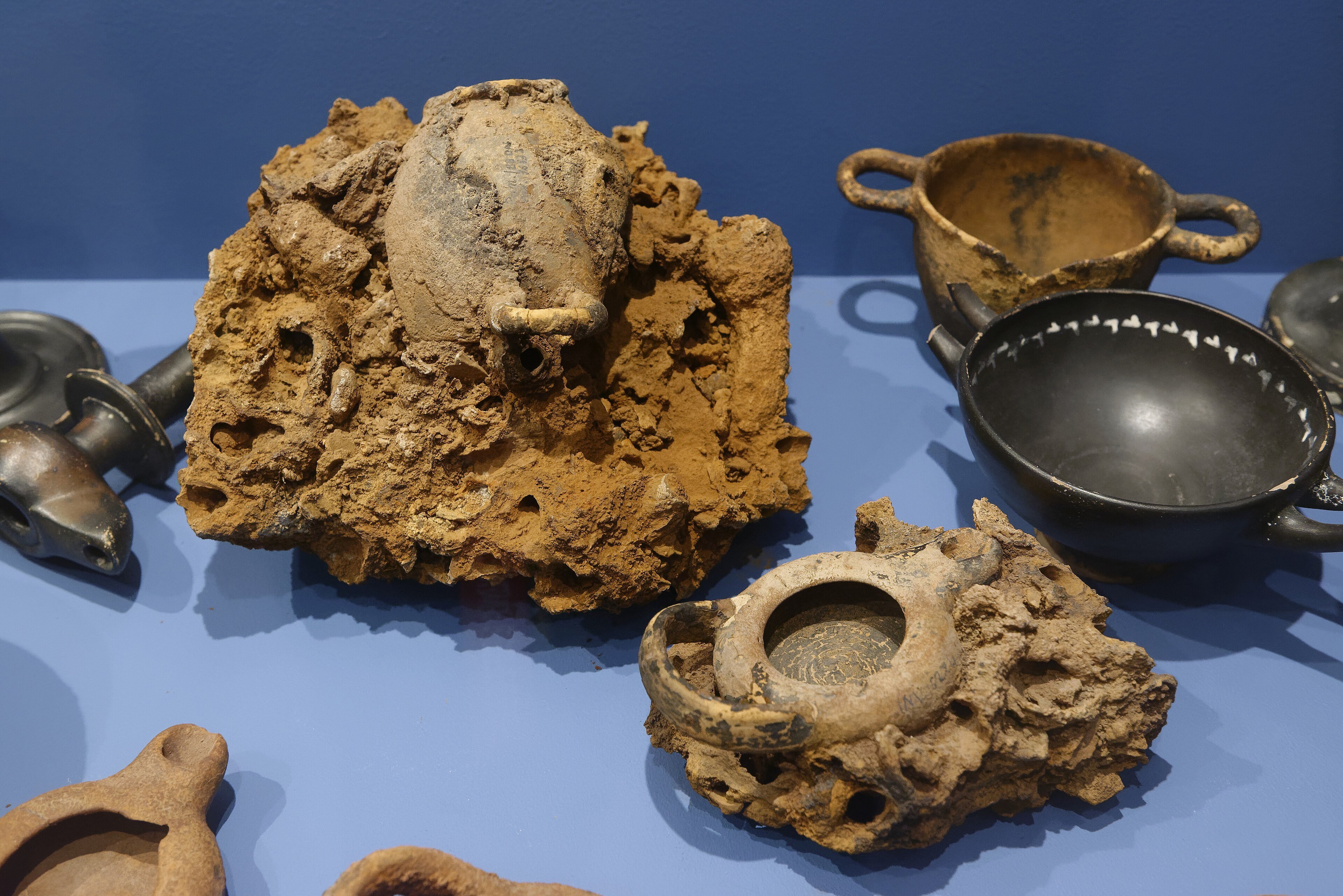
Photo: Marie-Lan Nguyen / Wikimedia Commons, Public domain
How deep is the wreck?
The ministry gives a range of about 42 to 55 metres, which is roughly 138 to 180 feet. Some reports quote slightly different depths, so treat the numbers as close, not exact.
Think of a tall block of flats turned upside down. At the top of that range, the seabed is as far below the surface as the roof of an 18-storey building is above the street.
The team works with the help of underwater robots at that depth.
Why do shipwrecks give us a better picture than museums?
Much ancient pottery turns up in pieces. A wreck is different. It freezes a single moment, with the goods still in the order they were loaded.
Here, archaeologists can see a whole shipment of Rhosian ware together. They can count the shapes, see how many of each were packed, and learn what a merchant thought would sell in Rome.
Six thousand five hundred and eleven plates, bowls and trays is not a chance find. It is a sales order that never got delivered.
How are archaeologists digging it up?
A team from the Underwater Archaeology Research Center at Akdeniz University leads the work, with public partners. The team began excavating in 2025 with Turkey's Ministry of Culture and Tourism. They are working with the help of underwater robots at depths of 42 to 55 metres.
After the dive, extra fragments went to the university's conservation lab in Kemer for study and care.
The minister said the objects carry Anatolia's craftsmanship and the Mediterranean's trading history into the present day. They are also a reminder that ordinary things, like a plate, can outlast a whole empire.
How many dishes are still down there?
Nobody knows. The count is 6,511 so far, and the dig is still going.
Every crate that comes up could hold another stack in perfect order. One day soon, a diver may lift the lid on a box that has been shut since before Rome had an emperor.
Sources5
- Gizmodo, this 2,100-year-old shipwreck carried 6,511 luxury dishes (2 Oct 2026)
- Smithsonian Magazine, ship carrying stacks of ancient dishware
- Nautilus, thousands of fancy dishes have survived a 2,100-year-old shipwreck
- bianet, Cicero's order: tableware recovered off Antalya
- Baird Maritime, Adrasan shipwreck yields 122 ceramic forms and sizes
The week's biggest stories, every Monday
One email. The stories everyone will be talking about, before they do.
Free. One email a week. Unsubscribe anytime.Keep reading
 ViralNeanderthals worked wood like us, and a cave in Spain just proved it
 ViralThe 71 THz signal that only living cells give off
 ViralHow did Karl Bushby pay for a 28-year walk? The money story