Neanderthals were woodworkers. A Spanish cave kept the proof in stone
Wood almost never survives 60,000 years. At one Spanish shelter, the rock grew round it and kept the shape.

Photo: Werner Ustorf / Wikimedia Commons, CC BY-SA 2.0
- A 2.45 metre Neanderthal spear was found in Spain
- The wood rotted, but the rock kept a perfect copy
- One club has no known match in the whole prehistoric record
A club with a narrow handle and a bumpy half-moon head. One report puts it at around a foot long.
Nobody alive has seen one like it. The researchers say it has no known parallel in the prehistoric record.
It was made by Neanderthals, tens of thousands of years ago, in a rock shelter near Barcelona. And it is only one of 597 pieces of wood and wood imprints from that site that a team has just reported.
A post from Polymarket on X put the big idea in one line: Neanderthals worked wood like modern humans. The replies were a mix of wonder and jokes. One person wrote "One just built me a bookshelf." Another asked if they were just "really ugly" humans.
What did the Spanish cave actually give up?
The site is Abric Romaní, a rock shelter in Catalonia. A team led by researchers at IPHES-CERCA, including Palmira Saladié, published the study in Science Advances in October 2026.
They went through wood remains collected over about 40 years of digging. The finds come from 16 layers and span roughly 62,000 to 40,000 years ago.
| Find | What the researchers report |
|---|---|
| Spears | Two well-preserved spears, one 2.45 m long and one 1.99 m |
| Club | A carved piece with a 16 cm handle and a half-moon head |
| Bark trays | Four pieces of charred, flattened bark found near hearths |
| Pole | A straight, stripped pole 5.10 m long, likely part of a tripod frame |
| Grill | A crossed-stick frame over a hearth that may have been a grill or smoking rack |
| Small tools | Wooden pellets and awls |
The shorter spear was found with deer remains, stone tools and fire pits.
How can wood last 60,000 years?
It cannot. Wood rots. That is why finds like this are so rare, and why wood has been missing from our picture of Neanderthal life.
At Abric Romaní, the trick was the water. It was rich in calcium carbonate. It poured over the wood and hardened into a rock called travertine, or tufa.
The wood then rotted away. But the rock kept a mould, a hollow copy, sometimes down to the cell structure of the tree.
Think of a jelly mould. The jelly is gone, but the shape is still there. The researchers used 3D recording to bring those hollows back to life.
Did Neanderthals really work wood like modern humans?
That is what the team argues, and they say it was routine. Co-author Gema Chacón said it was "simply part of their technology."
The details back up the idea. The Neanderthals did not grab any stick. Scots pine was used for fire and for sturdy tools. Juniper bark was used for the flexible trays.
That means they chose the right wood for each job. Modern woodworkers do the same.
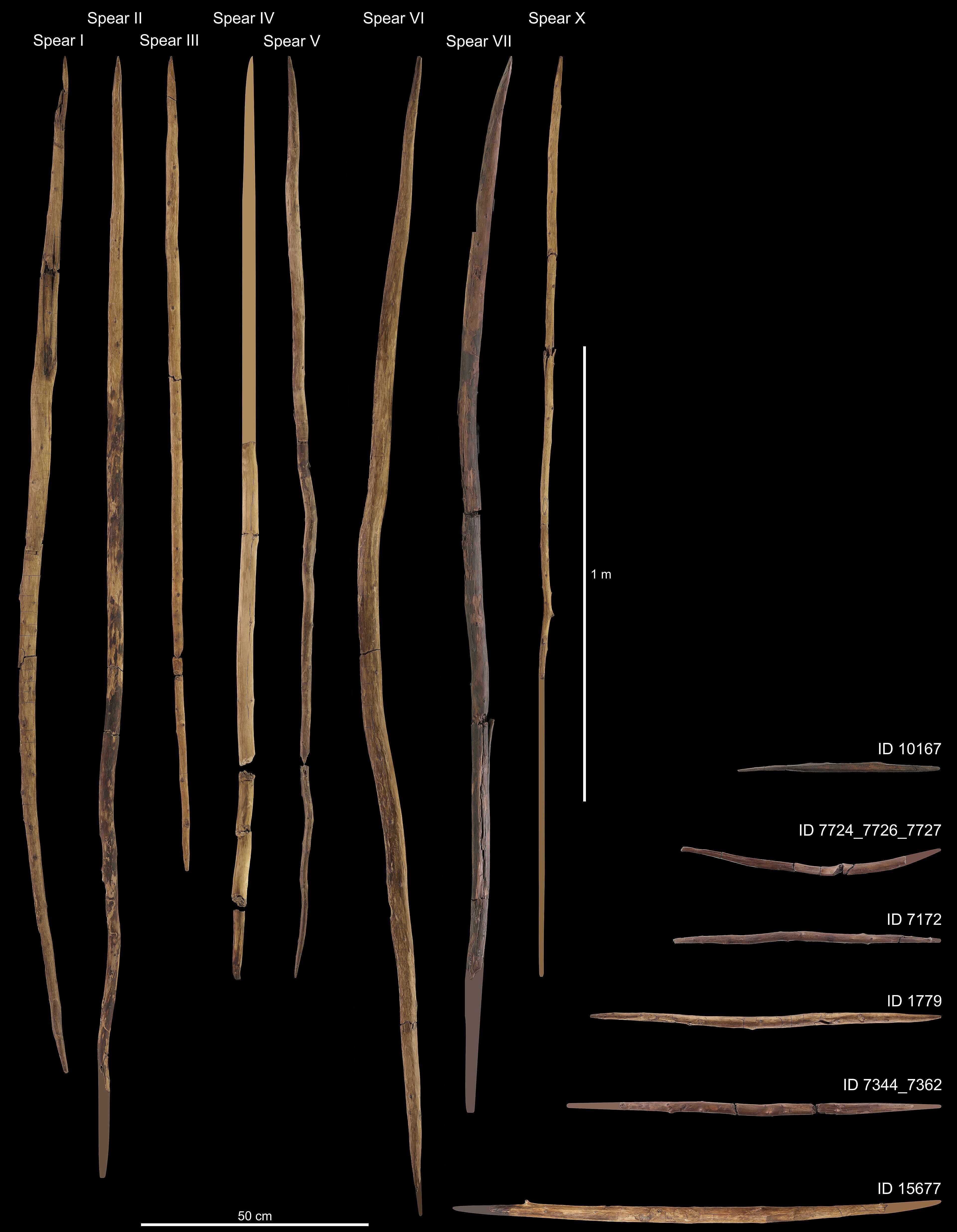
Photo: Matthias Vogel / Wikimedia Commons, CC BY 4.0
Spain is not the first clue. In 2024, a team reported on 187 wooden pieces from Schöningen, in Germany, about 300,000 years old. They saw a splitting technique that experts had only linked to modern humans before. The makers there were early humans from before our species existed, and some experts think they may have been early Neanderthals.
A 2018 study in Italy also found Neanderthals choosing wood with care and using fire to shape digging sticks.
| Site | Age | What it showed |
|---|---|---|
| Schöningen, Germany | About 300,000 years | 187 wooden pieces, with signs of splitting, carving and scraping |
| Poggetti Vecchi, Italy | Reported in 2018 | Digging sticks shaped with fire, from carefully chosen wood |
| Abric Romaní, Spain | About 62,000 to 40,000 years | 597 wood remains, spears, bark trays, a pole and a club |
Was it all spears, or did they build a camp?
Not all of it was for hunting. Some of the pointed sticks may have been digging tools for finding roots and tubers.
The trays are a good example. They sat near the fires. They likely kept food off the ground, or carried things around the camp.
The shelter also had small hearths that worked like personal braziers. Wooden windbreaks kept drafts out of the sleeping area.
It sounds less like a cave and more like a camp that somebody planned. The same people who knapped stone also built with wood.
Then there is the 5.10 metre pole. It is straight, and the bark was stripped off. The team thinks it held up a tripod frame, which could have carried a hide cover or a drying rack.
Some of the wood was charred, too. The Italian study of 2018 also suggested Neanderthals used fire as a tool to shape wood.
Put a spear, a tray, a pole and a grill in one cave, and a picture forms. These people planned a day, from the hunt to the meal to the bed.
For more on ancient lives that surprised scientists, see the story of the baby mammoth called Yana and the servants buried with Egypt's first kings.
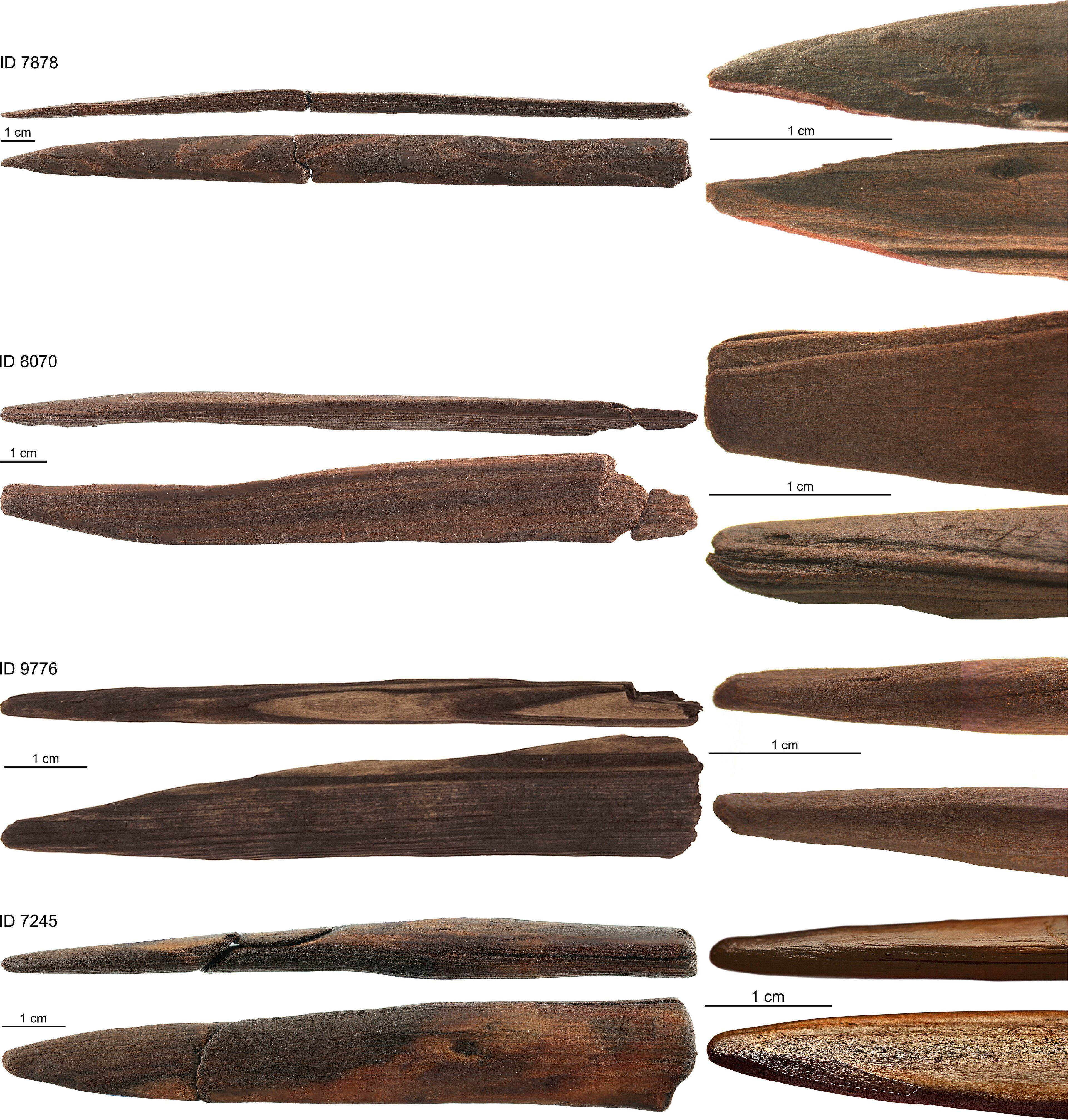
Photo: Matthias Vogel, Jens Lehmann, Dirk Leder / Wikimedia Commons, CC BY 4.0
If they had children with us, are they a different species?
This question kept coming up in the replies. Someone asked whether, if they mated with Homo sapiens and had fertile descendants, they are another species at all.
It is a real debate. Most people living outside Africa today carry roughly 1 to 2 percent Neanderthal DNA. That shows the two groups had children together.
Some scientists still list Neanderthals as their own species. Others see them as a close cousin population. The woodwork adds fuel, because it makes them look more like us every year.

Photo: Motekov / Wikimedia Commons, CC BY-SA 4.0
What was the club for?
The researchers do not know. It might have been a weapon for hunting. It might have been symbolic, something held for show or ritual. Saladié called it "an extraordinary piece."
It was carved from a single block of wood. Nobody has found another one like it, anywhere.
The wood itself is long gone. All that is left is a hollow in a rock, and the rock was in the cave all along. How many more shapes like it are still waiting inside the stone?
Sources5
- The Polymarket post on X (Oct 2026, profile link, exact post URL not found)
- Gizmodo: A wooden club and other rare finds reveal the invisible side of Neanderthal life (7 Oct 2026)
- ARA: Everything that wood reveals of 20,000 years of Neanderthal life at the Abric Romaní
- University of Reading: Wood split 300,000 years ago (Schöningen, 2024)
- PNAS 2018: Neanderthal wood tools and fire at Poggetti Vecchi
The week's biggest stories, every Monday
One email. The stories everyone will be talking about, before they do.
Free. One email a week. Unsubscribe anytime.Keep reading
 ViralThe 71 THz signal that only living cells give off
 ViralHow did Karl Bushby pay for a 28-year walk? The money story
 ViralA man called Hitler Mussolini just won a mayor's race in Peru