Six years' best lead on Amelia Earhart's plane turned out to be driftwood
Thousands had wondered if satellite images finally pinned down Amelia Earhart's crash site. A $900,000 expedition went to check. By the time they reached the island, the clue had almost washed away.
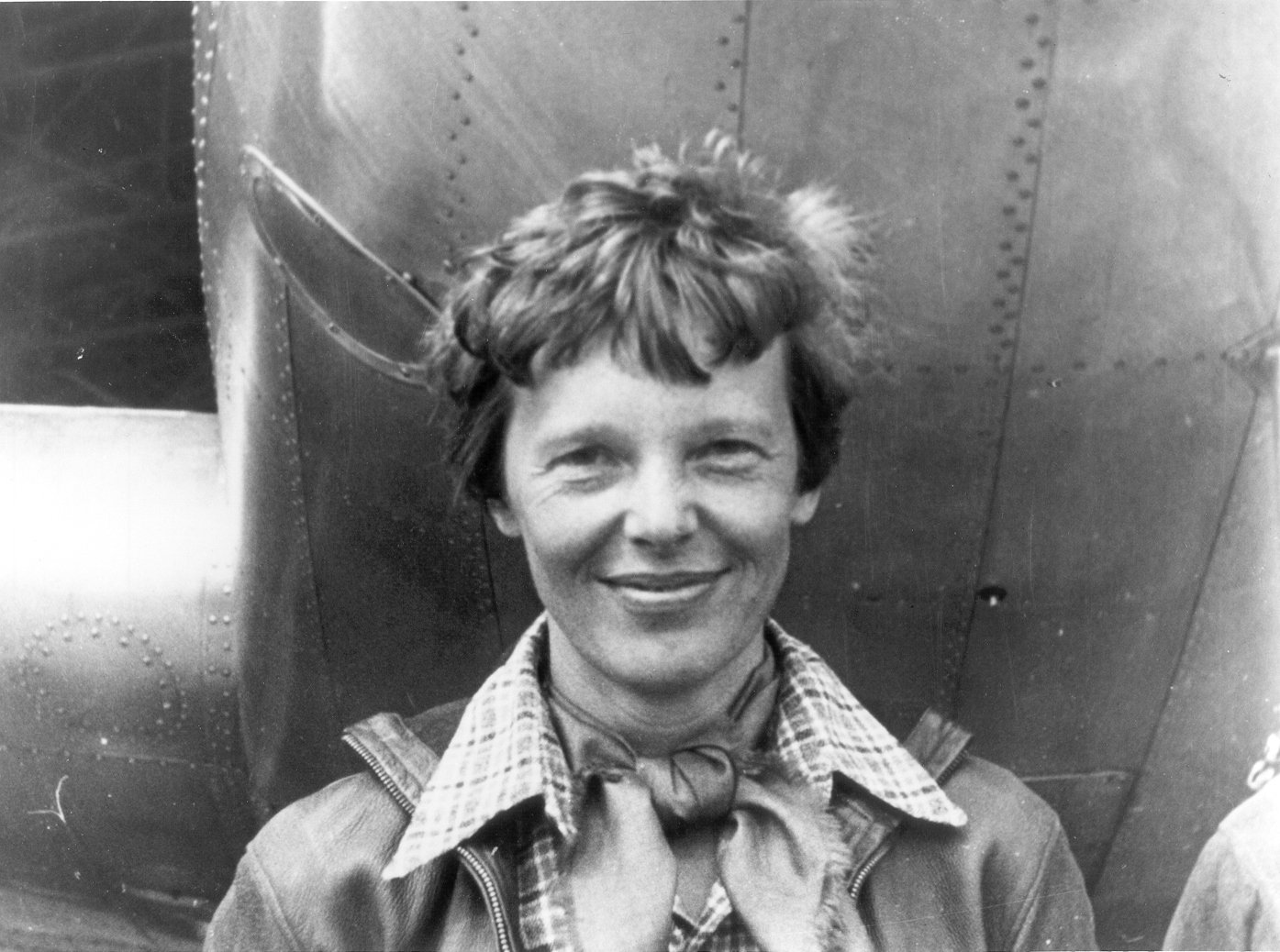
Photo: Underwood & Underwood (active 1880 – c. 1950)[1] / Wikimedia Commons, Public domain
- A six-year satellite mystery sent a $900,000 expedition into the Pacific
- A New Zealand museum sat on 47 island photos for over a decade
- The 1937 search reported "signs of recent habitation" but found no one
Six years.
That is how long a strange shape in satellite photos was the best lead anyone had on Amelia Earhart's lost plane. Researchers called it the Taraia Object, and it sat on a sandspit on a tiny Pacific island named Nikumaroro.
On 19 October 2026, a team funded by Purdue University and the Archaeological Legacy Institute finally reached the spot to look at it in person. Most of it was already gone. By the time their boat pulled up, the biggest pieces had broken apart and drifted off the sandbar, leaving one piece of wood shaped like a Y.
The Taraia Object was not part of Amelia Earhart's Lockheed Electra. It was trees.
What is the Taraia Object?
In 2020, satellite images picked up something odd sitting on a sandspit at the southern tip of Nikumaroro, a speck of coral and sand in the Phoenix Islands, part of the Pacific nation of Kiribati. Researchers who study Earhart's 1937 disappearance noticed it did not seem to move between images the way ordinary driftwood does, and it was roughly the right size for part of a crashed plane.
For six years, nobody had the ship, the money or the government permission to go stand next to it and check. It became the single most talked-about clue in the Earhart search, ahead of every theory that came before it.
What the expedition actually found on Nikumaroro
Seventeen people sailed out, including Rick Pettigrew of the Archaeological Legacy Institute, Purdue general counsel Steve Schultz, Purdue alumna and former astronaut Sirisha Bandla, and maritime archaeologists from RECON Offshore. The trip cost about $900,000, paid for by private donors and Purdue University.
 Read nextADHD and autism review: The numbers every parent should see
What they found on the sandspit was mostly gone. The object had broken up and washed away before the team even arrived, leaving a single Y-shaped fragment of wood. The shiny surface that caught researchers' eyes from orbit turned out to be a hard mineral crust, not metal.
"We accomplished our goal to determine what the Taraia Object was," Pettigrew said. Schultz was more blunt. "Unfortunately, we weren't able to find that smoking gun," he said.
The team did bring one thing home. Divers pulled a steel tube, about 76 centimetres long, out of the lagoon nearby. It is still being studied.
The real find was sitting in a museum drawer the whole time
While the expedition was chasing a pile of trees, the Air Force Museum of New Zealand quietly published something that had been sitting in storage for over ten years. The museum released 47 high-resolution aerial photographs of Nikumaroro, taken on 1 December 1938, about 17 months after Earhart vanished.
Museum staff member Matthew O'Sullivan found the negatives, unlabelled, in a tin box more than a decade ago. Low-resolution copies had quietly circulated online since then. It took the fresh attention around the 2026 expedition for the museum to finally scan and release the whole set at full resolution.
The photos were shot during a New Zealand survey flight looking for a spot to build an airfield, back when Nikumaroro was still called Gardner Island and long before anyone had connected it to Earhart. They are now the newest primary record of how the island looked less than two years after she disappeared.
 Trending nowBootlegger data leak: The locked dashboard that was never locked
Old sites keep surprising people this way. Archaeologists on a sunken Roman vessel recently pulled up a stack of dinner plates that never even cracked after thousands of years underwater.
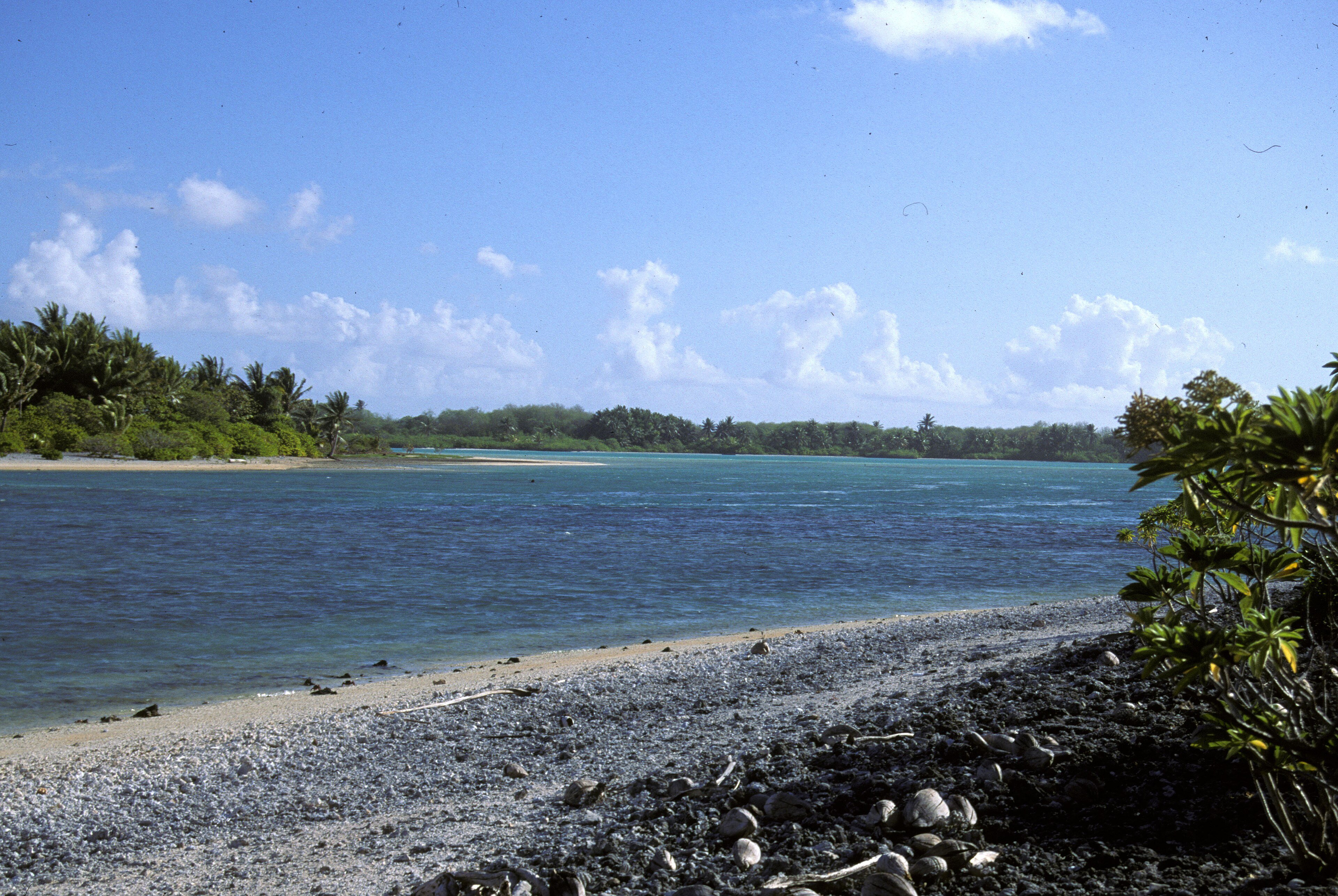
Photo: Angela K. Kepler / Wikimedia Commons, Public domain
Every serious lead on Nikumaroro, 1937 to now
| Year | Claim | Who said it | What came of it |
|---|---|---|---|
| 1937 | Earhart and navigator Fred Noonan vanish near Howland Island, flying a Lockheed Electra 10E | US search records | Declared lost, plane never found |
| 1937 | Navy floatplanes report "signs of recent habitation" over Gardner Island | Lt. John Lambrecht, USS Colorado | No one answered, search called off weeks later |
| 1940 | A skull, bones, a woman's shoe and a sextant box turn up on the island | Gerald Gallagher, colonial officer | Bones shipped to Fiji for testing, then lost |
| 1989 | First dedicated expedition to search Nikumaroro for wreckage | TIGHAR founder Ric Gillespie | No plane found, more trips planned |
| 1991-2015 | About a dozen further digs, dives and scans of the island | TIGHAR teams | Artifacts recovered, no confirmed wreck |
| 2019 | Deep-sea sonar sweep of the island's underwater edges | Ocean explorer Robert Ballard | No wreckage found on the seabed |
| 2020 | Satellite images show an odd shape on a sandspit | Earhart researchers | Becomes the lead clue for six years |
| Oct 2026 | Expedition reaches the Taraia Object in person | Archaeological Legacy Institute, Purdue | Ruled out: Mostly trees, already washed away |
| Oct 2026 | 47 aerial photos of the island from 1938 released in full | Air Force Museum of New Zealand | New primary record now open for study |
What happened to Amelia Earhart in 1937?
Earhart and Noonan took off trying to fly around the world. On 2 July 1937, their twin-engine Lockheed Electra 10E disappeared somewhere over the Pacific near Howland Island, the tiny strip of sand they were meant to land on to refuel.
A week later, on 9 July, three Navy floatplanes launched from the battleship USS Colorado and flew low over Gardner Island, the atoll now called Nikumaroro. Lieutenant John Lambrecht wrote that "signs of recent habitation were clearly visible but repeated circling and zooming failed to elicit any answering wave" from anyone below. Nobody waved back, so the Navy assumed the island was empty and moved on. A search can go cold fast at sea. A pair of divers left behind near the Great Barrier Reef once drifted for hours before anyone on their own boat noticed they were missing.
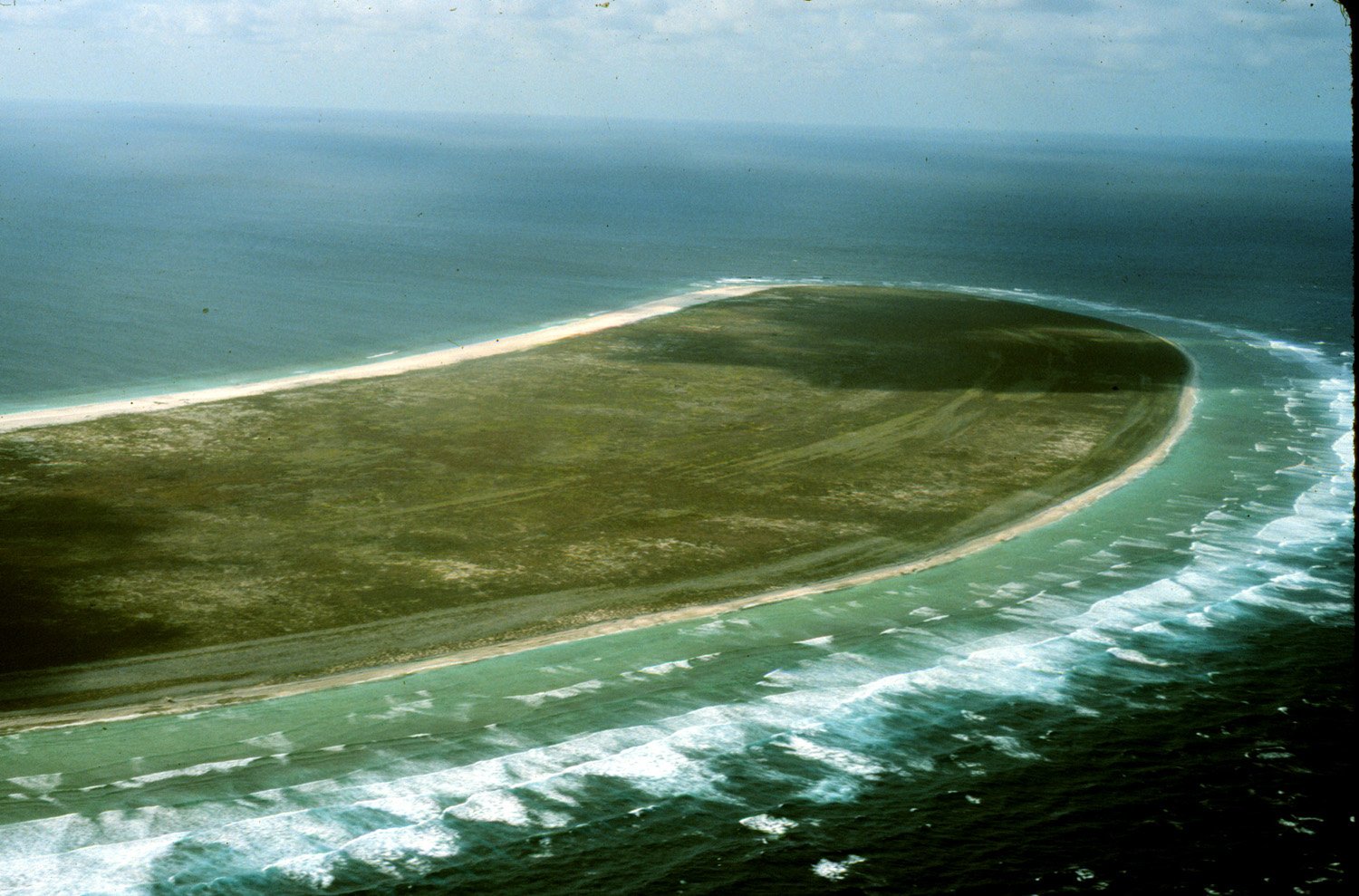
Photo: USFWS - Pacific Region / Wikimedia Commons, Public domain
Three theories still compete for what really happened
Most official accounts still assume Earhart and Noonan ran out of fuel and sank with the plane into open ocean near Howland.
Researchers at TIGHAR, the group behind most of the Nikumaroro searches since the 1980s, believe something else. They hold that the pair landed on the reef flat and were marooned, rather than crashing straight into the sea. They point to Gallagher's 1940 bones and sextant box as the strongest hint, even though the bones were lost in Fiji before modern testing could settle whose they were.
A smaller group argues for a third idea, that the pair came down farther north and ended up in Japanese hands, dying as prisoners on Saipan. It is the least followed of the three, but it has never fully gone away.
Ric Gillespie, TIGHAR's founder, has visited Nikumaroro eleven times since 1989 chasing proof. Pettigrew says his own team is already talking about where to look next. Somewhere between a satellite blob that turned out to be driftwood and photographs that sat in a drawer for ten years, whatever is left of Amelia Earhart's plane is still out there, waiting for someone to notice it.
Get the stories that hit your pocket
Petrol, SARS, Eskom, grants and the news everyone is talking about. One short email every weekday at 6am.
Free. One email each weekday. Unsubscribe anytime.Sources7
- Purdue University newsroom, expedition results (19 Oct 2026)
- KELO/Reuters, tree debris report (19 Oct 2026)
- Coverage of the Air Force Museum of New Zealand photo release
- IBTimes Singapore, on the 47 released photos
- US Naval Institute, the 1937 USS Colorado search report
- Forbes, on the 1940 Gallagher bone discovery
- TIGHAR, list of past Nikumaroro expeditions
Keep reading
 WorldJake and Callum Robinson and Carter Rhoad: Three men guilty in Mexico
 WorldAustralia went from 8 refineries to 2. New Zealand and South Africa followed
 WorldLimoges town hall fire: What happened, hour by hour