Bombs missed Hitler's mountain teahouse in 1945. A fire didn't
Allied bombers tried to destroy it in April 1945 and missed every time. On a quiet Friday night, something else reached it.
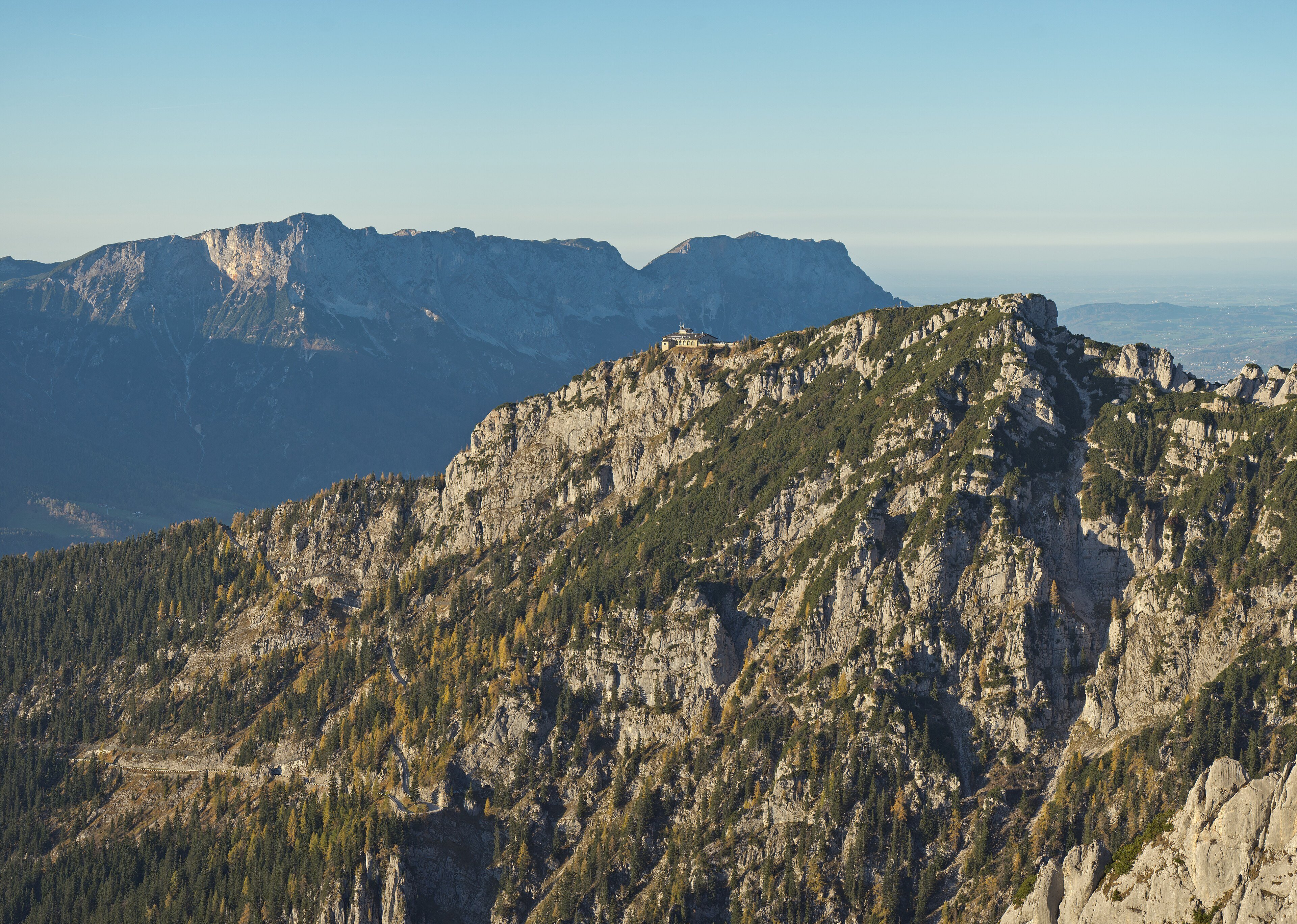
Photo: Jörg Braukmann / Wikimedia Commons, CC BY-SA 4.0
- A suspect was detained near the scene as police say they suspect arson
- It was the only major building left standing after the 1945 bombing raid
- It spent most of its 88 years as a restaurant run for charity
A fire tore through the Kehlsteinhaus, the mountain building above Berchtesgaden known around the world as Hitler's Eagle's Nest, on the night of Friday 23 October 2026. By the time firefighters reached the summit, the whole building was already burning.
Bavarian police say they suspect arson. A suspect, stopped by officers on their way to the scene, was taken into custody. Police have not said the man is responsible, and no motive has been given. They are still working out whether he had anything to do with the fire at all.
The flames alone are not the whole story. The Kehlsteinhaus has stood on that ridge since 1938. It took the heaviest Allied bombing raid of the whole region in 1945 and came out without a scratch, while almost every other building around it was destroyed. For 88 years, nothing managed to touch it. An ordinary Friday night finally did.
What do police actually know so far?
Not much, and they are saying so plainly. The alarm went out to the regional control centre in Traunstein at around 9:15pm on Friday. By 9:52pm, when the first crews arrived, the building was already fully alight.
About 200 firefighters and rescue workers were sent up the mountain, and the fire burned on through the night into Saturday morning. The site sits 1,834 metres above sea level, on an exposed ridge with no easy access, which made the firefighting slow and dangerous.
 Read nextThree oil shocks at once, and why diesel is the one to fear
Nobody was inside when the fire started, and no injuries have been reported. A police spokesperson said arson is suspected, but investigators still need to establish whether the detained man is connected to the fire in any way. The Traunstein criminal investigation division is leading the inquiry. How much of the historic structure can still be saved has not yet been worked out.
How did a teahouse end up on top of a mountain?
Because one of Hitler's closest officials wanted to give him something nobody else could. Martin Bormann commissioned the building in the summer of 1937, and it is usually described as a 50th-birthday present for Hitler, due the following April.
About 3,000 workers, many of them Italian stonemasons and Austrian engineers, built the whole thing in roughly 13 months, working through the winter under searchlights to make the deadline. Twelve of them died during construction, in avalanches, blasting accidents and vehicles going off the mountain road. The project is estimated to have cost around 30 million Reichsmark.
Hitler visited only about 14 times in total. He reportedly disliked heights and avoided the elevator that was built specifically to carry him up the final stretch.
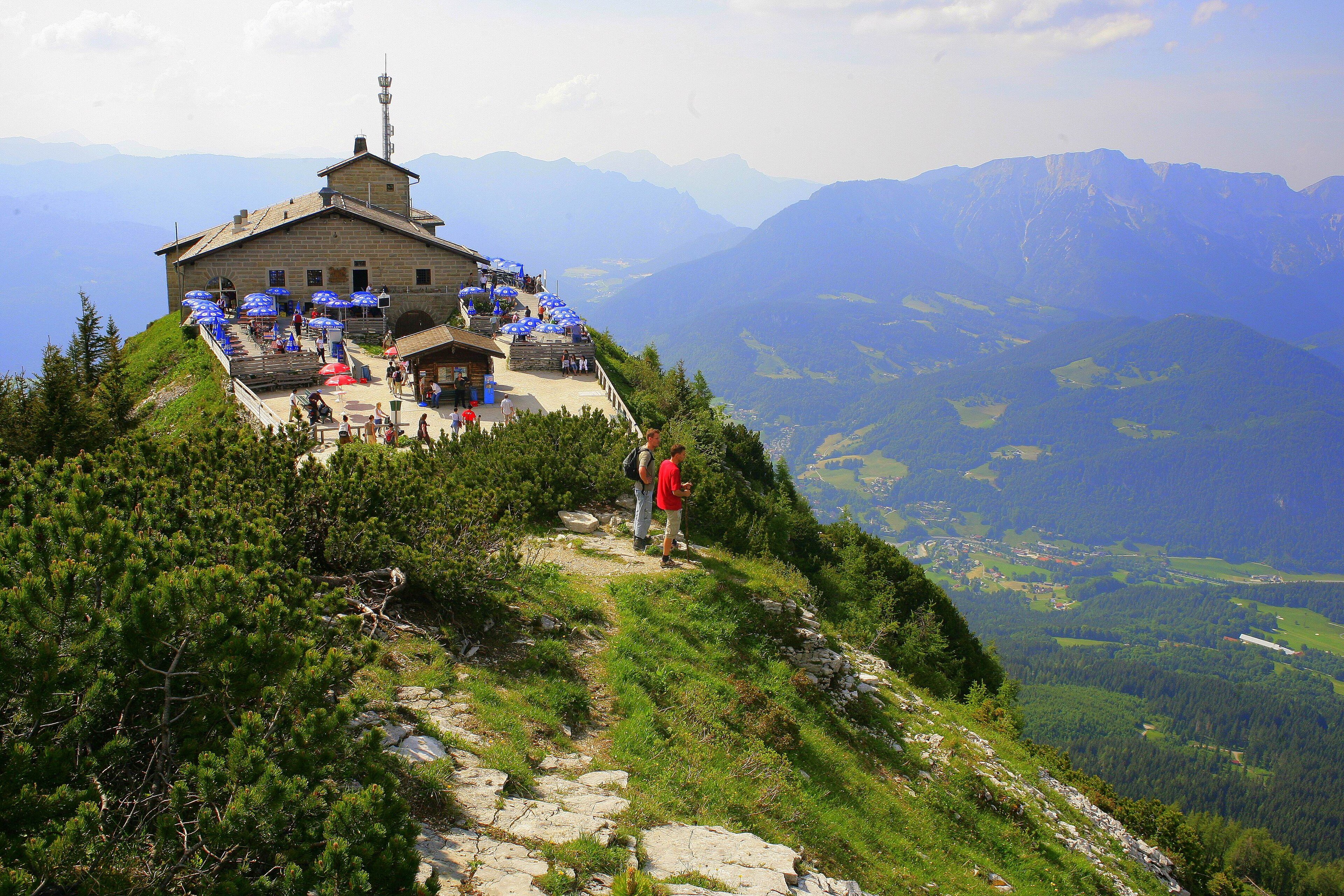
Photo: Cezary p / Wikimedia Commons, CC BY-SA 4.0
A baby mammoth frozen for 50,000 years and a mountain teahouse frozen in 1938 have little in common except this. Both stayed almost exactly as they were until the world suddenly looked again, the way the discovery of the baby mammoth Yana did earlier this year.
Eagle's Nest timeline: Every date behind the October fire
The Kehlsteinhaus is the only Nazi-era building on the Obersalzberg still standing in its original form. Here is every date that matters, each one sourced on its own.
| Date | What happened | Source |
|---|---|---|
| Summer 1937 | Martin Bormann commissions the building as a present for Hitler's 50th birthday | Kehlsteinhaus official history, kehlsteinhaus.de |
| 1938 | Construction finishes after about 13 months, using roughly 3,000 workers. 12 die during the build | SOFREP, construction history |
| 25 April 1945 | RAF Lancasters drop about 1,300 bombs on Obersalzberg. Every building in the restricted zone is hit except the Kehlsteinhaus | WWII Obersalzberg bombing accounts |
| 1952 | The ruined Berghof and other Nazi buildings nearby are demolished to stop them becoming pilgrimage sites. The Kehlsteinhaus is kept | WWII Obersalzberg bombing accounts |
| 17 May 1952 | The Kehlsteinhaus reopens to the public as a mountain restaurant | Kehlsteinhaus official history, kehlsteinhaus.de |
| 1960 | Management passes to the Berchtesgadener Land charitable foundation, which still runs it today | Kehlsteinhaus official history, kehlsteinhaus.de |
| 1999 | The Dokumentation Obersalzberg exhibition opens nearby, run by the Institut für Zeitgeschichte | Bundeszentrale für politische Bildung |
| 23 October 2026, about 9:15pm | Fire alarm raised. The building is fully alight by the time crews arrive 37 minutes later | Berliner Zeitung, Bluewin/Keystone-SDA |
| 24 October 2026 | Police confirm a suspect is in custody and say they suspect arson, with no stated motive | BBC, New York Post |
What was actually inside that mountain?
A 124-metre tunnel cut straight through the rock, lined with marble and once heated by warm air piped in from a side tunnel. It leads to a lift finished in polished brass, mirrors and green leather, which climbs the last 124 metres straight up inside the mountain to reach the building.
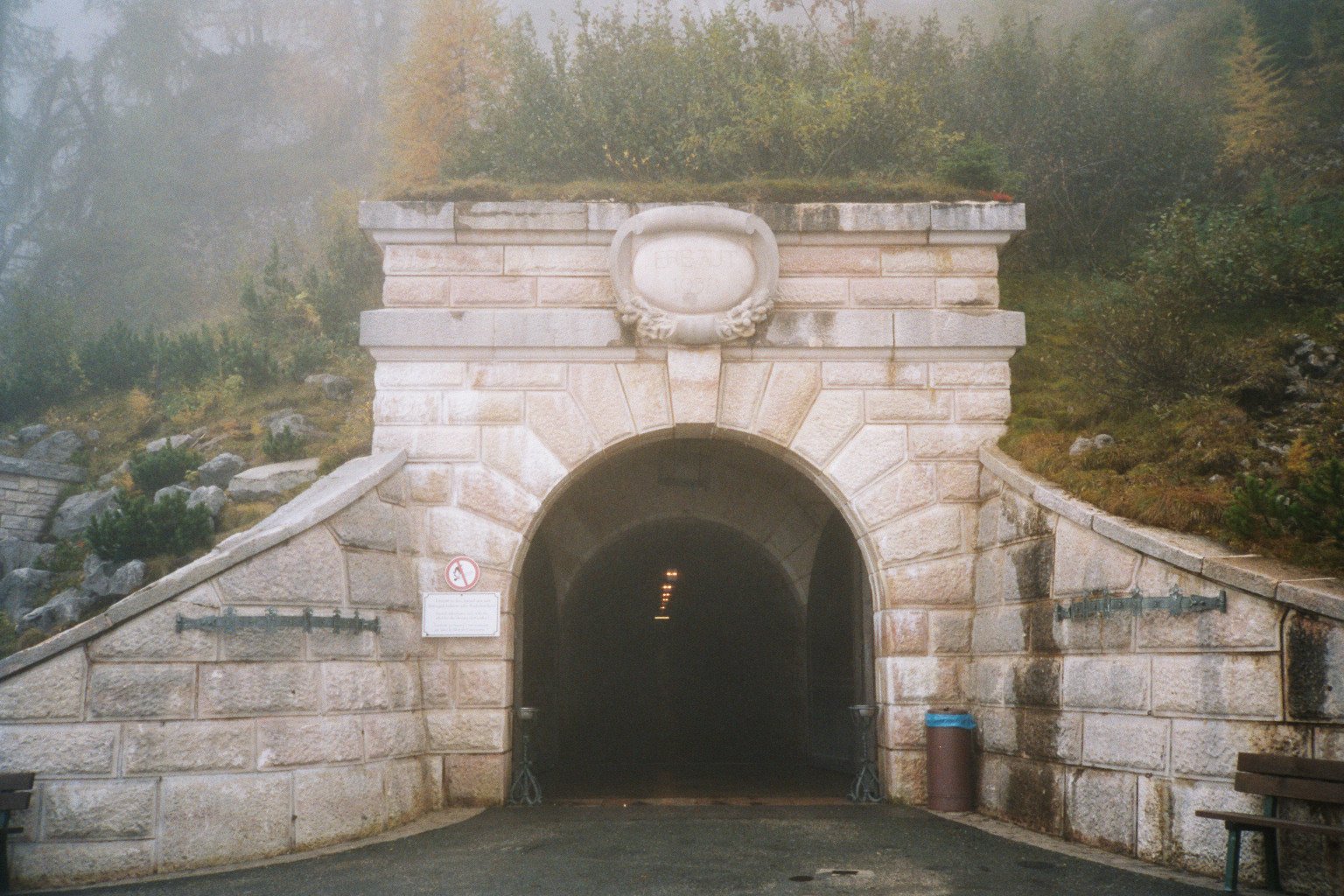
Photo: F.hilbert / Wikimedia Commons, CC BY-SA 4.0
Getting there means a narrow mountain road that climbs about 800 metres over 6.5 kilometres, through five tunnels and one hairpin bend, built to impress. Old buildings do not need a war to disappear either. Earlier this month, a 143-year-old town hall in the French city of Limoges burned down during a cost-of-living protest, proof that peacetime can finish what wartime never managed.
Why did Germany argue about this building for 80 years?
Because tearing it down was never a simple decision. After the war, the Allies and later German authorities deliberately destroyed Hitler's nearby home, the Berghof, along with most of the rest of the Obersalzberg complex, specifically so it could never become a shrine for neo-Nazis.
 Trending nowPinetown dad fires back at gunmen at his gate, and what the law says
The Kehlsteinhaus was the exception. It survived partly by accident, since the April 1945 raid simply failed to hit it, and partly because its scale and setting made it hard to erase quietly. Instead of demolishing it, Germany chose a different route. It turned the building into something ordinary, a restaurant, and built a serious history exhibition nearby that explains what the Nazi regime actually did. The Dokumentation Obersalzberg, run since 1999 by the Institut für Zeitgeschichte, now frames the whole hillside around victims of the dictatorship rather than the men who once used it. Even sites built to honour the war's winners get fought over. In London this month, marchers climbed a memorial to the 2,937 airmen of the Battle of Britain during a protest, and six people were arrested.
Who actually profits from Hitler's old teahouse?
Nobody connected to the Nazi era, and that is the point. The building belongs to the state of Bavaria. Since 1960, usage rights have sat with the Berchtesgadener Land charitable foundation, which leases the restaurant operation to a private tenant.
By law, the money has to go to charity in the Berchtesgaden district, covering things like healthcare, education and the upkeep of local cultural sites. It cannot be used to plug gaps in the local government's own budget. For most of its existence, this has been a working restaurant with a beer garden and a lunch menu, sitting on top of one of the twentieth century's strangest construction projects.
So what finally reached it?
Not bombers with proper visibility. Not decades of debate about demolition. Not the thousands of hikers and tourists who have ridden that brass lift since 1952. What reached the Kehlsteinhaus on a Friday night in October 2026 was a fire that investigators cannot yet explain, in a building with nobody inside at all.
Bavarian police have a suspect, a suspicion of arson, and no motive. The mountain will probably keep more of its secrets than the fire did.
Get the stories that hit your pocket
Petrol, SARS, Eskom, grants and the news everyone is talking about. One short email every weekday at 6am.
Free. One email each weekday. Unsubscribe anytime.Sources7
- BBC, Arrest made after fire at Hitler's Eagle's Nest retreat (24 Oct 2026)
- New York Post, Hitler's infamous Nazi 'Eagle's Nest' retreat set ablaze in suspected arson (24 Oct 2026)
- Keystone-SDA via Bluewin, Arrest Following Fire at the Kehlsteinhaus
- Berliner Zeitung, Hitlers Teehaus in Flammen: Verdächtiger nach Großbrand am Kehlsteinhaus festgenommen
- Kehlsteinhaus official site (Berchtesgadener Land foundation), history page
- Bundeszentrale für politische Bildung, Dokumentation Obersalzberg
- SOFREP, Conquest of the Eagle's Nest: construction background
Keep reading
 WorldWhy the world cannot simply swap Middle East oil for Venezuelan oil
 WorldA bug behind a TV at OpenAI. The AI company says its own AI helped catch him
 WorldHow Rwanda went from genocide to Africa's fastest-growing economies, and what critics say