You were right to shoot. So why do they still take your gun?
Winning the legal argument and getting your normal life back are two different timelines. Here is exactly where the second one starts.
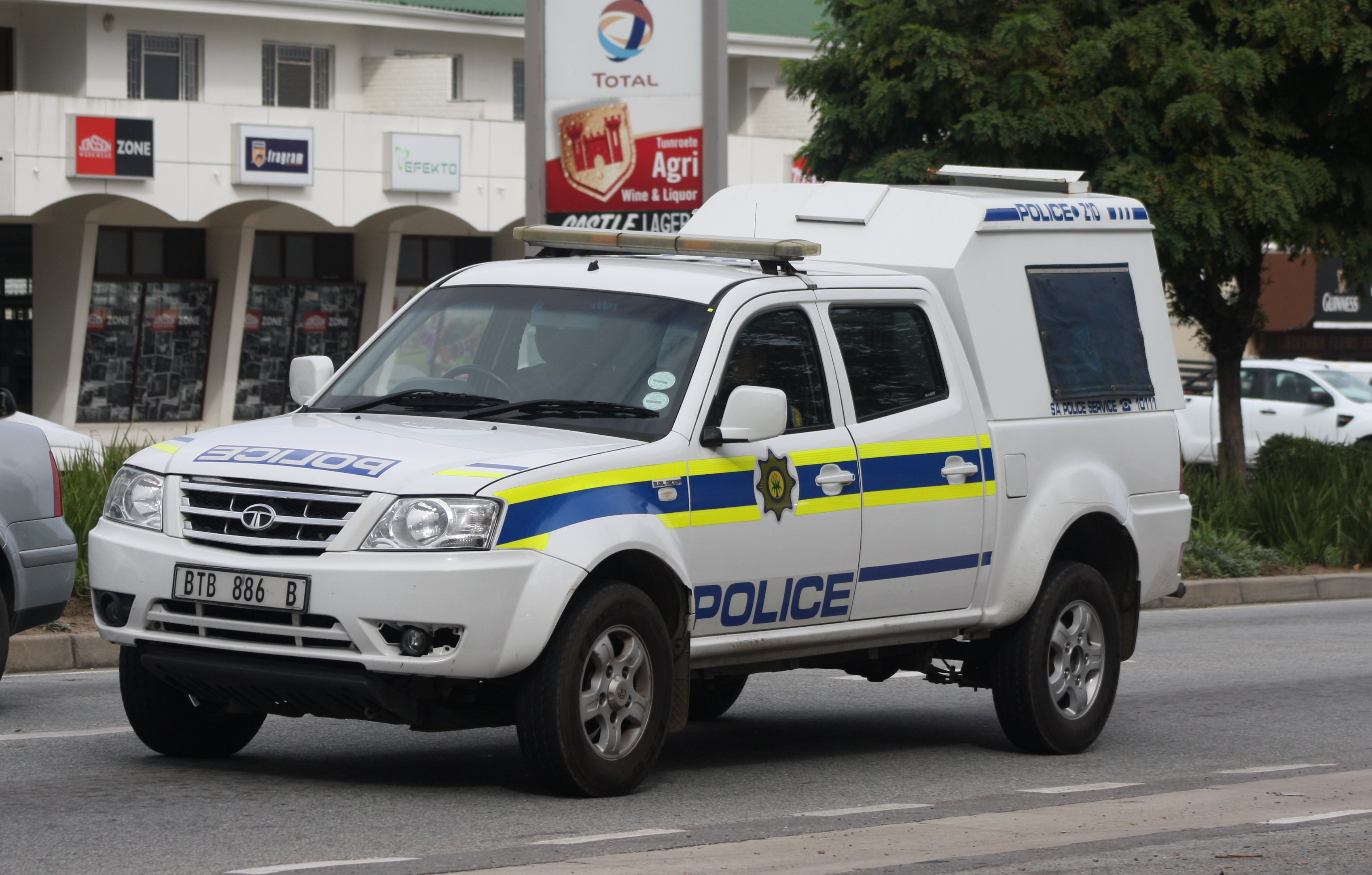
Photo: Bob Adams from Amanzimtoti, South Africa / Wikimedia Commons, CC BY-SA 2.0
- Your firearm is seized under the same law whether you were right or wrong
- A docket is opened for every shooting death, even a justified one
- One farmer's whole gun safe was taken, not just the pistol he fired
Police take your firearm the moment you report a self-defence shooting, before anyone decides if you did anything wrong. The law lets them hold it for testing under the Firearms Control Act, even when you were completely justified.
That is the part almost nobody explains to gun owners. Being in the right does not skip a single step. It only changes how the story ends, not how it starts.
A Pinetown father who fired at armed men blocking his gate in October 2026 went through exactly this, and his case is still open while police investigate. His story explained the self-defence test itself. This one explains what happens to you, your gun and your case file in the hours and months after you pull the trigger.

Photo: Leo za1 / Wikimedia Commons, CC BY-SA 3.0
What happens, hour by hour, after you pull the trigger?
The clock starts the second you call it in. Your firearm leaves your hands that night. Your case can still be open months later.
| When | Step | What the law or standing order actually says | Source |
|---|---|---|---|
| Minutes 0 to 30 | You call it in and secure the scene | No single law covers this, but every guide tells owners to call SAPS at once and touch nothing | Millers Attorneys, guidelines for using a firearm in self-defence |
| Within hours | Your firearm is seized | Police may seize and test-fire any firearm on reasonable suspicion it was used in an offence carrying 5 years or more in prison | Firearms Control Act 60 of 2000, section 114 |
| At the scene | You give a short statement | You must identify yourself, but you can stay silent on the rest until you have a lawyer | Constitution of the Republic of South Africa, section 35(1)(a) |
| Same day | A case docket opens, an inquest docket too if someone died | Every unnatural death gets its own inquest docket alongside any criminal one | Inquests Act 58 of 1959 |
| Hours 1 to 48 | Police decide whether to arrest you | Arrest without a warrant is allowed for murder or attempted murder, but it is not automatic once an attack has clearly been stopped | Criminal Procedure Act 51 of 1977, section 40 |
| By hour 48 | You appear in court, if arrested | The law requires a first court appearance within 48 hours of arrest, or release | Criminal Procedure Act 51 of 1977, section 50 |
| Same hearing | A magistrate rules on bail | Premeditated murder needs "exceptional circumstances" for bail. Ordinary murder only needs the state to show detention serves justice | Criminal Procedure Act 51 of 1977, section 60 and Schedule 5/6 |
| Days to weeks | Your firearm goes for ballistic testing | Every seized firearm is logged in the SAPS 13 property register and tested before anyone can apply for its return | SAPS National Instruction 8 of 2017, Property and Exhibit Management |
| Weeks to months | The NPA decides whether to prosecute | Prosecutors can hold off charging anyone and send a death to an inquest first while they wait on ballistics, post-mortem and video evidence | TimesLIVE, Emmarentia road-rage case, 21 Apr 2026 |
What actually counts as self-defence in South African law?
Courts do not ask if you were scared. They ask if the attack was still happening. That one word, imminent, decides most cases.
The test comes from a 1967 case, Ex parte Minister van Justisie: In re S v Van Wyk. It set three rules that still apply today. The attack must be unlawful and under way, not finished and not just a future worry. Your response must be necessary, meaning you had no safer way out. It must be proportionate to the danger you actually faced. (This is general legal information, not legal advice for any one case.)
There is a sharper trap inside that test. If you honestly believed you were under attack but were wrong, you can avoid a murder conviction. Courts call this putative private defence, built on a case called S v De Oliveira. But being honestly wrong can still end in a culpable homicide conviction, a lesser charge, but still a criminal record.
 Read nextOnly three rich countries still charge an annual tax on what people own
The same imminence and proportionality test gets argued hardest in farm attack cases, including the one involving Leon Lotz, where the line between defending a life and going too far keeps reaching Parliament.
Can police take every gun in your safe, not just the one you fired?
In practice, sometimes yes, and that is not supposed to happen. A Free State farmer named Andre fired warning shots at two masked men approaching his home at dinner. Police arrived, took the pistol he fired, and then emptied his entire gun safe, leaving his family without a single working firearm on an isolated property.
Criminal law expert Dr Llewellyn Curlewis reviewed the case for Firearms Guardian. Seizing the gun that was fired can be lawful evidence-gathering. Taking every other licensed firearm in the house, without a warrant or any link to a crime, is not. His advice: Apply to court for the firearms back, use the ordinary property remedy called rei vindicatio, and claim damages if anything is lost or broken in the meantime.
Firearms that are lawfully seized do not always come back quickly either. SAPS exhibit stores have been criticised in Parliament for firearms sitting untested for months, and owners have reported chasing their own seized rifles for years after a case closed.
Photo: Ijon / Wikimedia Commons, CC BY-SA 4.0
Does a lawful shooting put your firearm licence at risk?
Here is the good news buried in the bad news. A justified shooting does not, by itself, take your licence away.
The Firearms Control Act splits this into two separate switches. Section 103 is automatic, but only on conviction. If a court finds you guilty of murder or a similar listed offence, your competency certificate, licence and any permits stop being valid from that date. No conviction, no automatic loss.
 Trending nowPinetown dad fires back at gunmen at his gate, and what the law says
Section 102 is different and slower. A police registrar can only declare you unfit on specific grounds: A final protection order against you, a threat to harm yourself or someone else, a mental health or substance problem, failing to lock away a firearm safely, lying on a form, or paying an admission-of-guilt fine for a relevant offence. A lawful act of self-defence is not on that list. In practice, a section 102 notice can still land weeks after a withdrawn criminal case, and the hearing happens at a police station in front of an officer of captain rank or higher, where you must show you are fit on a balance of probabilities, a lower bar than the state proving guilt in a criminal court.
What happens if the NPA does not decide straight away?
Most people picture one decision: Charge or don't charge. Real cases often get a third option first.
In April 2026, prosecutors in Johannesburg held off charging a man who said he fired in self-defence during a road rage confrontation in Emmarentia. Instead of an immediate decision, the case went to an inquest first, so a judicial officer could establish the facts of the death while ballistics, post-mortem results and video were still being gathered. Only after that does the NPA make its final call.
If the NPA decides not to prosecute at all, it has a duty to issue a certificate confirming that, called a nolle prosequi. A grieving family can use that certificate to bring a private prosecution of their own under section 7 of the Criminal Procedure Act, though that road is rare and expensive.
Every part of this, the court dates, the legal fees, the months without your gun, costs money most people have not budgeted for. It sits next to a cost few hijacking victims plan for either, which is why what your car insurance actually pays out after a hijacking matters as much as the self-defence law itself.
So does being right actually matter?
It matters completely, just not on the night itself. Being right is what gets the docket closed, the firearm released and your name cleared months down the line. It is not what stops the SAPS van arriving, the statement being taken while your hands are still shaking, or your pistol going into an evidence bag.
Gun owner groups like GOSA exist mostly for this exact gap, offering members a standby attorney for the weeks between the shooting and the NPA's letter. The law was built to let you protect your life. It was never built to give you your gun back quickly.
Get the stories that hit your pocket
Petrol, SARS, Eskom, grants and the news everyone is talking about. One short email every weekday at 6am.
Free. One email each weekday. Unsubscribe anytime.Sources11
- Firearms Control Act 60 of 2000, sections 102, 103 and 114
- Criminal Procedure Act 51 of 1977, sections 7, 40, 50 and 60
- Inquests Act 58 of 1959
- Ex parte Minister van Justisie: in re S v Van Wyk 1967 (1) SA 488 (A), the leading private defence case
- De Rebus, Fight back and you might be found guilty: putative self-defence (S v De Oliveira)
- Millers Attorneys, guidelines for using a firearm in self-defence
- Legal Hero, the section 102 unfitness enquiry process explained
- Firearms Guardian, a Free State farmer's full gun safe seized after a self-defence shooting, with Dr Llewellyn Curlewis
- TimesLIVE, Emmarentia road-rage shooter case referred to inquest as NPA declines to prosecute (21 Apr 2026)
- Gun Owners South Africa, member legal support after an incident
- SAPS National Instruction 8 of 2017, Property and Exhibit Management
Keep reading
 ExplainedSingapore was poorer than South Africa in 1965. Here is how it got 15 times richer
 ExplainedHow much of your "safe" index fund is really just 7 AI stocks
 ExplainedIs my tap water safe? Check your town's Blue Drop score