What happens if you miss the October 15 tax deadline? The late-filing penalty is 10 times the late-payment one
Millions of people think the extension bought them time to pay. It did not. Here is what each mistake costs, in dollars, according to the IRS's own rules.

Photo: Carol M. Highsmith / Wikimedia Commons, Public domain
- The late-filing penalty is 5% a month, the late-payment one only 0.5%
- A $10,000 bill costs $2,850 after six months of filing late
- The payment clock started on 15 April, not 15 October
The deadline to file a 2025 tax return on extension is Thursday, 15 October 2026, and a missed deadline costs 5% of your unpaid tax for every month you are late. Paying late costs only 0.5% a month, so the IRS punishes a missing return ten times harder than a missing payment.
That surprises many people. An extension feels like a delay for everything. The IRS says it only moves the date for sending in the paperwork.
Key facts
- Filing deadline for returns on extension: Thursday, 15 October 2026
- Late-filing penalty: 5% of unpaid tax per month, capped at 25%
- Late-payment penalty: 0.5% of unpaid tax per month, capped at 25%
- Interest on unpaid tax: 7% a year for the fourth quarter of 2026
- Minimum penalty for a return more than 60 days late: $525, or the full tax owed if that is less
What happens if I miss the October 15 tax deadline?
The failure-to-file penalty starts. The IRS charges 5% of the tax you still owe for each month or part of a month your return is late. It stops growing at 25%.
A "part of a month" counts as a full month. File one day late and you pay a whole month's penalty.
Only people who filed Form 4868 by 15 April get the October date. If you never asked for the extension, the IRS treats your return as late since April.
Does the extension mean I have more time to pay?
No. The IRS says an extension "does not grant you an extension of time to pay." Your tax was due on 15 April 2026.
So the failure-to-pay penalty has been running for six months already. It charges 0.5% of the unpaid tax each month, also capped at 25%. Interest runs from 15 April too.
On a $10,000 bill, that is already about $300 in payment penalties on the day of the deadline. Interest adds roughly $58 a month on top, before compounding.
How much does it cost to file late versus pay late?
When both penalties apply in the same month, the IRS cuts the filing penalty by the payment penalty. In plain terms, you pay about 5% a month in total for the first five months. After that, only the 0.5% payment penalty keeps going.
We used those rules to build the table below. It shows two choices after 15 October: File on time and still owe, or file late and still owe. The payment clock includes the six months that already passed.
| Tax you owe | Months after 15 Oct | File on time, pay late | File late and pay late | Extra cost of filing late |
|---|---|---|---|---|
| $1,000 | 1 | $35 | $80 | $45 |
| $1,000 | 3 | $45 | $570* | $525 |
| $1,000 | 6 | $60 | $585* | $525 |
| $5,000 | 1 | $175 | $400 | $225 |
| $5,000 | 3 | $225 | $900 | $675 |
| $5,000 | 6 | $300 | $1,425 | $1,125 |
| $10,000 | 1 | $350 | $800 | $450 |
| $10,000 | 3 | $450 | $1,800 | $1,350 |
| $10,000 | 6 | $600 | $2,850 | $2,250 |
Penalties only, interest not included. Worked from IRS penalty rules. *The $525 minimum applies once a return is more than 60 days late, and the IRS page does not say how it combines with the reduction, so treat these two cells as estimates.
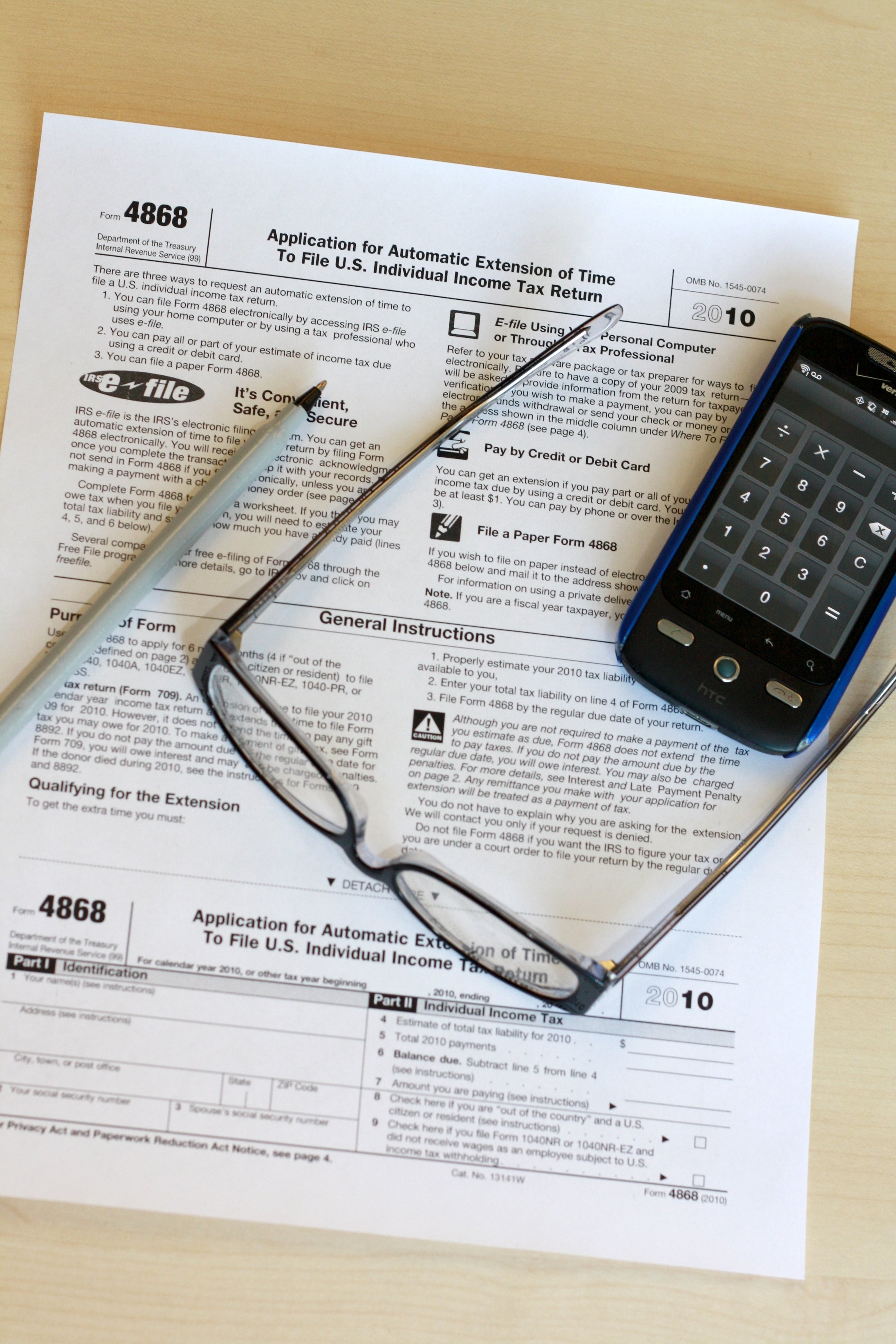
Photo: MoneyBlogNewz / Wikimedia Commons, CC BY 2.0
What is the minimum penalty for filing late?
A return more than 60 days late has a floor. The IRS sets it at $525 for returns whose original due date fell after 31 December 2025, which covers 2025 returns. If you owe less than $525, the minimum is the full amount you owe.
That floor is why the $1,000 rows jump. A small bill can attract a penalty worth more than half of it.
Can I get another extension after October 15?
For most people, no. The October date is the end of the line for a federal individual return, and there is no second form to file.
The IRS does give more time in two cases. One is a federally declared disaster. The other is certain military service. Everyone else needs to file by Thursday or accept the penalty.
Does disaster relief move the deadline?
Only if you live or run a business in a listed area. The IRS list shows several 2026 postponements that run past 15 October. As of 10 October, none of them is labelled a hurricane.
Here are the dates on the IRS list:
| Postponed to | Areas and events |
|---|---|
| 1 February 2027 | Indiana storms and tornadoes, West Virginia floods, Washington wildfires, Nebraska wildfires and storms, Hawaii County earthquake, Mississippi Tropical Storm Arthur, Oglala Sioux Tribe storms, Northern Mariana Islands Super Typhoon Bavi |
| 2 November 2026 | Mississippi storms, Wisconsin storms, Michigan storms, Northern Mariana Islands Super Typhoon Sinlaku |
Relief is applied automatically to people with an address in the area. The IRS warns that some relief does not cover payments that were already due on 15 April. Check your county on the IRS disaster page before you count on it.
What if I can't pay anything by October 15?
File anyway. That is the IRS rule in numbers, not advice from us: The filing penalty is ten times bigger per month, so a filed return with an unpaid balance costs far less than a missing one.
The IRS also offers payment plans. While a plan is in place, the payment penalty drops from 0.5% to 0.25% a month. That cut only applies if you filed your return on time.
The IRS also has a penalty relief process for people who can show reasonable cause. It comes after you file, not instead of it.
What is the IRS interest rate right now?
The rate on unpaid tax is 7% a year for the fourth quarter of 2026, from 1 October to 31 December. The IRS announced on 21 August that it would stay the same as last quarter.
Interest has no cap and it charges interest on penalties too. It is the same squeeze that sits behind mortgage rates passing 7% and the cost of filling a tank for American households this autumn.
Photo: G. Edward Johnson / Wikimedia Commons, CC BY 4.0
Do I still owe a penalty if I'm due a refund?
No. Both penalties are charged on tax you owe. If the IRS owes you money, there is nothing to penalise.
You are not in a hurry in the same way, but you should not drift. A refund claim has a window of three years from the original due date, according to IRS rules, and after that the money is gone.

Photo: Underwood & Underwood / Wikimedia Commons, Public domain
So what should I do before midnight on Thursday?
Look at the table again. The gap between the two columns is the whole story.
File a return with nothing in the bank and a $10,000 balance, and six months later the penalties come to $600. Leave the return unfiled until April 2027, and the same debt costs $2,850.
Same tax. Same empty account. A difference of $2,250, and the only thing that changed was whether the return went in before the clock ran out on Thursday.
Sources6
- IRS, Failure to file penalty (rate, 25% cap, $525 minimum, reduction by failure to pay)
- IRS, Failure to pay penalty (0.5% a month, 0.25% with a payment plan)
- IRS, Interest rates remain the same for the fourth quarter of 2026 (IR-2026-98, 21 Aug 2026)
- IRS, Tax relief in disaster situations (2026 postponements, checked 10 Oct 2026)
- IRS, Mississippi storm relief postponed to 2 Nov 2026
- CPA Practice Advisor, IRS keeps interest rates steady for Q4 2026 (24 Aug 2026)
The week's biggest stories, every Monday
One email. The stories everyone will be talking about, before they do.
Free. One email a week. Unsubscribe anytime.Keep reading
 ExplainedApple's 13 October launch: Time, products and prices
 Explained18 skulls, 5,000 years old, and a crack that was missed for a century
 Explained85 kilometres of shelves, 12 centuries of papers, and a door most of us will never walk through