US mortgage rates just hit 7.40%. Here is what that does to your payment
Weak jobs are supposed to bring rate cuts and cheaper mortgages. This time the Fed went the other way, and buyers are paying for it every month.
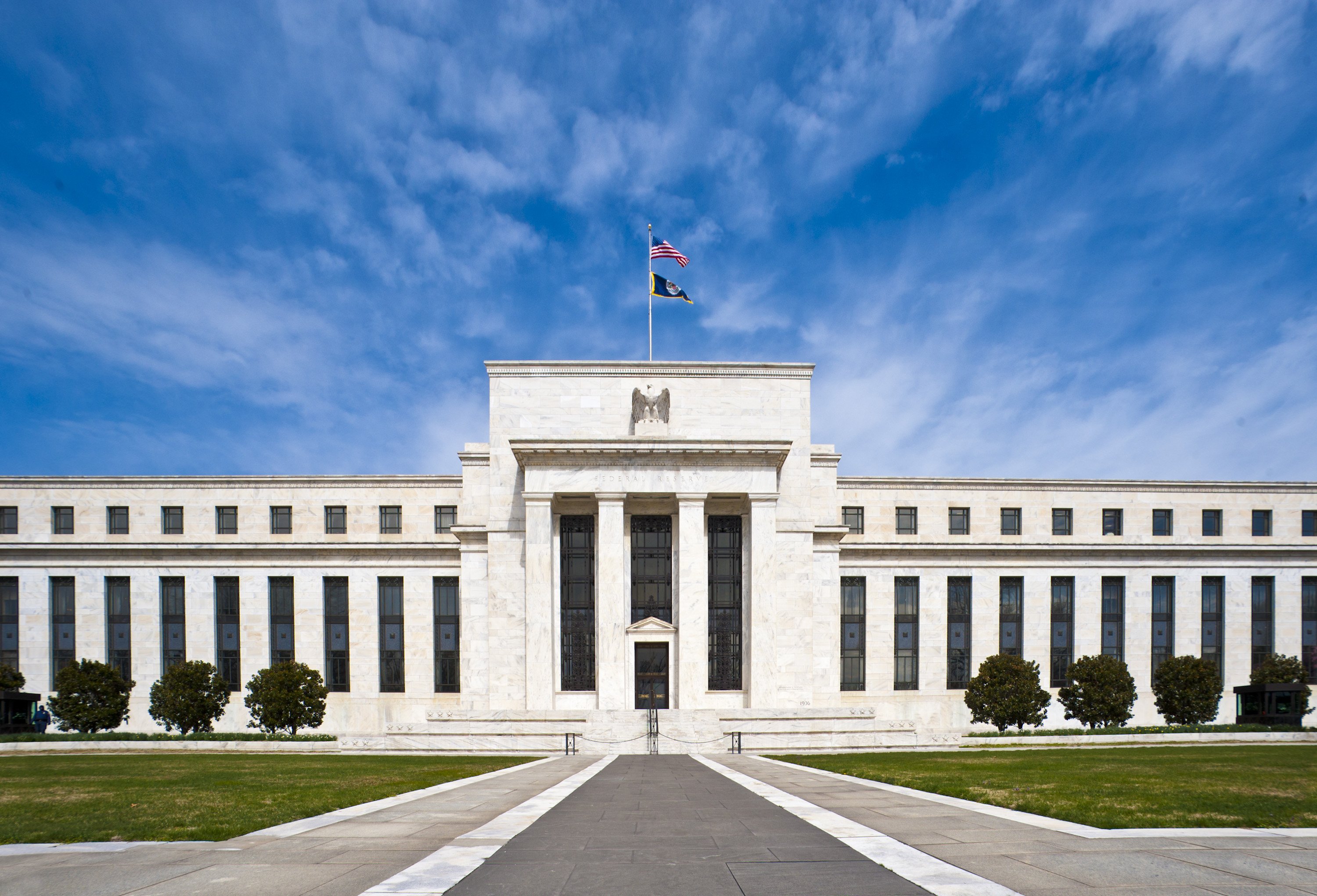
Photo: Federalreserve / Wikimedia Commons, Public domain
- The Fed hiked in the same month hiring nearly stalled
- A $400,000 loan now costs $294 more a month than a year ago
- Most Fed officials expect a second hike before the year ends
7.40%.
That is the average 30-year fixed mortgage rate in America this week, according to Freddie Mac's survey released on 8 October. A year ago it was 6.30%. It is the highest reading since November 2023.
A weak jobs market is supposed to push rates down. This time it pushed nothing. Employers added just 29,000 jobs in September, and the Federal Reserve had already raised its rate.
So what does that do to the price of a house? Quite a lot. Below is the monthly bill on three loan sizes, worked out with the standard loan formula.
Why are mortgage rates going up when the jobs market is weak?
Because the people who set mortgage rates are watching inflation, not hiring.
The Fed's own staff estimate that its favourite inflation gauge rose to 3.8% in the 12 months to August. The target is 2%. Core inflation, which strips out food and energy, was 3.4%. Oil has been climbing too, and a Fannie Mae forecast in August pointed to oil, government debt above $40 trillion and a Fed caught between weak jobs and high prices.
Mortgage lenders price home loans off the 10-year Treasury, the interest rate on US government debt. That rate has jumped this year, from about 4% in late February to close to 5% in September, according to market reports.
Higher government borrowing rates mean higher home loan rates. Simple as that.
How much more does a mortgage cost now than a year ago?
This is the part nobody puts on the front page. Here is the monthly principal and interest on a 30-year fixed loan at Freddie Mac's rate a year ago (6.30%) against this week (7.40%).
| Loan size | Payment at 6.30% | Payment at 7.40% | Extra per month | Extra per year |
|---|---|---|---|---|
| $300,000 | $1,857 | $2,077 | $220 | $2,643 |
| $400,000 | $2,476 | $2,770 | $294 | $3,524 |
| $500,000 | $3,095 | $3,462 | $367 | $4,404 |
Our calculation, using the standard amortisation formula. Principal and interest only. Property tax, insurance and fees come on top.
The yearly gap on a $500,000 loan is $4,404.
Now look at the long game. On a $400,000 loan, total interest over 30 years is about $491,321 at 6.30% and about $597,027 at 7.40%. The difference is $105,706 for the same house.

Photo: Serg Bataiev servika / Wikimedia Commons, CC0
How fast did mortgage rates climb in four weeks?
Fast. Freddie Mac's survey has the rate rising week after week since mid-September.
The 24 September reading of 7.03% was the first above 7% since early 2025, reports said. Two weeks later it was 7.40%.
Why did the Fed raise rates when only 29,000 jobs were added?
The Fed raised rates before it saw the jobs number.
On 16 September, the Fed lifted its range by a quarter of a point to 3.75% to 4.00%. It was the first hike since July 2023. The minutes, released on 7 October, say all 19 officials in the room backed it, including the seven who do not vote this year. The Fed said inflation "remains elevated."
Then came the jobs report on 2 October. Economists polled by LSEG expected about 90,000 jobs. They got 29,000. Unemployment rose to 4.2% and pay grew just 0.1% in the month. July and August were revised down by 60,000 combined, according to the Bureau of Labor Statistics (BLS).
The BLS said hiring had averaged only 45,000 a month over the past year.
So the Fed hiked into a market where hiring had almost stopped. Weak jobs and rising rates are the combination borrowers fear most.

Photo: Gogerr / Wikimedia Commons, CC BY-SA 4.0
Is the Fed rate the same as my mortgage rate?
No, and this trips up many buyers.
The Fed sets the rate banks charge each other overnight. It does not set your mortgage rate. When the Fed hiked in September, mortgage rates were already rising, because investors were worried about inflation and government debt.
That is why the Fed's quarter-point move and the jump in home loans do not match. The Fed moved 0.25 points. The mortgage rate has gone up about 1.1 points in a year.
It also explains the cruel twist. A weak job report can usually pull Treasury yields down. This time, with inflation at 3.8%, yields went up.
Will mortgage rates go down in 2027?
Nobody knows, and the forecasts disagree.
One projection in a Yahoo Finance series puts the 10-year Treasury near 4.20% in 2027 and the average mortgage rate near 6.20%. At that rate, the $400,000 loan from our table would cost about $2,450 a month. That is $320 less than today.
But the same series has changed its forecasts before. Forecasts are guesses, and this year's guesses have been wrong in one direction.
What the Fed itself has said is less comforting. Most officials expect another hike by the end of the year, according to the minutes. Fed leaders have since said they can wait, and traders put the odds of an October hike at only 20% to 25%.
What does the next Fed meeting mean for your payment?
The next Fed meeting is on 27 and 28 October.
If the Fed holds, mortgage rates may stay where they are. If it hikes again, the table above gets a new row. Every full percentage point added to a $400,000 loan adds roughly $280 to the monthly bill.
Michael Burry, the investor who bet against housing before 2008, has put a timer on the stock market. Fuel is squeezing the same households, as the Russian diesel deal story showed. South Africans feel it from the other side with the prime rate and petrol double hit.
Now the twist. Those minutes say most officials already expect a second hike before the year ends. A $400,000 buyer who would have paid $2,476 a month a year ago is looking at $2,770 today, and the people running the Fed are talking about a hike, not a cut.
Sources7
- Freddie Mac Primary Mortgage Market Survey, 8 October 2026
- Freddie Mac release, Mortgage Rates Average 7.40%
- Bureau of Labor Statistics, September 2026 jobs report
- Fox Business, US economy added 29,000 jobs in September
- Admiral Markets, Fed raised rates to 3.75%-4.00%
- BabyPips, September FOMC minutes
- Yahoo Finance, mortgage rate predictions
The week's biggest stories, every Monday
One email. The stories everyone will be talking about, before they do.
Free. One email a week. Unsubscribe anytime.Keep reading
 MoneyLedger wallets drained? The claim, the past incidents and what is confirmed
 MoneyPrime is 10.75%. Your bond table, plus the petrol bill coming in November
 MoneyNetflix is reported to be cutting about 5% of its staff, with a decision due before earnings