Egypt's first kings took their servants with them. What do the skulls say?
A hundred years ago, a famous digger suspected the servants around Egypt's first kings had been killed. He could not prove it. The skulls kept the proof for him.
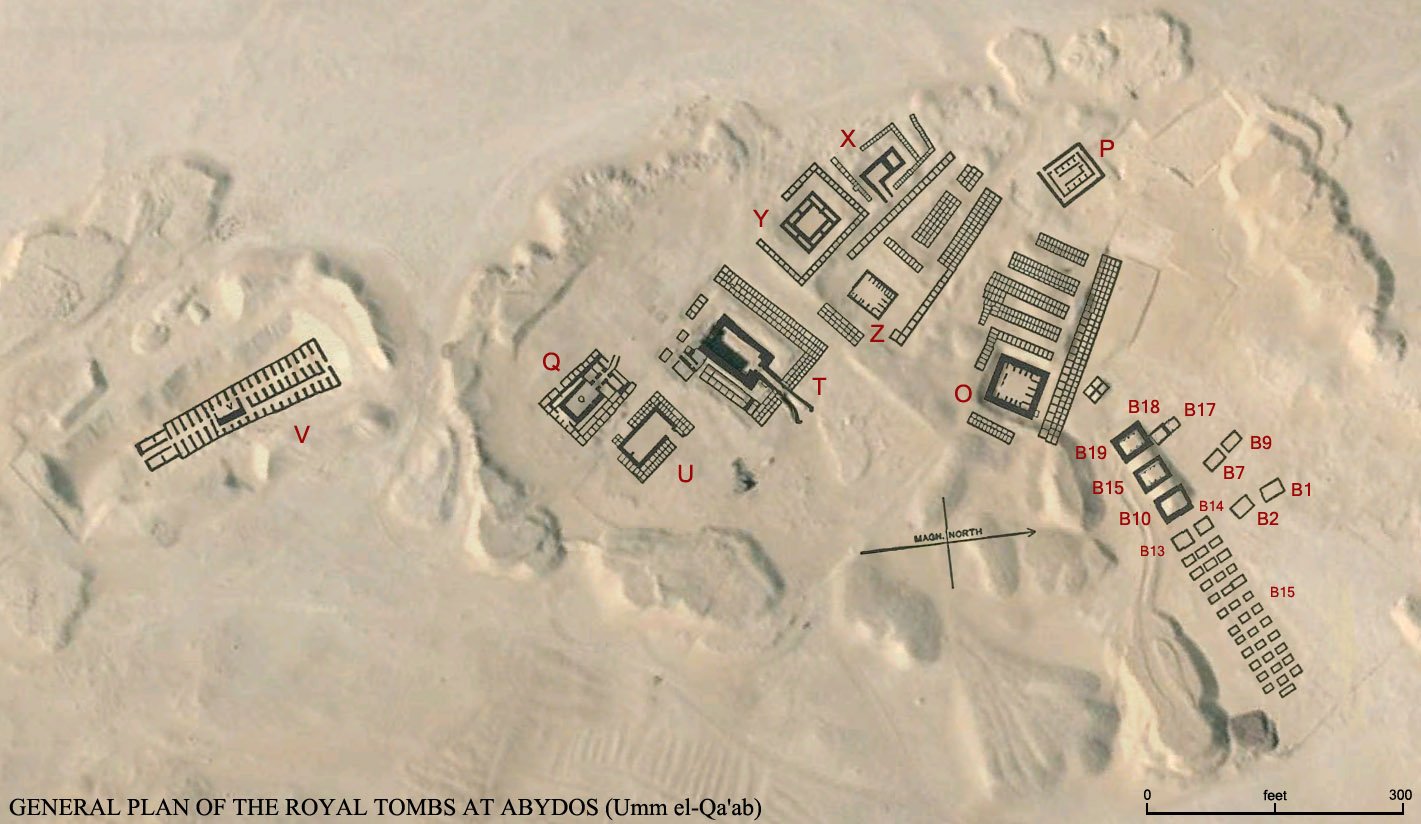
Photo: PLstrom / Wikimedia Commons, CC0
- 18 of 46 skulls from the royal graves show deadly head wounds
- A digger suspected it a century ago but could not prove it
- The wounds do not match the club in royal art
18 out of 46.
That is how many skulls, buried beside Egypt's very first kings, show a head injury bad enough to kill. The other 28 show no clear sign. Someone hit these people, and then they were laid in the sand next to their ruler.
The skulls come from Umm el-Qaab, the royal cemetery at Abydos in southern Egypt. They were dug up more than a century ago. A new study in the journal Frontiers in Environmental Archaeology, led by Purdue University archaeologist Roselyn Campbell, has now looked at them again with modern forensic eyes.
It was reported this week, and the questions came fast. Were these servants chosen? Did they go willingly? And what actually happened on the day a king was buried?
Did Egypt's first kings really bury people with them?
The evidence says yes. The first kings of Egypt ruled around 3100 to 2900 BCE. That is the First Dynasty, the very start of the pharaoh story.
At Abydos, those kings were buried in large tombs in the desert. Around them lay many smaller graves. The people in them seem to have been members of the royal household, such as servants and officials.
At least five First Dynasty kings were buried with people who died at the same time as them, according to the reports on the new study.
That is the part that bothered Flinders Petrie, the British digger who worked at Abydos. He reasoned that so many people could not have died of natural causes on the same day. But he found no wounds he could point to. So he could not prove it.
What the timeline shows
| When | What happened |
|---|---|
| About 3100 to 2900 BCE | Five First Dynasty kings are buried at Abydos with people laid around them |
| More than 100 years ago | Petrie digs the site and suspects the servants were killed, but finds no deadly wounds |
| 2001 to 2003 | A Penn Museum team digs at the enclosure of King Aha and finds six small graves around it, then excavates five |
| 2026 | Campbell re-examines 46 skulls and finds 18 with deadly head trauma |
What did Campbell find in the skulls?
She looked at 46 skulls and found that 18 of them carried serious injuries. That is almost 4 in every 10.
| Deadly head injury | 18.00 | 39% |
|---|---|---|
| No clear sign | 28.00 | 61% |
| Skulls examined | 46.00 | 100% |
Source: Campbell et al., Frontiers in Environmental Archaeology, as reported by Popular Science and Live Science
Most of the damage was a long, thin crack called a linear fracture. A blow like that would knock a person out fast and cause bleeding inside the head. Some skulls also showed a sharp cut. One has what looks like a chopping wound above the eye.
Here is the twist. Petrie and others had seen these cracks. They put them down to damage after burial, from sand and time. Campbell says they happened around the time of death.
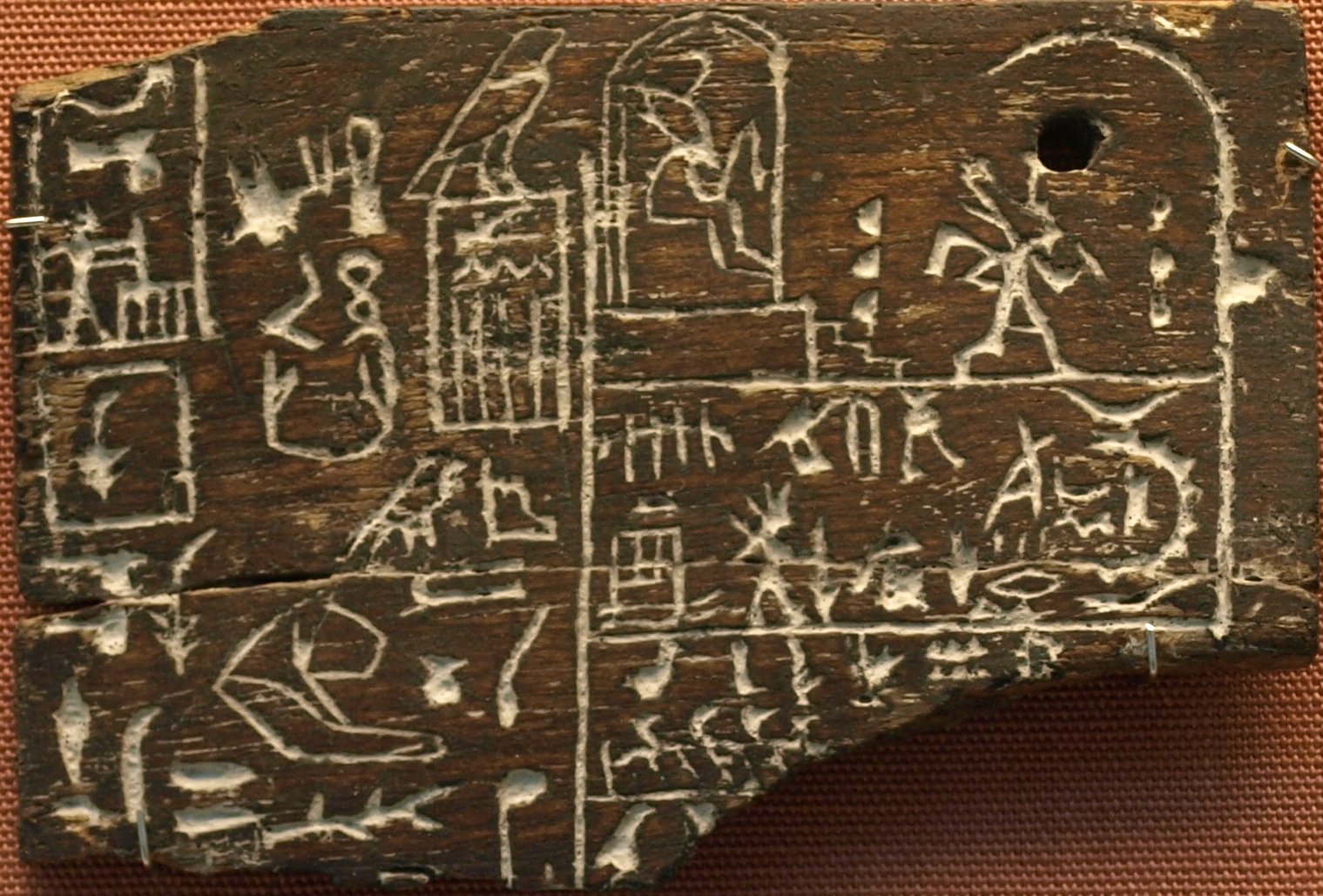
Photo: CaptMondo / Wikimedia Commons, CC BY 2.5
Who struck the blows, and with what?
Nobody knows yet. Campbell and her team did not claim to know the exact method.
Egyptian art shows kings smashing enemies with a heavy club called a mace. It is the image everyone knows. But a mace would leave a dented, pushed-in break. These skulls mostly have thin cracks instead. So the famous picture does not match the bones.
That leaves a gap. Was it a different weapon? A single blow from behind? Something done quickly and quietly, while a funeral went on a few steps away?
Did the servants go willingly?
This is the question people ask most. The honest answer is that nobody can say for sure.
Some researchers think a few attendants may have volunteered. Serving a king in the next life could have felt like an honour. Others may have been picked, or forced.
The graves hint at who they were. Some of the small graves near the royal tombs were marked with names and job titles. That points to officials and craftspeople, not just anonymous workers.
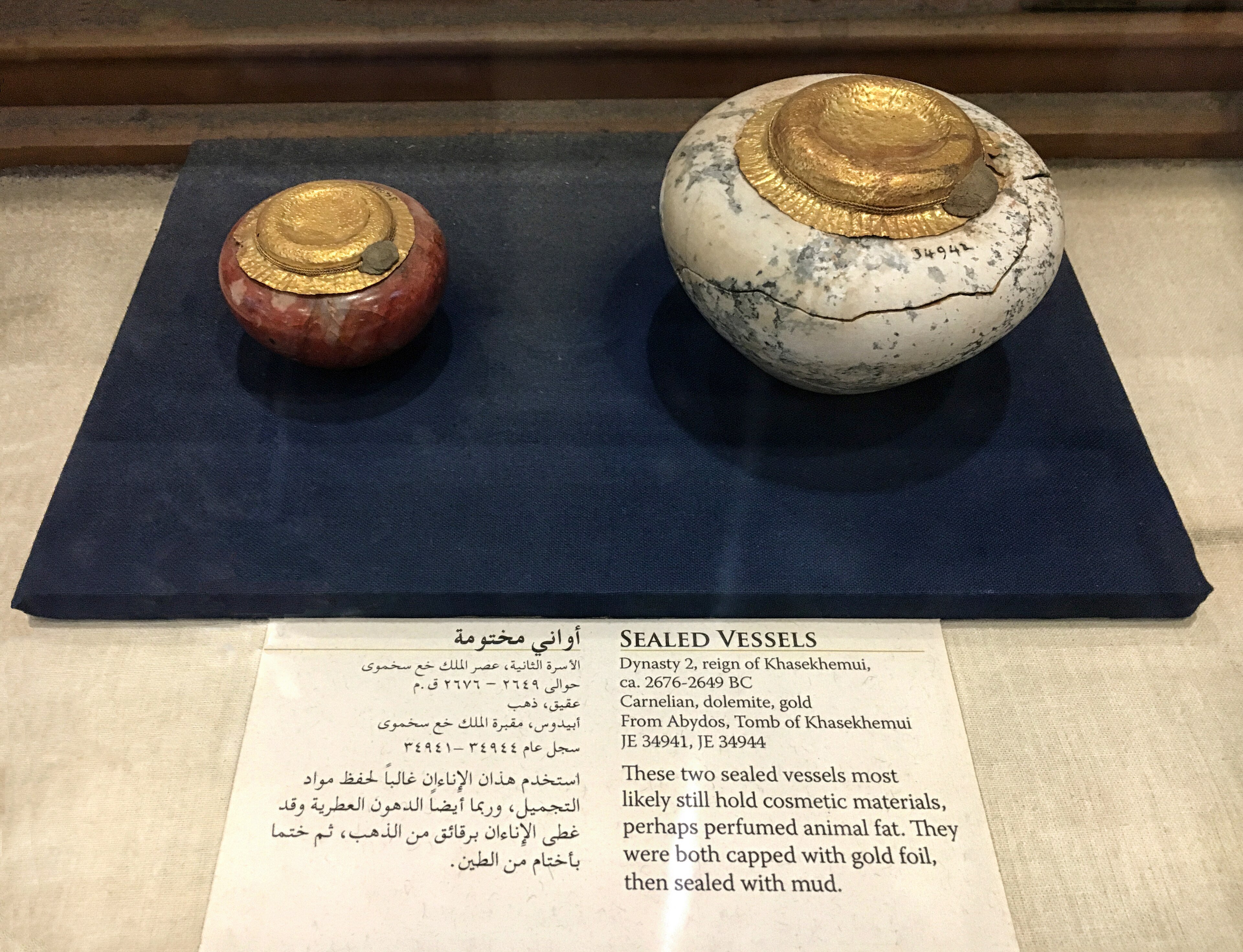
Photo: Sergio Geijo / Wikimedia Commons, CC BY-SA 2.0
Had anyone found proof before?
Once, and it came from a different dig. Between 2001 and 2003, a team from the Penn Museum worked at the enclosure of King Aha, one of the First Dynasty rulers. Around it they found six small graves, and they dug five of them.
The team said this gave the first definite archaeological evidence that people in such graves were killed. It most likely happened at the time of the king's funeral.
That was 25 years ago. Since then the question has sat in the background. Now the Abydos skulls add something the earlier dig could not. It shows wounds you can see on the bone, one skull after another, with nothing left to argue about except who did it.
Why did the practice stop?
It seems to have been short. After the First Dynasty, Egyptians moved on from burying people alongside kings. Later tombs were filled with models and statues of servants instead.
Nobody has a settled reason. Some people wonder if it just became too costly to lose so many skilled people. Others think beliefs about the afterlife changed. The skulls cannot answer that.
That is the odd thing. A custom that mattered enough to kill for lasted only a few kings, then vanished without a written word about why.
If you like frozen secrets from deep time, read about the baby mammoth that came out of the ice with her trunk still curled. For another place few outsiders ever get to see, look at the plague institute in Irkutsk.
What are the skulls still hiding?
Here is the number to sit with. Campbell found deadly injuries in 18 skulls, and the other 28 were not clear. That does not mean those 28 were fine. It means no one can read them yet.
Only 46 skulls made it into this study.
A hundred years ago a man looked at these bones and felt something was wrong. Today we know he was right. And at Abydos, beside the oldest royal tombs in Egypt, the desert has still not said who held the weapon.
Sources5
- The National, human sacrifice in ancient Egypt uncovered by modern forensic science (5 Oct 2026)
- Popular Science, 5,000-year-old skull fractures reveal human sacrifices in Ancient Egypt
- Live Science, ancient Egyptians sacrificed pharaohs' servants, new study finds
- Archaeology magazine, Did Egypt's first pharaohs demand human sacrifice?
- Penn Museum, evidence that courtiers were sacrificed at King Aha's enclosure
The week's biggest stories, every Monday
One email. The stories everyone will be talking about, before they do.
Free. One email a week. Unsubscribe anytime.Keep reading
 Explained85 kilometres of shelves, 12 centuries of papers, and a door most of us will never walk through
 ExplainedRefugees camped on a Durban pavement for four months. Why did no one move them?
 ExplainedHow much does Starlink cost? Plans, kit price and hidden fees