Inside the Siberian plague lab where a 28-year-old technician died
Marmots, mountain steppes and hundreds of plague strains. This is the institute Darya Shipilova worked for, and the questions it still has not answered.

Photo: IKhalitov / Wikimedia Commons, CC BY-SA 4.0
- Plague still lives in marmots along the Russia and Mongolia border
- A Siberian lab once took days to tell the WHO about an Ebola death
- Rumour says one broken test tube started everything
New to this? What is pneumonic plague? The facts, explained simply
Every summer, plague hunters from a Soviet-era institute in Irkutsk head for the high steppe of the Altai mountains, where Russia meets Mongolia. They trap marmots, comb fleas out of burrows and bring the samples back to the lab.
Between 2010 and 2024, scientists working that one stretch of mountains isolated 397 plague strains.
Darya Shipilova worked in that world. The 28-year-old lab technician at the Irkutsk Anti-Plague Research Institute of Siberia and the Far East died early on 2 October, days after she was admitted to hospital with severe pneumonia. Our first report covers the quarantines, the deleted posts and Russia's denials. This one goes inside the building where she worked.
What is the Irkutsk Anti-Plague Institute?
It opened in 1934, a year after a plague outbreak in Manchuria scared Moscow into building defences across Eastern Siberia and the Far East. Its first director, the epidemiologist Aleksey Skorodumov, built the anti-plague network that still covers the region.
Today it sits on Trilissera Street in Irkutsk and answers to Rospotrebnadzor, Russia's public health watchdog. Its territory is the Siberian and Far Eastern federal districts, roughly half of Russia by area.
Plague is the name on the door, but not the whole job. The institute also studies cholera, anthrax, tularemia, brucellosis and some viral infections. According to figures cited in US reporting, it has 95 scientific staff, has published more than 4,000 research papers and has trained over 3,000 doctors and lab specialists.
Where does plague still live in Russia?
In wild animals, in places most people never go.
Russia has several natural foci, pockets of land where Yersinia pestis, the plague bacterium, circulates among rodents and their fleas year after year. Between 2017 and 2025, infected animals turned up in three of them, the Central Caucasus, the Gorno-Altai mountains and Tuva.
The last two are Irkutsk territory. The Gorno-Altai focus is the northern part of the Sailugem focus, which straddles the Mongolian border, and it has been watched since 1961. For decades it carried only a mild strain, mostly in Mongolian pikas, small round cousins of the rabbit. Then, from 2012, the fully virulent form began showing up in grey marmots.
In Tuva next door, the main carrier is the long-tailed ground squirrel, a type of gopher. Researchers found the bacterium can survive for more than 400 days in the soil of its nests.

Photo: Alexandr frolov / Wikimedia Commons, CC BY-SA 4.0
Has anyone caught plague there recently?
Yes. Kosh-Agach district in the Altai Republic recorded a human plague case in each of 2014, 2015 and 2016. All three were linked to illegal marmot hunting and skinning infected carcasses.
The 2016 patient was a 10-year-old boy, taken to hospital in July with a severe fever after a trip into the mountains. Seventeen of his contacts, six of them children, were isolated. Doctors called his condition serious but stable.
Across the border it has been deadlier. In 2019 a 38-year-old man and his pregnant 37-year-old wife died in western Mongolia after eating marmot meat. Around 160 people were put under watch and the region was quarantined, stranding Russian tourists. In 2020 a 15-year-old boy died in Gobi-Altai province after eating an infected marmot.
It keeps happening. Mongolia quarantined Khovd province in 2024 after two marmot plague cases. This July another suspected case turned up there, traced to marmot meat eaten in neighbouring Bayan-Ulgii. Mongolia now rates 17 of its 21 provinces at risk.
How safe is a plague lab like this?
Russia puts plague in the top tier of its own danger scale for bacteria, roughly the level that labs elsewhere call biosafety level 3. Former colleagues of Shipilova told RFE/RL the institute ran strict biosafety rules, with plague shots even for interns.
The wider network has a patchier past. Back in 2005, US officials worried that scientists at some old Soviet anti-plague stations handled lethal microbes in cotton smocks and surgical masks.
Then there is the rumour. Local outlet Lyudi Baikala reported that Shipilova broke a test tube holding plague bacteria on 25 September. Some reports say she told medical staff herself that a tube broke while she was collecting samples. Rospotrebnadzor says it found no accident involving pathogens, and none of this has been confirmed.
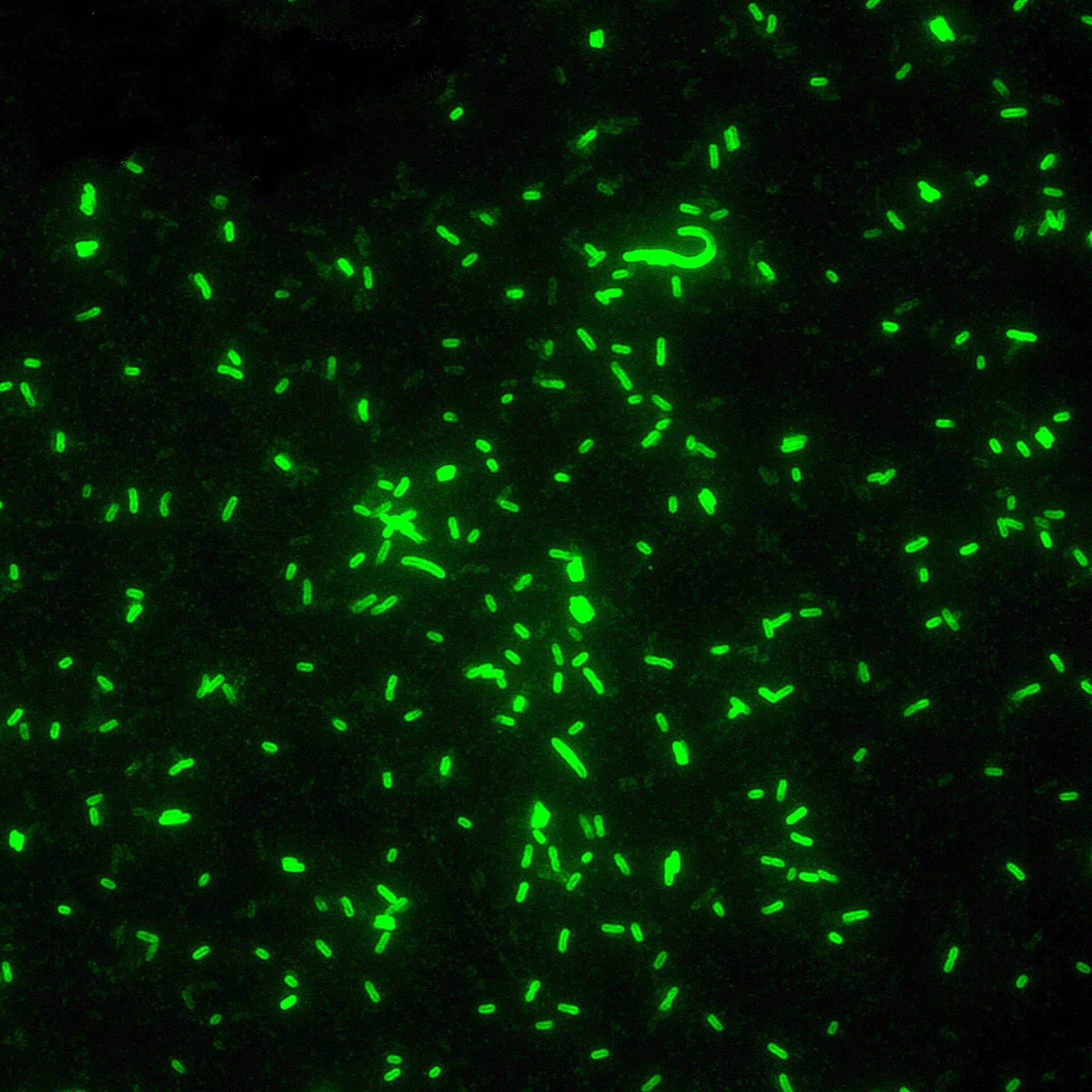
Photo: Larry Stauffer, CDC / Wikimedia Commons, Public domain
Have lab accidents leaked deadly germs before?
Yes, and Russia features more than once.
The best known is Sverdlovsk in 1979, where anthrax escaped a military site and killed at least 68 people, by Harvard biologist Matthew Meselson's count. How Moscow blamed bad meat and kept the secret for 13 years is a story of its own.
In May 2004, at the Vector lab near Novosibirsk, also in Siberia, researcher Antonina Presnyakova pricked herself with a needle carrying Ebola, the virus now crossing from Congo into Kenya. She died two weeks later. Vector told the WHO only after her death, too late for outside experts to advise on treatment.
Other countries have their own list. In 1978 Janet Parker caught smallpox from a lab one floor below her at the University of Birmingham and became the last person known to die of it. In 2004 two researchers in Beijing caught SARS at work and passed it on, and one researcher's mother died.
Has plague ever escaped a lab?
It has claimed a lab worker, at least once. In 2009 Malcolm Casadaban, a University of Chicago geneticist, died at 60 after working with a weakened plague strain. A hidden iron disorder had made him vulnerable. The CDC said it was the first reported death tied to a lab plague infection.
What does the latest reporting say?
Officially, the case is closed. The institute's own commission and Rospotrebnadzor say there was no emergency and no security breach, and no other staff reported infectious illness over 10 days. On 6 October Russia told the WHO that no plague was found in Shipilova or anyone else, and that observation of all her contacts had ended.

Photo: Vyacheslav Argenberg / Wikimedia Commons, CC BY 4.0
The WHO is not finished. Director-General Tedros said "timely, complete and transparent information sharing" is essential to clear up conflicting reports. The WHO has also asked about media reports of a second institute employee with pneumonia.
That second case is still developing. Claims of a second death have spread online, and one outbreak tracker traced them to a British tabloid citing unnamed Russian media. No Russian authority and no international body has confirmed it.
Small signs keep the doubt alive. Authorities in nearby Baikalsk posted a plague warning on Telegram on 3 October and pulled it about two hours later. And the story has now reached the White House, with Trump promising to raise it with Putin.
Why does this institute matter so much?
Because it is the reason plague in Siberia stays a local story.
Plague-infected animals have turned up in Russia almost every year, yet health officials recorded no epidemic between 2017 and 2025. That comes down to people like Shipilova. They test the rodents, map the fleas, train the doctors and keep the strains that tell a lab what it is facing.
In Kosh-Agach alone, one plague health survey covered 1,650 residents, including 135 shepherds and their families. A district that saw three plague cases in three years has held the line since.
Whatever killed the young technician, her institute has spent 92 years making sure that when plague surfaces in Siberia, it is caught fast, treated and stopped.
Sources9
How does this make you feel?
The week's biggest stories, every Monday
One email. The stories everyone will be talking about, before they do.
Free. One email a week. Unsubscribe anytime.Keep reading
 WorldAn MIT scientist says Irkutsk may not be plague at all
 WorldShould you be worried about the plague in Russia?
 WorldMoscow once blamed bad meat for an anthrax leak. Now it says pneumonia