Why does this corner of South America speak Afrikaans?
A ship, a shack and a snowstorm in a place with no hills. The story of South Africans who kept a language alive at the bottom of the world.
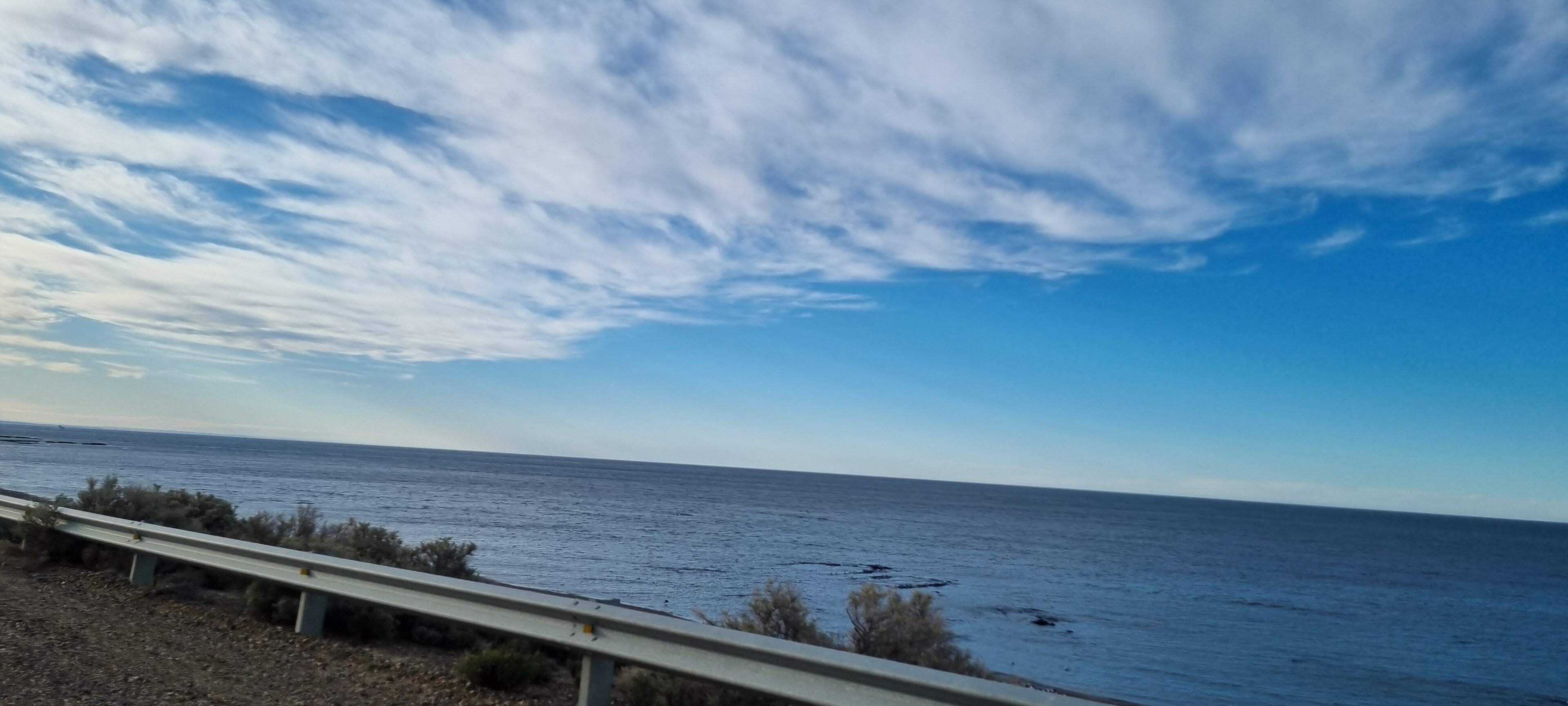
Photo: Natifuzz / Wikimedia Commons, CC BY-SA 4.0
- Hundreds of Boers sailed to Patagonia after losing the war
- Their Afrikaans stopped changing in 1902
- Only 20 to 30 native speakers are left
June 1902. A ship from Cape Town drops its passengers at Comodoro Rivadavia, a small port on the cold Atlantic coast of Argentina.
They are Boers. Weeks earlier their war against Britain ended in defeat. Now they stand on a beach at the bottom of the world, with oxen waiting to carry them about 100 miles inland.
More than 120 years later, a few dozen of their descendants still speak the Afrikaans they brought. It sounds like nobody else's. A video from History With Hilbert has passed 697,000 views, and thousands of South Africans in the comments say they never knew this community existed.
Why do people in Argentina speak Afrikaans?
Because of a war. After the Second Boer War, some Boers refused to live under British rule. Argentina offered land.
University of Michigan researchers say about 650 white South Africans arrived between 1902 and 1907. Most ended up in Chubut province, in Patagonia. The dry land around Comodoro Rivadavia looked a bit like the Karoo they knew.
Each family got 625 hectares free from the Argentine government and had to buy another 1,825 hectares of state land, according to Daily Maverick.
Many then trekked further inland to the town of Sarmiento.
What was waiting for them when they landed?
Very little. The video says the first families found an iron shack and not much else.
Daily Maverick describes a flat, windy land of knee-high thorny shrubs. The settlers had no water at first. When they were finally allowed to drill, they hit oil. But the oil belonged to the state, not to them.
The video also plays old interviews with survivors, taken from a 1978 documentary. In them, people recall snow within a week of landing. They say they built shelters from it and lived on government rations, plus ostrich and guanaco they shot themselves. Those are the survivors' words as the video tells it.
How did the Boers end up in Patagonia? A timeline
| Date | What happened |
|---|---|
| 31 May 1902 | The Treaty of Vereeniging ends the Boer War |
| 4 June 1902 | The first group lands at Comodoro Rivadavia |
| 1902 to 1907 | About 650 Boers arrive in total |
| 1938 | South Africa arranges a trip home for those who want it. Between half and two-thirds go |
| 1950s | Afrikaans loses ground as the community meets its Spanish-speaking neighbours |
| 2009 | One descendant says there are fewer than 20 first-language speakers left |
| 2018 | Michigan researchers count about 40 fluent speakers, aged 60 to 90 |
| 2019 | Estimates drop to 20 to 30 native speakers |
Sources: University of Michigan, Daily Maverick, Mail & Guardian.
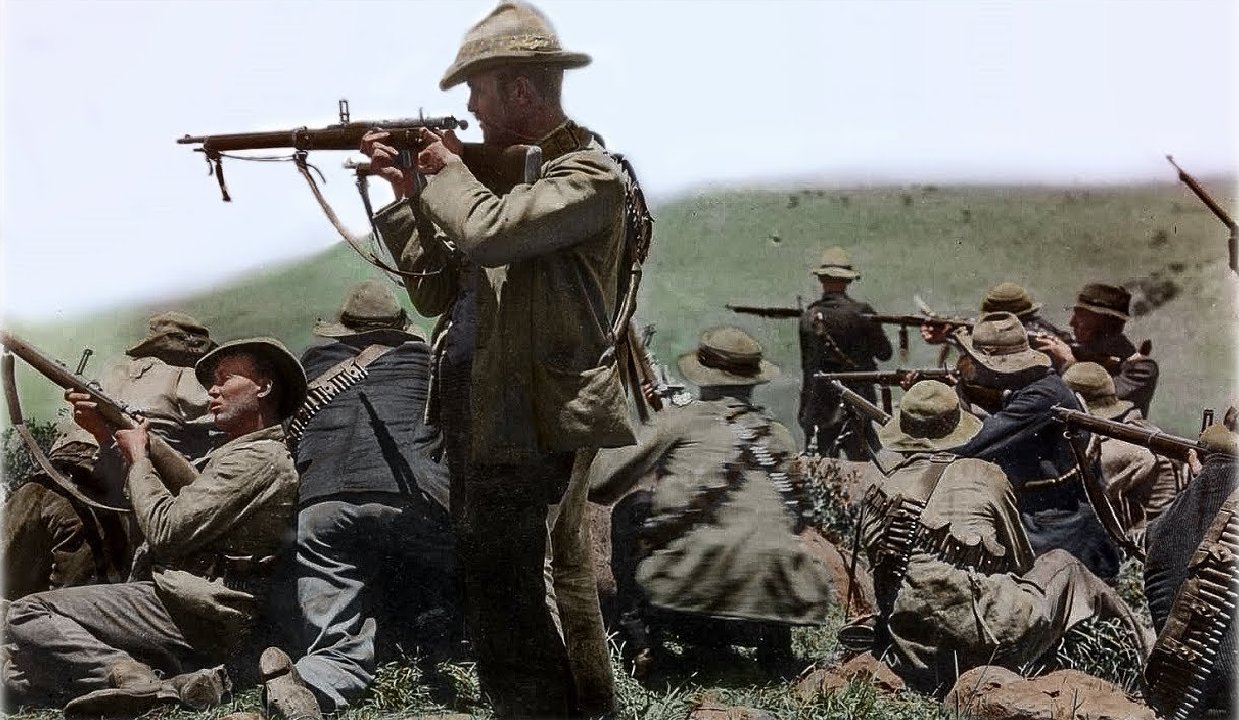
Photo: Unnamed War Correspondent / Wikimedia Commons, Public domain
What happened to the people who stayed?
Between half and two-thirds went home in 1938, when South Africa marked 100 years since the Great Trek. The rest stayed and became sheep farmers. Some still are.
Life stayed hard. A descendant named Danie Botha told a South African journalist in 2009 that you will see no Afrikaners there who are well off.
Their identity stayed strong. The video says the settlers named landmarks after Boer leaders such as Paul Kruger.
In Sarmiento, Afrikaans stayed the main language until the mid-1950s, researchers say. Then oil and mining brought Spanish speakers. People married across the line. Children grew up in Spanish.
Why does Patagonian Afrikaans sound frozen in time?
This is the part language experts love. The community lived cut off for about 50 years. Its Afrikaans skipped the usual slow decline and stayed close to the way people spoke before the language was standardised.
Dutch, not Afrikaans, was still the official language in South Africa until 1925. So these speakers left before their own language had a final shape.
Researchers point to a few clues:
- They say "ek" with a different vowel from modern South Africa.
- "Nege" (nine) keeps an older, harder "g" sound.
- Plurals often end in "s" where standard Afrikaans uses "e", so "troks" instead of "trokke". Spanish may have pushed this.
The community also made words of its own. Researchers list "kapokpop" for snowman, "operasiedokter" for surgeon and "lugskip", literally "air ship", for an airport. The video also mentions Spanish borrowings like "bueno", "sí" and "camión".
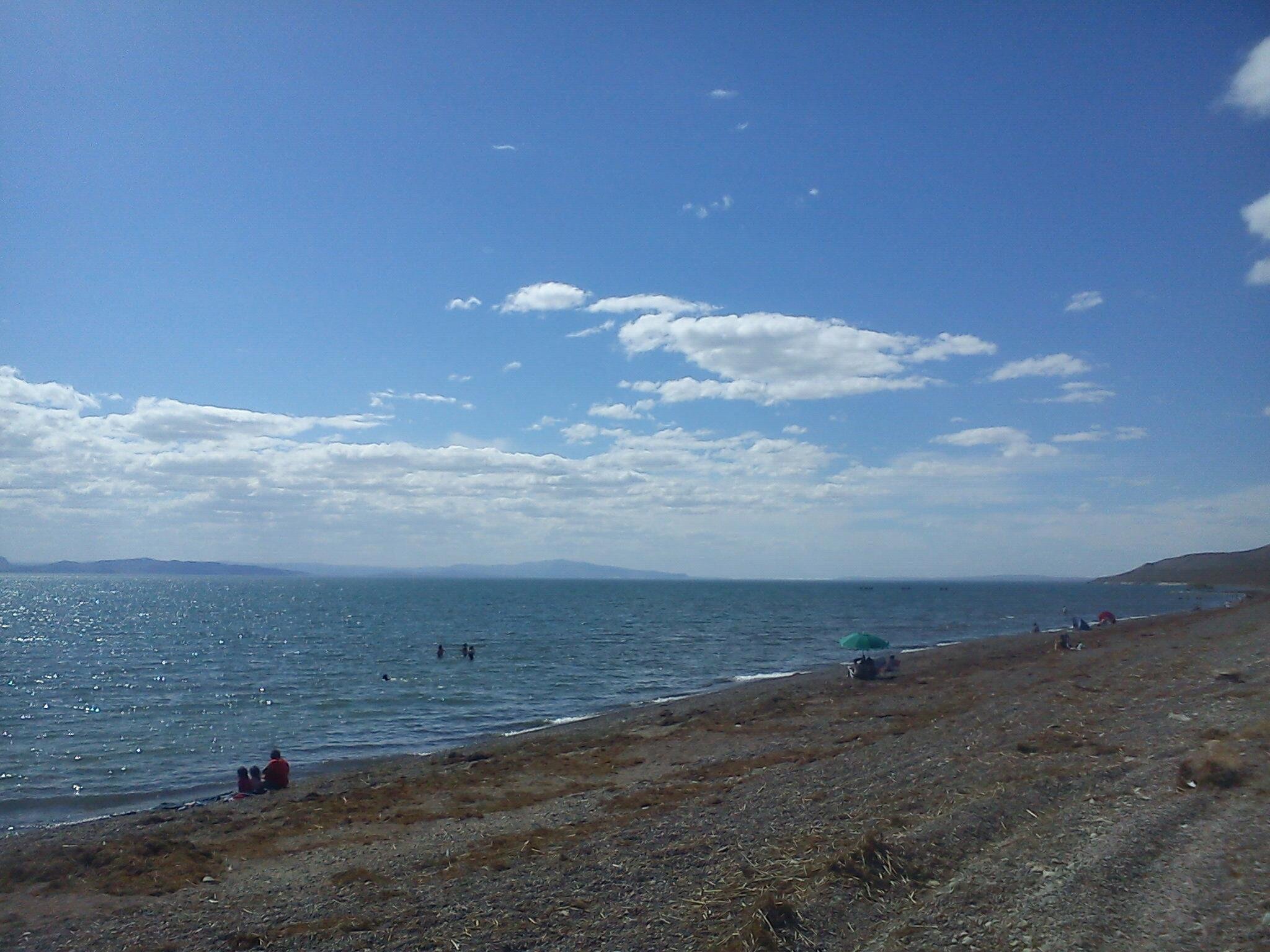
Photo: Rodarte / Wikimedia Commons, CC BY-SA 3.0
Who were Dumboy and Kokolas?
Not everyone on that voyage was Boer. The Michigan team wrote a paper about two Black South African men, remembered around Comodoro Rivadavia and Sarmiento as Dumboy and Kokolas. The video calls them Griqua.
Stories about the two men have been passed down for decades. The researchers study how those stories shape the way the community sees race and belonging. The video adds that interviews suggest at least two Black people were likely made to go, and that a third died on arrival.
Are there any speakers left?
Yes, but not many. Researchers counted about 40 fluent speakers in 2018. The 2019 estimate is 20 to 30 native speakers, almost all elderly.
Nicholas Henriksen of the University of Michigan says the last fluent speakers are between 60 and 90. Carlo de Lange, then 75, said in 2009 that after his generation there would be no more Afrikaans.
The Dutch Reformed Church, a pillar of Boer life, moved its services into Spanish in 1954, according to the video. Young people now drift away from it, Michigan researchers note.
Yet descendants in Comodoro Rivadavia and Sarmiento still call themselves Afrikaners. Enrique Grimbeek told the New York Times in 1991 that he tried to enlist when Argentina fought Britain over the Falkland Islands in 1982. Argentina has other stories the world is watching, like Messi's last game for Argentina. For another story about South Africans and where they belong, read the case for a Cape that stands alone.
Could a Welsh tea house really speak Afrikaans?
Welsh settlers share Chubut. Their language, Patagonian Welsh, still has about 1,000 speakers, according to the video. Their best-known town is Gaiman, famous for Welsh tea.
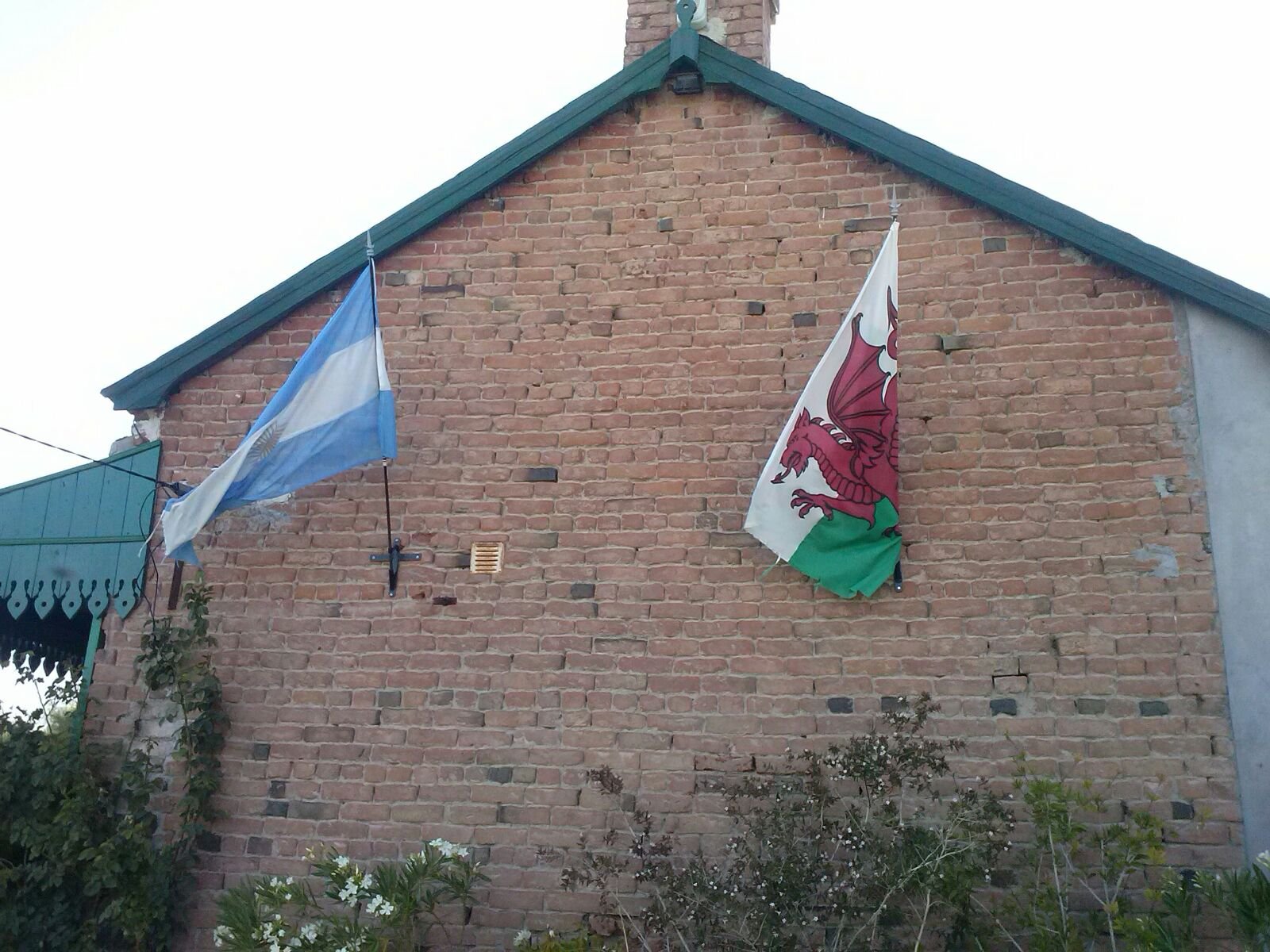
Photo: Delotrooladoo / Wikimedia Commons, CC BY-SA 4.0
One South African traveller wrote that they knocked on a door in Gaiman hoping for tea. The Welsh woman who answered switched to flawless Afrikaans. She had grown up beside Afrikaner neighbours.
"Suid-Afrika, ek is so lief vir daardie land," she said. South Africa, I love that country so much. She had even named her puppy Mannetjies.
Another viewer remembered meeting an Afrikaner from Argentina in Johannesburg in 1976. He looked like an Argentine footballer. He spoke like their grandfather.
And the snow? The video says the settlers called it "kapok", the word for something soft and white that most Boers had never watched fall from the sky.
Sources5
- History With Hilbert, Why does this South American country speak Afrikaans? (26 Sep 2026)
- University of Michigan LSA, Last Words (April 2018)
- University of Michigan Afrikaans-Argentine Collaboratory, The Other Afro-Argentines
- Daily Maverick, The Boers at the end of the world (2013)
- Mail & Guardian, End of an era for Argentina's Afrikaners (2009)
The week's biggest stories, every Monday
One email. The stories everyone will be talking about, before they do.
Free. One email a week. Unsubscribe anytime.Keep reading
 WorldPope Leo XIV on beauty, tech and why young people need to slow down
 WorldMargaret Hamilton, whose code landed Apollo 11, dies at 90
 WorldIs London's new African cinema really for Black people only?