Margaret Hamilton has died at 90. Her code kept Apollo 11 landing when the alarms went off
The computer was overloaded and the Moon was getting closer. The landing went ahead because of choices one young mother and her team made years before.
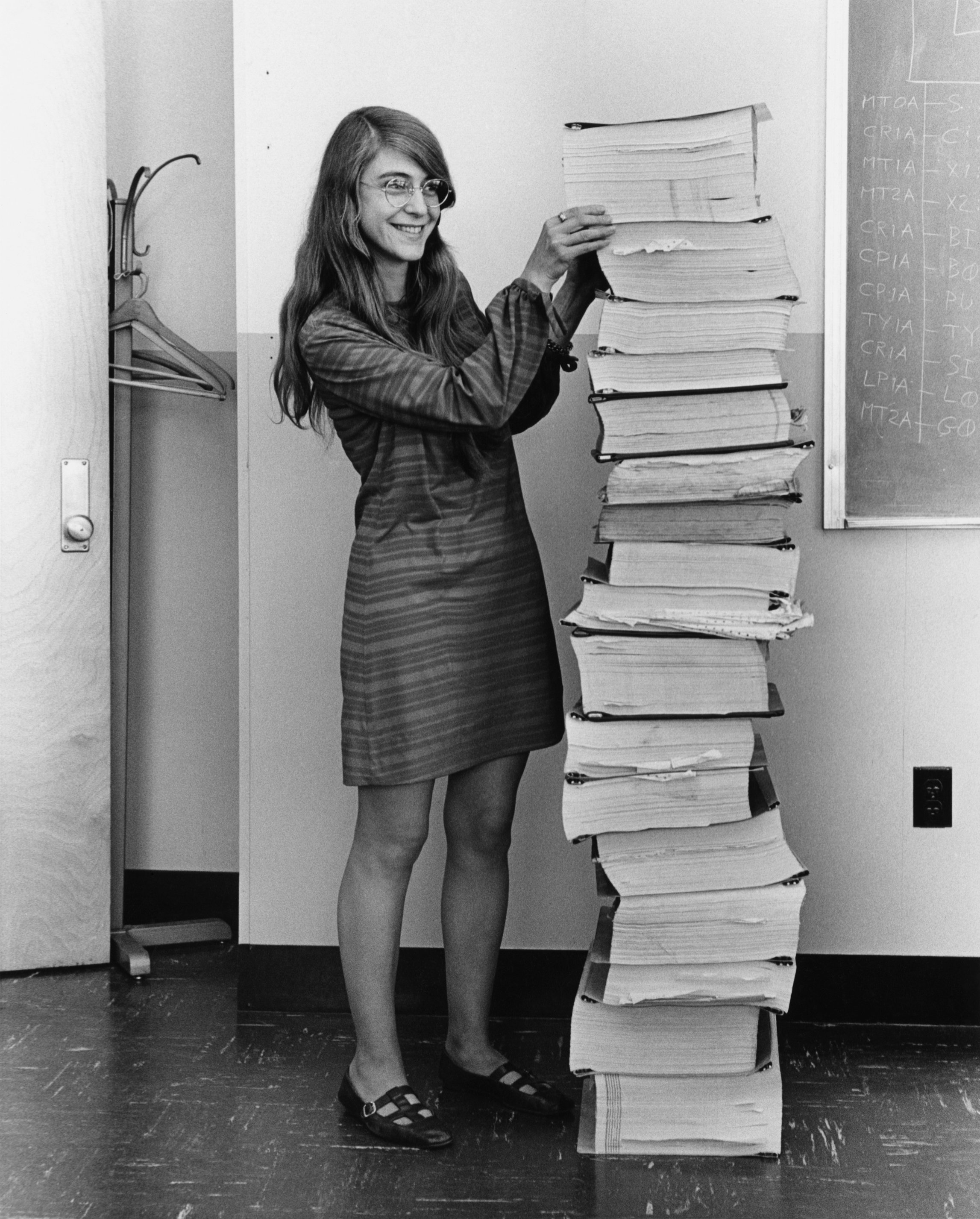
Photo: Adam Cuerden / Wikimedia Commons, Public domain
- She died on 30 September, and the news broke a week later
- A child's mistake in a simulator changed the Apollo code
- The famous photo shows printouts about as tall as she was
Four minutes from the Moon, a yellow light came on.
It was 20 July 1969. Neil Armstrong and Buzz Aldrin were guiding the lunar module Eagle down towards the surface. Then the small computer on board flashed a code nobody wanted to see: 1202.
Back on Earth, engineers had seconds to decide whether to stop the landing.
They let it go on. They could do that because of software written by a team at MIT, led by a woman named Margaret Hamilton.
Hamilton died on 30 September 2026 at a hospital in Cambridge, Massachusetts. She was 90. Her daughter, Lauren Hamilton, told The Associated Press, and MIT confirmed the death. CNN's post with the news passed 1.8 million views. No cause of death was given.
Who was Margaret Hamilton?
She was born on 17 August 1936 in Indiana and grew up mostly in Michigan's Upper Peninsula. In 1958 she earned a maths degree from Earlham College in Indiana.
In 1959 she went to MIT. Her first job there was writing weather software for a meteorology professor, Edward Lorenz, who later became famous for chaos theory. That is the idea that a tiny change, like the flap of a butterfly's wings, can change the weather far away.
In the mid-1960s she joined MIT's Instrumentation Lab, which had a NASA contract to build the guidance computer for Apollo. She started on software for missions without crews. Then she led the team writing the onboard flight software for the missions with astronauts.
By 1968 she was assistant director in charge of the command and service module team. She was in her early 30s, with a young daughter, in a field run almost entirely by men.
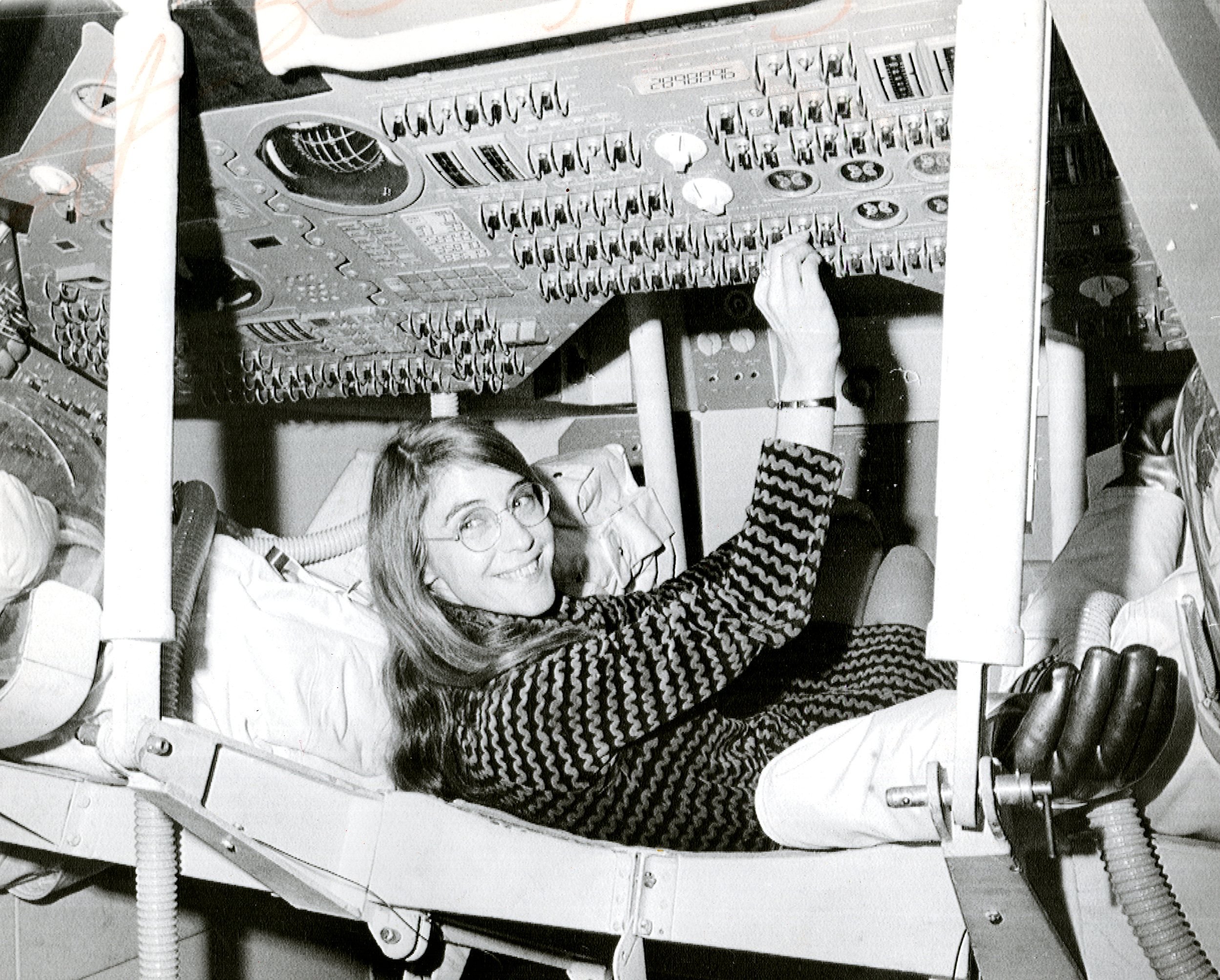
Photo: NASA / Wikimedia Commons, Public domain
What happened with the 1202 alarm on Apollo 11?
The Apollo computer was far weaker than your phone. It had to steer, read sensors and show numbers to the crew at once.
During the descent, the computer got more work than it could handle. Hamilton later explained that a radar switch was set in a way that kept feeding it extra data it did not need. The computer was being flooded.
Most systems would freeze. Apollo's software had been built to know which jobs mattered most.
When the computer ran out of room, it dropped the low-priority work, cleared its memory and restarted the jobs that steered and landed the craft. The 1202 and 1201 codes were its way of saying it was overloaded but still flying.
There were five alarms in about four minutes. Each time, the software kept the vital tasks running. Mission control gave the "go" again and again, and Eagle touched down in the Sea of Tranquility.
Apollo was the work of hundreds of people. But the way her team built the software, to protect the most important jobs first, is why a computer overload did not end the landing.
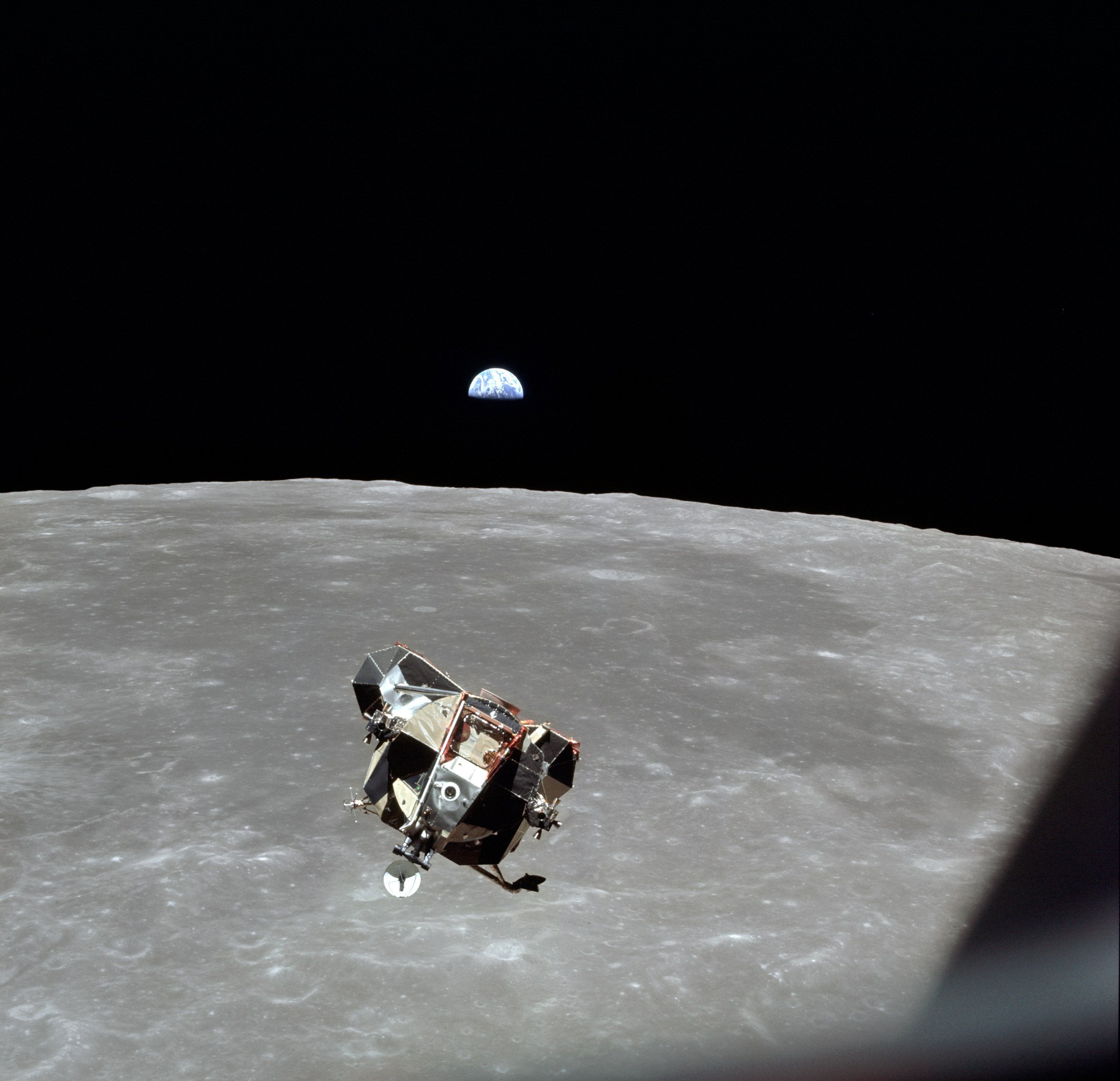
Photo: Michael Collins / Wikimedia Commons, Public domain
Did her daughter really crash a Moon simulation?
Yes, and it changed how Hamilton thought about mistakes.
Hamilton sometimes brought young Lauren to the lab at night and at weekends. One day Lauren was playing with the simulator and pressed keys that started the launch program while the "spacecraft" was already flying. The simulation crashed.
Hamilton told the story many times. She wanted to add a safety check to the code. She was told it was not needed, because astronauts were trained and would never make that mistake.
Then, on Apollo 8, astronaut Jim Lovell did exactly that. It wiped navigation data in the middle of the mission. Hamilton's team had to work out a fix and send it up from the ground.
After that, her team pushed even harder to plan for human error. Her rule from then on was simple. People will slip, so the system has to survive it.
Did Margaret Hamilton invent the term "software engineering"?
She is widely credited with it, and she said she started using the term during Apollo. At the time, writing code was not seen as real engineering. Building the rocket was serious work. Writing the instructions for its computer was not.
Hamilton wanted software to get the same respect as hardware. She has said people laughed at the phrase at first. Over time, the joke stopped.
Today "software engineer" is a job title you will find in almost every company on Earth.
What is the famous photo with the stack of code?
It is the photo at the top of this page. Taken at MIT's lab in 1969, it shows Hamilton standing next to a tower of printed paper. The pages are listings of the Apollo guidance software that she and her team wrote, and the stack reaches about as high as her head.
Decades later it went viral, and for many young women in tech it became a poster.
What did she do after Apollo?
She stayed at the lab into the 1970s, then started her own company, Higher Order Software. In 1986 she founded Hamilton Technologies, where she was CEO.
She published more than 130 papers on how to build software that does not fail. Her big idea stayed the same all her life: Catch errors before they happen, not after.
Here is her life at a glance.
| Year | Moment |
|---|---|
| 1936 | Born in Indiana on 17 August |
| 1958 | Maths degree from Earlham College |
| 1959 | Joins MIT, writes weather software for Edward Lorenz |
| 1968 | Assistant director on the Apollo command module software |
| 1969 | Apollo 11 lands despite five computer alarms |
| 1986 | Founds Hamilton Technologies |
| 2016 | Presidential Medal of Freedom from Barack Obama |
| 2017 | Becomes a Lego figure in the Women of NASA set |
| 2026 | Dies in Cambridge, Massachusetts, on 30 September |
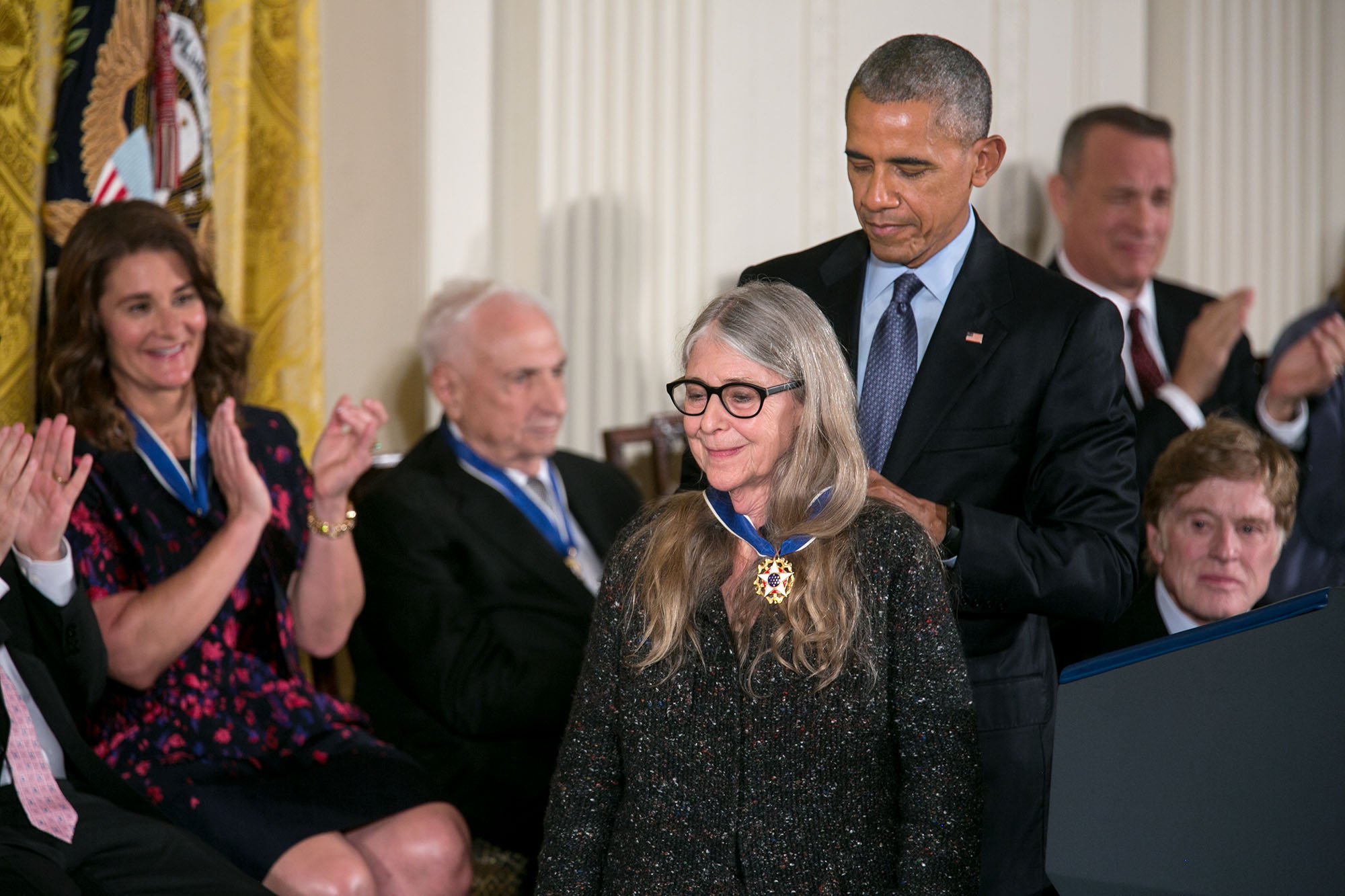
Photo: White House / Wikimedia Commons, Public domain
What are people saying about her now?
NASA's administrator, Jared Isaacman, called her a pioneer whose work helped make Apollo and humanity's first trips to the Moon possible.
Olivier de Weck, an MIT professor who teaches about the Apollo programme, called her "ahead of her time". He said she led a team using brand-new technology to build one of the most complex systems people had ever made.
Lauren described her mother as reserved but playful, a fan of vintage clothes, and someone who answered sexism with humour instead of anger.
Under the news, people shared the photo with the printouts again. Others told the 1202 story, or reminded everyone she once wrote weather software for the father of chaos theory. This week Elon Musk got America's top science medal to loud applause and louder anger. Hamilton's medal came for code most people never saw. Unlike some computer pioneers whose lives became wild tabloid stories, hers was about the work.
Why does her code still matter?
Before Apollo, code was the part nobody took seriously. She made people treat it like engineering.
When a plane's computer keeps flying through a fault, or an app keeps the important job going while the rest freezes, it uses the same idea her team built into Eagle. Expect the mistake, and protect the job that matters most.
In 2009 she looked back on the Apollo years and told MIT News: "We were the luckiest people in the world."
On 20 July 1969, the whole world was lucky she was there.
Sources5
- CNN, the original report of Margaret Hamilton's death (8 Oct 2026)
- CNN, Margaret Hamilton, whose code helped land Apollo astronauts on the Moon, dies at 90
- The Associated Press (via News4JAX), Margaret Hamilton, who led a software team for NASA's Apollo program, dies at 90
- Phys.org, Margaret Hamilton, scientist who worked on NASA's Apollo program, dead at 90
- Scientific American, NASA's Apollo Moon missions relied on this computer scientist
The week's biggest stories, every Monday
One email. The stories everyone will be talking about, before they do.
Free. One email a week. Unsubscribe anytime.Keep reading
 WorldSexually transmitted diarrhea is spreading and dodging antibiotics
 WorldHegseth vows a public firing squad for the Fort Hood shooter
 WorldElon Musk wins the National Medal of Science, and Trump calls him the new Edison