A river of mud swept cars down a rich Santiago street in minutes
The clips show cars floating away and one driver who did not move. Behind them is a storm, a blocked drain and a hillside that had already burned.
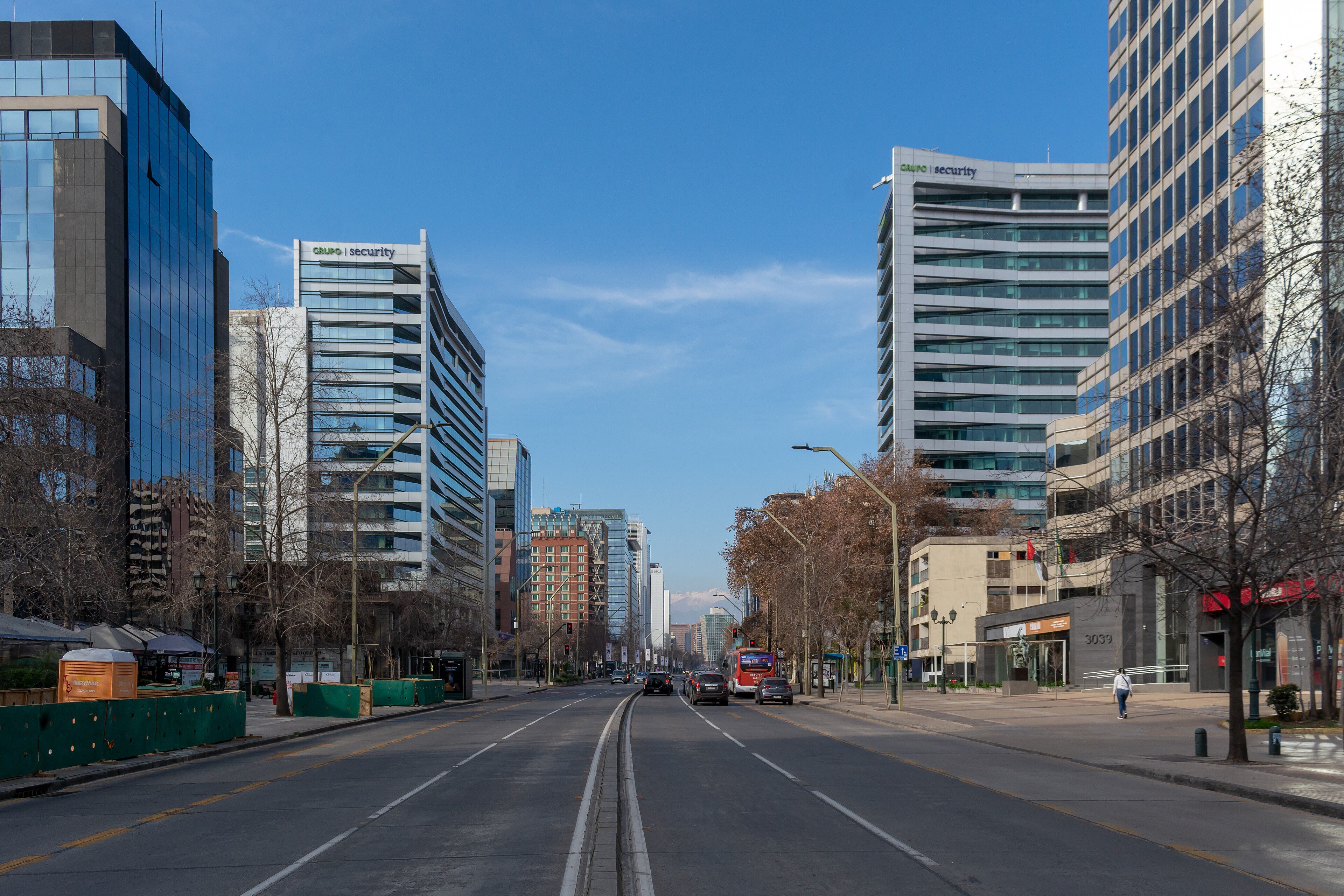
Photo: Carlos Figueroa Rojas / Wikimedia Commons, CC BY-SA 4.0
- A city bus was dragged down the street too
- The president declared Las Condes a catastrophe zone
- The hillside above had flooded before
A car sits still on a street in Santiago. Brown water rises around its wheels. Then the whole street starts to move.
That is the scene in videos that spread across the world on 8 October, including a clip shared by Fox News. Cars slide sideways. A city bus is pushed down the road. Mud and stones pour in behind them.
It happened in San Carlos de Apoquindo, in the Las Condes district on the east side of Santiago, Chile. The people watching online had one reaction. "For the love of god put it in reverse!" one viewer wrote under a clip. Another said they once saw a river burst its banks and a car float off "like a toy boat."
Chile was already in the news this month for its young protesters, as our look at Gen Z protests around the world shows. This time the story is the weather.
Here is what actually happened.
What happened in Las Condes on 8 October?
The emergency started at about 5pm on Thursday, after heavy rain fell on the mountains above Santiago. Chilean coverage calls it an aluvión. That is a flash flood that carries mud, rocks and trees, not just water.
Police say a canal on Francisco Bulnes Correa overflowed. The torrent then rushed west down General Blanche, one of the main roads in the area. Streets named in local reports include Avenida La Plaza, Camino El Alba and Quebrada Honda.
Cars were swept along. A red city bus was dragged by the current. People were stuck inside vehicles and on public transport. Others were trapped in buildings nearby.
| Time | What happened |
|---|---|
| About 5:15pm | Mudslide hits San Carlos de Apoquindo and cars are swept away |
| 5:34pm | A city bus is dragged by the flow |
| 6:14pm | President José Antonio Kast says emergency teams are heading to the site |
| 6:45pm | Red alert declared for ten districts |
| 7:57pm | The government says six people are injured |
| 8:20pm | Kast orders Las Condes declared a catastrophe zone |
| 10:20pm | The army sends soldiers and vehicles |
Source: Chilevisión live coverage and Pauta, 8 October 2026.

Photo: Brian Stansberry / Wikimedia Commons, CC BY 3.0
Did anyone die in the Santiago flood?
No deaths were reported in the first night of coverage we could find.
The injury numbers did not match at first. The national disaster agency, Senapred, said in an early update that no injured people were recorded. Later that evening, presidential delegate Germán Codina said six people were hurt. One of them was a minor with a broken bone.
Hospitals took a hit too. The Clínica UC Christus at San Carlos de Apoquindo was hit by mud and stones in its basement. It stopped emergency care and appointments until Friday, and it said its patients were safe. The Universidad de los Andes stopped people from leaving or entering its campus for their own safety.
Why were ten districts on red alert?
Senapred put these districts on red alert, its highest level: San José de Maipo, Puente Alto, Pirque, La Florida, Peñalolén, La Reina, Las Condes, Lo Barnechea, Vitacura and Colina.
Schools were closed in ten districts. Soldiers from the Buin and Tacna regiments went to Las Condes with heavy vehicles. The interior minister, Claudio Alvarado, announced a fenced-off zone so clean-up could begin straight away.
Las Condes mayor Catalina San Martín said some neighbours were cut off. She said officials did not expect a second wave, but she warned that crews would need to evacuate if one came. She asked people not to go and watch.
The catastrophe zone matters because it frees up money and help faster, Alvarado said.
What caused the flood in San Carlos de Apoquindo?
Officials point to a mix of things, and nobody has given a final answer.
The first is the weather. Regional governor Claudio Orrego said the rain was very heavy in a short time and the freezing level in the sky was unusually high. When that line sits high, rain falls where snow would normally stay on the mountain. All that water runs downhill at once.
The Andes rise right behind the city, so heavy rain up there reaches the streets fast. Las Condes sits at the foot of those slopes.
The second is a possible blockage. Codina said two drains on General Blanche may have been blocked by material. He said that still needs technical checking.
The third is the hillside itself. Codina linked the risk to vegetation lost in an earlier fire in the foothills. Burnt slopes cannot hold soil, so rain turns it into mud.
No official rainfall total had been published in the reports we found.
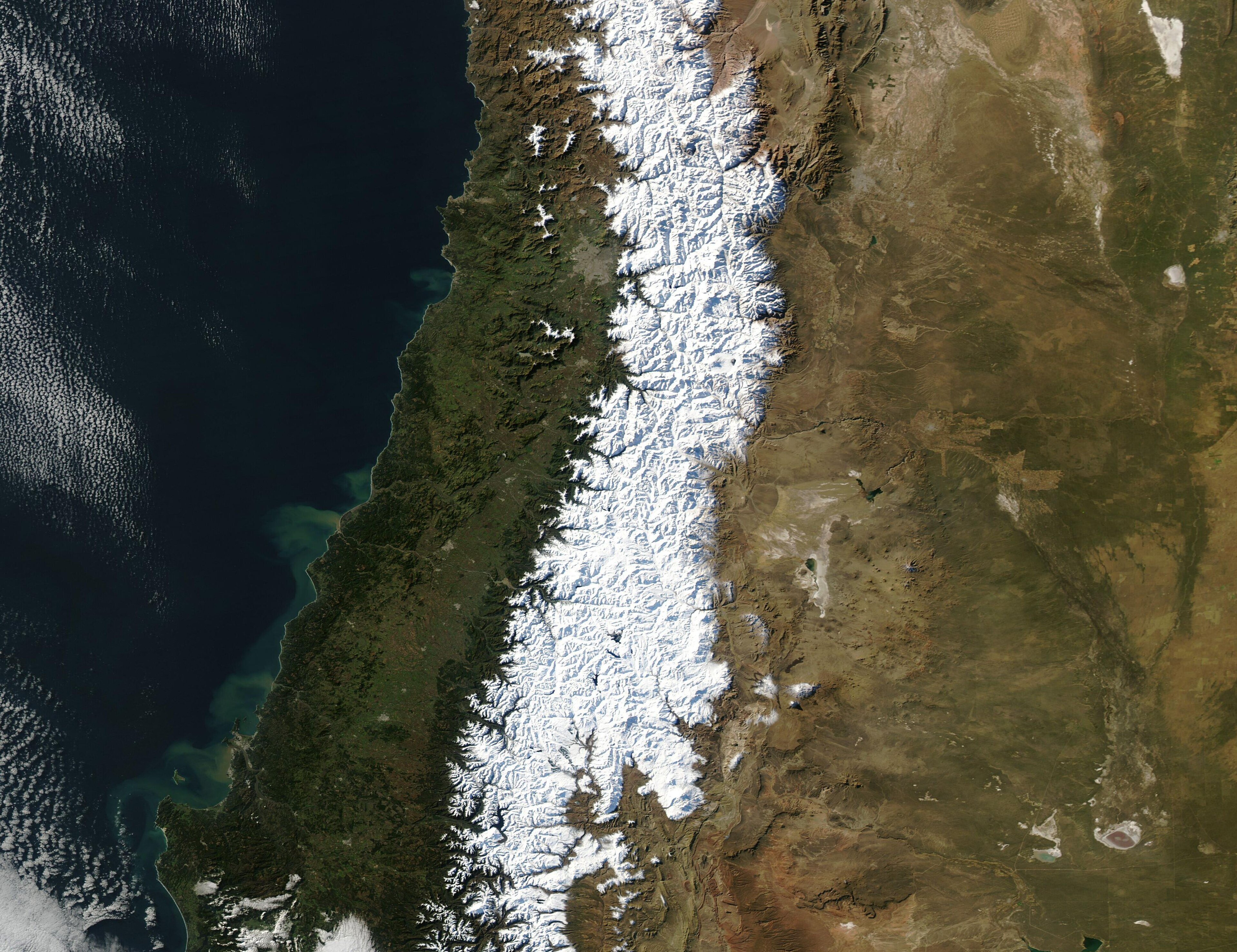
Photo: MODIS Land Rapid Response Team, NASA GSFC / Wikimedia Commons, Public domain
Could a driver really have just reversed?
That is the question the internet is fighting about. In the clip, one car stays put while the water climbs. Some viewers say the driver should have backed out. Others say it is easy to say from a sofa.
Nobody outside the car knows what that driver saw. A flash flood moves fast, and mud and stones can block a road in seconds. We do not know what happened to the people in those cars, and we will not guess.
What the clips show is how quickly an ordinary street can turn into a river.
Was this flood a warning that nobody could use?
Here is the part that stings in Las Condes.
In August, Mayor San Martín and the Universidad Católica football club signed a deal to build flood barriers in San Carlos de Apoquindo. The plan, as Pauta reports it, has five flexible barriers and an investment of 754 million pesos from the public works ministry.
On the night of the flood, Codina confirmed that the containment nets agreed for the area were not installed yet. Whether they would have stopped this flood is not known. Pauta notes that nobody can say those works would have prevented it. Still, in a place that had already flooded once this year, residents will ask why the nets were still on paper.
And it was not the first time. A report from August says that on 31 January, heavy rain sent mud and sediment down San Carlos de Apoquindo as far as the Atenas roundabout. A forest fire the month before had burned the plant cover on the same slopes.
So the hillside flooded in January, the barriers were agreed in August, and the cars were swept away in October. The same mountain, the same neighbourhood and the same clip that the world cannot stop watching.
Sources6
- Fox News on X, videos of the Santiago flash flood (8 Oct 2026)
- Pauta, aluvión in Las Condes: red alert in ten districts (8 Oct 2026)
- Chilevisión live coverage, minute by minute (8 Oct 2026)
- Radio Agricultura, Senapred update on people trapped and sites hit (8 Oct 2026)
- Radio Agricultura, Governor Orrego on heavy rain and a high freezing level (8 Oct 2026)
- Diario Correo (EFE), cars swept away in an upmarket area of Santiago (8 Oct 2026)
The week's biggest stories, every Monday
One email. The stories everyone will be talking about, before they do.
Free. One email a week. Unsubscribe anytime.Keep reading
 WorldWhy an Iowa council meeting opened with "Hail Satan"
 WorldSexually transmitted diarrhea is spreading and dodging antibiotics
 WorldHegseth vows a public firing squad for the Fort Hood shooter