A doctor told Christina Applegate she does not have MS after 5 years
She lived with the label for five years. Now a top MS clinic says the case is still open, and the numbers show she is nowhere near alone.

Photo: Gage Skidmore / Wikimedia Commons, CC BY 2.0
- Up to 1 in 5 people referred to MS clinics don't actually have MS
- Migraine is the condition doctors mistake for it most
- A second opinion, not a new symptom, is usually what catches it
1 in 5.
That is roughly how many people referred to a multiple sclerosis clinic with an existing MS diagnosis turn out not to have the disease, according to a study from two of the busiest MS centres in the United States.
Christina Applegate says she has just joined them. The actress was diagnosed with MS in 2021 and has spoken about it publicly ever since, including using a cane at the SAG Awards with a message taped to it reading "F U MS". This week, on her podcast "MeSsy" with Jamie-Lynn Sigler, she said a doctor told her: "Congratulations. You don't have MS." Applegate said she is "back at square one where I don't know what's going on with me." She said nothing magical happened when she heard the news. She still uses a wheelchair for doctor's visits and still has every symptom she had before.
Can MS be misdiagnosed?
Yes, and it happens more than most people would guess. A 2019 study looked at 241 patients who had already been diagnosed with MS elsewhere, then referred to the Cedars-Sinai or UCLA MS clinics in Los Angeles over one year. 18% of them did not have MS at all. The rate was 17% at Cedars-Sinai and 19% at UCLA.
Dr Marwa Kaisey, a Cedars-Sinai neurologist and one of the researchers behind that study, appeared on Applegate's podcast this week. She told listeners that almost 1 in 5 people who have been told they have MS "didn't actually have it", the same number her own research found six years earlier.
What is mistaken for MS?
MS damages the coating around nerves, and an MRI scan can show the scars this leaves behind, called lesions. The problem is that several other conditions leave similar-looking marks or cause similar symptoms, so doctors can get it wrong in good faith.
 Read nextNovember petrol forecast: Now about R3.01 more a litre
The 2019 study named the conditions people were most often diagnosed with instead.
| Condition mistaken for MS | Share of misdiagnoses | Study |
|---|---|---|
| Migraine | 16% | Cedars-Sinai/UCLA study, 2019 |
| Radiologically isolated syndrome | 9% | Cedars-Sinai/UCLA study, 2019 |
| Spine disease (spondylopathy) | 7% | Cedars-Sinai/UCLA study, 2019 |
| Nerve damage (neuropathy) | 7% | Cedars-Sinai/UCLA study, 2019 |
Nearly 1 in 5 people referred to a major MS clinic with an existing MS diagnosis do not have the disease, the same figure Applegate's own neurologist gave on her podcast this week, first reported from the 2019 Cedars-Sinai and UCLA study above.
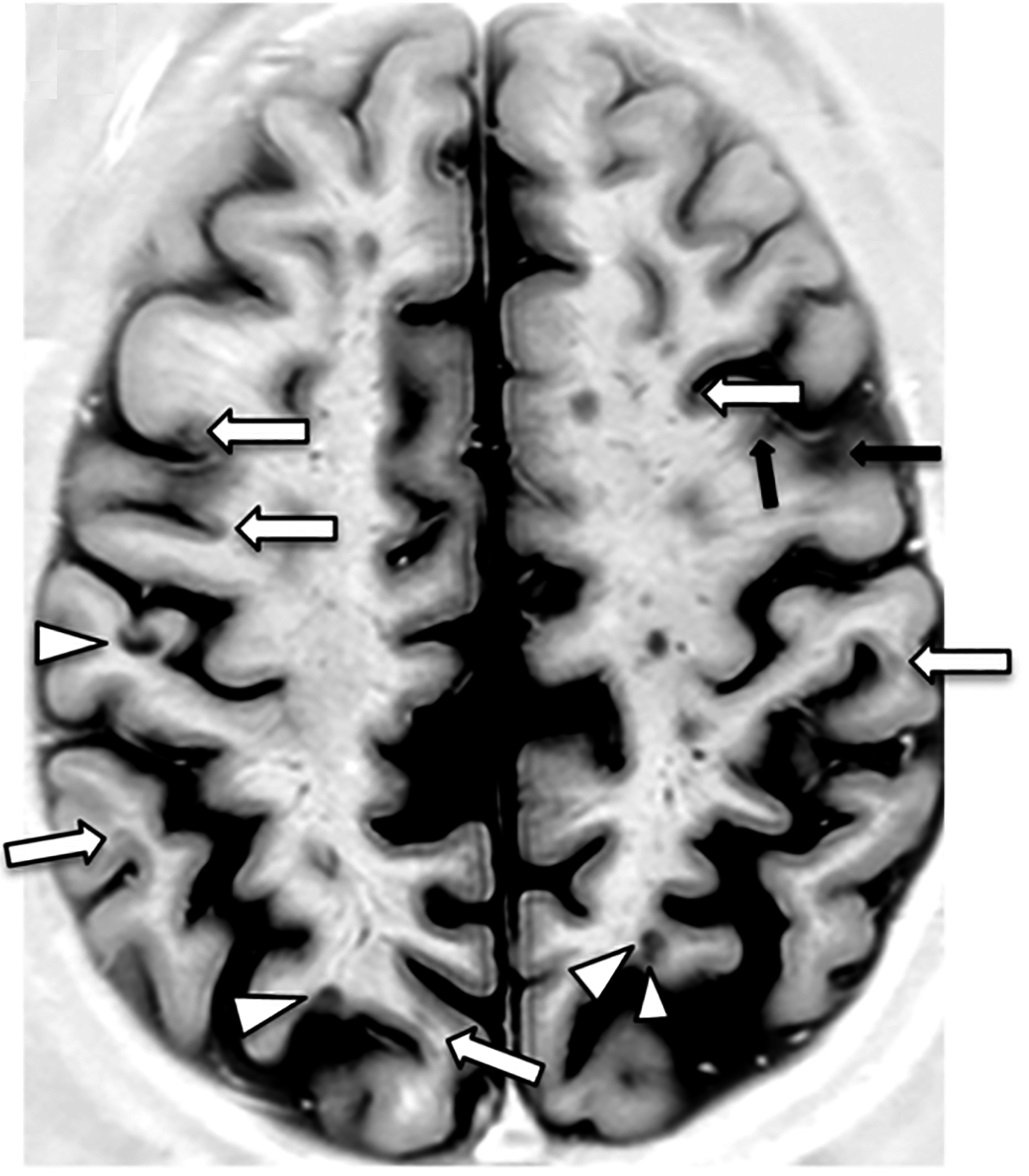
Photo: Article authors: Alice Favaretto, Davide Poggiali, Andrea Lazzarotto, Giuseppe Rolma, Francesco Causin, Paolo Gallo / Wikimedia Commons, CC BY 4.0
How is MS actually diagnosed?
There is no single MS test. Doctors only confirm it by combining a brain and spine scan, a needle in your lower back, and electric signals sent through your nerves.
The MRI looks for lesions in the brain and spinal cord. A lumbar puncture, often called a spinal tap, takes a small sample of fluid from around the spine to check for antibody patterns linked to MS, called oligoclonal bands. Evoked potential tests use mild electric signals on the skin to measure how fast nerves respond. Blood tests rule out other illnesses that cause similar symptoms.
Doctors follow a checklist called the McDonald criteria, named after the neurologist who led the group that wrote it. It was updated again in 2024. The new version lets doctors use a newer blood and fluid test called kappa free light chains, which works as well as the older antibody test but is faster to run in many labs. It also allows two new MRI patterns, the "central vein sign" and "paramagnetic rim lesions", to count as extra evidence. Together they are meant to catch real MS earlier and rule out look-alikes faster.

Photo: Bill Branson (Photographer) / Wikimedia Commons, Public domain
Why does it take so long to find the right diagnosis?
Misdiagnosis runs both ways, and both are common. A 2024 review in the Multiple Sclerosis Journal combined 62 studies on the subject. It found a pooled misdiagnosis rate of 15% (people wrongly told they have MS), and a pooled underdiagnosis rate of 36% (people who have MS but were missed). Individual studies in the review ranged far wider, from 5% up to 41% for misdiagnosis.
For people whose MS was missed, it took an average of 17.3 months longer to get the right diagnosis. The same review found women are 2.1 times more likely than men to be misdiagnosed with MS in the first place.
 Trending nowBootlegger data leak: The locked dashboard that was never locked
The cost of getting it wrong is not small. In the 2019 Cedars-Sinai and UCLA study, people spent an average of four years being treated for MS before the mistake was caught. 72% of them had already been prescribed real MS medication they did not need, and the researchers estimated the group's unnecessary treatment cost almost $10 million.
Similar mix-ups show up further down the list too. A 2025 review of genetic conditions that get mistaken for MS found CADASIL, a rare inherited blood vessel disease, behind 22% of those cases, often in patients with a family history of neurological illness that nobody had asked about yet.
Doctors are not alone in finding this hard. Over-labelling shows up in other fields too. A recent UK review found autism diagnoses among young people running far ahead of confirmed cases, a pattern worth reading alongside how diagnosis rates for autism and ADHD have shifted over time. And once any label sticks, what a patient gets prescribed next is shaped by more than symptoms alone, as research into drug company influence on prescribing habits has shown.
What should you do if something doesn't add up?
Specialists are consistent on this point: The fix is a second opinion at a comprehensive MS centre, not a new test you ask for yourself. The National Multiple Sclerosis Society keeps a list of centres built around exactly this kind of review, where a neurologist re-reads the original scans and fluid results against the full McDonald checklist rather than taking the first diagnosis on trust.
Nobody treating or advising on MS suggests stopping medication on your own based on doubt alone. Any change to treatment is a conversation with your own neurologist, done with the same tests that confirm or rule out the disease in the first place.
Diagnostic tools keep improving too. Alongside the 2024 criteria update, researchers are testing new blood markers that could one day confirm MS without a spinal tap at all, the kind of advance covered in recent work on faster, less invasive disease testing.
Applegate's own case shows why the second opinion still matters more than the paperwork. She has not been told what she does have. Her neurologist's number, almost 1 in 5, was not new science. It was published seven years ago, sitting in a journal, waiting for her own story to make people look it up.
Get the stories that hit your pocket
Petrol, SARS, Eskom, grants and the news everyone is talking about. One short email every weekday at 6am.
Free. One email each weekday. Unsubscribe anytime.Sources8
- CBS News, Christina Applegate reveals she was misdiagnosed with multiple sclerosis (20-21 Oct 2026)
- CNN, Christina Applegate says doctors found she doesn't have the disease after all
- Today, Christina Applegate says she was misdiagnosed with MS after 5 years
- NeurologyLive, coverage of the Cedars-Sinai/UCLA misdiagnosis study (2019)
- Multiple Sclerosis Journal, misdiagnosis and underdiagnosis systematic review and meta-analysis (2024)
- Mayo Clinic, Multiple sclerosis diagnosis and treatment
- National Multiple Sclerosis Society, how MS is diagnosed
- The Lancet Neurology, the 2024 McDonald criteria revision
Keep reading
 ExplainedThe interest on a $300,000 home loan now costs more than the loan
 ExplainedWhen do the clocks go back? UK and US dates for 2026
 ExplainedThe Guinea-Bissau newborn vaccine trial is back. Here is the full timeline