Cape Town now has more Airbnbs than Barcelona. Locals say they paid the price
Some people call Airbnb the reason Cape Town is thriving. Others say it flipped the script on the locals. Both quote numbers, and they do not match.

Photo: Dietmar Rabich / Wikimedia Commons, CC BY-SA 4.0
- Cape Town has more Airbnbs than Barcelona by Airbnb's own count
- One researcher says Sea Point has lost over a quarter of its homes
- A tiny share of hosts runs a huge share of listings
"That place is thriving & growing. Every Airbnb spot employs people and pays tax."
Under a thread about Airbnb taking over Cape Town, that reply got a lot of likes. So did this one: "the airbnb wave definitely flipped the script on the locals."
And then a third voice jumped in with a warning. "As long as it has not gone down the drain like Hillbrow, Yeoville..." the person wrote, a nod to two Johannesburg suburbs many people say have declined.
Three replies, three different Cape Towns. Which one is real?
How many Airbnbs does Cape Town have?
About 26,000. Inside Airbnb, which tracks listings on the platform, counts more than 26,870. The City of Cape Town's own estimate is more than 25,000 across all booking sites.
BusinessTech reported Airbnb's own count of 23,564 active listings in October 2024. That was more than Barcelona (18,925) or San Francisco (7,888).
Growth is the heated part. Housing activist Jens Horber of Ndifuna Ukwazi says listings in tourist areas like the city centre and the Atlantic seafront are up 190% since 2022. Airbnb says active listings have not grown much since 2020. Both can be measured differently, and the gap is part of the fight.
What do the people who love Airbnb say?
Airbnb's case rests on money and jobs. Its own research on 2023 says hosts in Cape Town welcomed over 700,000 guests. It says that added about R14.4 billion to the economy and supported 42,000 jobs.
The company says a typical host earned R74,000 that year. It also says almost half of hosts rely on that income to cope with living costs.
On rent, Airbnb says listings are only 0.9% of the city's formal homes. It says that if every dedicated rental went back on the long-term market, rents would drop by an average of just R69 a month.
Velma Corcoran, who leads Airbnb in the Middle East and Africa, says regulation can help if it is simple and fair. Airbnb wants a national host register.
What do the people who are angry say?
Their case rests on rent and neighbourhoods. The Western Cape has had the highest rents in South Africa since 2016. PayProp data cited by BusinessTech puts the average at R10,673 a month, 21% above the national average. A video by the page Cape Town Etc, reported by Briefly, said the first quarter of 2026 average hit R12,125, up 7.4% on the year. We could not check that second figure at its source.
A one-room flat in the city centre starts at around R10,000 a month, according to eNCA.
The campaign group Fair Rent in Cape Town launched in August. It says some tenants have faced yearly rent rises of 20% or even 30%. Member Adam Narain told CapeTalk that young professionals and working families are leaving Gardens, Vredehoek and Zonnebloem for cheaper areas. He says the City treats Airbnb only as a business issue.
Researcher Cloe St-Hilaire of the University of Waterloo estimates the city has lost 1.5% of its housing to Airbnb overall. In Sea Point, she says, the loss has passed 26%. That is more than one home in four.
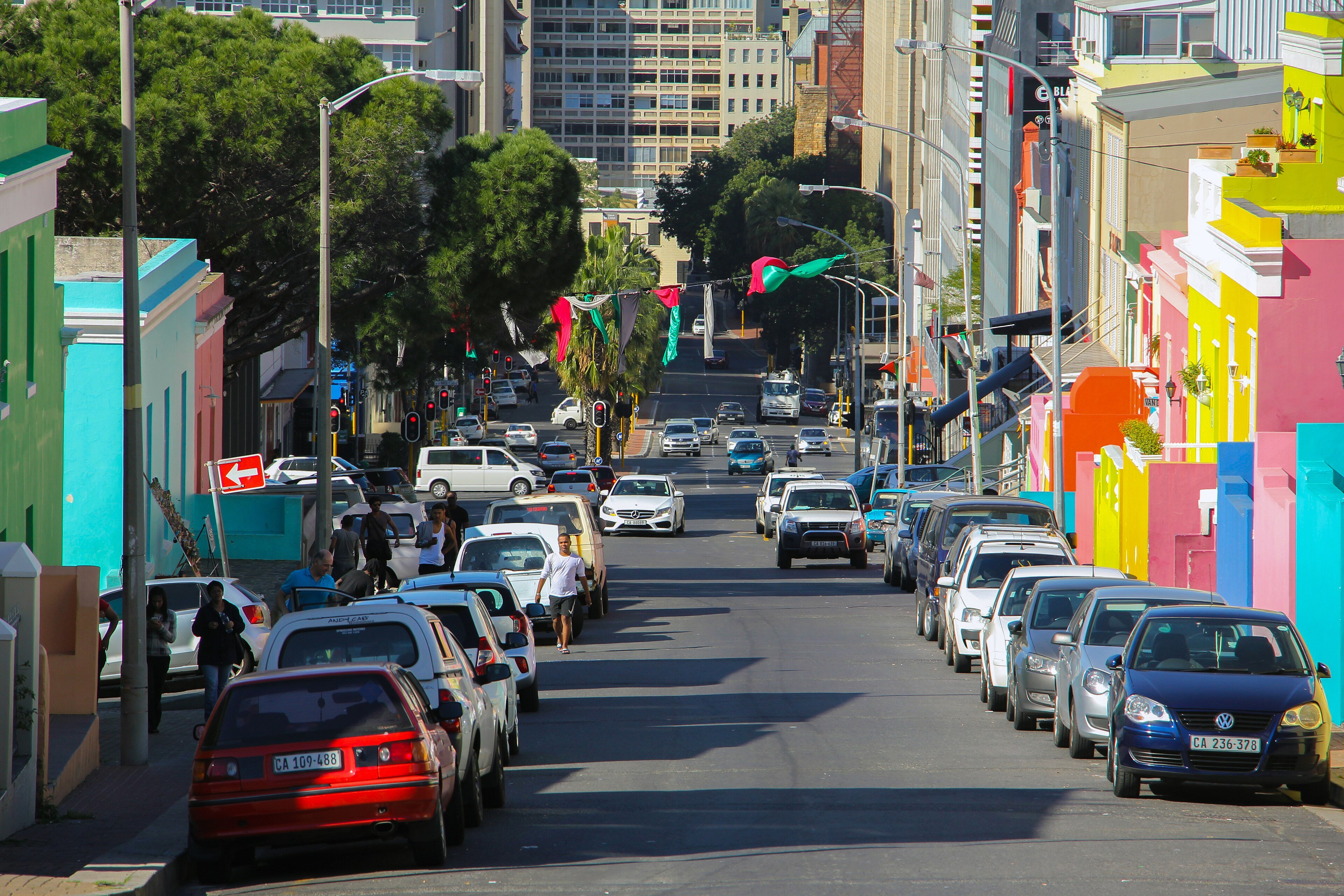
Photo: Moheen Reeyad / Wikimedia Commons, CC BY-SA 4.0
Both sides, side by side
| Question | Airbnb says | Critics say |
|---|---|---|
| Share of homes | 0.9% of formal housing units | 1.5% of all housing, over 26% in Sea Point |
| Effect on rent | Rents would fall by about R69 a month | Long-term homes became tourist stays, so rents rose |
| Growth | Little change since 2020 | Up 190% in tourist areas since 2022 |
| Jobs and money | 42,000 jobs, R14.4bn to GDP (2023) | The jobs are real, but rents and neighbourhoods pay for it |
| Who gains | Hosts averaging R74,000 a year | Over 60% of hosts have more than one listing |
Sources: Airbnb research via BusinessTech; Inside Airbnb and Cloe St-Hilaire via eNCA; Jens Horber (Ndifuna Ukwazi).
What is the City of Cape Town doing about it?
In August, the City released a draft Short-Term Letting By-Law. Hosts would have to register, show a City number on every listing and share availability data.

Photo: Dietmar Rabich / Wikimedia Commons, CC BY-SA 4.0
A property would count as commercial if it is available for short-term letting for more than 50% of its yearly room nights. Breaking the rules could mean a fine or up to six months in jail. The City aims to put the policy in place before 1 July 2027.
Some reports say affected owners could see their property rates jump by up to 135%. The City says the by-law is not a new tax. It says it is meant to make sure the existing rates policy is followed.
One city official, Luthando Tyhalibongo, has a blunt view of the whole row. "Housing stress is not foreign-made, investor-made, or Airbnb-made," he said. "It is supply-made." In other words, a city whose population grew by nearly 28% between 2011 and 2022 needs more homes, whoever rents them out.
That growth is part of the Cape's own story too. We have written about the tourism record that Airbnb helps feed, and about the wider fight over whether the Cape should run itself.
Who are these hosts, really?
This is the number that nobody in the replies mentioned.
Property-press reports say 40% of all Airbnb listings in Cape Town are run by just 7.8% of hosts. Inside Airbnb says more than 60% of hosts have multiple listings.
So when someone says "every Airbnb spot employs people and pays tax," they may be right. But when someone says the locals lost out, they may be talking about a local who did not own the building at all. Both can be true, and that is what makes it so hard to settle.
Behind the thriving, growing Cape Town in that first reply sits a very small group of owners holding a very big share of the keys.
Sources7
- The X thread on Airbnb in Cape Town and the replies (8 to 10 Oct 2026)
- eNCA, Cape Town's housing crisis meets Airbnb boom (22 Dec 2025)
- BusinessTech, Airbnb storm brewing in South Africa
- EWN, Priced out of Cape Town? Campaign wants action on rents and Airbnbs (27 Aug 2026)
- Briefly, Cape Town locals react as average monthly rent rises
- Daily Investor, Cape Town to crack down on short-term rentals
- MyProperty, Cape Town's proposed Airbnb rates change explained
The week's biggest stories, every Monday
One email. The stories everyone will be talking about, before they do.
Free. One email a week. Unsubscribe anytime.Keep reading
 MoneyThe phone bill war: Can SpaceX really make plans cheaper?
 MoneyTrump's SpaceX bonds: The timing that has people furious
 MoneyLedger wallets drained? The claim, the past incidents and what is confirmed