Eskom wants 6,000 MW of solar and batteries, enough to cover a whole Stage 6 blackout
Eskom made R30 billion selling the least power in 18 years. Now it wants to build its own sun and batteries, and the numbers are bigger than most people think.
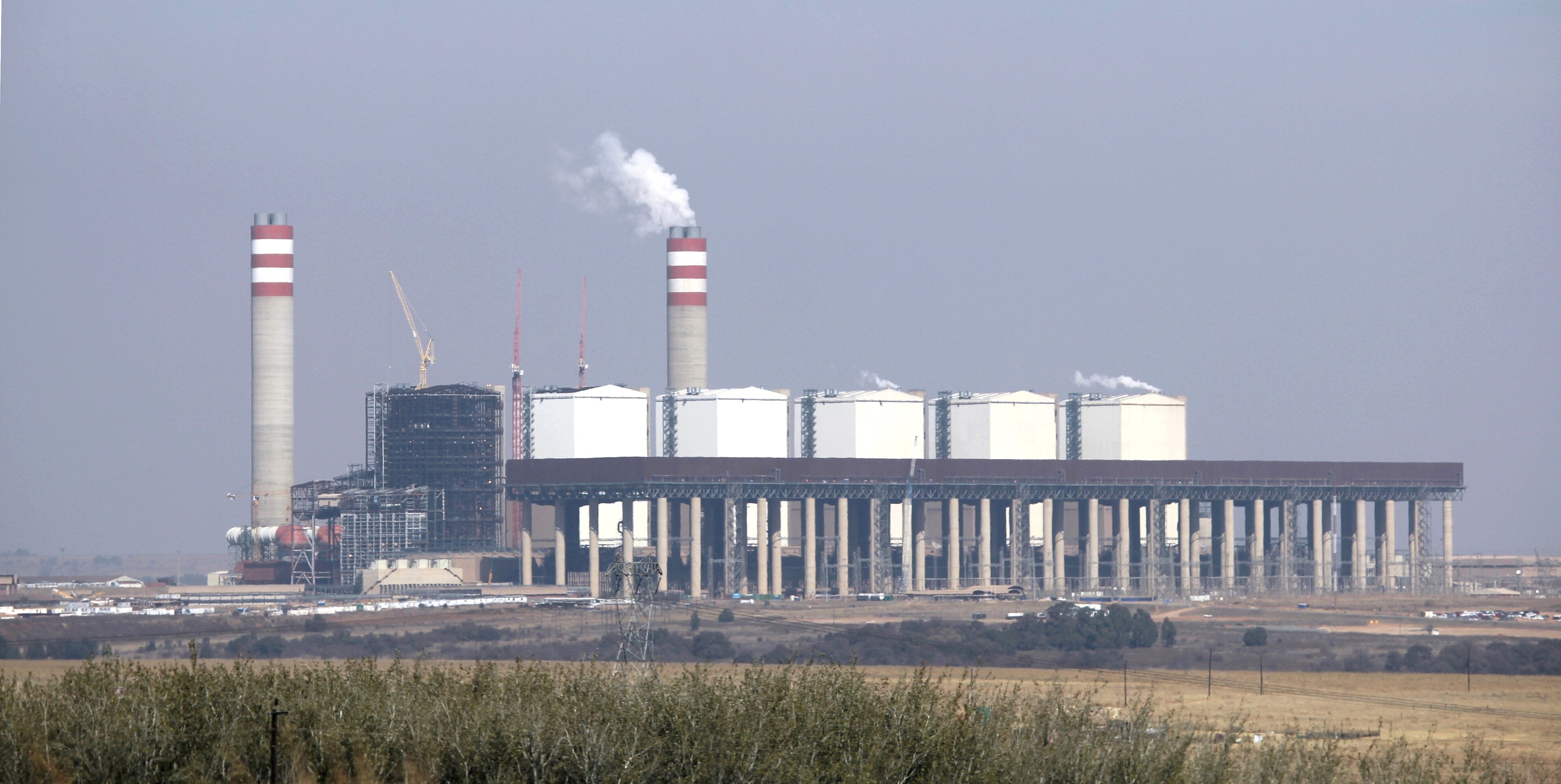
Photo: JMK / Wikimedia Commons, CC BY-SA 4.0
- Eskom wants up to 6,000 MW, about the size of a Stage 6 blackout
- Its own battery plan runs flat out for just four hours
- The call has a deadline and a size but no price
Update: This follows our report on Eskom's R30 billion profit and record-low sales.
6,000 MW.
That is how much solar, battery and wind power Eskom wants private partners to help it build. BusinessTech says it is enough to cover six stages of load shedding.
Eskom put out the call on 2 October. Most people missed it. It is a request for companies to apply, and it comes from the same Eskom that sold the least electricity in 18 years while making a R30 billion profit.
So the company that lost customers to rooftop solar now wants a solar fleet of its own.
How big is 6,000 MW of solar and batteries, really?
Eskom calls it the Phase 1 Programme. It covers up to 6 GW of utility-scale projects, which is 6,000 megawatts. They include solar panels, battery storage, wind and other renewables.
Eskom says its own share is at least 2 GW of solar and 1 GW of battery storage that can hold 4 GWh. Partners can add projects of their own on top.
The projects come out of an internal list of 14 GW of solar, wind and battery ideas, according to Engineering News. Eskom wants the Phase 1 projects built by 2030.
Here is the plain version of those numbers.
| What | Size | Source |
|---|---|---|
| Phase 1 Programme | Up to 6,000 MW | Eskom, via BusinessTech |
| Eskom's own solar | At least 2,000 MW | Eskom, via BusinessTech |
| Eskom's own batteries | 1,000 MW, holding 4,000 MWh | Eskom, via BusinessTech |
| Eskom's wider project list | 14,000 MW | Engineering News |
Does 6,000 MW really equal six stages of load shedding?
That comparison is BusinessTech's, and the maths is close. Eskom's stage bands, as reported by Daily Investor, climb in steps of about 1,000 MW.
Stage 1 means up to 1,000 MW is switched off. Stage 6 means up to 6,000 MW.
| Load shedding stage | Power cut from the grid |
|---|---|
| Stage 1 | Up to 1,000 MW |
| Stage 2 | 1,001 to 2,000 MW |
| Stage 3 | 2,001 to 3,000 MW |
| Stage 4 | 3,001 to 4,000 MW |
| Stage 5 | 4,001 to 5,000 MW |
| Stage 6 | 5,001 to 6,000 MW |
So 6,000 MW is the very top of Stage 6.
One short clause matters here. A solar plant gives its full rated power only when the sun is high, so 6,000 MW of panels is not 6,000 MW all day.
That is why the batteries are in the plan.
Photo: Coordenação-Geral de Observação da Terra/INPE / Wikimedia Commons, CC BY-SA 2.0
How long can Eskom's batteries keep the lights on?
Do the sum. Eskom's battery plan is 1,000 MW holding 4,000 MWh.
4,000 MWh divided by 1,000 MW is four hours at full power. After that the batteries are empty and need to charge again.
Four hours is roughly the evening peak, when South Africans cook, heat water and switch on lights. It is also the time solar panels have gone to sleep.
So the batteries are not a second power station. They move noon sun into the evening.
Who is Eskom Green, and who can join?
The plan runs through a new company called Eskom Green. Eskom Holdings will own all of its shares.
Eskom Green is still being set up. Eskom Holdings runs the call until it is born, then the deals move across.
The call is a request for qualification, the first of two steps. Companies that pass go on a panel for five years and can later bid in a second round, a request for proposals.
To get on, firms must show a track record in building and running big power projects. They must also show they have the money to put in.
Each project is meant to sit in its own company, funded mostly by project finance. That is a loan secured on the project itself, not on the whole of Eskom.
What are the dates to watch?
Engineering News gives the calendar.
| Date | What happens |
|---|---|
| 2 October 2026 | Eskom Holdings issues the request |
| 15 October, 11:00 | Optional briefing meeting for bidders |
| 16 November, 10:00 | Responses close |
| 2030 | Target for the Phase 1 projects |
The energy minister, Kgosientsho Ramokgopa, is also expected to sign a new order covering extra power bought between 2026 and 2037. Eskom issued its call before that order arrived.
The department says the mix will be wind, solar, batteries and gas.
Why would Eskom build solar when it sells so little power?
Eskom's own report shows the pull of the sun. It sold almost 21% less power than in 2008, and homes, farms and factories making their own electricity are part of why. You can see the figures in our look at where all of Eskom's customers went.
A company that sells less every year has two choices. It can fight the sun or it can own some of it.
Eskom has picked the second one.
Photo: Paul Scott from South Africa / Wikimedia Commons, CC BY-SA 2.0
Cities are chasing the same idea. Our column on Cape Town building its own power plant shows how badly some places want control of their own supply.
Eskom also gets something from partners that it does not have alone. It says it brings power-generation know-how, a way to sell the power, and access to private and cheaper development money.
What does the call leave out?
Plenty of readers will ask one thing. What will it cost?
BusinessTech reports no price. Neither does Engineering News. There is no total, no per-megawatt figure and no word on what it means for household bills.
There is also no build schedule beyond the 2030 target. The call does not say how many projects there are or where they will stand.
Eskom does say each project has a site, and that land, environmental approvals and grid connection are in progress. They are at different stages.
What happens to load shedding if this works?
Load shedding has already nearly vanished. In the last financial year there were only four days of cuts, and none for more than a year, according to the report we covered earlier.
So this is not a rescue. It is a company deciding what it wants to be.
For years the story was customers leaving Eskom to put panels on their roofs. Now Eskom is putting out its own call for the same panels and the same batteries.
The document has a size, a deadline and a five-year clock. What it does not have is a price, and 6,000 MW is a very big number to leave without one.
Sources4
- BusinessTech, Eskom launching enough solar and batteries to cover 6 stages of load shedding (9 Oct 2026)
- Engineering News, Eskom in bid to select renewables partners for 6 GW portfolio (6 Oct 2026)
- TaiyangNews, Eskom seeks partners for 6 GW of renewables and storage
- Daily Investor, Eskom load shedding stages and megawatts
The day's top stories, every weekday at 6am
One short email. The stories everyone will be talking about, before they do.
Free. One email each weekday. Unsubscribe anytime.Keep reading
 MoneyEskom made R30.3bn while selling its lowest amount of power in 18 years
 MoneySouth Africa makes 39% of its own fuel, down from 78% in 2019
 MoneyR31 billion a year to deposit and withdraw cash, and what each bank charges