One word from the Dutch defence minister, and Russia now asks if it means war
For years the Dutch called Russia "the aggressor". This week their defence minister dropped the polite word. Moscow says she wants a war. She says she just wants to call things what they are.
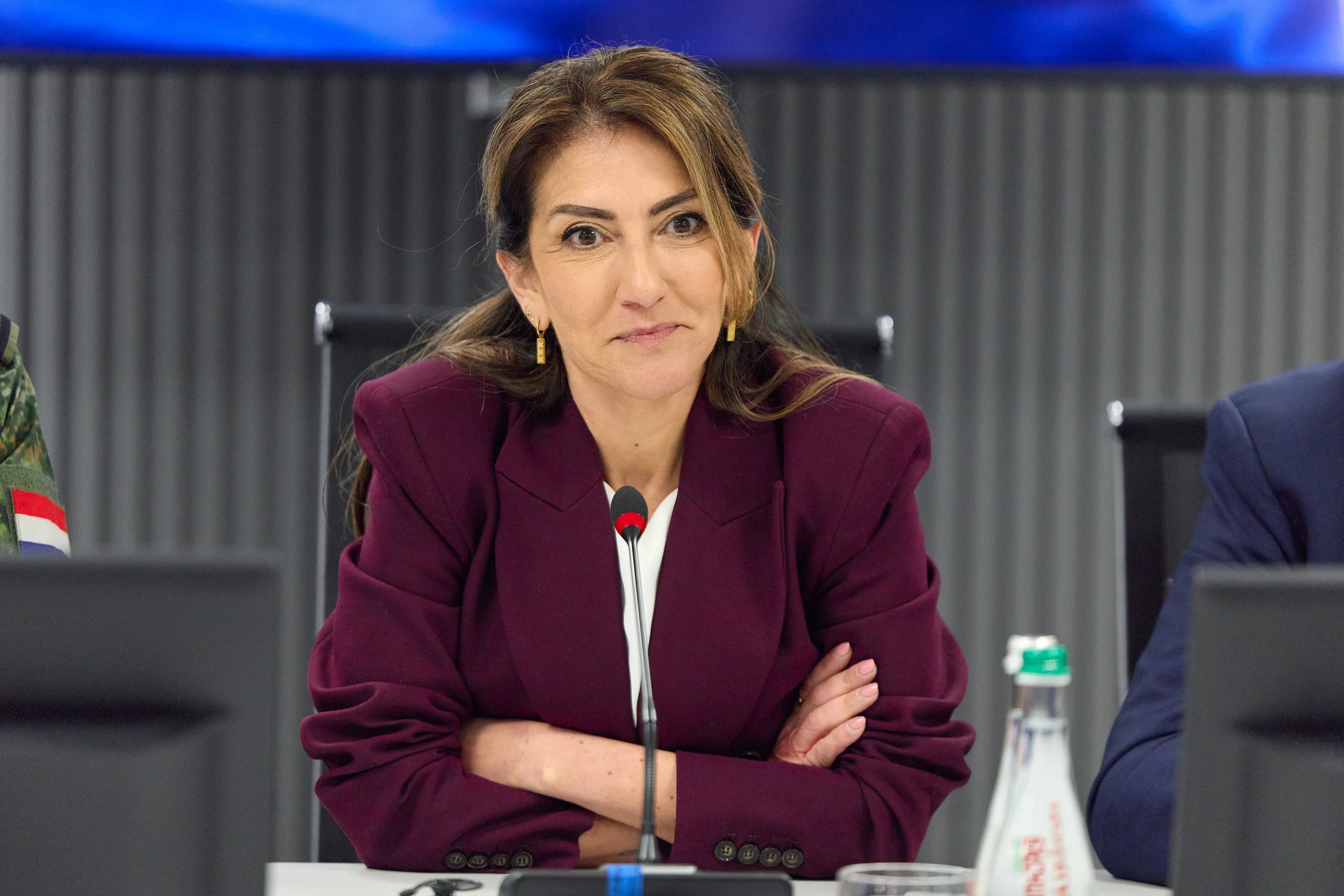
Photo: Ministry of Defence of Ukraine / Wikimedia Commons, CC BY 4.0
- The Dutch defence minister dropped the word "aggressor" for "enemy"
- Russia's embassy asked if this means military confrontation
- The foreign minister backed her, but she had not told him first
For more than four and a half years, Dutch ministers called Russia "de agressor", the aggressor. It is the polite word governments use for the country that invaded Ukraine.
On Thursday, 8 October, Defence Minister Dilan Yeşilgöz-Zegerius stood up in the Dutch parliament and used a new one. "De vijand." The enemy.
Within hours, Russia's embassy in The Hague answered in capital letters. "Minister of Defence has openly called Russia an ENEMY," it wrote on X. It demanded that the Dutch government confirm her words or distance itself from them. Then it asked: "Is this an official declaration of direct military confrontation?"
The embassy shut off replies. The post still passed 1.18 million views in a day.
What did Yeşilgöz actually say about Russia?
She spoke during the debate on the defence budget in the Tweede Kamer, the Dutch House of Representatives.
According to the Dutch public broadcaster NOS, her point was simple. It is very clear, she said, that Russia presents itself as the enemy.
She told MPs that calling Russia only "the aggressor" had become a euphemism, a soft word that hides how bad something is. She said experts had advised her to name things clearly.
Her reasons were close to home. She pointed to more sabotage, drone attacks and other threats across Europe. She said Vladimir Putin is testing how strong the NATO alliance is.
She also warned that a carefree peace is "very far away", as Dutch reports translated it. The Netherlands, she said, must be able to scare off enemies, but also be able to fight.
Does calling Russia the enemy mean the Netherlands is at war?
No. And she said so herself.
Yeşilgöz told NOS the word does not mean the Netherlands is at war with Russia. She said it changes nothing in practice.
The work was already happening, she said. Since Russia invaded Ukraine, the Dutch have been spending more on security, staying alert and working closer with other European countries. In her words, the Dutch were not naive before, and they will not become naive now.
The policy stayed the same and the word changed. In diplomacy, that can be enough to start a row.
What did the Russian embassy say?
The embassy put out a longer comment for TASS, the Russian state news agency, and posted it on its Telegram channel.
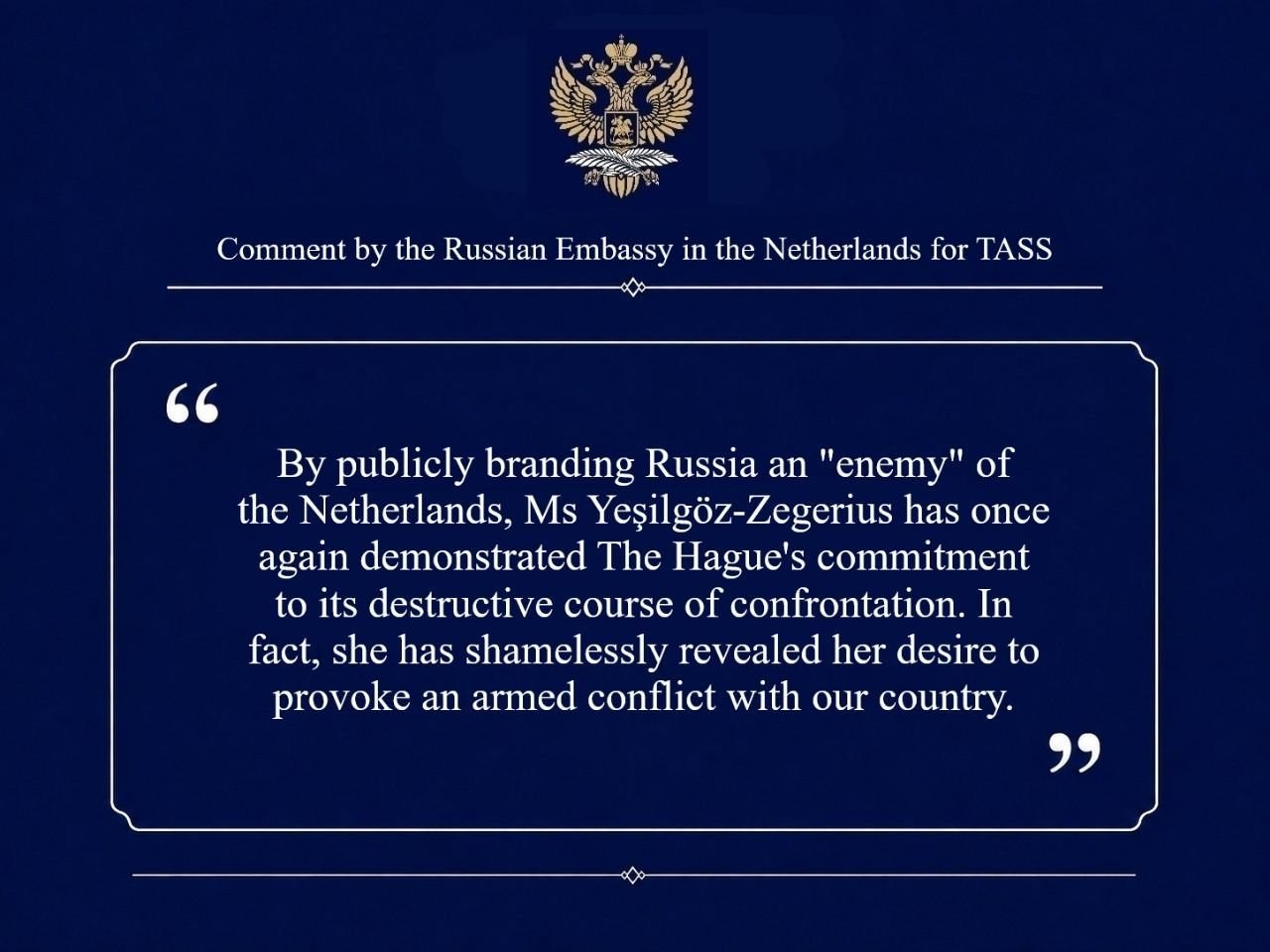
It said that by branding Russia an "enemy" of the Netherlands, Yeşilgöz had shown The Hague's "destructive course of confrontation". It went further. It claimed she had "shamelessly revealed her desire to provoke an armed conflict with our country."
The embassy asked whether she speaks for the whole Dutch cabinet. It said Russia has no aggressive plans against Europe or the Netherlands.
Then came the warning. Russia will not accept threats or ultimatums, it said. Any threat to Russia's security or sovereignty would bring an immediate, swift and crushing response, according to Dutch translations of the statement.
The embassy ended by asking Dutch authorities for an official explanation of the minister's words.
Who is Dilan Yeşilgöz-Zegerius?
She is one of the best-known politicians in the Netherlands. She leads the VVD, the right-of-centre liberal party that was Mark Rutte's party for years.
She became Minister of Defence and Deputy Prime Minister in the new Dutch cabinet early in 2026. Before that she was Minister of Justice and Security.
She was born in Ankara, Turkey, and came to the Netherlands as a child refugee at the age of seven. Earlier this year she returned to Ankara for a NATO summit, this time as a foreign country's defence minister.
In February 2026 she visited Ukraine as defence minister. That is her in the photo at the top of this story. The Netherlands has been one of Kyiv's firmest backers since the full invasion in 2022.
Did the Dutch government back her up?
Partly, and that is where it gets awkward for The Hague.
Foreign Minister Berendsen was asked about it in a separate debate. He called Russia "our biggest security threat", as NOS reported it, and said the defence minister speaks for him too.
But he also admitted something opposition MPs jumped on. Yeşilgöz had not told him in advance that she would use the word. He said ministers should speak with one voice.
Dutch outlets report that the cabinet has not made "enemy" its official wording. The foreign ministry is not using the term for now.
That leaves a gap Moscow is trying to push open. The embassy's whole demand rests on one question: Is this her word, or the government's?
| The word | Who uses it | What they say it means |
|---|---|---|
| "Aggressor" | Dutch government since 2022 | Russia started the war in Ukraine |
| "Enemy" | Yeşilgöz, in the budget debate | Naming what Russia is doing in Europe, not a declaration of war |
| "Our biggest security threat" | Foreign Minister Berendsen | The cabinet's view of Russia |
| "Armed conflict" | Russian embassy | Proof, it claims, that The Hague wants a fight |
Why is Russia so angry at the Netherlands right now?
The word landed in a week that was already tense between the two countries.
On the same Thursday, according to Dutch broadcaster BNNVARA, Moscow demanded that the Netherlands hand over nine staff of the International Criminal Court, which sits in The Hague. They include former chief prosecutor Karim Khan and former court president Piotr Hofmański.
A Russian court convicted the nine in their absence in 2025. Russia does not recognise the ICC. The court issued an arrest warrant for Vladimir Putin in 2023, over the deportation of Ukrainian children.
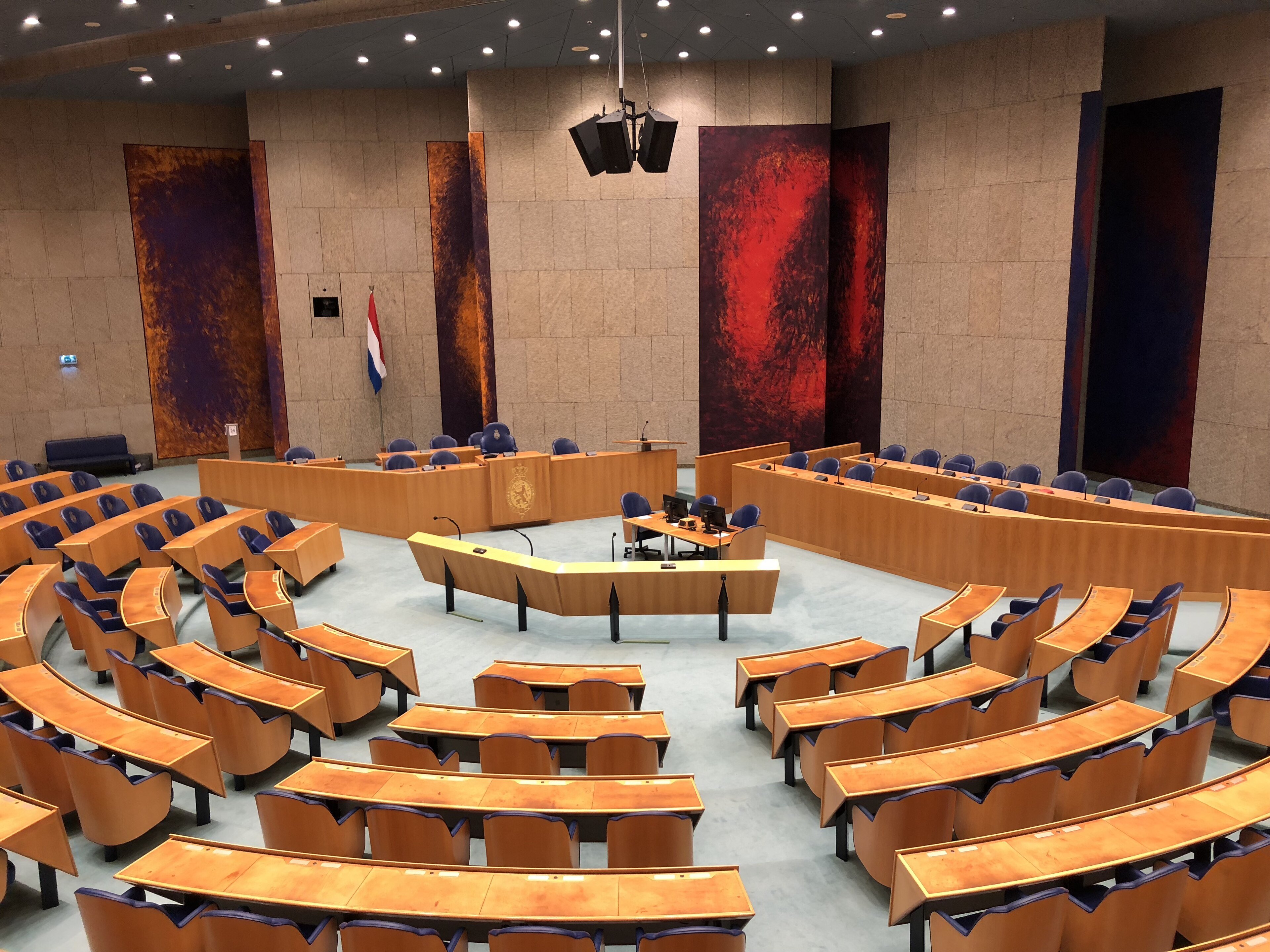
Photo: Husky / Wikimedia Commons, CC BY 4.0
The Dutch also carry a long memory. Flight MH17 left Amsterdam in 2014 and was shot down over eastern Ukraine. Most of the 298 people killed were Dutch.
What are Dutch spies warning about?
The AIVD, the Dutch intelligence service, has warned that the country has not faced a threat picture like this in 80 years. The military intelligence service MIVD says Russia's and China's armies are growing stronger and working together more.
Dutch intelligence also warns that Russia keeps probing NATO's borders, and could end up in a direct clash with the alliance. Sabotage, drones over sensitive sites and cyber attacks have become regular news across Europe.
Yeşilgöz's argument is that the old polite word no longer fits that picture.
If you have followed how Moscow handles bad news at home, or how Washington told Americans to leave Russia this month, the pattern is familiar. Words from Moscow and words about Moscow are both carefully chosen.
Why does one word matter for the rest of Europe?
Because the Netherlands is not alone, and Russia knows it.
The Dutch sit at the heart of NATO. Mark Rutte, the Dutch prime minister for 14 years, went on to lead the alliance. The Hague hosts the world's top courts. When a Dutch defence minister changes her vocabulary, other capitals notice.
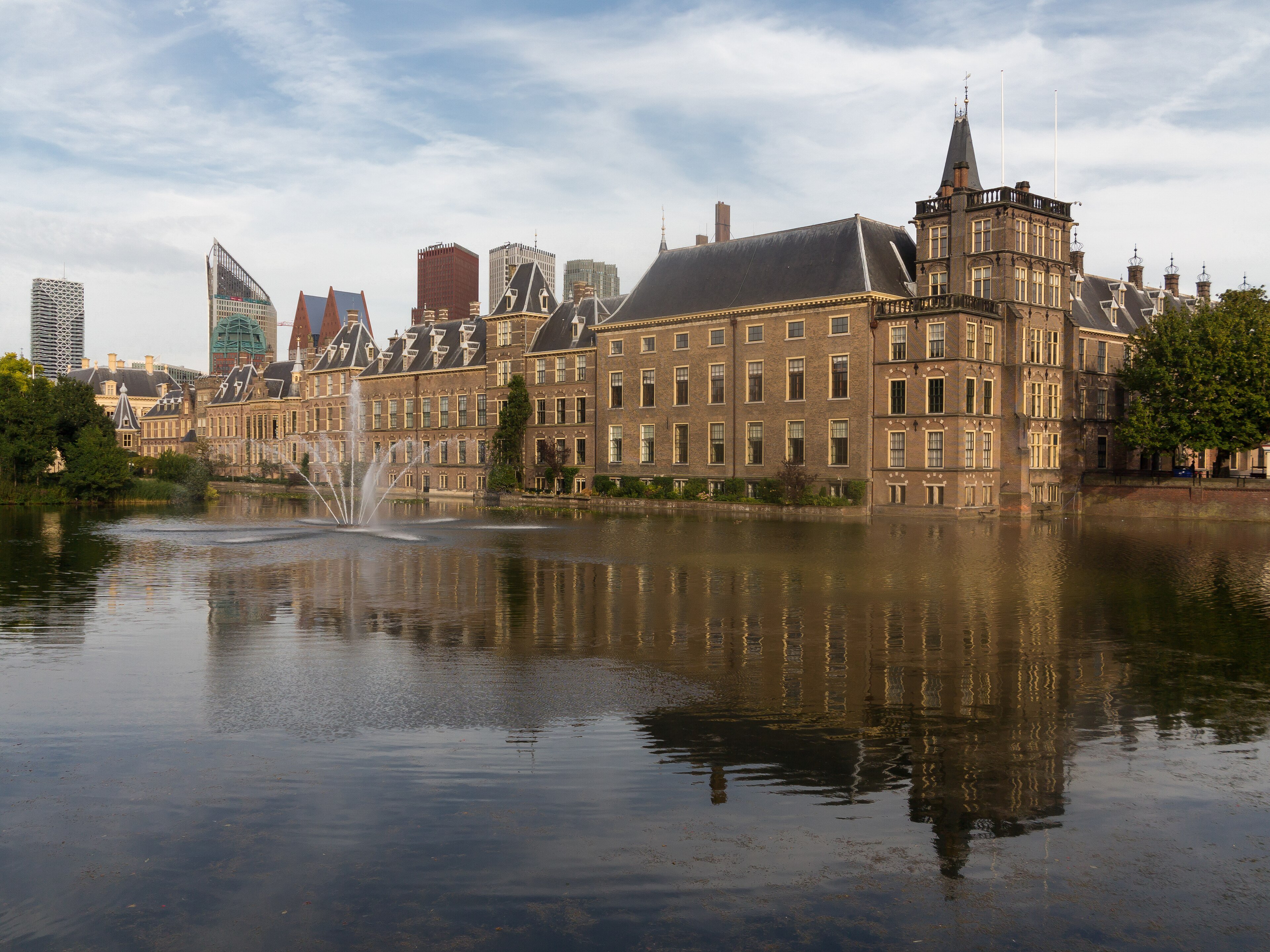
Photo: Michielverbeek / Wikimedia Commons, CC BY-SA 4.0
That is why the embassy did not just complain. It demanded an answer, in public, in English, to an audience of more than a million people. It wants the cabinet to either repeat the word or take it back. Either way, Moscow gets a headline.
And the war around Russia already reaches far beyond Europe. Ukraine's drone strikes on Russian refineries are one reason diesel has become so expensive around the world, South Africa included.
So is Russia the enemy?
Russia says it is not. Its embassy insists it has no aggressive plans for Europe or the Netherlands.
The Dutch defence minister looked at the drones, the sabotage, the war in Ukraine and her own spies' warnings, and decided the polite word had run out.
For four years, The Hague called Russia the aggressor. This week, one minister in that government said the word out loud, in parliament, on the record.
Moscow heard it. Its answer has passed a million views, and The Hague still has not taken the word back.
Sources5
- Russian Embassy in the Netherlands on X (8 Oct 2026)
- Russian Embassy in the Netherlands, full comment for TASS on Telegram (8 Oct 2026)
- NOS, Yeşilgöz now calls Russia the enemy, but that does not mean a different approach
- Hart van Nederland, Yeşilgöz calls Russia the enemy, Russian embassy demands an explanation
- BNNVARA Joop, the embassy's crushing response warning and the ICC extradition demand
The week's biggest stories, every Monday
One email. The stories everyone will be talking about, before they do.
Free. One email a week. Unsubscribe anytime.Keep reading
 WorldThree oil shocks at once, and why diesel is the one to fear
 WorldArmenia's 101-metre Jesus statue: The record and the row
 WorldOct 7 families are split on Netanyahu before the vote