England had one of its wettest winters. Its reservoirs kept emptying anyway
Britain is being warned about the exact thing Cape Town stared down eight years ago. Cape Town got far less rain, and still won.
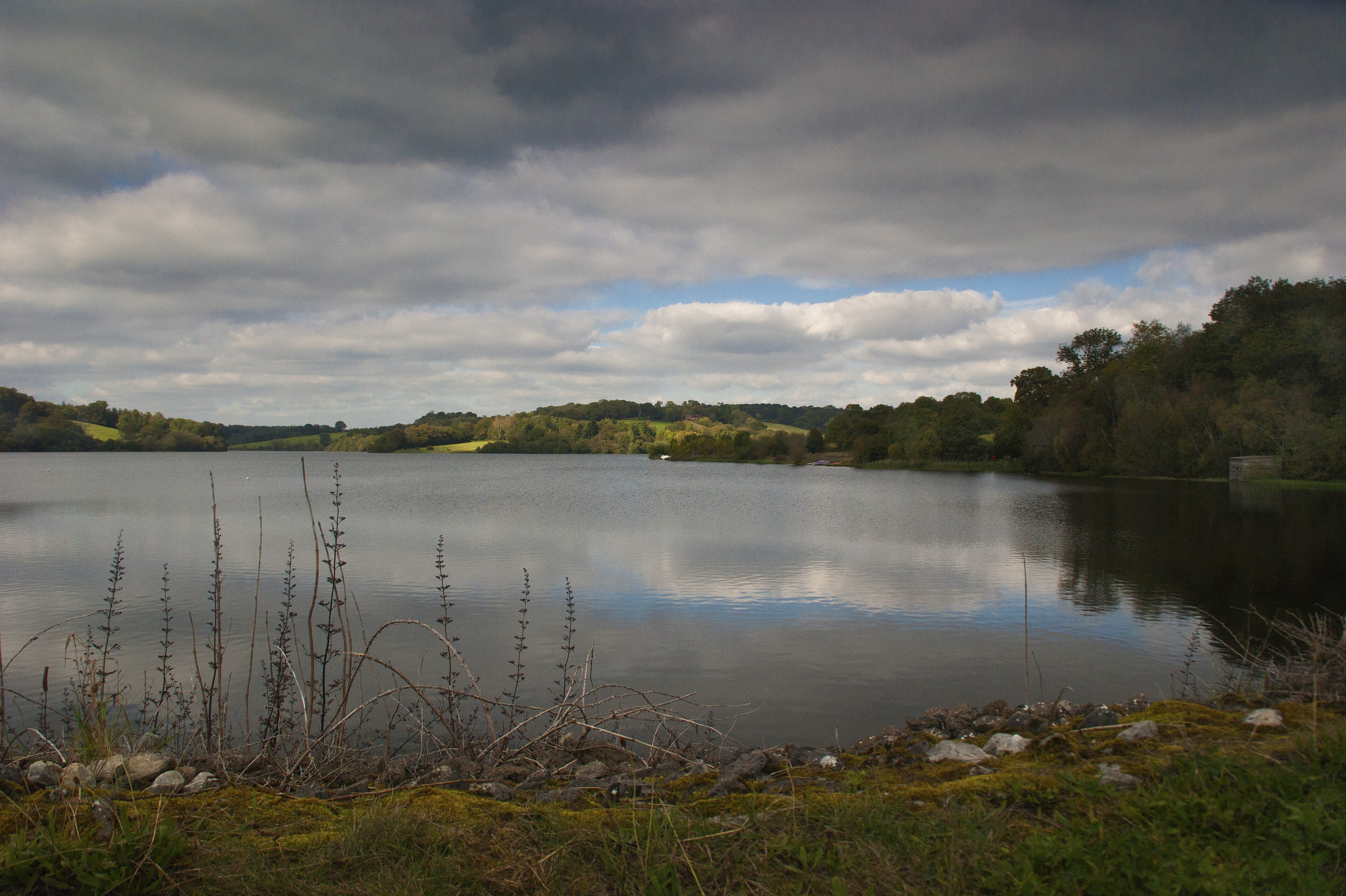
Photo: Kurseong Carl / Wikimedia Commons, CC BY-SA 2.0
- One English reservoir has fallen lower than Cape Town's dams did in 2018
- England needs 120% of its normal rainfall just to break even
- Cape Town's fix was never a new dam
54%.
That is how full England's reservoirs were in the week of 20 October 2026, 22 percentage points below where they should sit for the time of year, straight after one of the wettest winters South East England has seen in decades.
A reservoir in West Sussex called Ardingly has it worse. By mid October it had dropped to 17% of capacity, a lower point than Cape Town's own dams ever reached during the crisis the world came to know as Day Zero.
Around 27 million people across England have spent some part of 2026 under a hosepipe ban, and ten water companies still have no date for lifting theirs. The word on everyone's mind, quietly, is the one Cape Town made famous eight years ago.
For anyone who lived through Cape Town's own countdown in 2018, that is a strange thing to read. Cape Town gets far less rain in a normal year than England does, and it still won. The obvious question is what it actually did, and whether England is doing any of it.
Why are England's reservoirs still falling after all that rain?
The short version is that it did rain, a lot, and then it almost completely stopped. Last winter ranked among the wettest England has recorded. Then came one of the driest spring and summer stretches in more than a hundred years across the south and south west.
Climate scientists call this swing "weather whiplash". A soaked winter gives the ground no time to bank water before a scorched summer drains it straight back out through dry soil and thirsty crops. UK water expert Dr Glenn Watts calls the result a "flash drought", where a sudden lack of rain and repeated heatwaves hit rivers fast.
By early September reservoirs stood at 56.9%, already nearly 20 points below normal. By 20 October that had fallen further to 54%, with 13 reservoirs or reservoir groups now rated "exceptionally low" and 18 under half full, according to the Environment Agency's own weekly count.
 Read nextNovember petrol forecast: Could dip to R30.02 a litre
England has not built a new reservoir since 1992, and its network still loses close to 2.87 billion litres a day to leaking pipes before a drop reaches anyone's tap.
How close is England to its own Day Zero?
On 15 October the government declared severe drought in parts of six counties, Cornwall, Devon, Dorset, Somerset, East Sussex and West Sussex, after the driest April to September there in over a century.
Ardingly took the hardest hit. South East Water has had to cut back how much water it releases from the reservoir into the River Ouse, just to protect what drinking supply is left. A nearby reservoir, Weir Wood, is still 80% full, but it feeds a separate treatment works and cannot simply be piped across to rescue Ardingly.
Water planners and industry experts have warned for months that parts of Britain could face its own version of Cape Town's "Day Zero", the point where mains supply has to be cut and water gets rationed from tankers and standpipes.
Almost 78% of England now sits in some stage of drought, up from about 71% in August, and no part of the country is rated fully normal. The National Drought Group, which brings together the Environment Agency and water company bosses, says England needs around 120% of its normal rainfall over the next seven months, through to roughly April 2027, for every area to climb out of drought. A normal winter will not be enough.
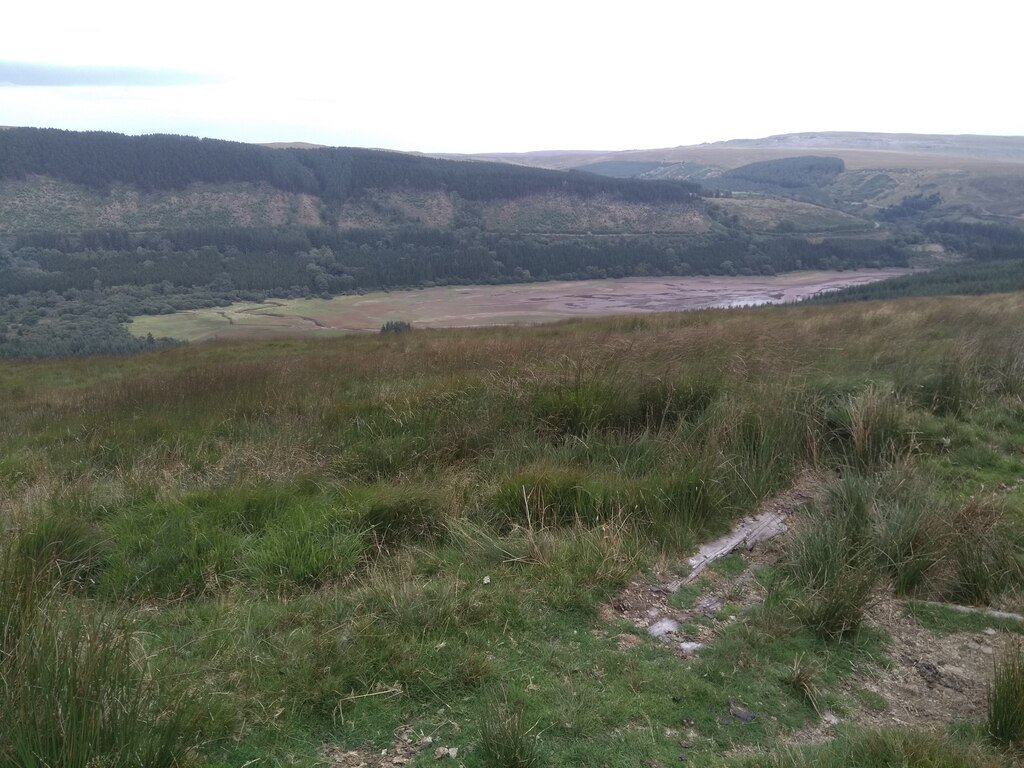
Photo: Martin Laverty / Wikimedia Commons, CC BY-SA 2.0
What was Cape Town's Day Zero, and how bad did it get?
Cape Town's crisis is the one everyone measures a water shortage against now. In 2018 the city's major dams, combined, bottomed out at around 21% of capacity. Theewaterskloof, the biggest dam supplying the city, fell to roughly 10%.
Cape Town had defined Day Zero itself: The moment combined dam levels dropped below 13.5%, the point at which most of the city's mains would be switched off and residents would queue at standpipes for a ration of 25 litres a person a day. The city got within weeks of that line before the crisis broke. City officials later called the drought behind it a one-in-590-year event, a scale nobody had built a backup plan for.
How do England and Cape Town compare right now?
| Cape Town, 2018 | England, 2026 | |
|---|---|---|
| Lowest level reached | Combined dams about 21%, Theewaterskloof about 10% | Ardingly reservoir 17%, national average 54% |
| Daily water limit | 50 litres a person, for everything | No personal limit, hosepipe bans only |
| What was restricted | Hosepipes, pools, car washing, then nearly all mains use | Hosepipes, sprinklers, some non-essential business use |
| How long the crisis ran | A three-year drought, with an acute scare through most of 2018 | Drought on and off since 2022, current spell since spring 2026 |
| What ended it | Usage cut almost in half, then rain returned from June 2018 | Not resolved. Needs about 120% of normal rain over seven months |
What would an English Day Zero actually look like?
Nobody in government has set a date for one, but the mechanics are no mystery. English water companies hold drought plans for what comes after a hosepipe ban stops working: Bans on non-essential business use next, then a formal drought order through the courts, and only as a last resort the standpipes and tankers Cape Town used in its final months. England has not reached that last stage in living memory. Cape Town had not either, until it nearly did.
What actually fixed Cape Town's water crisis?
Not a new dam. Cape Town never built one to escape Day Zero. It cut demand instead, hard and fast, backed by tougher tariffs and a public campaign that treated saving water as a civic duty.
 Trending nowPinetown dad fires back at gunmen at his gate, and what the law says
Home water use fell from about 240 litres a person a day in 2015 to a crisis low near 50 litres at the worst of it. Even years later, in 2025, it still sat at about 156 litres, well under where it started. Rain eventually came too, from June 2018 onward, but by then the hardest work had already been done.
Our earlier look at how the city kept that habit going found homes there still get far fewer water cuts than the rest of South Africa, years after the scare ended.
Why is Britain flooding and drying out in the same week?
Storm Boelo tore through the UK and Ireland over the weekend of 24 to 26 October 2026. Two men died when trees fell on them, one in Dumfries and Galloway and one in London, and 160,000 homes and businesses lost power at the storm's peak.
Storm Chloe is next on the official storm name list for the UK, Ireland and the Netherlands, and forecasters were already watching the system that could earn it by the Tuesday after.
Most of that rain and wind hit the north and west hardest. The reservoirs under the most strain, Ardingly among them, sit in the drought-hit south and south east, an area the storm barely touched. A flooded street in Scotland does nothing for a reservoir two hundred miles away, which is exactly why a country can flood and run dry in the same week.
What has to happen this winter for England to avoid trouble?
The Environment Agency's own modelling says that even a completely average winter, nothing special, would still leave most drought-hit areas in drought through the rest of the year. Only rain well above the usual amount closes the gap, and none of the ten companies still running hosepipe bans would give a date for lifting them when last asked.
When any country's water system is stretched this thin, supply is not the only worry, quality follows close behind. A breakdown at a treatment plant in South Africa once left hundreds of people in Tshwane sick from unchlorinated water, and the scorecards meant to catch problems like that do not catch everything.
Cape Town's answer was never a bigger reservoir, a desalination plant or a clever engineering fix. It was fifty litres a day, enforced for months, until the rain finally caught up with the sacrifice. England gets far more rain most years than Cape Town has ever seen, and it is now being asked the same question Cape Town already answered eight years ago. So far, it has not given one back.
Get the stories that hit your pocket
Petrol, SARS, Eskom, grants and the news everyone is talking about. One short email every weekday at 6am.
Free. One email each weekday. Unsubscribe anytime.Sources6
- Environment Agency, Dry weather and drought in England, 16 to 22 October 2026
- Environment Agency, What is severe drought? (15 Oct 2026)
- Sussex Express, Ardingly reservoir falls below 17% as drought persists
- LADbible, Storm Boelo leaves two dead and 160,000 without power (25 Oct 2026)
- Reservoirs.earth, Day Zero: the cities that nearly ran dry, on Cape Town's 2018 crisis
- The Big Fuss, Did Cape Town fix its water crisis? How the Cape beat Day Zero
Keep reading
 ExplainedWhat happens to your gun after a self-defence shooting in SA
 ExplainedSingapore was poorer than South Africa in 1965. Here is how it got 15 times richer
 ExplainedHow much of your "safe" index fund is really just 7 AI stocks