Cape Town nearly ran dry. So why are its taps the ones still running?
Other metros were told to fix their water. Cape Town was told to survive without it. It did both, and the plan keeps growing.
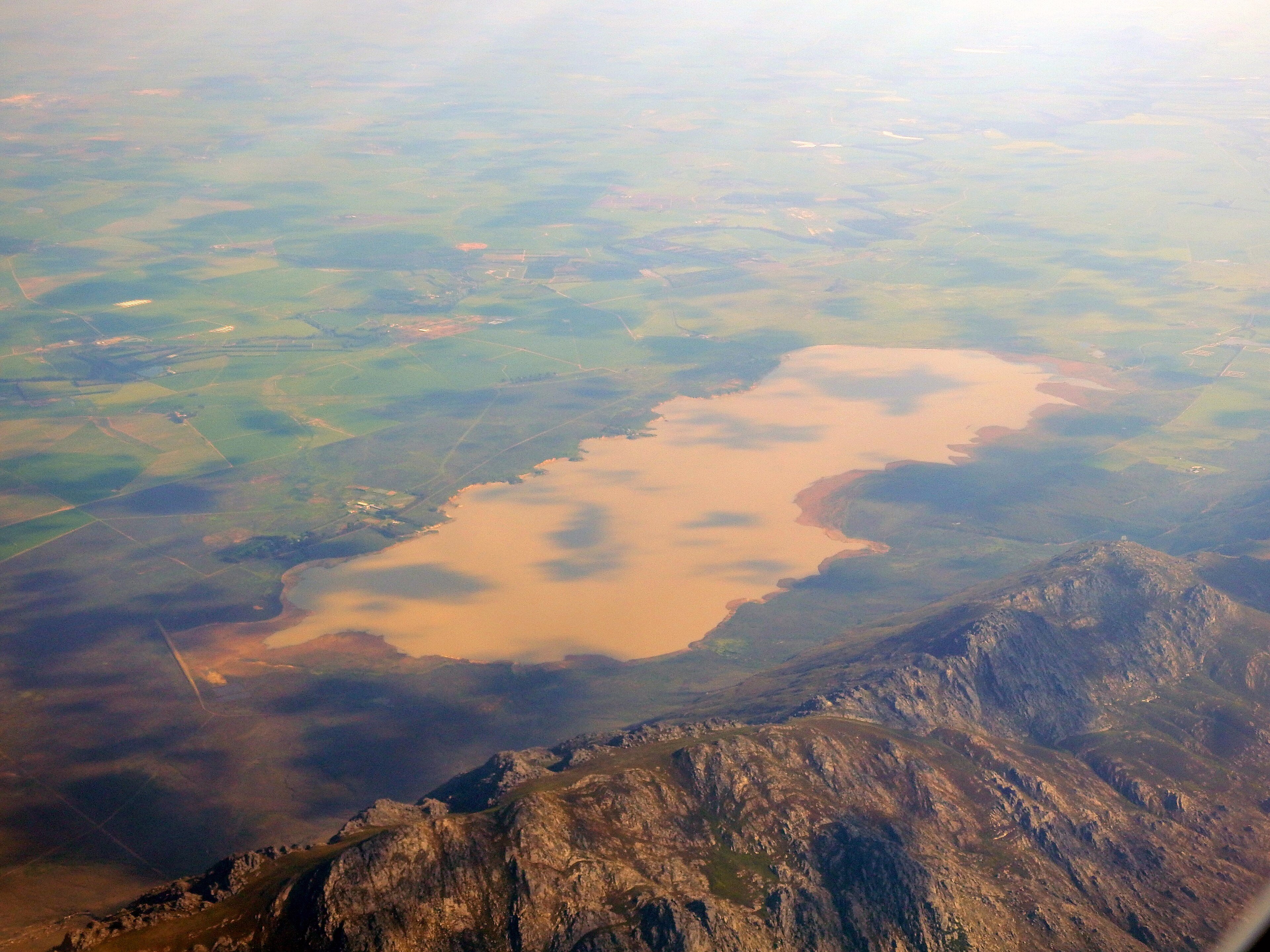
Photo: Rehman Abubakr / Wikimedia Commons, CC BY-SA 4.0
- Cape Town cut its water use by half to dodge Day Zero
- Only 0.3% of Western Cape homes get weekly water cuts
- Rand Water warned that taps across Gauteng could run dry
Three in four homes in the Western Cape went a whole year without a single water cut.
Across South Africa, fewer than half could say the same. That is 74.8% against 43.2%, and it comes from Stats SA's General Household Survey, not from a politician.
Now remember where this city stood. In 2018, the whole world watched Cape Town count down to Day Zero, the day the taps would be switched off. Today the same city is the one other metros should be studying.
This column argues for a self-governing Western Cape, and water is the cleanest proof we have. (New to the idea? Our guide to Cape independence explains the basics, and the whole debate has its own page.)
How did Cape Town beat Day Zero?
Not by luck. The drought from 2015 to 2017 was a one-in-590-year event, city officials told Daily Maverick in 2025. In 2015, rain-fed dams supplied 98% of the city's water.
Then the city and its people acted. Restrictions, tougher tariffs and a loud public campaign cut the city's water use by half, according to the same report. At the worst point, residents were limited to 50 litres a day each.
Per person, home use fell from about 240 litres a day in 2015 to about 156 litres in 2025.
That is a government doing its job in a crisis, and its residents trusting it enough to listen. Nobody in Pretoria ran that campaign.
Do Western Cape homes really get fewer water cuts?
Yes, and the official numbers are blunt. Stats SA asked families across the country about their water in 2025.
| Stats SA General Household Survey 2025 | Western Cape | South Africa |
|---|---|---|
| Homes with no water cuts in the past year | 74.8% | 43.2% |
| Homes with weekly water cuts | 0.3% | 12.7% |
Read the last row twice. Weekly cuts hit about one home in eight nationally. In the Western Cape, fewer than one in 300. In Mpumalanga, more than a third of homes lived with weekly cuts.
 Read nextThe Cape independence push Pretoria can't ignore
We looked at the rest of that survey in our piece on why the Western Cape is called the best-run province. Water is where the gap is hardest to explain away.
What is happening to taps in Gauteng?
South Africa's biggest province tells a different story. Rand Water and Eskom planned major maintenance at the Palmiet and Zuikerbosch sites from 29 May to 17 July 2026, and Rand Water warned that taps across Gauteng could run dry.
On 31 May, Gauteng's cooperative governance department reported low pressure and temporary outages in parts of Johannesburg and Emfuleni. Water tankers were lined up for the worst-hit areas. Clinics and hospitals were put on contingency plans.
Photo: Ossewa / Wikimedia Commons, CC BY-SA 4.0
Planned maintenance should not leave a province of millions wondering if the tap will work.
The table below lines up the two stories.
| When | Where | What happened |
|---|---|---|
| 2015 to 2017 | Cape Town | One-in-590-year drought, with dams supplying 98% of the city's water |
| 2018 | Cape Town | Residents limited to 50 litres a day each, Day Zero avoided |
| 2025 | Cape Town | Home use down to about 156 litres a person, from about 240 in 2015 |
| 2025/26 | Cape Town | R492 million set aside for new water sources |
| 29 May to 17 July 2026 | Gauteng | Rand Water maintenance, with a warning that taps could run dry |
| 31 May 2026 | Gauteng | Low pressure and temporary outages in parts of Johannesburg and Emfuleni |
| September 2026 | Cape Town | Six big dams at 75.72% |
| Around 2031 | Cape Town | Target for 300 million extra litres a day from new sources |
What is Cape Town building so it never gets close again?
The city is now building its own water future. Its New Water Programme aims to add 300 million litres a day from sources that do not depend on rain. The target is around 2031. It started at 2030.
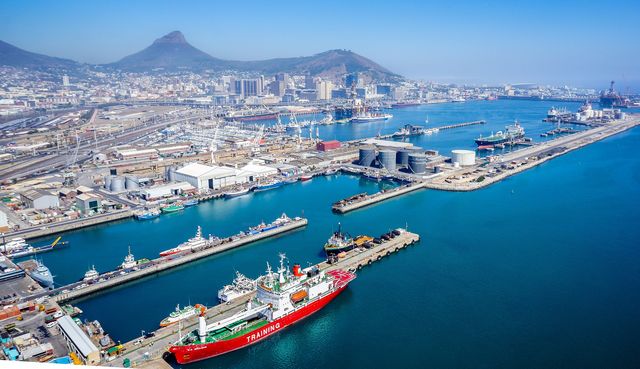
The plan has four parts. Groundwater comes from the Cape Flats Aquifer, where the city has drilled 79 production boreholes. Water reuse comes from the Faure New Water Scheme, planned to turn treated wastewater into up to 70 million litres of drinking water a day. A seawater desalination plant at Paarden Eiland is planned for 50 to 70 million litres a day, at an estimated R5 billion. Clearing thirsty alien trees from the mountains adds water too.
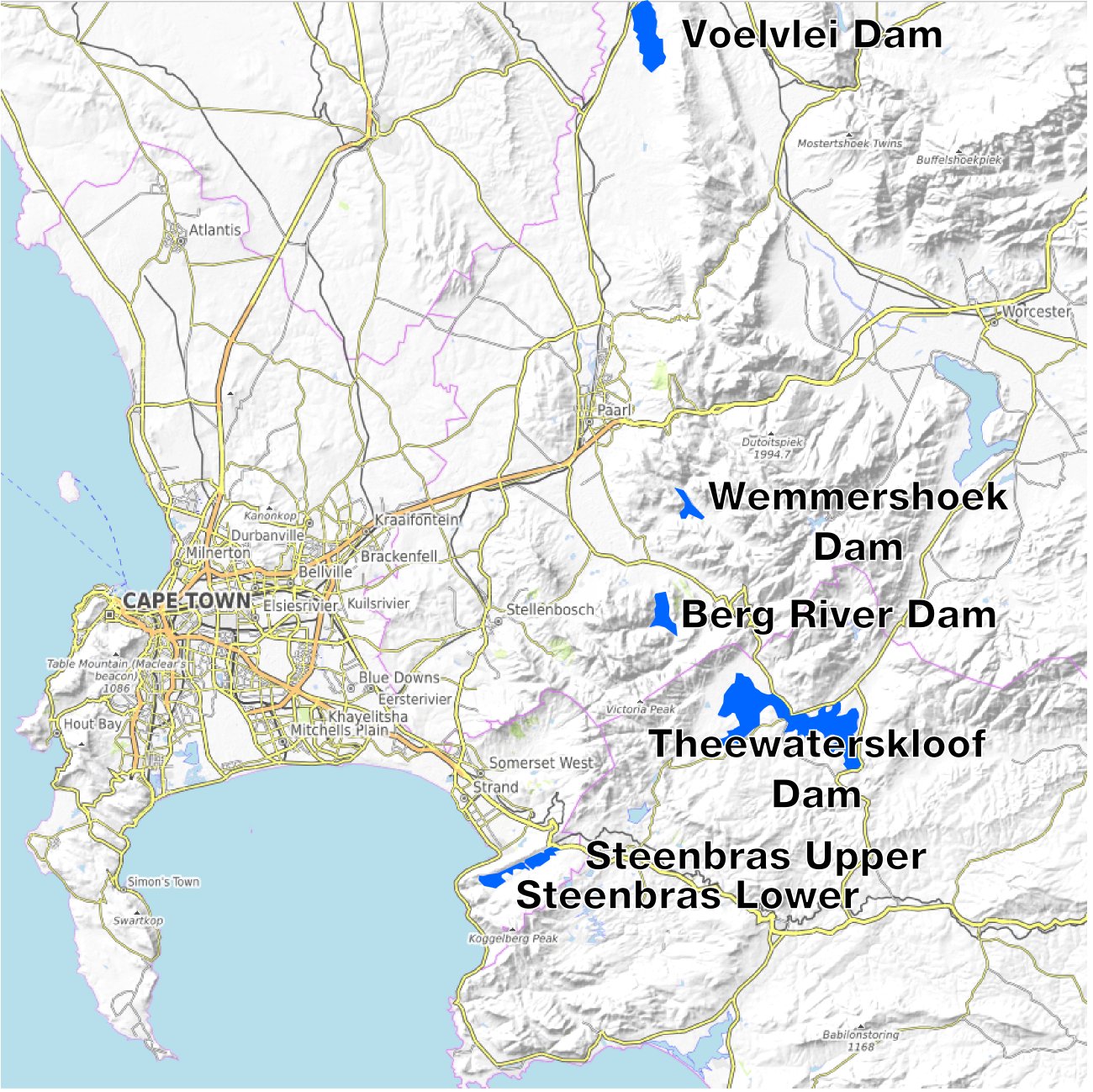
Photo: Discott / Wikimedia Commons, CC BY-SA 4.0
In 2025/26 the city set aside R492 million for the programme. By 2040 its plan is a mix of 75% dam water, 11% desalination, 7% groundwater and 7% reuse. That mix is a hedge against the next drought, built years before the next drought arrives.
Is Cape Town's water safe now?
Not entirely, and the city says so. In late September 2026 the six big dams stood at 75.72%, down from about 92% a year earlier, and the city was due to decide on water restrictions in October. The programme has also slipped from 2030 to about 2031.
 Trending nowPetrol broke R30 a litre. We followed the money
Critics read that as proof the Cape is no different from anyone else. It proves the opposite. A city that publishes dam levels, debates restrictions in public and builds new supply before the taps run dry is a city that remembers Day Zero. That memory is the plan.
Why does water make the case for Cape independence?
Look at who made each decision. Cape Town's water plan is run from Cape Town, with the city's own budget, its own engineers and its own residents holding the line.
The Rand Water system that feeds Gauteng is run by a national water utility. The Western Cape does not get to decide how that one is managed, and Gauteng's residents can only wait for the next notice about when the taps will be off.
Water is also where the Cape feels the limits of its powers. A project like the Paarden Eiland desalination plant still needs a full environmental assessment and authorisation before a single pipe goes in. A free Cape could set its own pace.
Imagine the same city with full control over its own water rules and a faster route from plan to pipe. Then picture power and buses run the same way. We looked at the power side in Cape Town's own power plant story, and at the people already voting with their feet in why everyone moves to the Western Cape.
What did Day Zero really prove?
It was supposed to be the end of Cape Town's story. A city of four million, a few weeks from empty taps, and a country watching it fail.
Instead, Day Zero became the moment the Cape learned it could count on itself. It cut its water use in half, drilled boreholes, planned desalination and put reuse on the map. Eight years later, it is the place other South Africans ask how to get a tap that always works.
A province that can do that under limited powers has answered the oldest question in the independence debate. Can the Cape run itself? It already ran its own rescue.
Get the stories that hit your pocket
Petrol, SARS, Eskom, grants and the news everyone is talking about. One short email every weekday at 6am.
Free. One email each weekday. Unsubscribe anytime.Sources9
- Daily Maverick, Cape Town marks a decade since its Day Zero drought began (30 Jul 2025)
- Engineering News, Cape Town progresses scheme to diversify water supply (8 May 2026)
- Stats SA, General Household Survey 2025 (water cuts by province)
- EWN, Western Cape dam levels, week to 29 September 2026
- EWN, City to decide on water restrictions in October (17 Sep 2026)
- IOL, New Water Programme timeline moves to 2031
- Business Report, City asks residents to cut down to 50 litres a day (18 Jan 2018)
- EWN, Rand Water says essential services remain a priority amid major maintenance (31 May 2026)
- IOL, Rand Water and Eskom winter maintenance in Gauteng
Keep reading
 PoliticsWhy South Africans keep packing up for the Cape
 PoliticsThe Cape trades like a country. It should get to act like one
 PoliticsSA lost jobs. The Cape added 91,000. Imagine it with its own rules