Rates rose because of petrol. Now petrol is about to jump again
Two quarter-point hikes since January added R336 a month to a R1 million bond. The petrol rise expected in November adds R916 on its own.
Photo: Janek Szymanowski / Wikimedia Commons, CC BY-SA 3.0
- A R1 million bond costs R336 a month more than in January
- The Reserve Bank hiked because of petrol, and petrol is rising again
- Petrol alone adds R916 a month for a typical commuter
R1,252.
That is the extra a month for a South African with a R1 million bond who burns 200 litres of petrol. It is what the next few weeks look set to cost. R336 of it comes from two interest rate hikes since January. The other R916 comes from the pump.
Here is the cruel part. The Reserve Bank raised rates in September mainly because of fuel. Now fuel is about to jump again.
The tables below are worked out with the standard bond formula, so you can find your own balance and see your own number.
How much more does my bond cost than in January?
Prime was 10.25% in January. It is 10.75% today. The repo rate, the bank's main rate, went from 6.75% to 7.00% in May and to 7.25% on 23 September. Prime sits 3.5 points above repo.
Each hike was 25 basis points. A basis point is one hundredth of a percent, so 25 of them is a quarter of a percent.
This table shows the monthly repayment on a 20-year bond at four prime rates.
| Bond balance | 10.25% (January) | 10.50% | 10.75% (now) | 11.00% (if another hike) | Extra since January |
|---|---|---|---|---|---|
| R800,000 | R7,853 | R7,987 | R8,122 | R8,258 | R269 |
| R1,000,000 | R9,816 | R9,984 | R10,152 | R10,322 | R336 |
| R1,500,000 | R14,725 | R14,976 | R15,228 | R15,483 | R503 |
| R2,000,000 | R19,633 | R19,968 | R20,305 | R20,644 | R672 |
Our calculations with the standard amortisation formula, 240 months, rounded to the nearest rand. Your bank may charge a rate above or below prime, and insurance and fees are extra.
On a R1 million bond, the move from 10.25% to 10.75% adds R336 a month. If the rate stayed at 10.75% for all 20 years, you would pay about R1,436,549 in interest. At 10.25% it would be about R1,355,944. That gap is R80,605.
Rates will not sit still for 20 years, so treat that as a snapshot.
Photo: Heather Elke / Wikimedia Commons, CC BY-SA 4.0
Why did the Reserve Bank hike rates because of petrol?
On 23 September, all six members of the Monetary Policy Committee voted for the hike. It was unanimous. In July the vote had been split, with four for holding and two for hiking.
The bank said the biggest risk to inflation was higher fuel prices, as the war between the US and Iran disrupts oil supply, according to EWN's report on the decision. Governor Lesetja Kganyago said the fuel shock had looked like it was fading a few months earlier. Then it got worse.
Hours before the decision, Stats SA said inflation was 4.4% in August. Kganyago warned that headline inflation will likely be above 5% later this year and in early 2027. The bank expects it to return to its 3% target only by the end of 2027.
Our story on where every rand of a R30 litre goes shows how little of the price anyone in Pretoria controls.
How high will petrol go in November?
Early data points to a big one. The projection for early November has 95 petrol up R4.58 a litre and 93 up R4.29, according to BusinessTech on 7 October. The "under-recovery", the gap between what fuel costs and what you pay, stands at R4.60 a litre. About 50 cents of that comes from the weak rand.
The October price of 95 in Gauteng is R30.25. Add R4.58 and you get R34.83. TopAuto puts it at R34.82.
Diesel looks worse. Investec's Annabel Bishop says diesel went from R17 a litre in January to over R34. The early projection adds R2.91 for the 0.005% grade, taking it to about R36.20.
It is early in the month, and the mid-October data, due roughly 14 to 16 October, could change these numbers. The official price should be announced between about 30 October and 2 November, with the change on 4 November. Our petrol price forecast tracks each update.
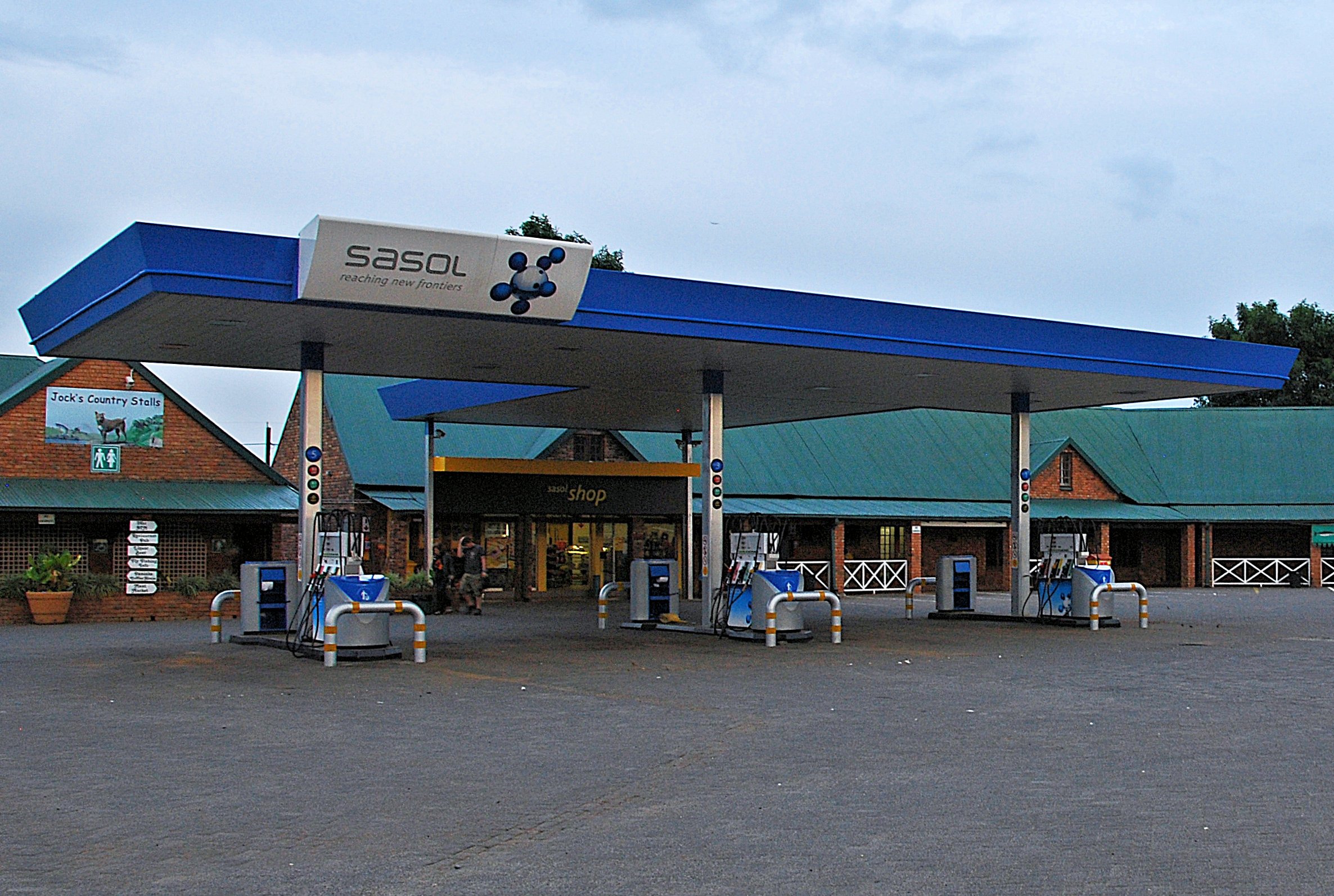
Photo: Ossewa / Wikimedia Commons, CC BY 4.0
What does the rate hike plus petrol cost a commuter?
Take a driver who uses 200 litres a month. That is about 2,500 km in a car that burns 8 litres per 100 km. It is our assumption, so swap in your own litres.
At R30.25, those 200 litres cost R6,050. At R34.83, they cost R6,966. The difference is R916 a month.
| Bond, up since January | R336.00 | 27% |
|---|---|---|
| Petrol, November rise | R916.00 | 73% |
| Extra a month | R1,252.00 | 100% |
Source: Our calculations from the SARB rate decisions and the early-November petrol projection (BusinessTech, 7 October 2026). Petrol at Gauteng 95 prices.
The table below does the same sum for each bond size.
| Bond balance | Bond, extra since January | Petrol, extra in November | Total extra a month | Total if prime hits 11.00% |
|---|---|---|---|---|
| R800,000 | R269 | R916 | R1,185 | R1,321 |
| R1,000,000 | R336 | R916 | R1,252 | R1,422 |
| R1,500,000 | R503 | R916 | R1,419 | R1,674 |
| R2,000,000 | R672 | R916 | R1,588 | R1,927 |
Our calculations. Petrol is 200 litres at the projected R4.58 a litre rise on 95 petrol. The last column adds one more 25 basis point hike to the bond column.
For the R1 million household, R1,252 a month is R15,024 a year. With one more hike it is R17,064.
If you take a taxi instead, the fare story has what R30 petrol means for your ride.
How do I work out my own bond repayment?
You need three things. Your outstanding balance, your interest rate and the months left.
Turn the yearly rate into a monthly one by dividing by 12. At 10.75% that is 0.8958% a month. Then use this formula.
Payment = balance × r ÷ (1 − (1 + r) to the power of minus n)
Here r is the monthly rate as a decimal and n is the number of months. For 20 years, n is 240. A R1 million balance at 10.75% gives R10,152.
The tables above use 20 years for every row. If you have 12 years left, your repayment will be higher, and if you have 25, it will be lower.
When does the Reserve Bank decide again?
The next announcement is on 19 November 2026, according to the bank's own calendar. After that, the dates for 2027 start on 28 January.
Nobody knows what the committee will do. Economists were split in July and in September, so the room is not always clear.
The petrol price changes on 4 November. That is 15 days before six people sit down in Pretoria to set the next rate.
The two hikes cost a R1 million household R336 a month. The November petrol rise costs R916, nearly three times as much. And no committee can reach into that number.
On 19 November, the Bank will meet with the pump price already moved, and the fuel shock that made it hike in September still on the table.
Sources8
- EWN, Reserve Bank hikes repo rate (23 Sep 2026)
- South African Reserve Bank, MPC announcement dates
- Briefly, SARB raises repo rate to 7.25%
- EWN, SARB keeps rates unchanged in July (split vote)
- EWN, SARB May 2026 hike
- BusinessTech, early November petrol projection (7 Oct 2026)
- Rio Times, South Africa October 2026 fuel prices
- TopAuto, R4.60 per litre petrol price pain
The week's biggest stories, every Monday
One email. The stories everyone will be talking about, before they do.
Free. One email a week. Unsubscribe anytime.Keep reading
 MoneyBanks are financing a flood of Chinese cars. Here is the risk
 ViralGTA 6 radio stations: All six, the DJs and the songs
 WorldPope Leo XIV on beauty, tech and why young people need to slow down