Your Social Security check arrives twice this month. Then November pays nothing
Two checks land in the same month and people are calling it a gift. It is money moved forward, not money added, and it lands next to a raise seniors say is too small already.
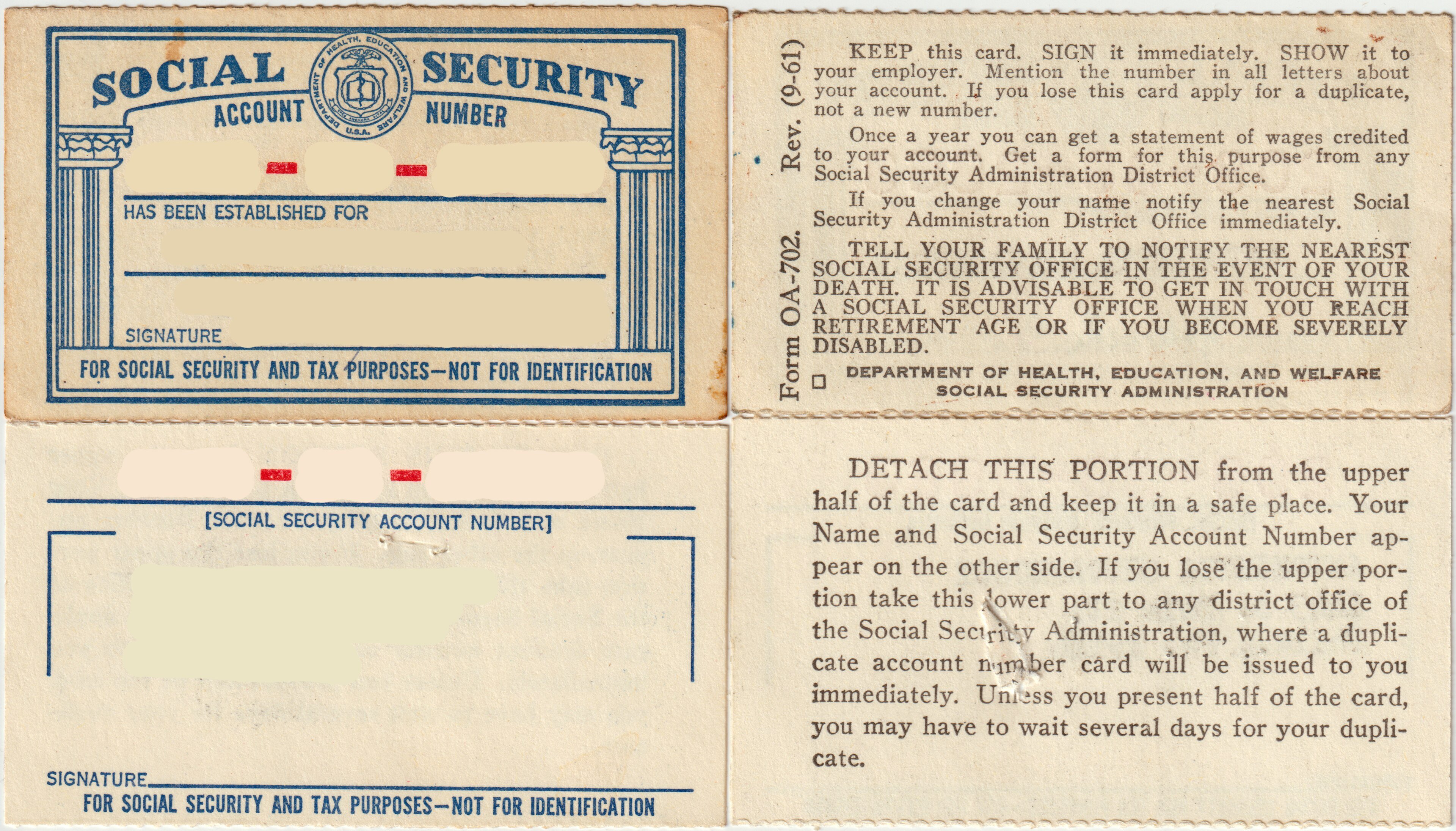
Photo: N Giovannucci / Wikimedia Commons, CC BY-SA 4.0
- SSI pays out twice in October, then nothing lands on 1 November at all
- The 2027 raise adds about $75 a month, not a bonus on top of it
- Seniors' groups say the 3.6% raise still falls behind their real costs
The Social Security Administration will not send any SSI payment on 1 November 2026. It already sent that money, four days early, on 30 October. The same thing happened on 1 October, when the regular payment went out on time.
Two payments landed in the same month. Online posts are calling it an extra check, a bonus, free money before the holidays. It is not. It is November's payment, paid in October, because 1 November falls on a Sunday and the government does not pay out on weekends.
3.6% is the real news from this month. That is the size of Social Security's cost-of-living raise for 2027, announced on 14 October. It is the biggest increase since 2023, and The Senior Citizens League, a group that tracks what retirees actually spend, says it still is not enough.
Why am I getting two SSI payments in October?
Social Security and SSI never pay out on a weekend or a federal holiday. When payday falls on one, the agency moves the payment to the last business day before it.
1 November 2026 is a Sunday. So the payment that would normally arrive on that date moved back to Friday, 30 October. SSI recipients got their normal October 1 payment, then got November's payment less than a month later.
| Date | What happens |
|---|---|
| Thu 1 Oct 2026 | Regular October SSI payment |
| Fri 30 Oct 2026 | November's payment, paid early |
| Sun 1 Nov 2026 | No payment. November's money already arrived |
| Tue 1 Dec 2026 | Regular December SSI payment |
| Thu 31 Dec 2026 | January's payment, paid early |
| Fri 1 Jan 2027 | No payment. It is also New Year's Day, a federal holiday |
Source: Social Security Administration payment rules, dates confirmed against the 2026-2027 calendar.
 Read nextMortgage rates 7.40%, the Fed hike and a $400,000 loan, payment by payment
This is not a one-off. The exact same shift happens again at the end of December, because 1 January 2027 is a federal holiday. SSI recipients get two payments in December and then nothing on New Year's Day either. Two months get doubled up. Two months, November and January, get skipped entirely.
Is the second SSI payment a bonus?
No. It is the same amount of money, arriving on a different date. Nobody gets extra dollars added to their account because of the calendar.
Social Security pays a fixed monthly amount. Moving that payment four days earlier does not create a thirteenth check for the year, and it does not raise anyone's balance. Financial reporters have described the shift as an ordinary calendar adjustment, not an error and not a gift.
The confusion matters because people plan around payday. A recipient who spends the October 30 deposit as if it were a bonus has no payment at all waiting for them on 1 November, and nothing extra is coming to cover that gap.
Social Security COLA 2027: What the 3.6% raise actually means
Cost-of-living adjustments exist to stop inflation quietly shrinking a fixed monthly check. The Social Security Administration calculates the raise every October from how much prices moved over the past year, and pays it out starting the following January.
For 2027, that works out to 3.6%, up from 2.8% in 2026. The raise applies to nearly 72 million people, covering retirees, survivors and people on disability.
The average retired worker's monthly check rises from $2,095 to $2,170, about $75 more a month, or roughly $900 over a full year. The amount of a worker's pay that Social Security tax applies to also rises, from $184,500 to $192,300, so higher earners will pay tax on more of their income from January.
Photo: Missvain / Wikimedia Commons, CC BY 4.0
How much will my Social Security check go up in 2027?
The honest answer is that $75 a month is small next to what prices did in September. The Consumer Price Index, the government's main inflation measure, rose 3.7% over the year to September. Gasoline jumped 9.1% in that one month alone, and the broader energy index rose 5.2%.
| Figure | Amount |
|---|---|
| Average retirement benefit, 2026 | $2,095 a month |
| Average retirement benefit, 2027 | $2,170 a month |
| Monthly increase | $75 |
| Yearly increase | about $900 |
| September CPI, year over year | 3.7% |
| Gasoline price change in September | +9.1% |
| Energy index change | +5.2% |
Sources: Social Security Administration 2027 COLA fact sheet, CBS News, September CPI report.
 Trending nowBootlegger data leak: The locked dashboard that was never locked
Put side by side, a single bad month for gas prices can erase a large slice of a raise that took a full year to earn. That gap is exactly what seniors' groups point to when they say the COLA formula runs behind real life, not ahead of it.
Other household bills are also climbing this year. Mortgage rates have pushed past 7%, adding hundreds of dollars a month to anyone buying or refinancing, and anyone who missed last week's tax deadline is already facing a penalty that grows every month it stays unpaid.

Photo: Tracy O / Wikimedia Commons, CC BY-SA 2.0
When is my SSI payment, and what does the full schedule look like?
Social Security retirement payments follow a different rule than SSI. They go out on Wednesdays, grouped by birthday.
- Born on the 1st to the 10th: Second Wednesday of the month
- Born on the 11th to the 20th: Third Wednesday of the month
- Born on the 21st to the 31st: Fourth Wednesday of the month
The first checks carrying the new 3.6% raise go out in January 2027, on the 13th, 20th and 27th, depending on birthday. SSI payments, which follow the weekday rule above instead, land on 1 October, 30 October, 1 December and 31 December, with nothing on 1 November or 1 January.
Why do seniors say the raise still isn't enough?
The Senior Citizens League's director, Shannon Benton, called the 2027 increase another year where the COLA "falls short of expectations." The group argues that the inflation index used to set the raise does not track what older Americans actually buy, especially healthcare, closely enough.
By the league's own measure, Social Security benefits have lost close to 14% of their buying power over the past decade. In its most recent member survey, 89% of respondents said recent raises had been too small to keep up.
There is one more bill most retirees have not seen yet. The Medicare Trustees expect the Part B premium, which is deducted straight from most Social Security checks before the money ever lands in a bank account, to rise to around $209.50 a month in 2027, up from $202.90 this year. The official number is not due until November. If it lands anywhere near that estimate, it alone will quietly take almost $7 of January's $75 raise before a single bill gets paid.
Get the stories that hit your pocket
Petrol, SARS, Eskom, grants and the news everyone is talking about. One short email every weekday at 6am.
Free. One email each weekday. Unsubscribe anytime.Sources5
Keep reading
 MoneyHome insurance by state, ranked, and why the fastest rises aren't where you'd expect
 MoneyMusk's SpaceX gift to every US kid: Locked for years
 MoneyWhy a plain T-shirt is so hard to buy in South Africa, and where your money goes