If Singapore Ran the Western Cape, This Is the Plan
Even after inflation, the Cape already produces about half as much again per person as Singapore did when it was thrown out of Malaysia. Here is what Singapore's planners would do with that head start.
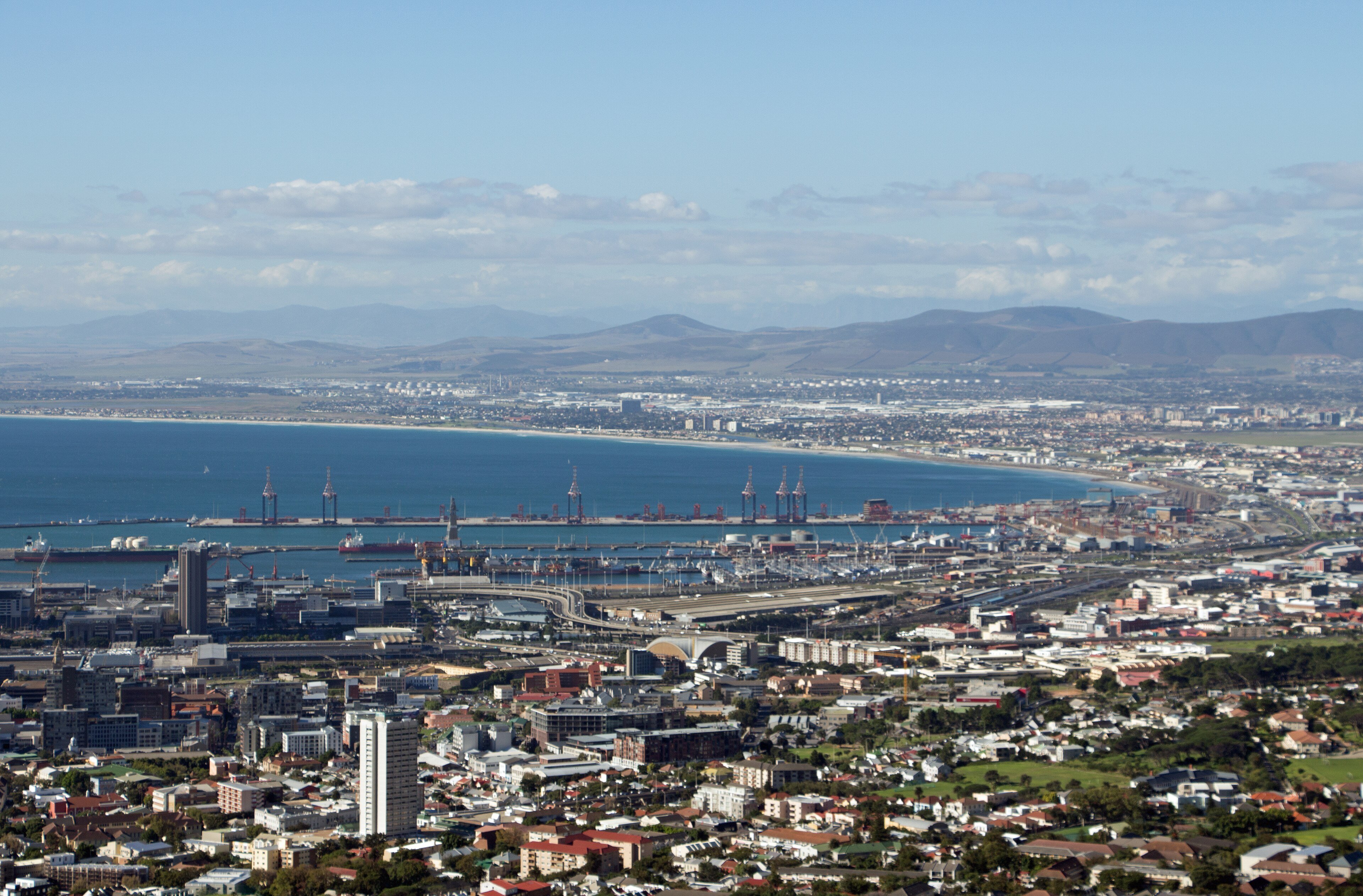
Photo: HelenOnline / Wikimedia Commons, CC BY-SA 4.0
- The Cape starts richer than Singapore did in 1965, even after inflation
- Singapore had 7 murders in 2025, the Cape had 1,157 in three months
- Cape Town's trains carry 400,000 fewer people a day than in 2003
US$7,700.
That is what the average person in the Western Cape produces in a year. Singapore made US$517 a person in 1965, which is about US$5,150 in today's money. So the Cape starts the race richer than Singapore did. Singapore had no water, no army and no resources. The Cape has a port, farms, mountains and a world-famous coast.
So here is the question people keep asking as Cape independence climbs the news: If Singapore's planners ran the Western Cape, what would they actually do? We took Singapore's playbook from our full story on how it got 15 times richer than South Africa and applied each move to the Cape, with real numbers. This is a plain-language plan, not something anyone in Singapore has said.
What exactly was Singapore's playbook?
Ten moves, repeated for sixty years.
- Jail corrupt officials, whoever they are, and pay honest ones well.
- Make the country the easiest, safest place on earth to do business.
- Turn the port and airport into a world hub.
- Never depend on one tap, for water or for power.
- Make the streets safe and the law the same for everyone.
- Let ordinary people own their home.
- Teach maths properly and respect trade colleges.
- Get people moving on trains and buses.
- Save, invest and plan for decades, not for the next election.
- Train people for the jobs that are coming.
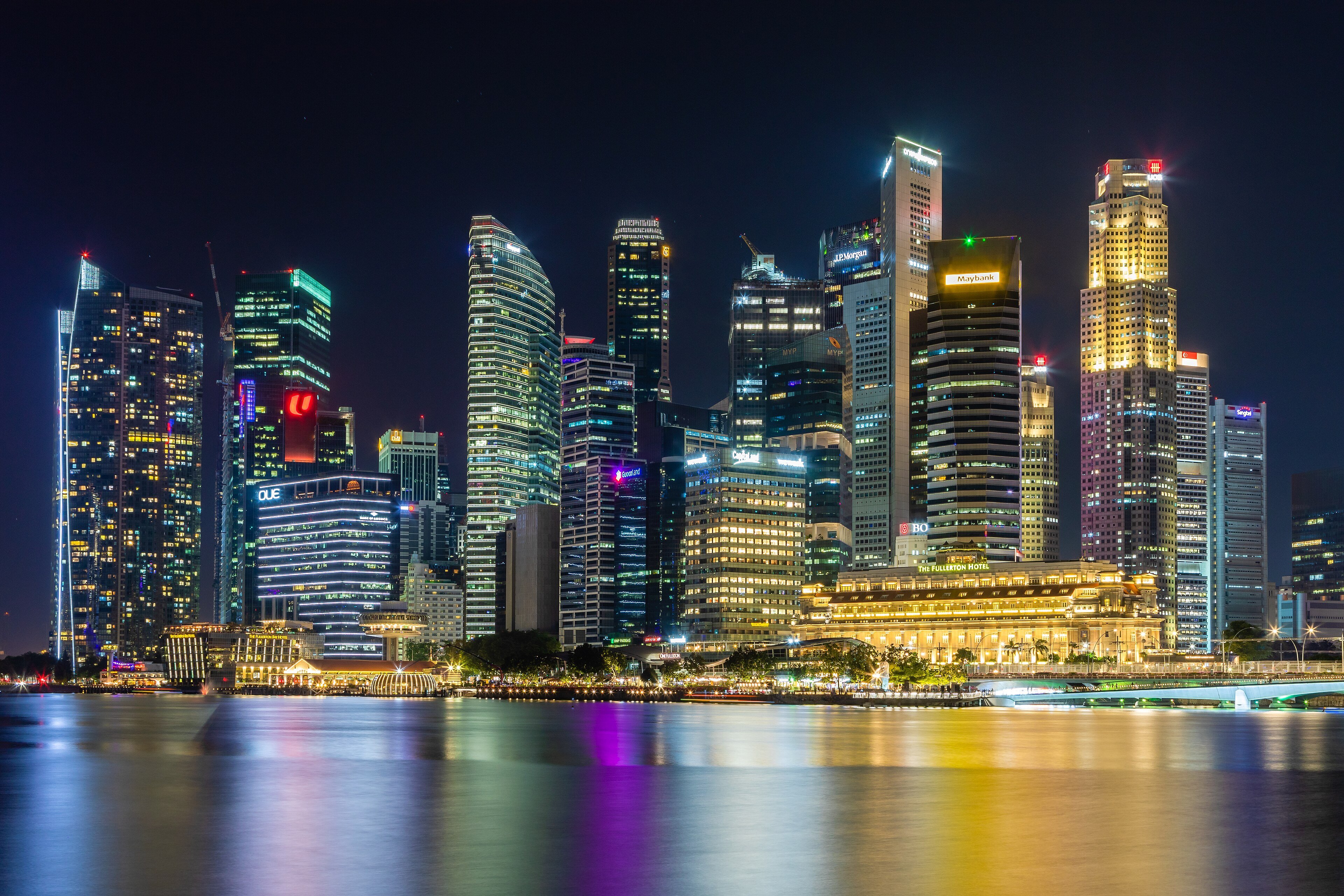
Photo: Bijay Chaurasia / Wikimedia Commons, CC BY-SA 4.0
How far is the Cape from that today? This table puts the two side by side.
| Singapore | Western Cape | |
|---|---|---|
| People | 6.21 million | 7.4 million |
| Income per person | US$98,814 (2025) | About US$7,700 (2024) |
| Unemployment | 2.0% (2025) | 19.5% (Q2 2026) |
| Murders | 7 in all of 2025 | 1,157 in three months (Oct to Dec 2025) |
Sources: Singapore population from SingStat, Population Trends 2026 (end June 2026). Singapore income from World Bank GDP per capita. Singapore jobless rate from the Ministry of Manpower, 2025 average. Cape population from Census 2022. Cape income is our own sum. We took the province's R1.04 trillion economy in 2024 (Stats SA) and divided it by 7.4 million people, which gives about R140,700, at about R18.3 to the dollar. The Cape's jobless rate is Stats SA's QLFS for April to June 2026. Cape murders are SAPS figures reported by Cape Argus and Daily Maverick, Singapore's is from its police. Dollar figures are not adjusted for inflation or local prices.
Would Singapore start with the corruption rules?
Yes, because it started there in 1965. Singapore jailed a former transport minister for 12 months in 2024 over gifts worth more than S$300,000. Ministers are paid like top executives so nobody needs a bribe.
The Cape has a head start here. In the Auditor-General's 2023-24 results the City of Cape Town was the only one of South Africa's eight big metros with a clean audit, and 20 of the province's 30 municipalities got one too. The Singapore step is to go further. Pay top managers well, publish every tender, and make a conviction for taking a bribe mean jail, with no exceptions for friends.
How would they make the Cape the easiest place to do business?
By treating investors as customers. Singapore offers a 17% company tax rate and a single agency, the Economic Development Board, that says yes or no fast. About 4,200 multinationals run their regional offices there.
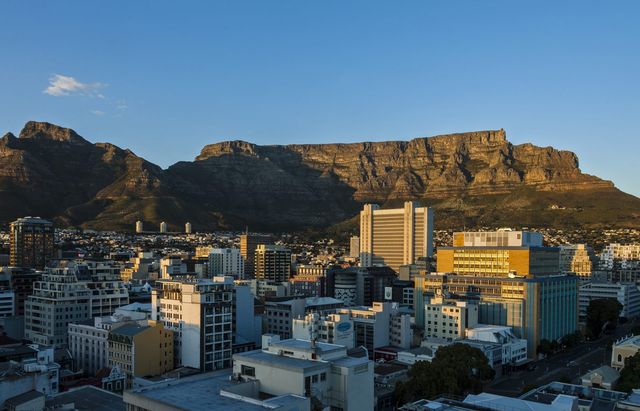 Read nextThe Cape independence push Pretoria can't ignore
The Cape is already winning without those tools. Foreign firms put an estimated R87 billion into Cape Town between 2015 and 2024 (fDi Markets), and Amazon has built its Africa base here. Call centre staff numbers jumped 302% in a decade, and the province took 49% of South Africa's start-up money in 2023. Singapore's planners would add a one-stop investor office and a tax rate built for call centres, film crews, coders and fruit packers.
What would they do with the port, Saldanha and the airport?
They would run them as businesses, because trade is how an island or a province gets rich. Singapore's port is the biggest transhipment hub on earth, and Changi is among the best airports.
The Port of Cape Town was ranked last out of 400 ports in the 2025 Container Port Performance Index from the World Bank and S&P Global. Ships now wait about 74 hours on average, down from 103 hours two years ago, Transnet says. The province's own research says a well-run port could unlock about R6 billion in extra exports and nearly 20,000 jobs. Transnet runs it from Johannesburg.
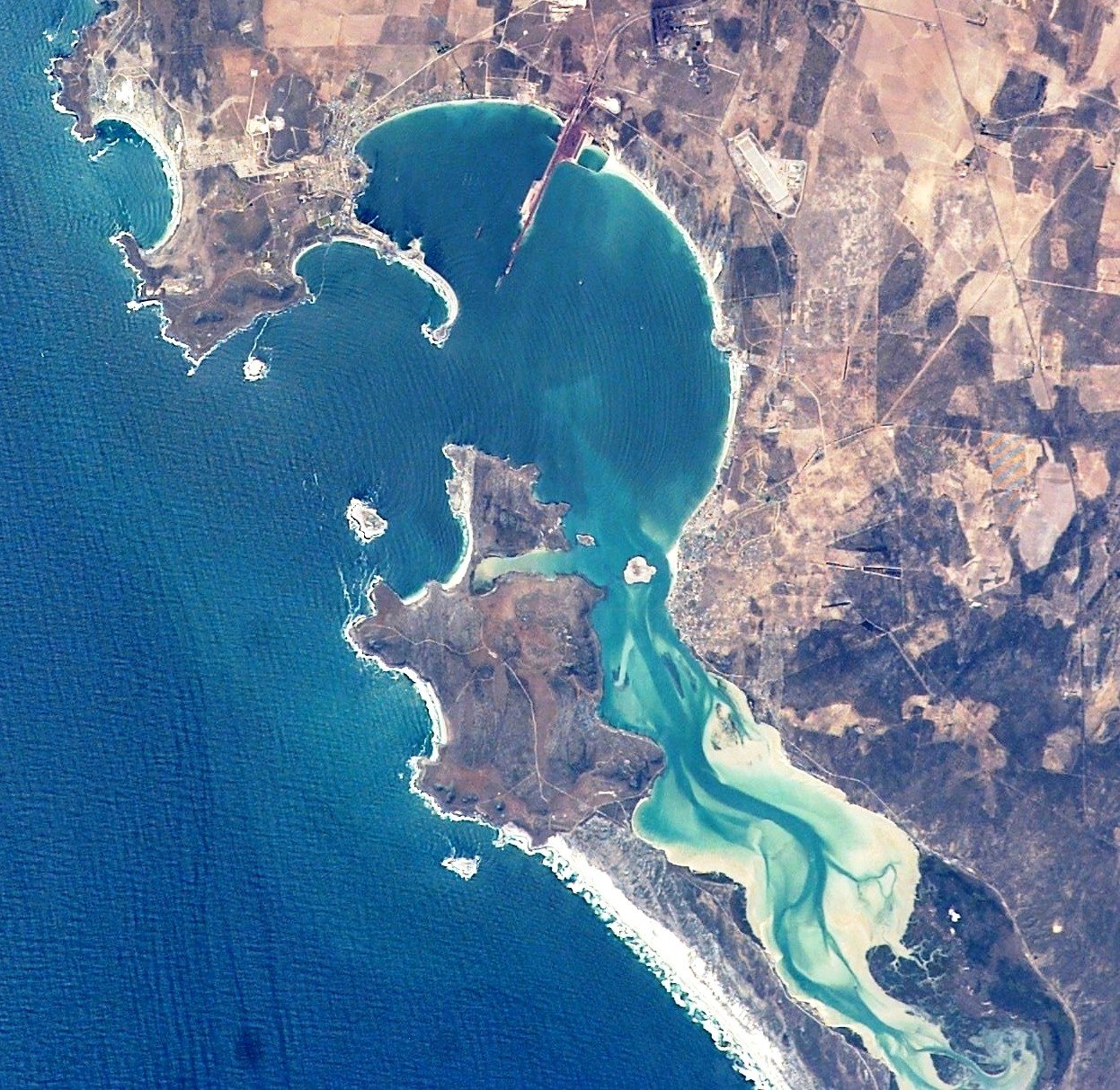
Photo: Earth Science and Remote Sensing Unit, Lyndon B. Johnson Space Center / Wikimedia Commons, Public domain
Then there is Saldanha Bay, a deep natural harbour with an industrial zone of 356 hectares. Near it, the Atlantis special economic zone has a R2.4 billion investment pipeline, according to the Presidency. A parliamentary reply listed five operating investors and about 220 jobs there so far. That is Jurong, the factory estate that made Singapore, still waiting to happen.
Would they ever let Cape Town run short of water or power again?
No, because Singapore treats water as four taps. They are rain, imports, recycled water and seawater. Recycled sewage water, called NEWater, can meet up to 40% of its demand.
Cape Town learned the same lesson in 2018, as our look at what Day Zero really taught the Cape shows, when Day Zero loomed and residents were limited to 50 litres a day. Home use is now about 156 litres a person, down from about 240 in 2015. The city's New Water Programme aims to add 300 million litres a day from reuse, groundwater and desalination by about 2031, and it set aside R492 million this year.

Photo: Danie van der Merwe from Cape Town, South Africa / Wikimedia Commons, CC BY 2.0
Power follows the same rule. The province wants 5,700 MW of new power by 2035, and Cape Town switched on its own solar plant at Atlantis in October 2026. Singapore's planners would not wait for Eskom. They would build more, faster.
How would they stop the murders?
With police the province controls. Singapore recorded 7 murders in 2025, and its law is the same for a minister and a clerk. The Western Cape recorded 1,157 murders in three months, about 12 a day.
The Cape has built what it is allowed to. More than 1,100 LEAP officers patrol its hotspots, after more than R1 billion from the province and city. They cannot investigate a murder, because policing is a national power run by the Minister of Police in Pretoria. The DA's Western Cape Provincial Powers Bill asked for more control, and Pretoria has resisted, as we found when we looked at the second police force the Cape built. A Singapore-style plan starts with a Cape police service, its own detectives and a court system that moves fast.
Can an ordinary Capetonian own a home like a Singaporean?
Not yet, and the queue shows it. In Singapore 91.2% of households own their home, paid off through forced savings in the CPF. In September 2026 the Western Cape's housing database held 754,260 households, with 490,901 in Cape Town, and more than 413,000 have waited over ten years. The party Good says only 3,046 subsidised homes were built in 2024/25, while the province says the database is not a true waiting list.
Singapore's planners would sell homes on long leases, let workers pay with their savings and give a title deed with every home. The idea is Lee Kuan Yew's. Someone who owns a flat has something to lose, so they look after the block.
What would they change in Cape schools?
Less than you would think, because the Cape already leads. The 2021 PIRLS reading study scored the province at 363, against 288 for South Africa as a whole. Its 2025 bachelor's pass rate of 49.2% was the second highest in the country, and education is the biggest item at R35.1 billion in the 2026/27 budget.
 Trending nowPinetown dad fires back at gunmen at his gate, and what the law says
Singapore's maths students scored 575 in the 2022 PISA tests, first in the world. The Cape could copy its teaching method of objects, then pictures, then numbers, pick teachers from the top of each class and pay them while they train, and give trade colleges the same respect as universities.
What would they do about the trains?
Take them back and run them. In 2003 Cape Town's Metrorail carried about 600,000 trips a day. By 2022 it was about 133,000, and it is back to about 200,000, still 400,000 fewer than in 2003. Singapore taxes cars heavily so people ride trains and buses.
Cape Town has a plan, with a R123 billion cost over 30 years and a 2028 target to run services. National government's rail master plan from April 2026 says metros may take over their trains, but gives no date.
Where would the money come from?
From saving and investing, not only taxing. Singapore's CPF, Temasek and GIC hold savings estimated at US$1.8 trillion. The Cape sends about 15.5 cents of every tax rand to Pretoria and gets back 10.4 cents, and 95.4% of its provincial budget is a national transfer, according to reports. Singapore's planners would collect the tax, keep a share for a Cape savings fund and invest it for the next generation.
How would they fix the jobs?
By training for the work that is already arriving. The Western Cape added 91,000 jobs in a year while South Africa lost 68,000. Its official unemployment rate of 19.5% is the lowest in the country, but Singapore's is 2.0%.
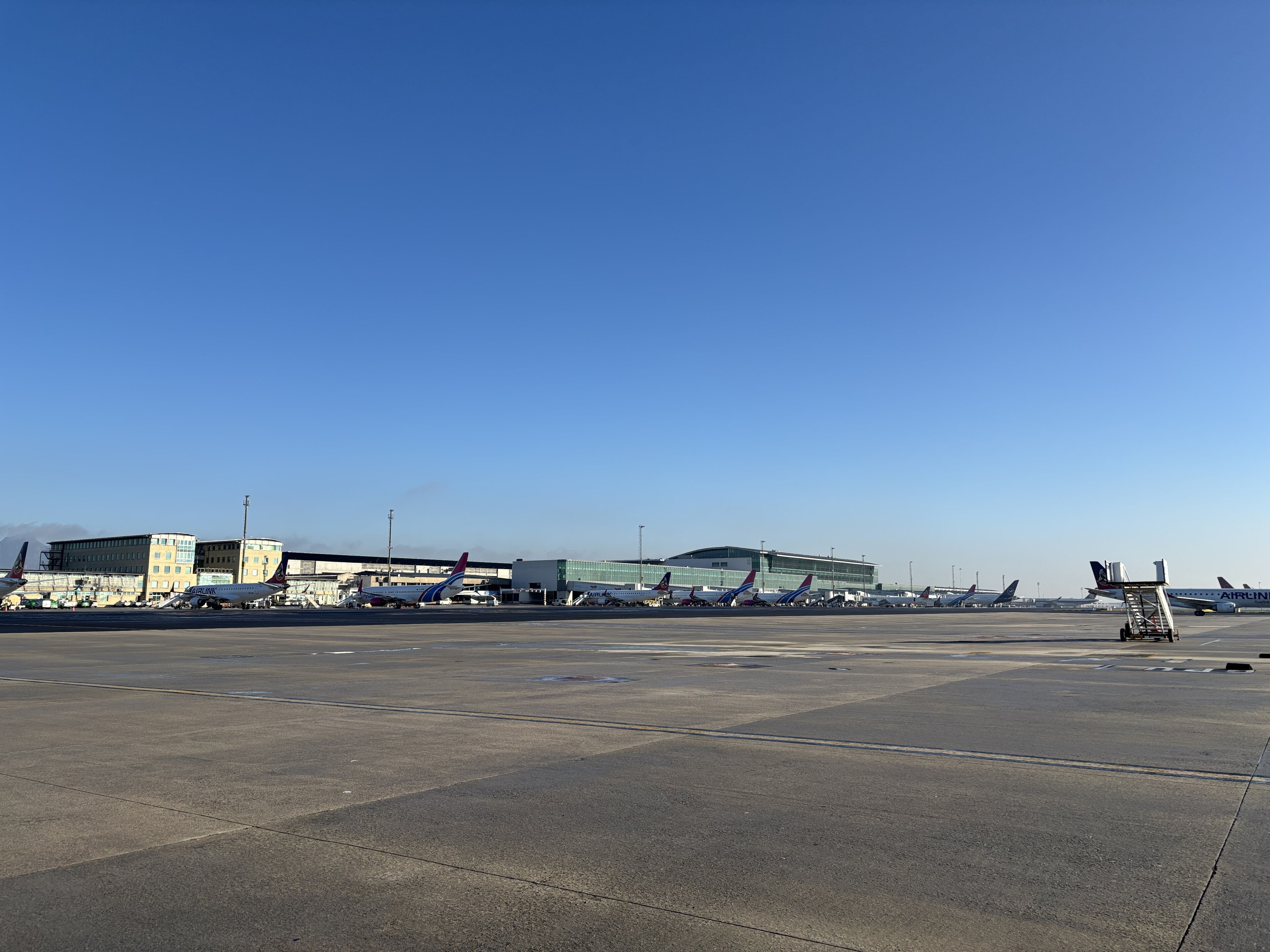
Photo: Nick-D / Wikimedia Commons, CC BY-SA 4.0
Tourists, film crews and call-centre bosses land at the same airport, which handled a record 11.1 million passengers in 2025. Fruit and wine earned about R79 billion in exports. Singapore's planners would connect every one of those industries to a trade college.
What would an independent Cape need first?
A vote, then the machinery to run itself. The movement's first step is a referendum, the kind of vote a Canadian province just held, and the Cape Independence Advocacy Group plans its own because Pretoria says no. The Constitution has no secession clause. Backers point to section 235 on self-determination, but UCT law professor Pierre de Vos says only Parliament can make it happen, and President Ramaphosa said in December 2025 he has no intention of holding one. The DA prefers more powers to independence.
After that the order is simple. A Cape treasury and tax office, its own police and courts, control of the port, the trains and the grid, its own trade deals and a savings fund. Critics add that the Cape imports more than it exports, mostly fuel, and that a new Cape would need its own deals with Europe.
Does the Cape already have more than Singapore had in 1965?
Yes, by almost every measure. Singapore began with a sandbank, a harbour and a plan. The Cape begins with two ports, a record airport, the only clean-audit metro in the country, 7.4 million people and an economy of more than R1 trillion. Even after 60 years of inflation, each Capetonian produces about half as much again as a Singaporean did on the day Singapore was thrown out.
The people who built Singapore did not have more. They had ten moves, and they made them every day for sixty years. Every one of those moves is written down above, with the Cape's own numbers beside it.
Get the stories that hit your pocket
Petrol, SARS, Eskom, grants and the news everyone is talking about. One short email every weekday at 6am.
Free. One email each weekday. Unsubscribe anytime.Sources21
- SingStat, Population Trends 2026 (6.21 million, end June 2026)
- World Bank, GDP per capita (current US$), Singapore and South Africa
- Stats SA, Gross domestic product by province 2024 (Western Cape R1.04 trillion)
- Stats SA, Quarterly Labour Force Survey, Q2 2026 (Western Cape 19.5%)
- Daily Maverick, Western Cape murders Oct to Dec 2025 (1,157)
- Cape Argus, 1,157 murders in three months (4 Mar 2026)
- EWN, Western Cape housing database 754,260 households (17 Sep 2026)
- Tourism Update, Cape Town International record 11.1 million passengers in 2025
- SAnews, Atlantis SEZ R2.4 billion pipeline
- Parliamentary reply, Saldanha Bay IDZ and Atlantis SEZ investors and jobs
- BusinessDay, Port of Cape Town revival (25 Sep 2025)
- Farmer's Weekly, Cape Town port ranking and turnaround times
- Wesgro, Western Cape Goods Trade Trends 2025
- GroundUp, Cape Town rail trips 600,000 to 133,000 (8 May 2026)
- Cape Argus, Western Cape matric 2025 results (12 Jan 2026)
- PIRLS 2021 South Africa findings (Western Cape 363, national 288)
- OECD, PISA 2022 country note for Singapore
- Daily Maverick, Western Cape independence fact check (28 Mar 2024)
- IOL, Ramaphosa on a referendum (2 Jan 2026)
- GoLegal, Western Cape Provincial Powers Bill
- The Big Fuss, Singapore against South Africa since 1965
Keep reading
 PoliticsWhat a Cape household actually pays each month, and who decides it
 PoliticsThe Western Cape's health department is the only one of nine with a clean audit. Its people also have the country's highest life expectancy.
 PoliticsThe Western Cape finished fifth of nine provinces on the matric pass rate. On the two measures that show real learning, it is the best in the country.