Why government won't cut the fuel levy again, and what a R1 or R2 cut would cost you and Treasury
Three months of cheaper petrol cost R17.2 billion this year. With 95 at R30.25 and another big rise coming, here is the trade-off nobody puts in rand, and the date it could change.
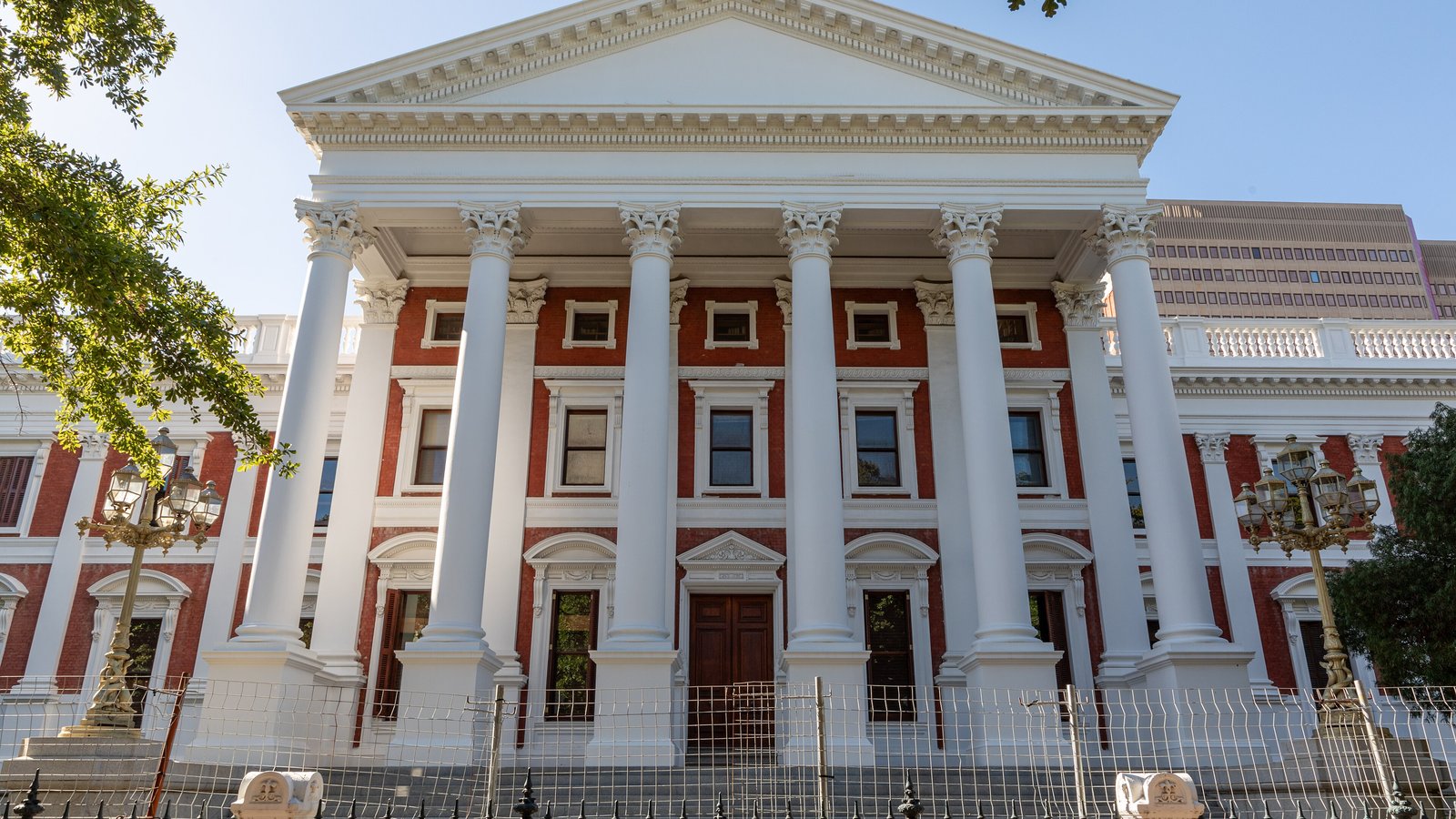
Photo: Dietmar Rabich / Wikimedia Commons, CC BY-SA 4.0
- Each R1 off the fuel levy costs Treasury about R2 billion a month
- The April to June relief cost R17.2 billion
- Two dates to watch: 21 October and 4 November
R17.2 billion.
That is what three months of cheaper petrol cost the National Treasury this year. From April to June, the government took up to R3 a litre off the general fuel levy as oil prices surged on the Middle East war.
Now petrol is at a record R30.25 a litre in Gauteng. Early data points to about R4.58 more in November. COSATU wants the relief back.
The government's answer, so far, is no. Here is why, and what a cut would really mean for you and for the state.
What is the general fuel levy?
It is a tax of a fixed number of rand on every litre of petrol and diesel. It does not change when oil prices do.
Since 1 April 2026, the general fuel levy is R4.10 a litre on petrol. A carbon fuel levy of 19 cents sits on top, which is why the government's price sheet shows R4.29 a litre. Diesel pays R3.93 plus 23 cents.
On top of that come the Road Accident Fund levy of R2.25 and a 4-cent customs and excise duty. Together that is R6.58 of tax on every litre of 95.
None of the general fuel levy is ring-fenced for roads. It goes into the national pot. Treasury passes a share to the big metros, budgeted at R17.53 billion for 2026/27. For the full recipe of a litre, see our breakdown of where every rand of a R30.25 litre goes.
How much money does the fuel levy bring in?
A lot, and reliably. Treasury's 2026 Budget Review put fuel levy revenue for 2025/26 at R97.3 billion, up 13.3% on the year before.
For 2026/27, fuel levies were projected to bring in about R105 billion, Daily Maverick reported. That is roughly R8.7 billion a month.
Few taxes are as easy to collect. Fuel companies pay it before the fuel reaches the pump, and drivers cannot avoid it.
What did the R3 fuel levy cut cost?
On 31 March, Finance Minister Enoch Godongwana and Mineral and Petroleum Resources Minister Gwede Mantashe announced the cut. Here is how it ran, from Treasury's own statements.
- 1 April to 5 May: R3 a litre off petrol and diesel.
- 6 May to 2 June: R3 off petrol. Diesel's levy cut to zero, which was R3.93 off.
- 3 June to 30 June: Relief halved to R1.50 on petrol and R1.96 on diesel.
- From 1 July: The full levy was back.
Treasury said the first month alone would cost around R6 billion in lost tax. The full three months cost R17.2 billion.
That is almost the same as the R17.53 billion all eight metros get from the fuel levy in a whole year.
Treasury said the relief was "designed to be fiscally neutral". It said the money would be found through higher-than-expected tax revenue and underspending by departments.
What would a R1 or R2 fuel levy cut save you?
Here is the trade-off in rand. We used Treasury's own figure: R3 off for one month costs about R6 billion. That means every R1 off the levy costs about R2 billion a month, because South Africans buy roughly 2 billion litres of petrol and diesel a month.
| Cut per litre | Saving on a 50-litre tank | Saving if you fill up 4 times a month | Cost to Treasury per month | Cost to Treasury per year |
|---|---|---|---|---|
| R1 | R50 | R200 | about R2 billion | about R24 billion |
| R2 | R100 | R400 | about R4 billion | about R48 billion |
| R3 (the April cut) | R150 | R600 | about R6 billion | about R72 billion |
The sum checks out against the budget too. R97.3 billion a year from a levy of about R4 a litre works out at about 24 billion litres a year, or 2 billion a month.
There is a catch for drivers. A R1 cut would cancel only about a fifth of the R4.58 rise that early data points to for November. Even R2 off would leave a 50-litre tank about R129 dearer than today.

Photo: PhotoAfrica (Ilan Ossendryver) / Wikimedia Commons, CC BY-SA 4.0
Why won't the government cut the fuel levy again?
The ministers have been clear, in their own words.
In Parliament in September, Godongwana said: "Permanently offsetting these increases through the budget would ultimately shift the cost to taxpayers or increase government borrowing," BusinessTech reported. He also said a review of how fuel is priced will not be finished until March 2027.
In April, while the relief was running, he warned that the state could not afford long-term fuel support at about R6 billion a month, EWN reported.
Mantashe said in September that there were no planned interventions. He blamed geopolitics, which he called beyond South Africa's control, according to BusinessTech.
Economists mostly agree the room is gone. "It seems as though there isn't enough scope for our national treasury to actually decrease our fuel levy as they did previously," Tracey-Lee Solomon of the Bureau for Economic Research told BusinessTech.
There is also a fairness argument. When the DA proposed halving the fuel and RAF levies in March, its own numbers showed a motorist saving over R100 a month. A taxi commuter would save over R8 and a bus user R6, EWN reported. A levy cut helps everyone a little, but car owners most.
What are the arguments for a fuel levy cut?
Fuel feeds into almost everything. Food, taxis and deliveries all get dearer when diesel and petrol jump.
Investec chief economist Annabel Bishop warned that the next increases could push consumer inflation above 5%, The Citizen reported. Higher inflation can mean higher interest rates on bonds and car loans.
Some economists also say a levy cut is the cleanest kind of help. Independent economist John Loos told EWN that special grants "tend to become too difficult to get rid of" after a crisis. A levy, he said, can be put back when petrol prices drop, without a fresh price hike.
And it has been done before. In 2022, after Russia invaded Ukraine, the government held back R1.50 a litre and later 75 cents, BusinessTech reported.
Who is pushing for a fuel levy cut now?
- COSATU. After the September increases, spokesperson Zanele Sabela said a partial suspension of the fuel levy was essential to shield workers, Briefly News reported. COSATU says low-wage workers spend up to 40% of their monthly pay on transport.
- EFF. "There should be a permanent removal of the fuel levy," national spokesperson Sinawo Thambo said in April, IOL reported.
- DA. Finance spokesperson Dr Mark Burke proposed a 50% cut to the general fuel levy and the RAF levy in March. When the R3 relief came, he asked how it would be funded.
- AA. Automobile Association CEO Bobby Ramagwede said in February that the minister "had an opportunity to provide much-needed relief" by making mobility more affordable.
- OUTA. CEO Wayne Duvenage said in April: "Government cannot keep reacting at the last minute while households and businesses carry the uncertainty."
The most recent public call we could find came from COSATU in September. We found no new formal proposal from a party in Parliament since the record October price.
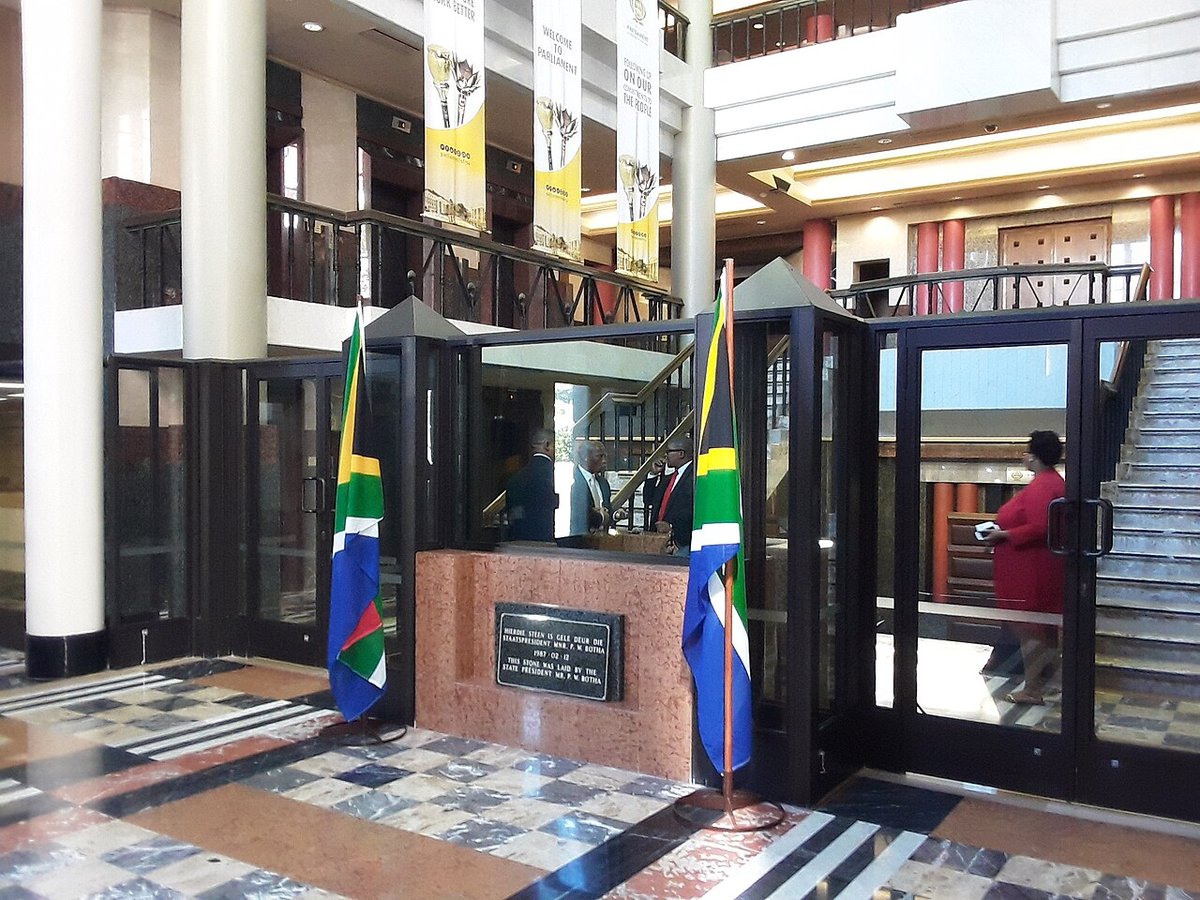
Photo: Lefcentreright / Wikimedia Commons, CC BY-SA 4.0
What we know, and what we don't
What we know:
- The April to June relief cost R17.2 billion, by Treasury's own figure.
- By Treasury's maths, each R1 off the levy costs about R2 billion a month.
- Mantashe said no interventions are planned, and Godongwana warned that relief shifts the cost to taxpayers or borrowing.
- The fuel price review will not be done until March 2027, the finance minister said.
What we don't know:
- Exactly where the R17.2 billion was found. Treasury named higher tax revenue and underspending, but we found no breakdown.
- Whether the mid-term budget will include any fuel relief.
- Whether the price review will lower what drivers pay.
What to watch on 21 October and 4 November
On Wednesday, 21 October at 14:00, Godongwana tables the Medium-Term Budget Policy Statement, the mini-budget, in Parliament.
Watch three things. Whether fuel levy revenue is revised down after the relief. Whether any new support is announced. And whether Treasury hints at next year's levy increase, which would normally come in the February 2027 Budget.
Two weeks later, on Wednesday, 4 November, the new petrol price lands. It is the same day South Africans vote in the local government elections.
If the early data holds, millions of people will pay close to R35 a litre to drive to the polls. Every rand Treasury gives back costs R2 billion a month. On 21 October, we find out whether the government thinks that rand is worth it.
Sources16
- National Treasury and DMPR, extension of fuel levy relief, R17.2 billion cost (28 April 2026)
- National Treasury and DMPR, R3 fuel levy relief, about R6 billion a month (31 March 2026)
- National Treasury, 2026 Budget Review chapter 4, fuel levy revenue and rates
- National Treasury, 2026 Budget Review Annexure F, fuel levy sharing with metros
- National Treasury, 2026 MTBPS to be tabled on 21 October
- Central Energy Fund for DMPR, October 2026 price structure
- BusinessTech, Godongwana in Parliament on fuel relief (9 September 2026)
- BusinessTech, Mantashe: no planned interventions (17 September 2026)
- BusinessTech, BER economist on fuel levy scope (15 September 2026)
- EWN, Godongwana and John Loos on fuel support (20 April 2026)
- EWN, DA plan to halve fuel and RAF levies (26 March 2026)
- IOL, EFF, DA, OUTA and others react to the R3 cut (1 April 2026)
- Briefly News, COSATU calls for fuel levy relief (6 September 2026)
- Daily News, AA and OUTA on the 2026 Budget levy increases
- Daily Maverick, fuel levy revenue projection for 2026/27
- The Citizen, Annabel Bishop on November petrol and inflation (7 October 2026)
How does this make you feel?
The week's biggest stories, every Monday
One email. The stories everyone will be talking about, before they do.
Free. One email a week. Unsubscribe anytime.Keep reading
 PoliticsPetrol broke R30 a litre. We followed the money
 PoliticsThe farmer the world won't believe
 PoliticsThe Madlanga commission turned on IDAC. Here is what it found