Hawaii and Easter Island came from the same tiny island of sailors
Two of the loneliest places on Earth, 7,000 km of open ocean apart, turn out to share the same ancestors. The researchers who found it say the discovery is still showing up in people's medical results.
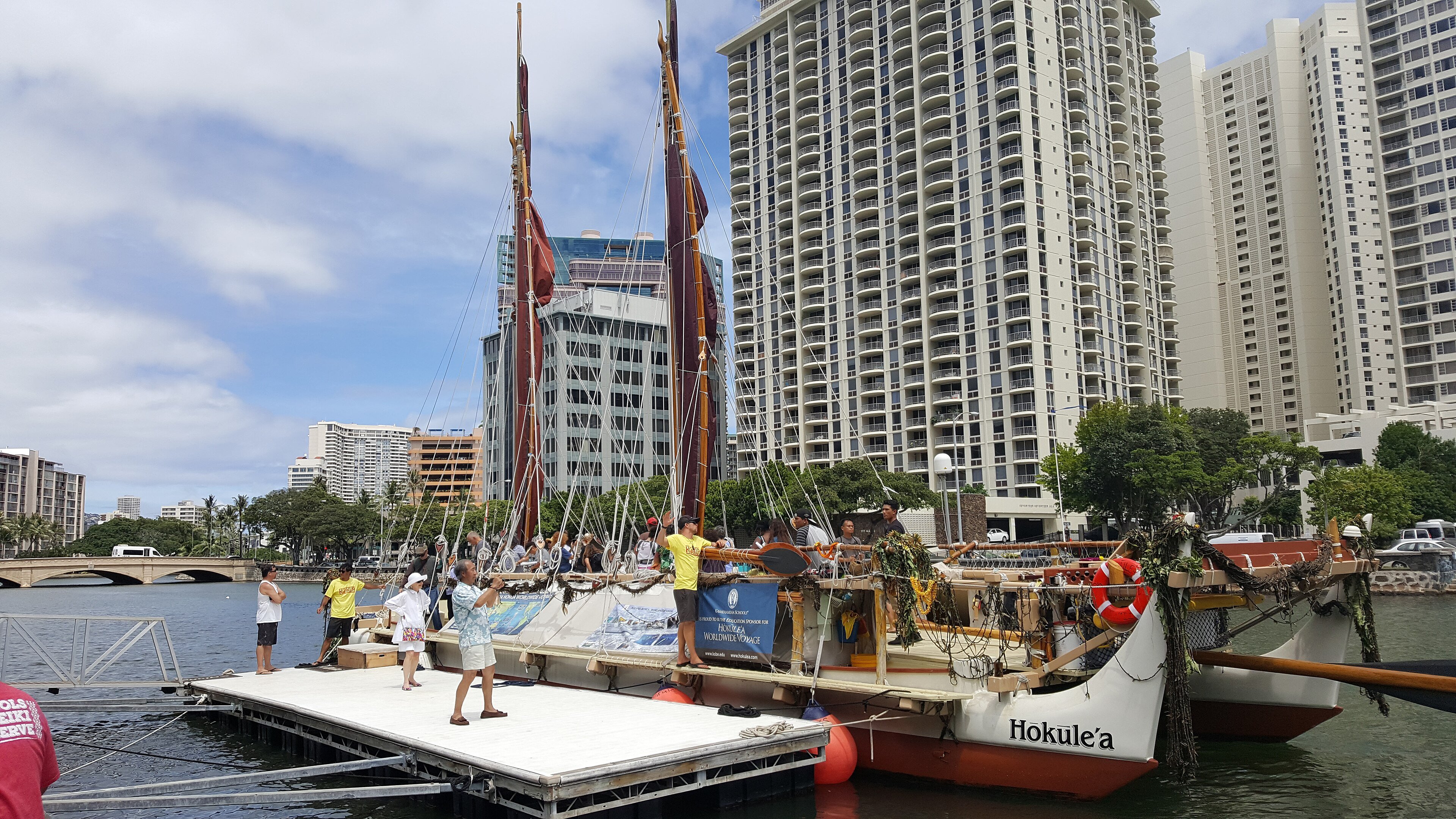
Photo: Region 5 Photography / Wikimedia Commons, Public domain
- Stanford read 1,050 Polynesian genomes to trace two lonely islands' first people
- Hawaii and Easter Island turn out to be genetic cousins, 7,000 km apart
- The same voyages left Native Hawaiians with rare gene effects doctors rarely test for
Hawaii and Easter Island sit about 7,000 km apart across the Pacific Ocean. They are two of the loneliest places people have ever settled. A new study says their first people came from the same small group of sailors.
Researchers at Stanford Medicine read the genomes of 1,050 Polynesian people, including 317 Native Hawaiians and 12 people from Easter Island, also called Rapa Nui. They found that these two island groups share more ancient DNA with each other than with any other Pacific islanders. The study was published in the journal Science on 8 October 2026.
That one finding rewrites a part of history that stood for decades.
Where did Hawaii's first people really come from?
For years, the accepted story was that Hawaii's first settlers sailed up from the Marquesas Islands or Tahiti, the biggest of the Society Islands. Both sit far closer to Hawaii than Easter Island does.
The new genetic study tells a different story. Native Hawaiians share the most ancient DNA with the people of Easter Island. After that island, their next closest match is tiny Mangareva, a cluster of islands in French Polynesia today.
The researchers built thousands of family trees from the DNA samples. In 61% of those trees, Hawaii and Easter Island sat next to each other, like cousins who left the same home around the same time.
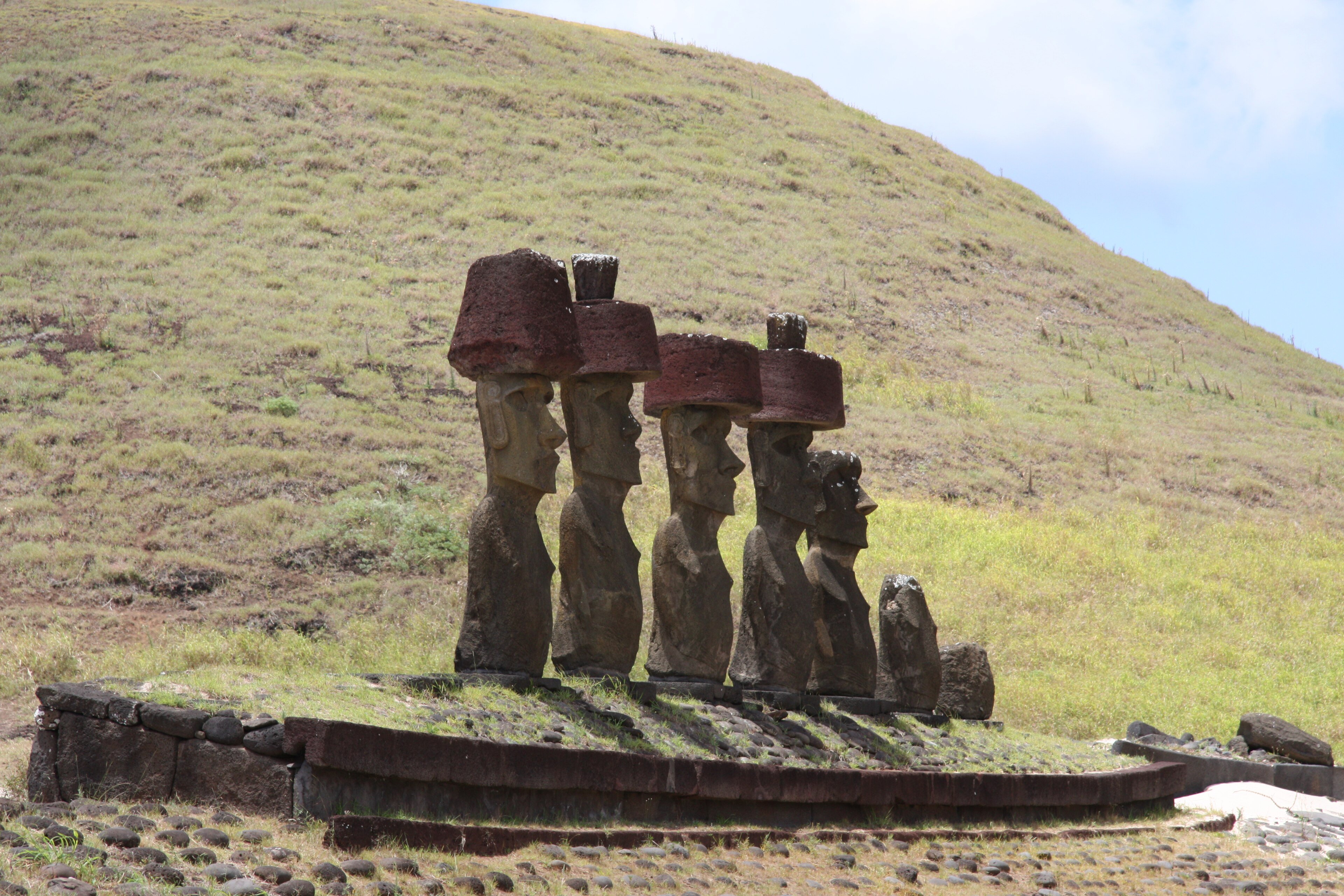
Photo: Docrgd / Wikimedia Commons, CC BY 4.0
How far did the ultravoyagers sail?
The researchers describe the group behind these crossings as "ultravoyagers." They launched from Mangareva, a small cluster of islands now home to fewer than 1,000 people.
From Mangareva, one group sailed about 2,600 km (1,600 miles) and reached Easter Island in the 1200s. Around the same century, another group pushed on toward Hawaii, a trip of about 5,530 km (3,440 miles), with the longest single stretch of open ocean close to 7,000 km.
 Read nextEverything that broke on 21 October 2026, and why one master key was the number 4
Stanford's team read 1,050 Polynesian genomes and traced both Hawaii and Easter Island back to Mangareva, about 5,530 km from Hawaii, in the study published in Science on 8 October 2026. The table below lays out that route against the older theory it replaces.
| Island group | Distance from Mangareva | Settled | Source |
|---|---|---|---|
| Mangareva (the launch point) | Starting point of the voyages | Ancestors lived there before the long crossings | Shanks et al., Science, 8 Oct 2026 |
| Easter Island (Rapa Nui) | About 2,600 km (1,600 miles) | The 1200s | Shanks et al., Science, 8 Oct 2026 |
| Hawaii | About 5,530 km (3,440 miles), longest single leg near 7,000 km | Likely the 1200s, the same century as Easter Island | Shanks et al., Science, 8 Oct 2026 |
| Society Islands and Marquesas (the old theory's route) | About 1,600 to 2,500 km from the Mangareva region, though not the real route | Marquesas settled from about AD 300, said to reach Hawaii by about AD 750 | Patrick Kirch, Journal of the Polynesian Society, 1986 |
What did experts believe before this study?
Archaeologist Patrick Kirch argued in 1986 that the Marquesas Islands were settled first, around AD 300. He said the Marquesas then became a launch point, sending sailors on to Hawaii by about AD 750 and to the Society Islands by about AD 800.
That version made sense on a map. The Marquesas sit roughly 3,400 km from Hawaii, much closer than Mangareva or Easter Island ever were. The DNA tells a different story.
The Stanford team's own evidence puts Easter Island, not the Marquesas, as Hawaii's closest genetic relative. The old route assumed the nearest islands were the ancestors. They were not.
How did sailors cross 7,000 km without instruments?
Ancient Polynesian navigators read the stars, the ocean swells and the flight paths of birds to find islands they could not yet see. The Polynesian Voyaging Society in Hawaii still teaches this method, called wayfinding, aboard its canoe Hokulea.
A crossing like the one from Mangareva to Hawaii could take weeks at sea in a double-hulled canoe, carrying food, water and the plants and animals needed to start a new home. A small mistake in direction could mean missing an island by a few degrees and sailing into open ocean with no way back.
Mangareva itself is barely a dot on the map, the kind of remote island chain where scientists once had to count an entire population of giant tortoises by hand because so little else lived there.
What is a founder effect, and why does it matter now?
A founder effect happens when a small group of settlers passes on only a slice of the genetic variety a bigger population would carry. Rare gene versions carried by just one or two of the original sailors become common in everyone who descends from them.
 Trending nowLeon Lotz: The farmer the world won't believe
Because so few people made these ocean crossings, Native Hawaiians today carry founder effects the Stanford team says are more than ten times stronger than those recorded in the Amish, a group long studied for the same reason.
That concentration brings certain rare disease variants along with it, similar in principle to a single gene switch that can raise someone's risk of Alzheimer's. Conditions that would barely register in a larger population show up more often in Native Hawaiians, because so much of the community descends from the same small founding group.
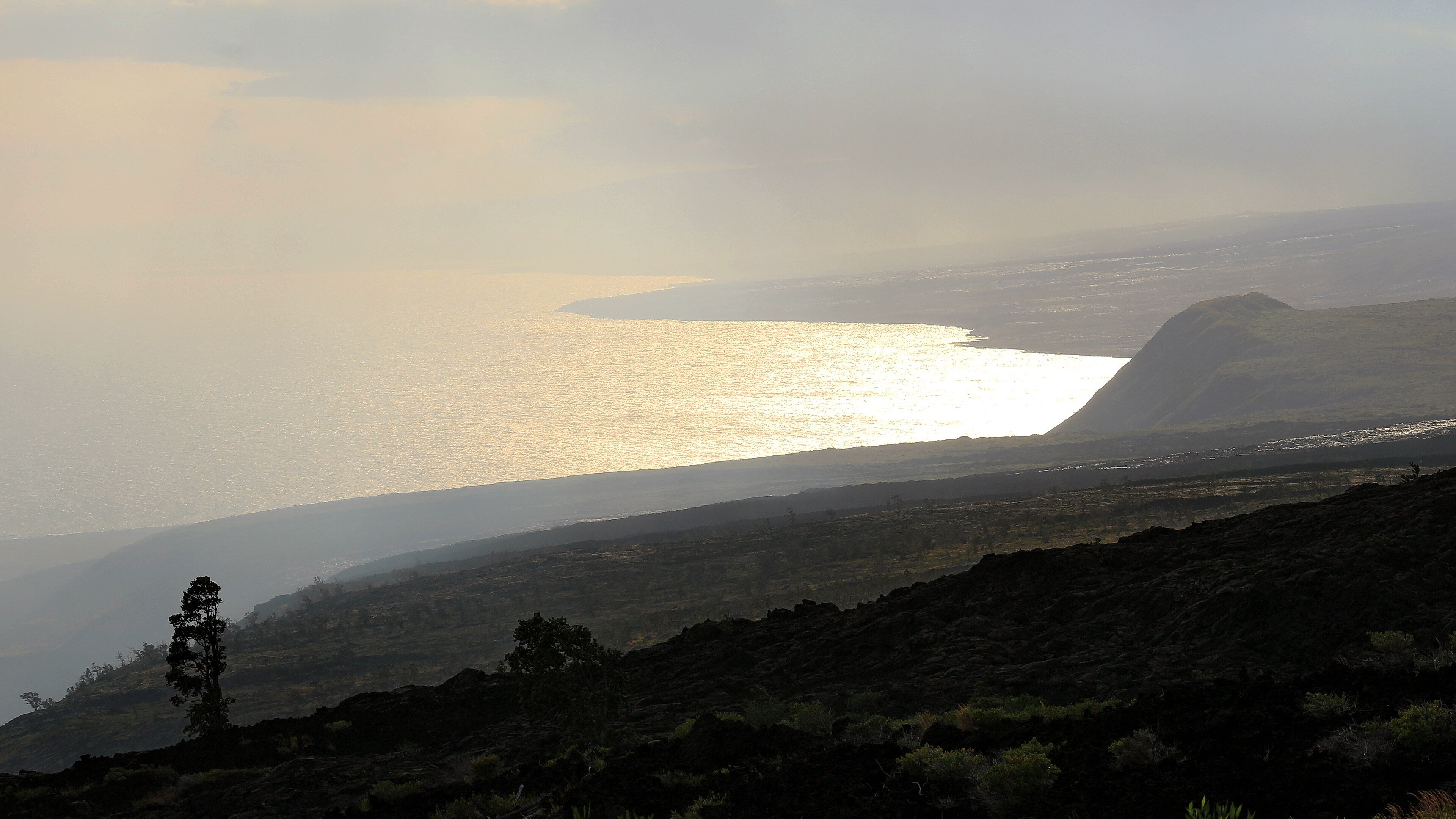
Photo: Robert Linsdell from St. Andrews, Canada / Wikimedia Commons, CC BY 2.0
Will Native Hawaiians get new genetic screening guidelines?
Right now, doctors have little to work with. Stanford geneticist Alexander Ioannidis, who co-led the study, said there are no standard recommendations for testing Native Hawaiians for these conditions, and no insurance reimbursement, because "these are conditions we don't even know about."
He said the population needs research resources and attention from geneticists "even more urgently" than it currently gets.
The same pattern of concentrated rare variants has already helped doctors build better screening programmes for the Amish and for Ashkenazi Jewish communities elsewhere. Native Hawaiians, despite carrying an even stronger version of that same pattern, have had no equivalent screening programme built for them yet.
Could your own blood still carry that ancient voyage?
For Native Hawaiians, the answer is already yes. Every blood test, every rare diagnosis, traces back in part to the handful of canoes that reached Hawaii from Mangareva eight centuries ago.
Researchers now want to sequence other Pacific populations to see how far the ultravoyagers' DNA really spread, and whether Rapa Nui's own community responds to a study that just rewrote where their ancestors came from. It is the kind of isolation question that once pushed a woman to spend 500 days alone in a cave just to find out what being that cut off does to a human mind.
Two of the loneliest dots on any map, thousands of kilometres of empty ocean between them, and inside the people who live there today, the same eight-century-old voyage is still showing up on a lab report.
Get the stories that hit your pocket
Petrol, SARS, Eskom, grants and the news everyone is talking about. One short email every weekday at 6am.
Free. One email each weekday. Unsubscribe anytime.Sources8
- Shanks, Huang, Thomassin, Ioannidis et al., Message in a bottleneck: Nested founder effects from French Polynesia to Rapa Nui and Hawai'i, Science (8 Oct 2026)
- Stanford Medicine, Genetic study reveals surprising origin of Native Hawaiians (Oct 2026)
- Stanford Medicine news release, New genetic study reveals surprising origin of Native Hawaiians
- Live Science, Native Hawaiians and Easter Islanders came from same 'ultravoyager' group
- ScienceAlert, Scientists have discovered where Native Hawaiians came from (24 Oct 2026)
- KSL, Genetic study shows seafarers from Easter Island settled Hawaii (20 Oct 2026)
- Hoodline, New DNA study finds close ancestral ties between Native Hawaiians and Rapa Nui
- Patrick V. Kirch, Rethinking East Polynesian Prehistory, Journal of the Polynesian Society (1986)
Keep reading
 ExplainedSingapore was poorer than South Africa in 1965. Here is how it got 15 times richer
 ExplainedHow much vitamin D to take this winter, and what your bottle's number means
 ExplainedScientists switched the risky Alzheimer's gene for the safe version