Vitamin D winter advice: 10 micrograms, but some pills sell 4,000 IU
Everyone says take vitamin D in winter. Almost nobody says how much, or what the number on your bottle actually means next to the official advice.

Photo: Aslam Karachiwala / Wikimedia Commons, CC BY-SA 3.0
- NHS winter advice is 10 micrograms (400 IU) a day
- The official safety ceiling is 100 micrograms (4,000 IU) a day
- One study used 5,000 IU in people who already had memory problems
10 micrograms. That is the whole of the UK's official advice. The NHS tells adults to take 10 micrograms, or 400 IU, of vitamin D every day from the start of autumn until the end of winter, because the sun sits too low in the sky for skin to make enough on its own.
Check the bottle in your cupboard before you read any further. Plenty of supplements on pharmacy shelves are 25, 50 or even 100 micrograms a dose, several times higher than the routine advice, and a new study on memory used a dose higher again.
Key facts
- NHS winter advice: 10 micrograms (400 IU) a day for adults, autumn through winter
- Official safety ceiling: 100 micrograms (4,000 IU) a day, say both the NHS and the US National Institutes of Health
- A cognition study used 5,000 IU a day, well above routine advice
- That study tested older adults with mild memory problems and sleep trouble, not healthy adults
- Anyone on blood thinners, with kidney disease, or already taking calcium or vitamin D elsewhere should check with a doctor or pharmacist before going above the routine dose
How much vitamin D should you take this winter?
For most adults, the NHS answer is 10 micrograms (400 IU) a day, taken every day from about October to the end of March. That covers pregnant and breastfeeding women too. The reason is simple. Vitamin D mostly comes from sunlight hitting bare skin, and in winter the UK sun is too weak for the body to make it, so a daily supplement fills the gap food alone rarely closes.
The tricky part is reading the label. Supplements are sold in micrograms or in International Units, and shoppers rarely see both side by side. The table below does that conversion for the strengths actually sold.
| What's on the label | Micrograms | IU | How it compares |
|---|---|---|---|
| NHS winter advice | 10 mcg | 400 IU | The official baseline (NHS, checked 27 Oct 2026) |
| Common low-strength pill | 25 mcg | 1,000 IU | 2.5 times the advice |
| Common high-strength pill | 50 mcg | 2,000 IU | 5 times the advice |
| Common high-strength pill | 75 mcg | 3,000 IU | 7.5 times the advice |
| Safety ceiling | 100 mcg | 4,000 IU | The most adults should take daily, from food and supplements combined (NHS and US NIH ODS, checked 27 Oct 2026) |
The conversion is fixed: 1 microgram always equals 40 IU, so you can check any bottle against this table yourself.
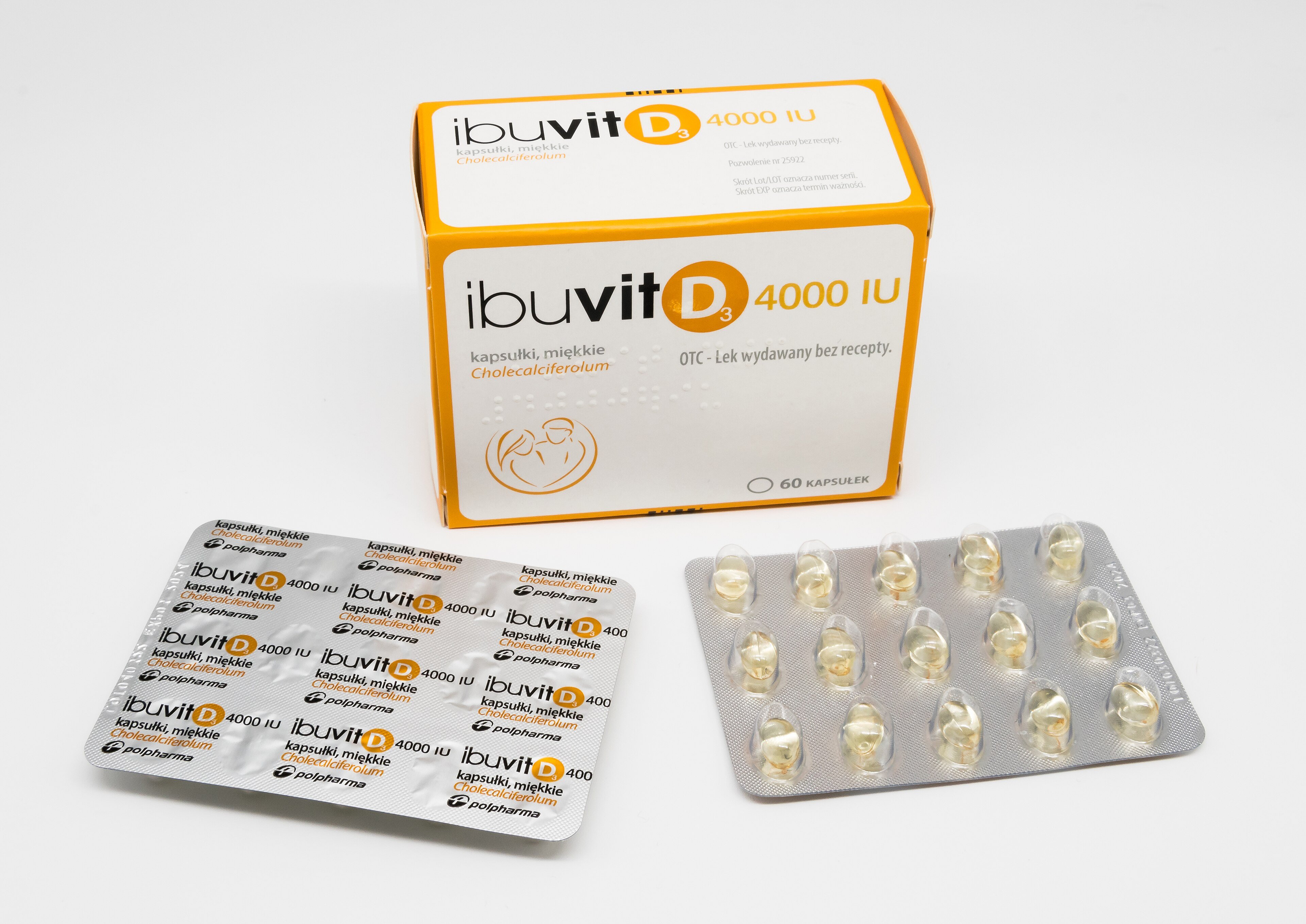
Photo: Jacek Halicki / Wikimedia Commons, CC BY-SA 4.0
What happens if you go above the safety ceiling?
Both the NHS and the US National Institutes of Health land on the same number. Adults should not take more than 100 micrograms (4,000 IU) a day, and that figure already adds up every source together, food, drinks and every supplement combined. That ceiling is a safety limit, not a target to aim for. Going over it for a long stretch can push calcium levels too high, which strains the kidneys.
 Read nextEverything that broke on 21 October 2026, and why one master key was the number 4
This is one plain line worth repeating. If you take a prescribed medicine, have kidney disease, or already take calcium tablets, check with a doctor or pharmacist before adding any high-strength vitamin D. Nothing in this article is advice to change, start or stop a medicine.
Does a higher dose of vitamin D actually help your memory?
Researchers gave older adults with mild cognitive impairment and sleep problems at least 5,000 IU of vitamin D a day. After the trial, those who took it scored more than 13 percent higher on a cognitive test than the group given none, the researchers found. It was described as the first study to look specifically at vitamin D and cognition in people already showing early signs of dementia.
That dose is roughly 12 times the routine winter advice. It was tested in a specific group of older adults with existing problems, not handed out as general guidance, and larger randomised trials in people with normal vitamin D levels have not found that supplements prevent dementia. The researchers are not telling healthy adults to take 5,000 IU a day.

Photo: Oddman47 / Wikimedia Commons, CC0
Does low vitamin D raise your risk of memory problems anyway?
A separate analysis pooling 22 studies and more than 53,000 people found that people with the lowest vitamin D levels had a 49 percent higher rate of dementia than people with the highest levels, the researchers found. Each small rise in blood vitamin D tracked with a small drop in dementia risk. The data is observational, meaning it shows a pattern rather than proof that raising your level would lower your own risk, and the researchers who ran it called for trials to test that directly.
Separate research on severe vitamin D deficiency, a blood level far below normal, has linked it to higher rates of death, diabetes, heart attack, stroke, dementia and kidney failure needing dialysis across two large groups of patients that were tracked over time. Severe deficiency is a specific medical finding from a blood test, not something most winter supplement users have.
 Trending nowLeon Lotz: The farmer the world won't believe
Memory conditions get misdiagnosed more often than people expect, too. Nearly 1 in 5 people once told they have MS turn out not to have it, which is one more reason a single number, on a bottle or in a blood test, should never replace a doctor's full picture.
What else actually helps your brain through winter?
Vitamin D is one piece of a bigger picture. A large review of 218 trials found that dancing beat every other exercise tested for lifting low mood, with walking close behind. Daily habits add up elsewhere too. A regular coffee habit has been linked to nearly two extra years of healthy life in people who were tracked for decades.
None of that replaces the basic winter dose. It just means the pill bottle is one part of the routine, not the whole of it.
So what should you actually buy at the pharmacy?
For routine winter use, the number to look for is 10 micrograms or 400 IU, taken daily from October through to the end of March. That matches the official NHS advice and sits well inside the safety ceiling of 100 micrograms or 4,000 IU. If a bottle on the shelf is stronger than that, it is not automatically dangerous, but it is also not automatically better, and anything near or above the ceiling is worth a quick word with a pharmacist first.
The 5,000 IU dose that moved memory scores in this study is not on any general supplement shelf by accident. It came from a trial on people who already had problems, not a recommendation for the person standing in the aisle. If a larger trial in healthy adults ever finds the same effect, the bottle you reach for next winter could look very different from the one you picked up this year.
Get the stories that hit your pocket
Petrol, SARS, Eskom, grants and the news everyone is talking about. One short email every weekday at 6am.
Free. One email each weekday. Unsubscribe anytime.Sources5
- Medical News Today, high-dose vitamin D and cognition in older adults at risk of dementia
- NHS, vitamin D guidance (checked 27 Oct 2026)
- US National Institutes of Health, Office of Dietary Supplements, Vitamin D fact sheet
- Dose-response meta-analysis of vitamin D and dementia risk, PMC
- Cohort study on severe vitamin D deficiency and mortality risk
Keep reading
 ExplainedScientists switched the risky Alzheimer's gene for the safe version
 ExplainedWhat to do when the till charges more than the shelf price
 ExplainedWhy England's reservoirs are still emptying after a record wet winter