The RAF asked for 75c more on every litre of petrol. Barbara Creecy said no
Petrol is already at a record R30.25. The fund that gets R2.25 of every litre wanted more, and the minister told it to fix itself first.
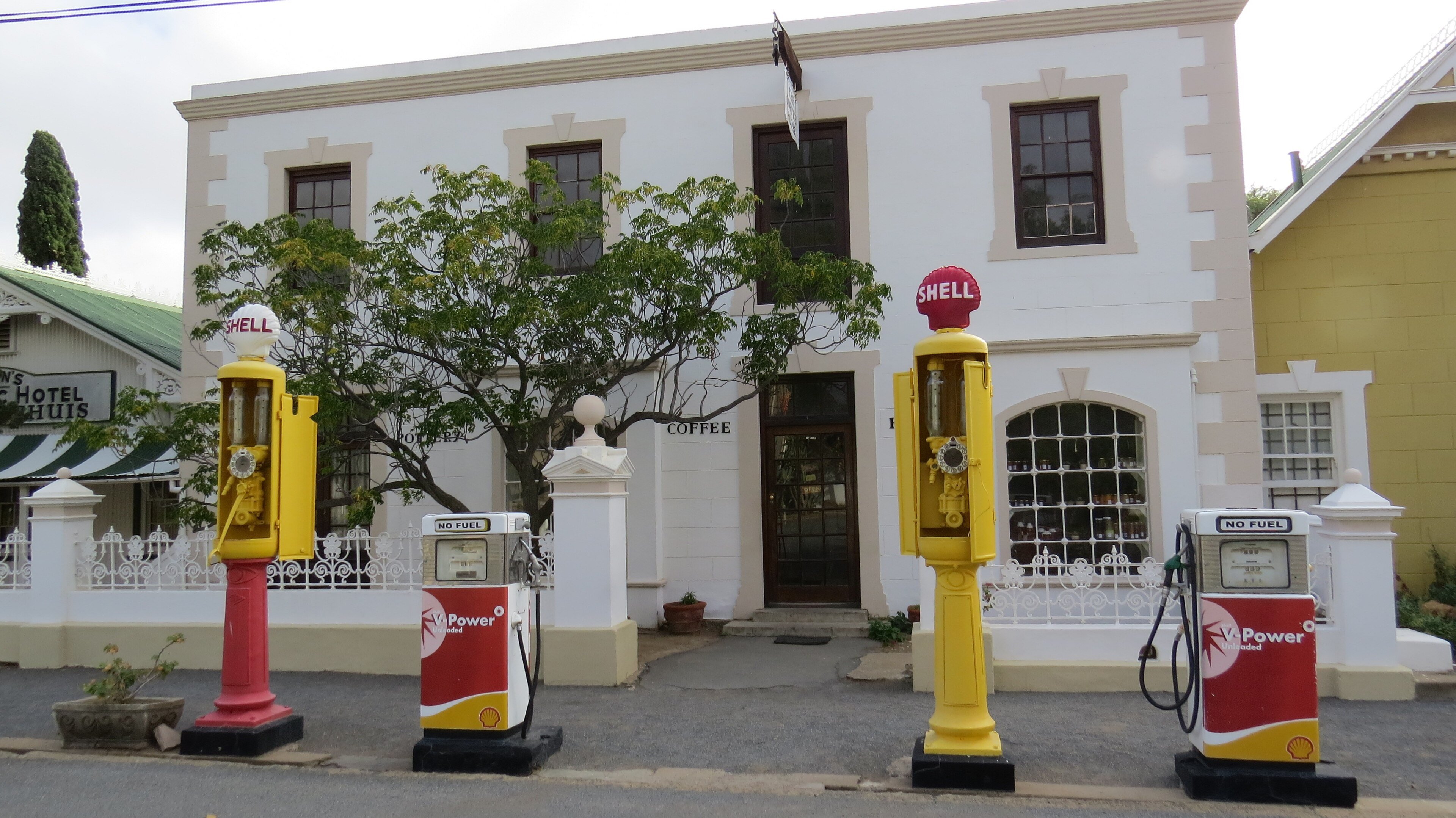
Photo: Sara Essop / Wikimedia Commons, CC BY-SA 3.0
- The RAF wanted its levy raised by 33% to R3 a litre
- The extra 75c would raise about R16 billion a year
- The fund's net debt is R439.5 billion
New to this? November petrol forecast: Now about R3.01 more a litre
75 cents.
That is the extra the Road Accident Fund (RAF) wanted on every litre of petrol and diesel you buy. On 13 October, Transport Minister Barbara Creecy said no.
She confirmed that the RAF will get no extra money from government. She told eNCA that motorists are under enough pressure. Eyewitness News reported her answer, and its post about it was seen 37,400 times within hours.
The replies were angry. Some said scrap the RAF. Others said the ANC is squeezing drivers before the elections. One wrote that we pay R3 extra per litre so lawyers can get rich.
That last one is close, but not right. Here is the real number.
Is the RAF levy R3 a litre right now?
No. It is R2.25 a litre today. The RAF asked to go to R3.00.
The levy rose by seven cents from R2.18 on 1 April 2026. The RAF says that was far too small. In its 2025/26 annual report, it said it would ask National Treasury for a bigger lift of up to R3.00 a litre.
That is a rise of 33%. It sits inside the record R30.25 you pay for 95 in Gauteng. For the full split of that price, see where every rand of a litre goes.
What would 75c more a litre have cost you?
For one driver, it is the price of a coffee a tank. For a taxi, it is serious money.
We used a 50-litre tank for a car. For a minibus taxi, we assumed 80 litres a day. That is our assumption, not an official figure, so swap in your own.
| Today (R2.25) | Proposed (R3.00) | Extra | |
|---|---|---|---|
| Per litre | R2.25 | R3.00 | R0.75 |
| Car, one 50-litre tank | R112.50 | R150.00 | R37.50 |
| Taxi, per day (80 litres) | R180 | R240 | R60 |
| Taxi, per month (30 days) | R5,400 | R7,200 | R1,800 |
| Taxi, per year | R65,700 | R87,600 | R21,900 |
Our sums from the levy figures reported by Eyewitness News and MyBroadband. The taxi rows are an assumption.
 Read nextPrime is 10.75%. Your bond table, plus the petrol bill coming in November
Taxi owners already warn that fares follow petrol. Our look at what R30 petrol does to taxi fares shows how fast that lands on commuters.

Photo: Shade Schutze Photography / Wikimedia Commons, CC BY-SA 4.0
Why did Creecy say no?
She gave two reasons. Drivers are squeezed, and the fund must be fixed first.
She told eNCA that as long as she is in the job, her department will not ask Treasury for a higher fuel levy. She said it is easy to break an institution and slow to repair one.
Her plan has three parts. Fix the RAF's money and management. Change the law so benefits follow a set schedule and no one has to prove who was at fault. Cut road deaths so there are fewer claims.
A new chief executive has just been approved by Cabinet. A permanent board is being appointed. The old board was dissolved in August 2025.
What does the RAF owe, and where does the money go?
The numbers are huge. The figures below come from Moonstone's reading of the RAF's 2025/26 annual report.
| RAF, year to 31 March 2026 | Amount |
|---|---|
| Income, almost all from the fuel levy | R48.1 billion (down 5%) |
| Claims paid | R43.3 billion |
| Of that, legal and claims-processing costs | R8.2 billion (19%) |
| Total liabilities | R452.4 billion |
| Total assets | R12.9 billion |
| Net liabilities | R439.5 billion |
| Open claims | 422,477 (59% older than five years) |
Those legal costs are the "lawyers get rich" anger in the replies. Nearly one rand in five of claims money went on legal and processing costs.
The Auditor-General gave the fund an unqualified opinion with findings this year, Moonstone reports, up from an adverse one before. The auditors still flagged doubt about whether the RAF can keep going.
Would 75c more even have helped?
A little. Not much.
At R48.1 billion from R2.25, each cent of levy brings in roughly R214 million. So 75c is about R16 billion a year, if petrol sales stay the same. That is our arithmetic, not the RAF's.
Against a net debt of R439.5 billion, that is 3.6%. Even if every cent went to old debt, it would take about 27 years. And that ignores all the new crashes.
And petrol sales are not staying the same. The RAF says its income fell 5% as hybrids and electric cars take a bigger share.
Will the RAF slip a fee into your licence disc instead?
That is what many people fear, and the idea is real. It is not finished.
 Trending nowPetrol broke R30 a litre. We followed the money
Creecy first floated a vehicle-linked fee in May. The RAF then put a new charge on vehicle registrations and licence disc renewals into its annual report. No amount has been set. Nothing is final.
The aim is to make electric and hybrid drivers pay in, since they buy less fuel. Creecy said this week that government expects fuel levy income to shrink, and that a mix of funding may be needed in the short term.
Critics say petrol owners could pay twice. The Automobile Association's chief executive called the idea "laughable" when it first came up. In her latest comments, Creecy did not mention it at all.
Photo: Ruby D-Brown / Wikimedia Commons, CC BY 4.0
Could everyone just buy insurance instead?
Some replies say all cars should carry insurance. The department says compulsory third-party cover is under study.
A cost and benefit report is expected with the planned new benefit bill. No date has been given.
Should the RAF be scrapped, and what about monthly payments?
Some readers want the RAF scrapped, the old claims paid, and the leftover cash used to ease petrol. The DA has pushed to scrap the RAF fuel levy before. Treasury has not agreed.
Others remember that earlier draft bills would pay long-term losses as monthly payments, not one lump sum. Supporters say that is easier on the fund. Critics say victims lose certainty, and payments could stop if a victim dies.
Creecy now talks about a set schedule of benefits and a no-fault system. She says that would let people claim without a lawyer. The law still has to change, and no date is public.
For why the state also refuses to cut the main levy, read why government will not cut the fuel levy. Every move in this fight is on our petrol price topic page.
Will petrol go up again on 4 November?
Early data points to a big rise, and the next official price lands on 4 November. Our November forecast tracks it.
So the RAF's 75c is off the table for now. The oil price is not. The Mid-Term Budget on 21 October is the next moment a levy could move.
One date, two fights. On 4 November, South Africa votes in local elections and the pump price changes on the same day. A minister who just refused drivers 75c will soon find out whether drivers noticed.
Liked this story? Get the next one free.
One short email every weekday at 6am. The top stories, before everyone is talking about them.
Free. One email each weekday. Unsubscribe anytime.Sources5
- EWN (13 Oct 2026), Transport minister confirms RAF won't receive additional funds from government
- Eyewitness News, Transport Minister confirms RAF won't receive additional funds from govt (13 Oct 2026)
- MyBroadband, Creecy draws red line at R3-per-litre petrol tax
- Moonstone, RAF's balance sheet delivers a brutal reality check (8 Oct 2026)
- Cape Town ETC, RAF proposes R3 fuel levy (9 Oct 2026)
Keep reading
 MoneyBotswana petrol is about R8 a litre cheaper than South Africa's. Here is why
 MoneyA Tembisa taxi depot is said to sell fuel at R10 a litre
 MoneySouth Africa makes 39% of its own fuel, down from 78% in 2019