Tear gas at the Bastille: Why French teenagers are fighting riot police over their schools
It began with crumbling schools and missing teachers. Three weeks later, France counts more than 6,000 arrests and a minister scrambling for 3,000 teachers.
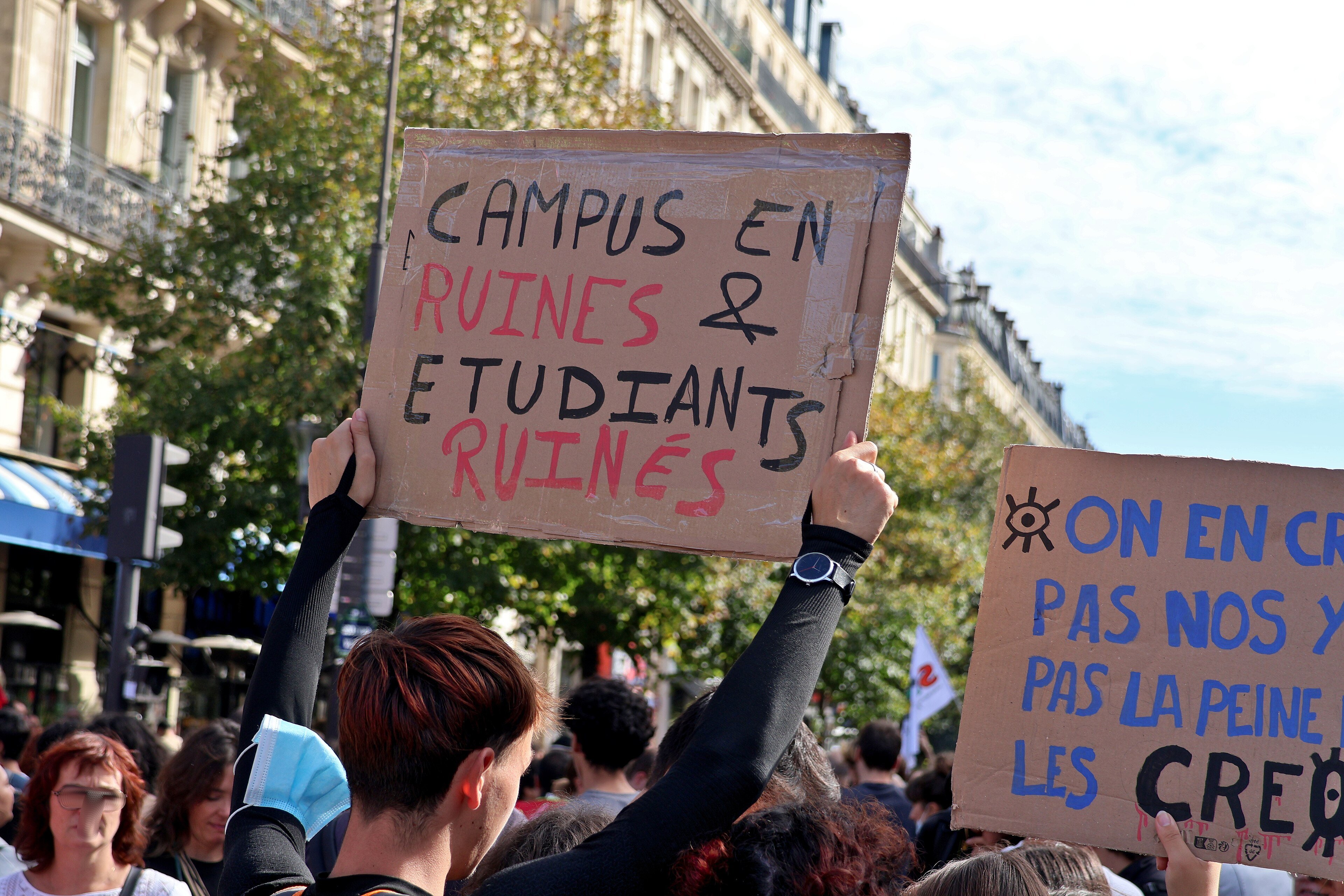
Photo: FreCha / Wikimedia Commons, CC BY-SA 4.0
- 504 people were arrested across France on Thursday alone
- Police say about 20 masked people started the Bastille clashes
- Students want 10 billion on the table before they stop
The water cannon swept across the wet square in late afternoon light.
On Thursday 8 October, riot police in Paris charged a crowd at the end of a student march on Place de la Bastille, the square where the French Revolution began. Tear gas filled the air. In one clip from central Paris, young people in black run, regroup and run again.
That 29-second clip spread fast. One post called it "massive clashes" between police and an "alliance" of high school rioters and Antifa. It passed 398,000 views in a few hours.
The clashes were real. The story behind them started a long way from the Bastille, with crumbling buildings and missing teachers.
What happened in Paris on Thursday?
Thursday was another national day of action by French high school and university students. The Interior Ministry counted 71,500 people in the streets across France, with 24,500 of them in Paris. The CGT union said more than 130,000 marched.
The Paris march ended at the Bastille. That is when things turned, according to franceinfo. Police charged and fired tear gas. Officers made arrests on the square.
An AFP reporter saw a young man with a bloodied face and clothes among those taken away.
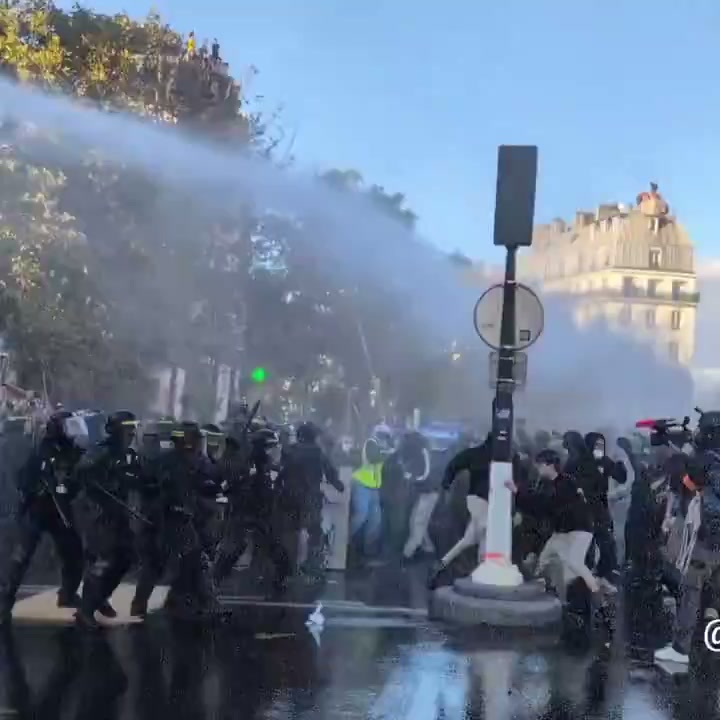
Photo: via X / @visegrad24
Across France, the ministry said 504 people were arrested that day. It spoke of "an increase in urban violence". Nearly 50 police officers and gendarmes were hurt.
Who was behind the Paris clashes?
This is where the labels split.
The Paris police prefecture said about 20 "black blocs" threw street furniture at officers. Black bloc is the name for protesters who dress all in black, cover their faces and move as one group. They are usually linked to anarchist and far-left circles.
The viral post went further and called them Antifa extremists working together with school rioters. French officials have not used that word. But they have voiced a similar worry. The authorities have said they fear anarchist groups are hijacking the student marches.
Parents and teachers see it from the other side. Many now march next to the pupils, Al Jazeera reports, both to keep troublemakers out and to protect children from police force.
So who started it? Police point at a small masked group. The students point at the police. Both stories are still out there, and neither side has backed down.
Why are French high school students protesting?
It started small, in late September, in some of the poorest suburbs around Paris.
Pupils began blocking the gates of their own schools. Their complaints were simple. Teachers are absent and nobody replaces them. Classes are packed. Timetables are overloaded. Buildings are falling apart and get too hot in summer.
One sign at a Paris march this week read "Campus in ruins and students ruined". Another, carried in Marseille, Nantes and Lyon, said "Survive or study".
The anger spread from school to school. On Tuesday 6 October, it became a national event.
That Tuesday, the authorities counted about 250,000 marchers. Organisers said it was close to 500,000. The high school students' union said nearly 2,000 schools were blocked or shut.
Thursday's march was smaller. But the arrests stayed high, and the mood got darker.
How many students have been arrested?
The numbers are huge for a protest led by teenagers.
The Interior Ministry says 6,100 people have been arrested since the movement began, most of them under 18. The Justice Ministry says more than 1,800 will be prosecuted. Of those, 1,483 are minors.
Prime Minister Sébastien Lecornu says at least 215 teenagers and 715 police officers have been wounded.
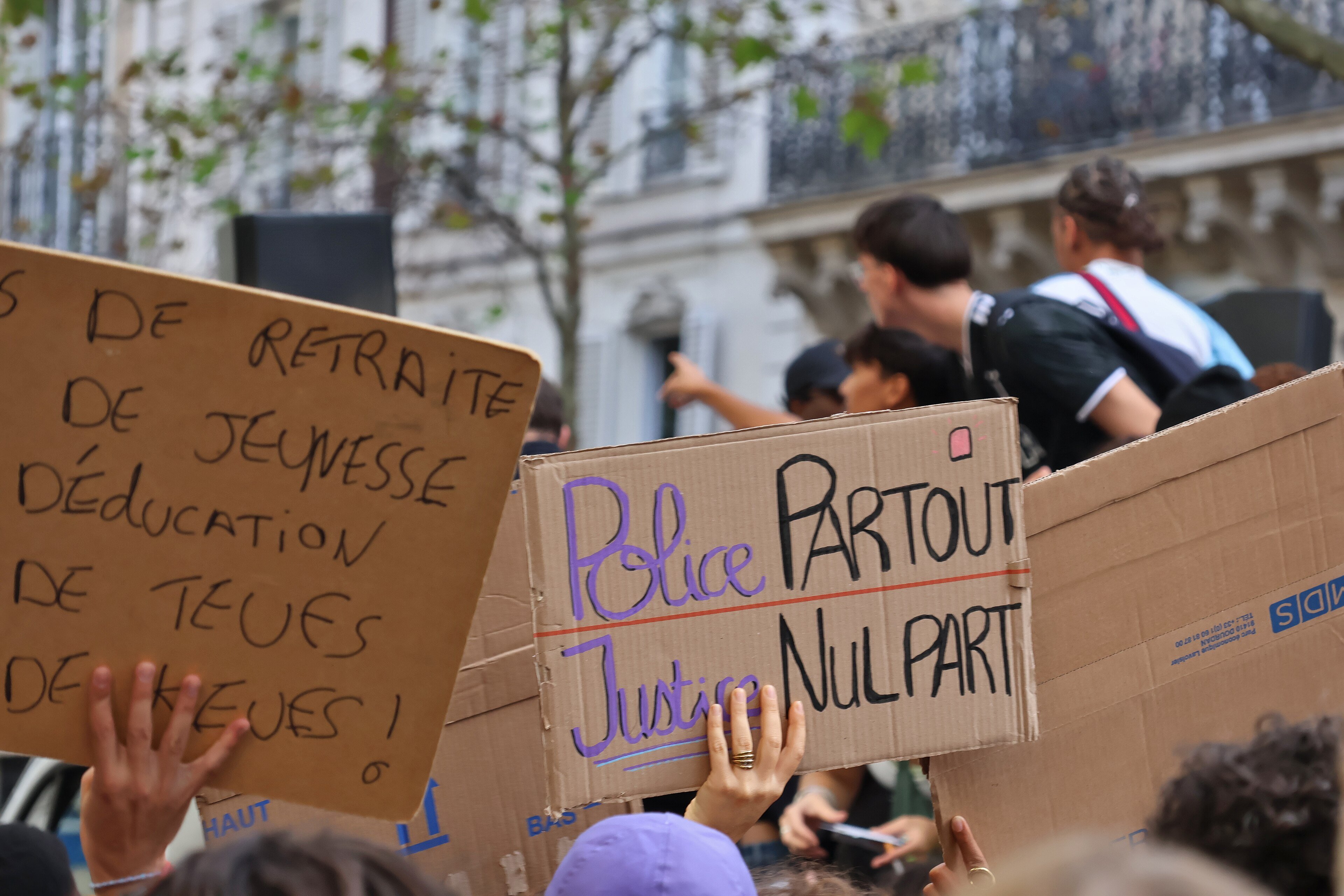
Photo: FreCha / Wikimedia Commons, CC BY-SA 4.0
Two injuries shocked the country. On Monday 5 October, a 15-year-old in Lens, in the north, lost a hand. Local paper La Voix du Nord reported he had picked up a police grenade.
In Tours, a 16-year-old was hit in the head during a school blockade. French media report he lost the use of his right eye. The local prosecutor said the wound fits the impact of a rubber ball fired by a police launcher.
That is why police behaviour is now a protest issue of its own. Earlier this month, the Paris police chief called the movement "out of control" and urged students to stop the blockades.
What has the French government offered?
At first, it pulled the plug on school itself.
Lecornu suspended high school classes across France for the rest of this week. He said the time should go to "internal democracy" inside schools, where pupils and teachers could talk about conditions. He also had a sharp line for the rioters: "Burning down a high school does not improve the state of high school buildings."
He told his ministers to answer the students' demands by the end of October.
On Thursday night, Education Minister Edouard Geffray went on TF1's evening news with a first offer. He promised 3,000 replacement teachers for struggling schools by Tuesday. His ministry has marked 114 high schools as "red" and 400 as "orange" because of teacher shortages.
He also said students had sent in 66,000 ideas through a government website.
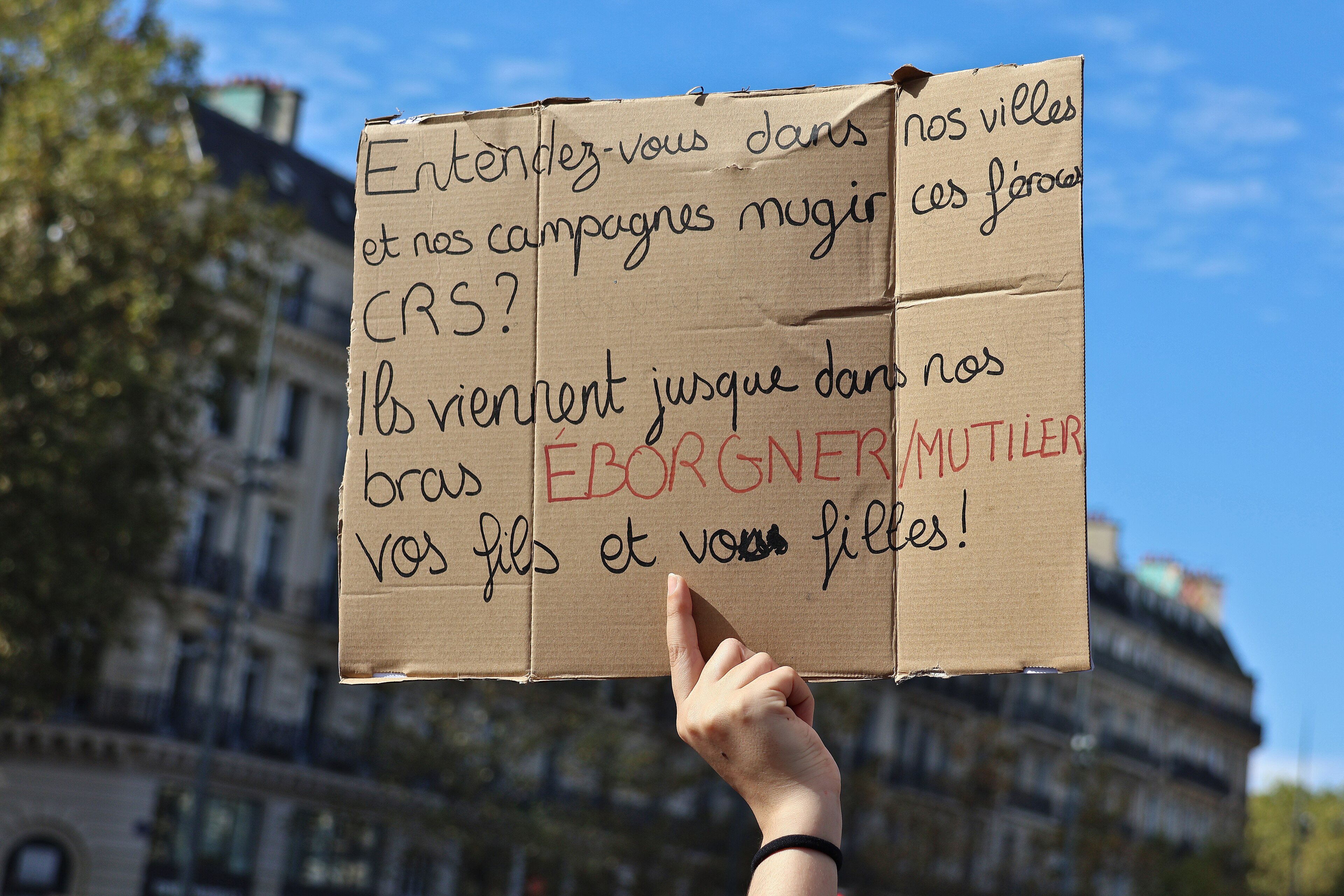
Photo: FreCha / Wikimedia Commons, CC BY-SA 4.0
Not everyone was impressed. Left-wing MP Paul Vannier called the speech a hypocritical attack on ten years of President Macron's own school policy. A school principals' union leader said that if these teachers were free all along, they clearly do not meet the need.
The money question hangs over everything. France is deep in debt and fighting over its budget. Nobody has said where the cash for school repairs would come from.
Why is this protest getting so much attention abroad?
Partly because of who is in the streets. These are mostly 15 to 18-year-olds, and many of them are fighting for basics like a teacher in the room.
Partly because of the politics. In the United States, President Donald Trump blamed the unrest on "out of control mass migration" on Truth Social. He gave no evidence. Students' own demands are about schools, staff and buildings.
And the pictures are dramatic. Tear gas over the Bastille travels fast online, whoever you think is to blame. South African readers will know the feeling. Students here shut down campuses in 2015 over money, and the images went around the world too.
Europe's other big row this week is with Moscow. And the fuel price shock is squeezing governments that already have no spare money for schools.
Will the protests in France continue?
Yes. The students have already set the date.
The student and workers' unions have called a new day of strikes and marches for Tuesday 13 October. That is the same day Geffray's 3,000 replacement teachers are meant to be in place.
So Tuesday becomes the test. Either the teachers show up and the anger cools, or the students are back on the Bastille.
Sabrine Kharbach, a spokesperson for the Union étudiante, made the price clear. She says they will keep going until there is "10 billion on the table".
The government has offered 3,000 teachers. The students want 10 billion. On Tuesday, France finds out how far apart those two numbers really are.
Sources6
- The original clip on X (8 Oct 2026)
- franceinfo live: Thursday's turnout, 504 arrests, Bastille clashes and Geffray's 3,000 teachers (8 Oct 2026)
- Al Jazeera, Demonstrators clash with riot police in France as education protests mount (6 Oct 2026)
- Reuters (via The Star), Paris police chief says student protest movement out of control (4 Oct 2026)
- Noovo (AFP), Several minors seriously injured in the protests in France
- Daily Maverick, Students and police clash as France struggles to quell school protests (2 Oct 2026)
The week's biggest stories, every Monday
One email. The stories everyone will be talking about, before they do.
Free. One email a week. Unsubscribe anytime.Keep reading
 WorldThe Dutch defence minister calls Russia "the enemy", and Moscow demands answers
 WorldThree oil shocks at once, and why diesel is the one to fear
 WorldArmenia's 101-metre Jesus statue: The record and the row